
Photo locations, techniques and technology. Highlights of locations we frequent as well as features on how and why we shoot the way we do, including gear reviews specific to nature photographers.
Tanzania - Birds
Birds were kind of a side quest that often became part of the main story while we were in Tanzania. You get so excited to see all the big animals that you have never seen other than on a BBC special and you kind of forget the fact that there are so many interesting birds in Africa many of which are not that afraid of humans (or at least not afraid of the land cruisers).
Birds were kind of a side quest that often became part of the main story while we were in Tanzania. You get so excited to see all the big animals that you have never seen other than on a BBC special and you kind of forget the fact that there are so many interesting birds in Africa many of which are not that afraid of humans (or at least not afraid of the land cruisers).
With limits to the amount of gear I wanted to take with us to Africa, I didn't bring any really long lenses for bird photography. I did have the 100-400 and a 1.4x teleconverter which is good enough for closer birds or maybe really big birds. This didn't stop us from capturing plenty of different species in different locations. I did have to crop in on most of the shots but that is nearly always the case even with huge lenses.
The first morning in Arusha we spent the day relaxing at the resort and I was up early with all the different sounds outside. The first thing I heard was bird song and even before breakfast I was getting shots of kingfishers and weavers just outside of our mud hut. After 2 days and more than 20 hours on planes these sites and sounds helped us to relax and seeing a bunch of new (to us) bird species was already kind of exciting.
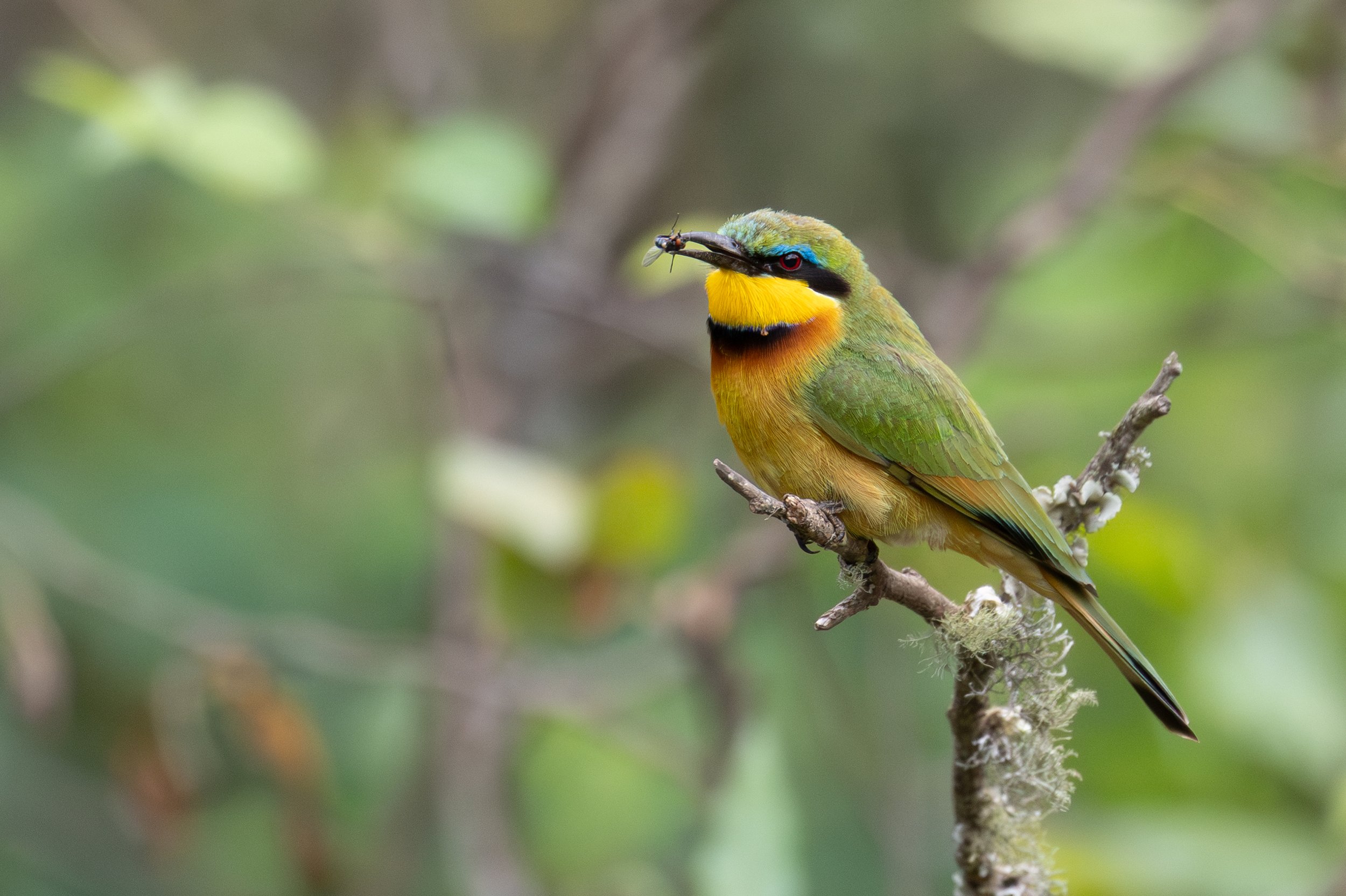
Once we started on the safari runs we were looking everywhere for animals but often the first thing to catch our eyes were very brightly coloured bee-eaters. We found these birds sitting on small branches often close to the roads where they would do short flight out for bugs and then often come back to the same perch. This made it relatively easy to just wait for them to come back for a nice open shot. They were very quick on the take offs and I did not manage to get much in the way of interesting flight shots but just getting a pair sitting on a branch with a bug was pretty nice.
Let's take a look at some of the birds we saw, and most of the ones I was able to get reasonable pictures of.
Bee-eaters
Some of the most colourful birds and so fun to watch as they sit on a branch for a few seconds and then dart off for a bug often coming back to the same branch.
Cinnamon-chested bee-eater
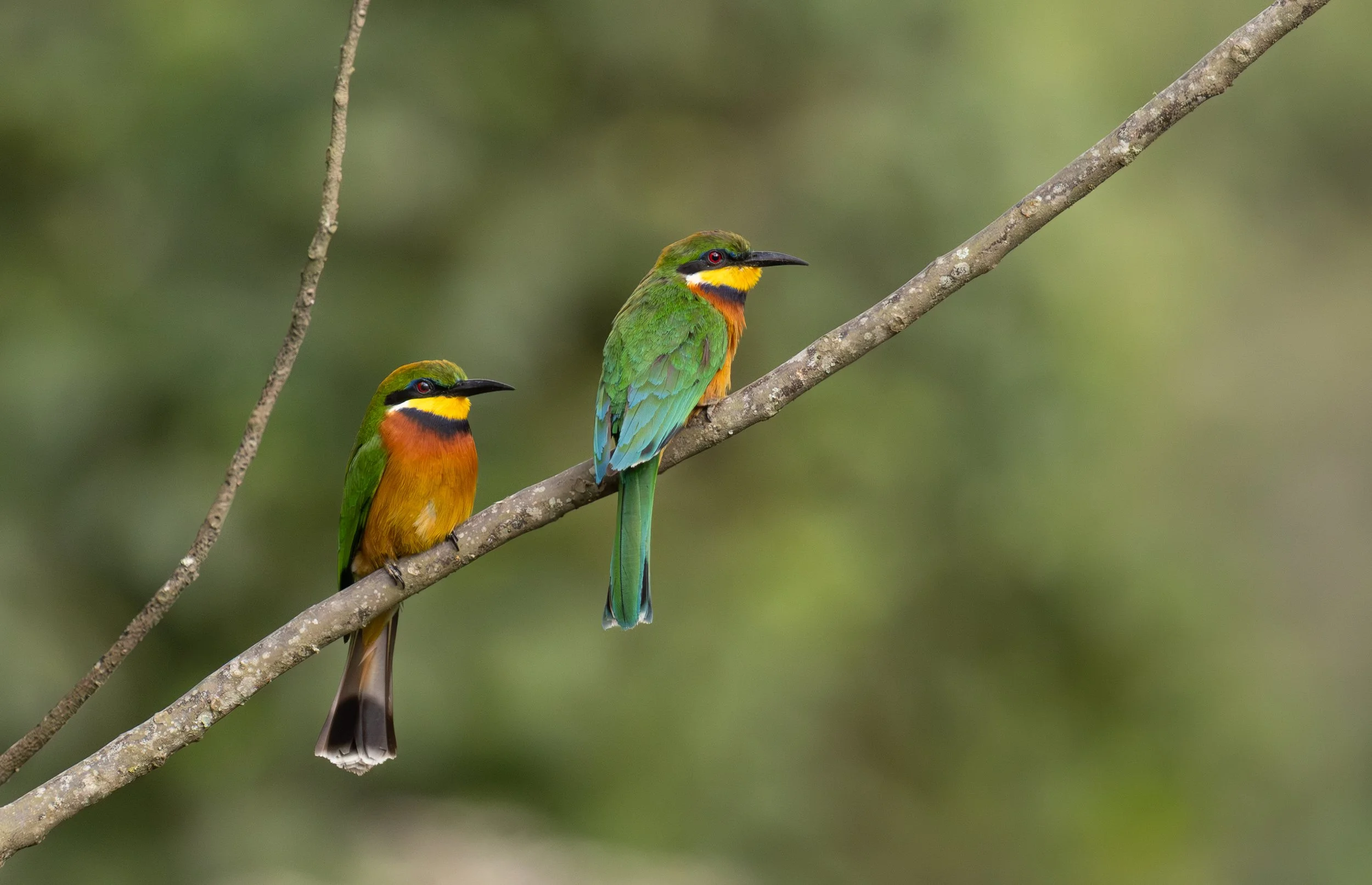
Pair of Cinnamon-chested bee-eaters
Little bee-eater
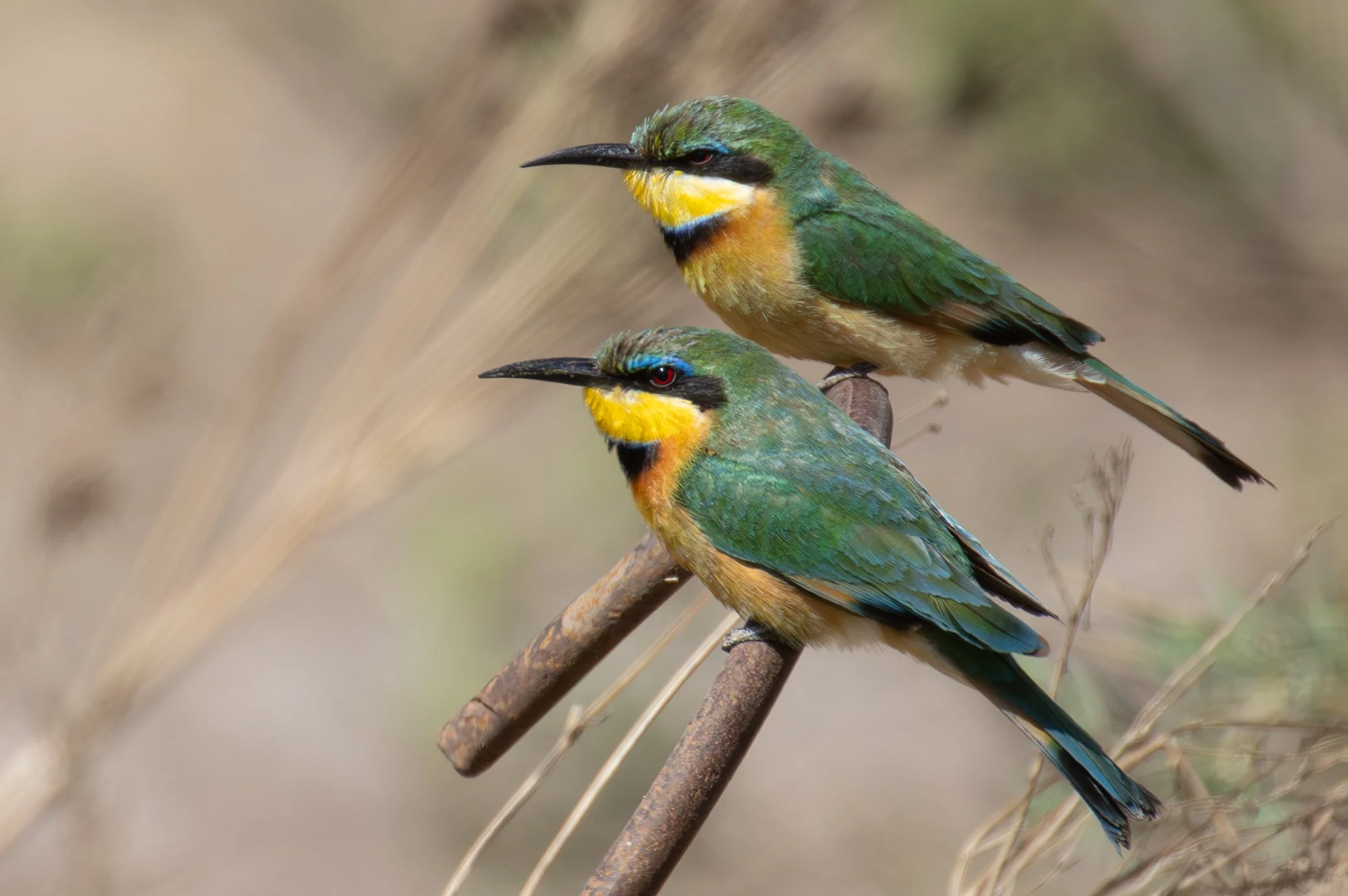
Pair of Little bee-eaters
white-fronted bee-eater
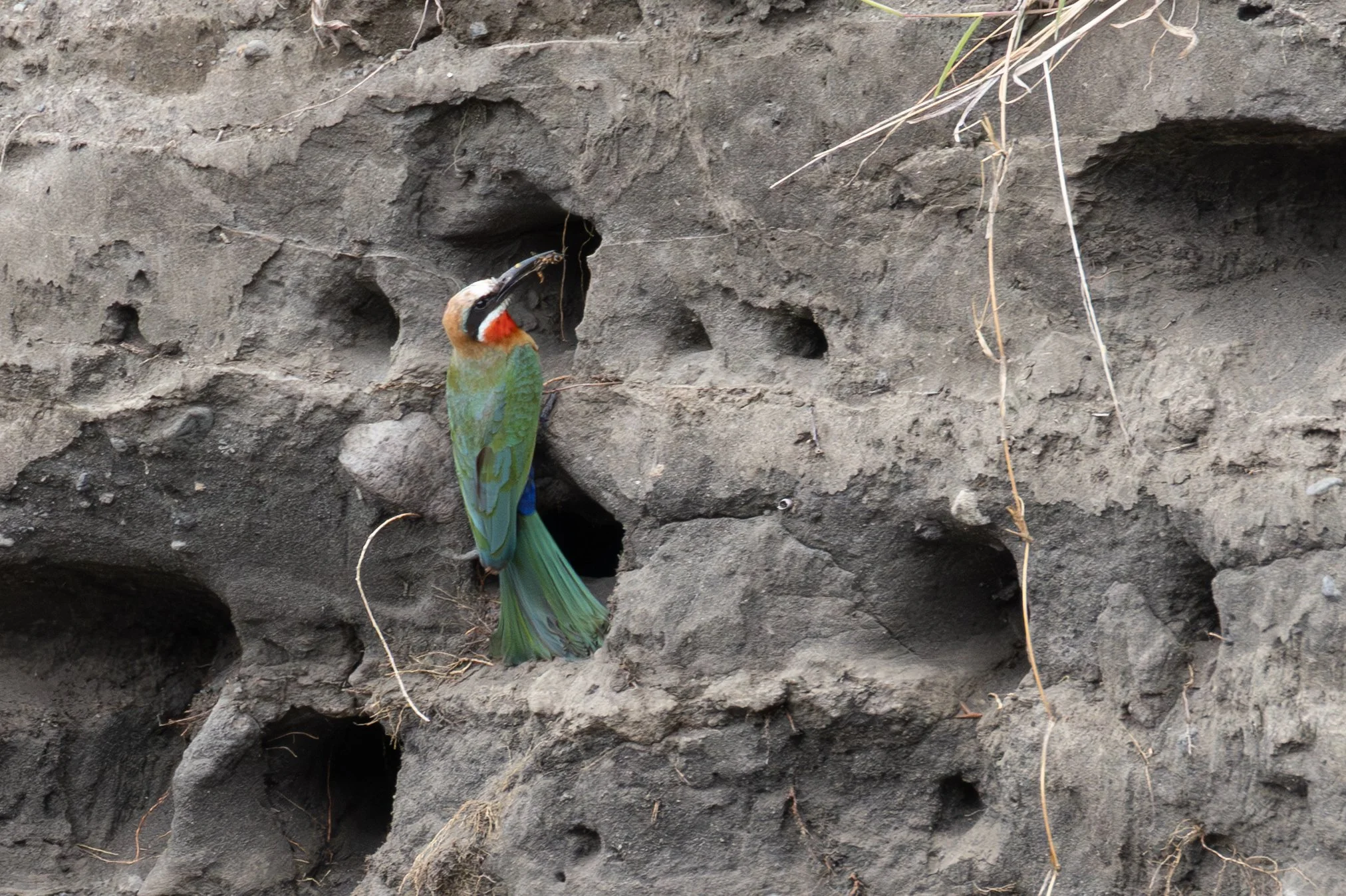
White-fronted bee-eater taking a bee back to the nest
Hornbills
With their distinct bills and loud calls Hornbills can seem a bit quirky but they are crucial seed dispersers in the African ecosystems and quiet entertaining to watch.
Von der Decken's
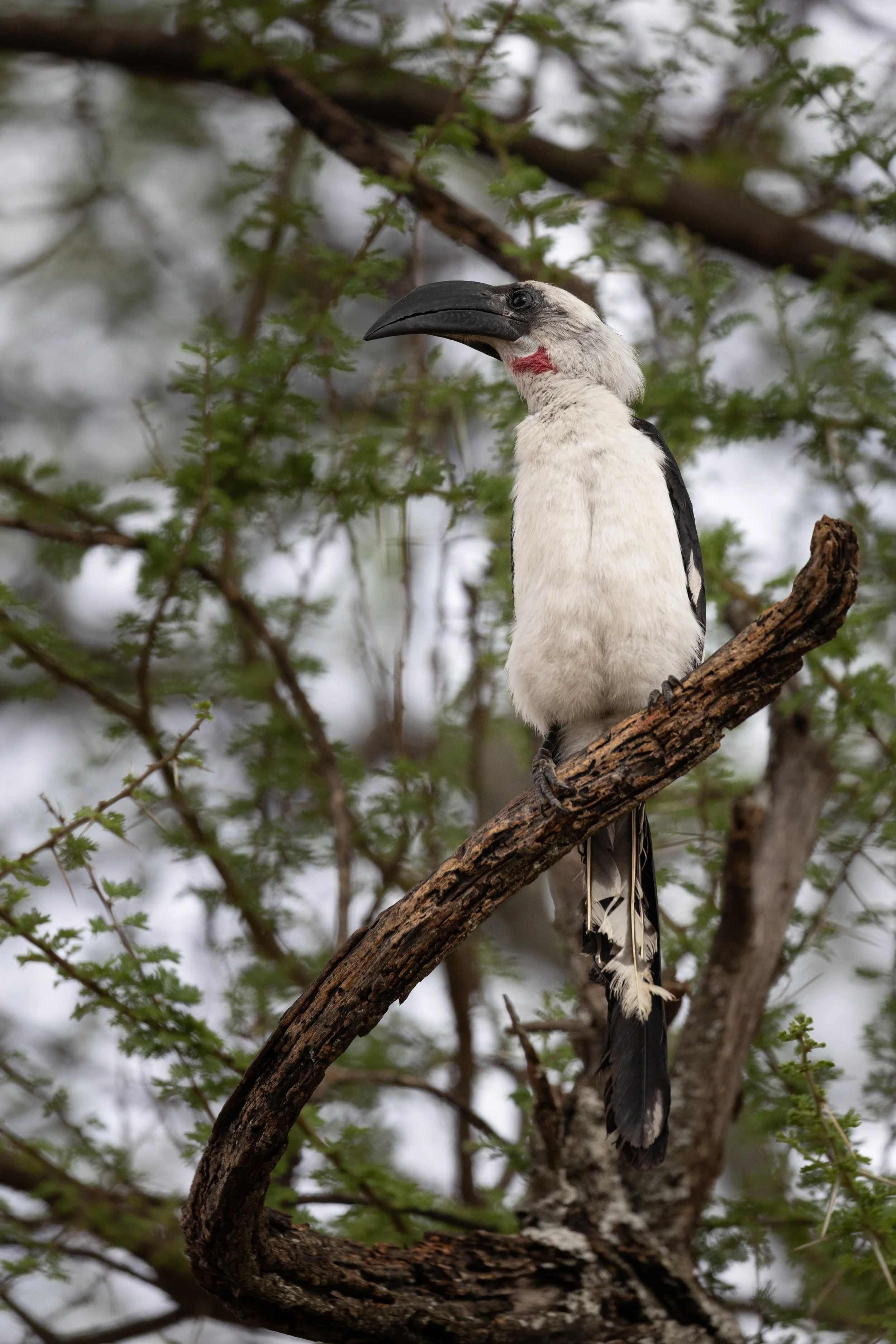
Von Der Decken’s Hornbill
Southern Ground
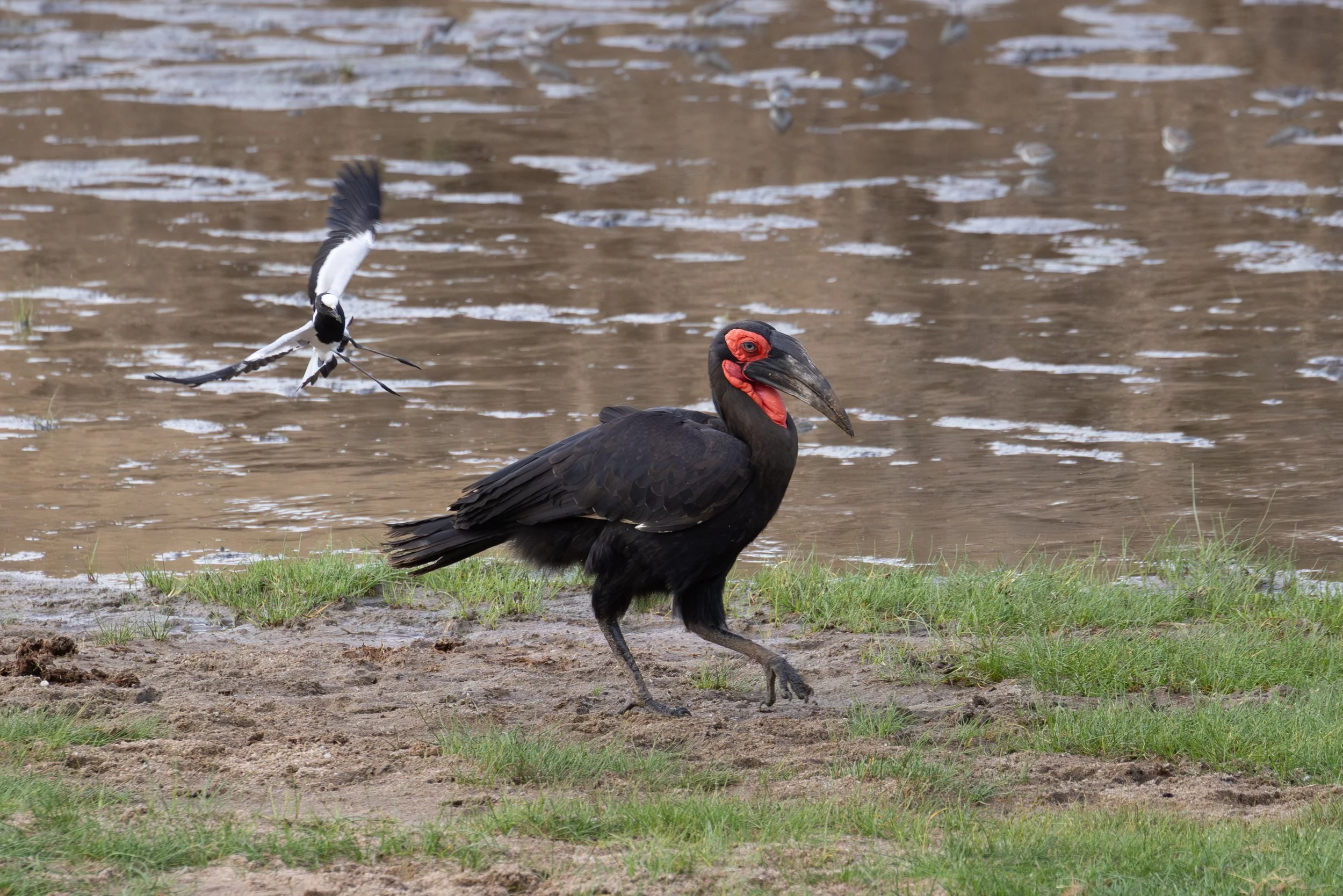
Southern Ground Hornbill
Silvery Cheeked
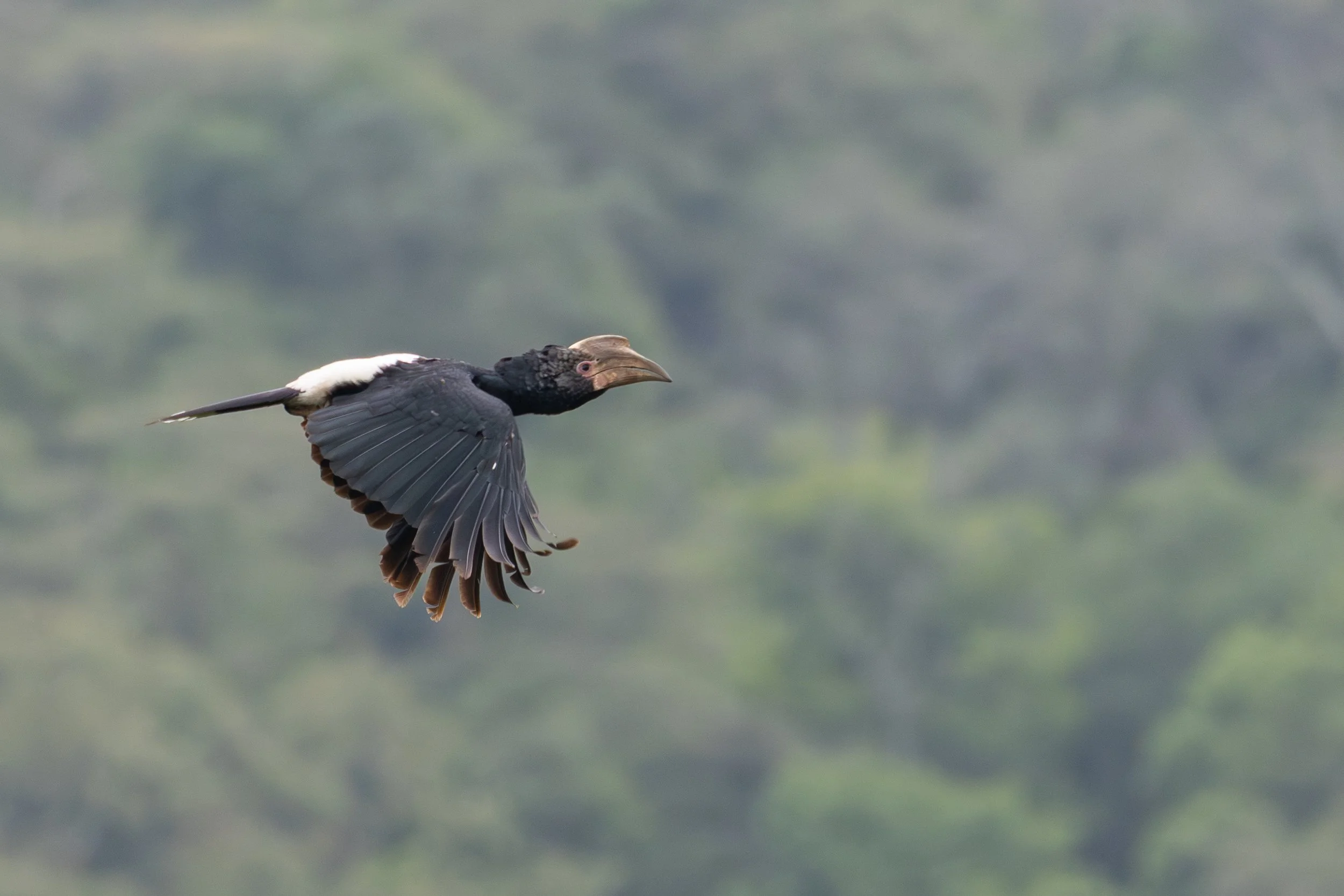
Silvery Cheeked Hornbill
red-billed
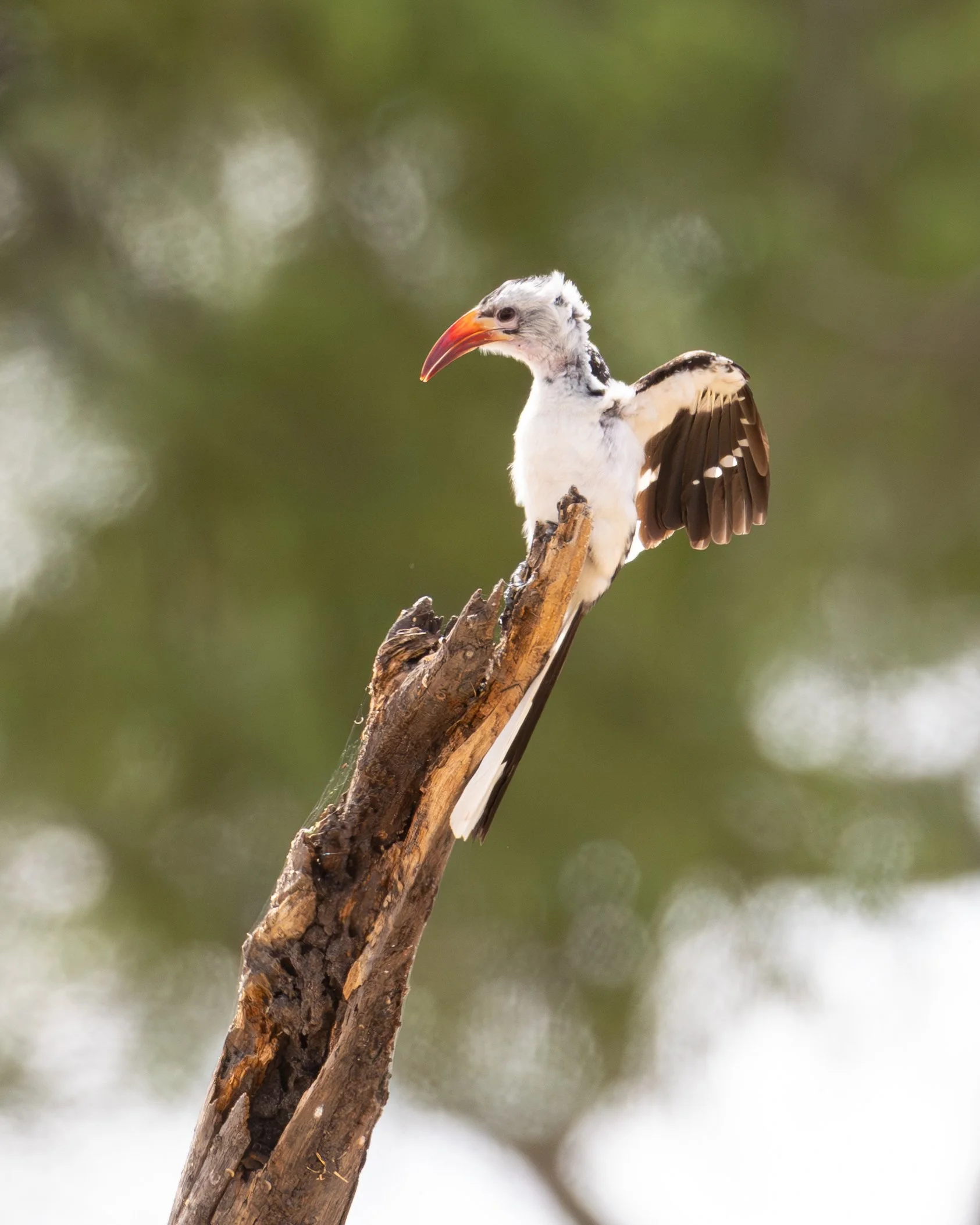
Tanzanian or Northern Red-billed Hornbill
Weavers
We saw weaver nests everywhere and I have a feeling we could have gotten easily a dozen different types if we had the time to wait to see birds coming to these nests but that could be an entire trip in itself. As it was I got a couple of pictures of two very pretty weavers.
Speke's
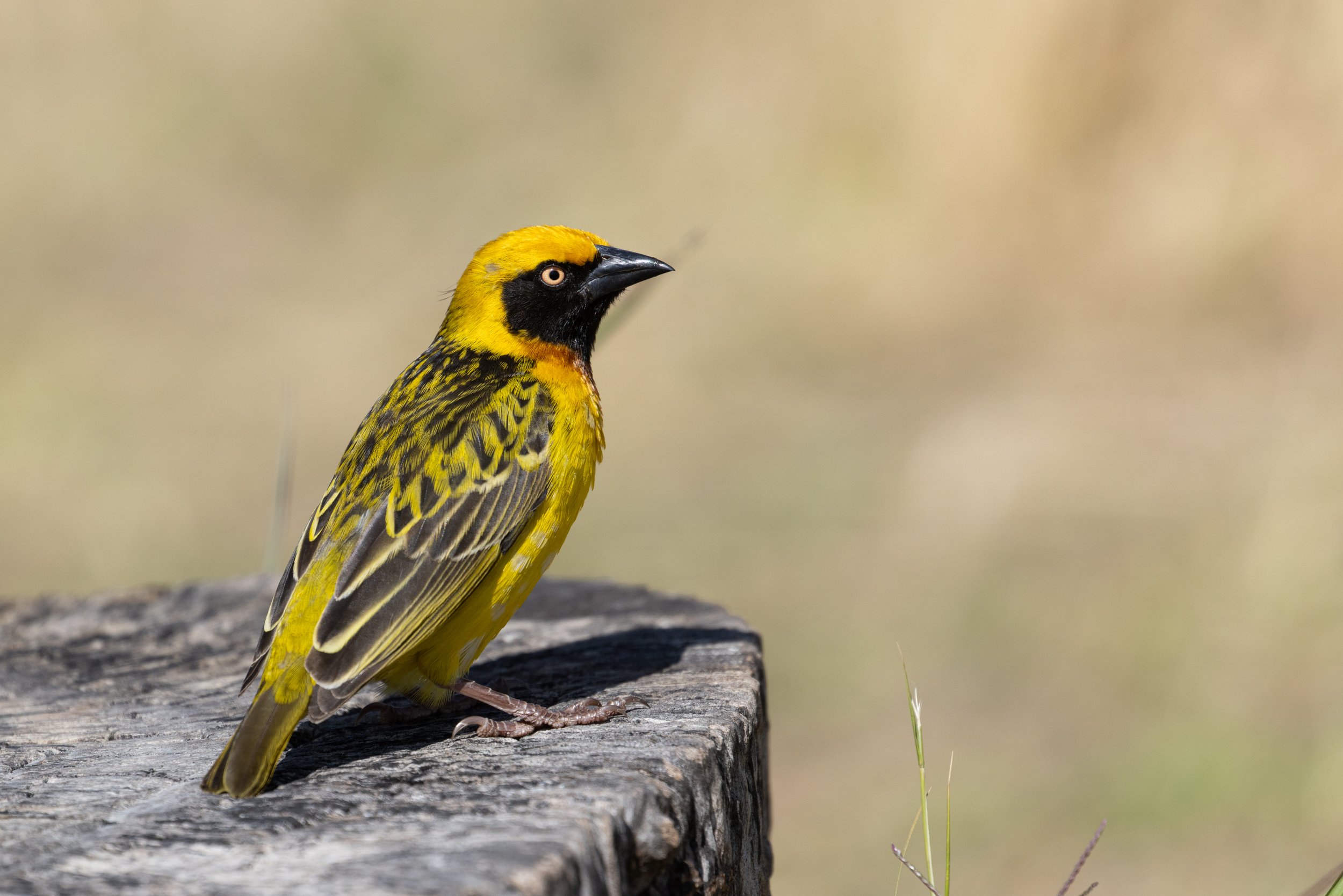
Speke’s Weaver
Blaglafecht
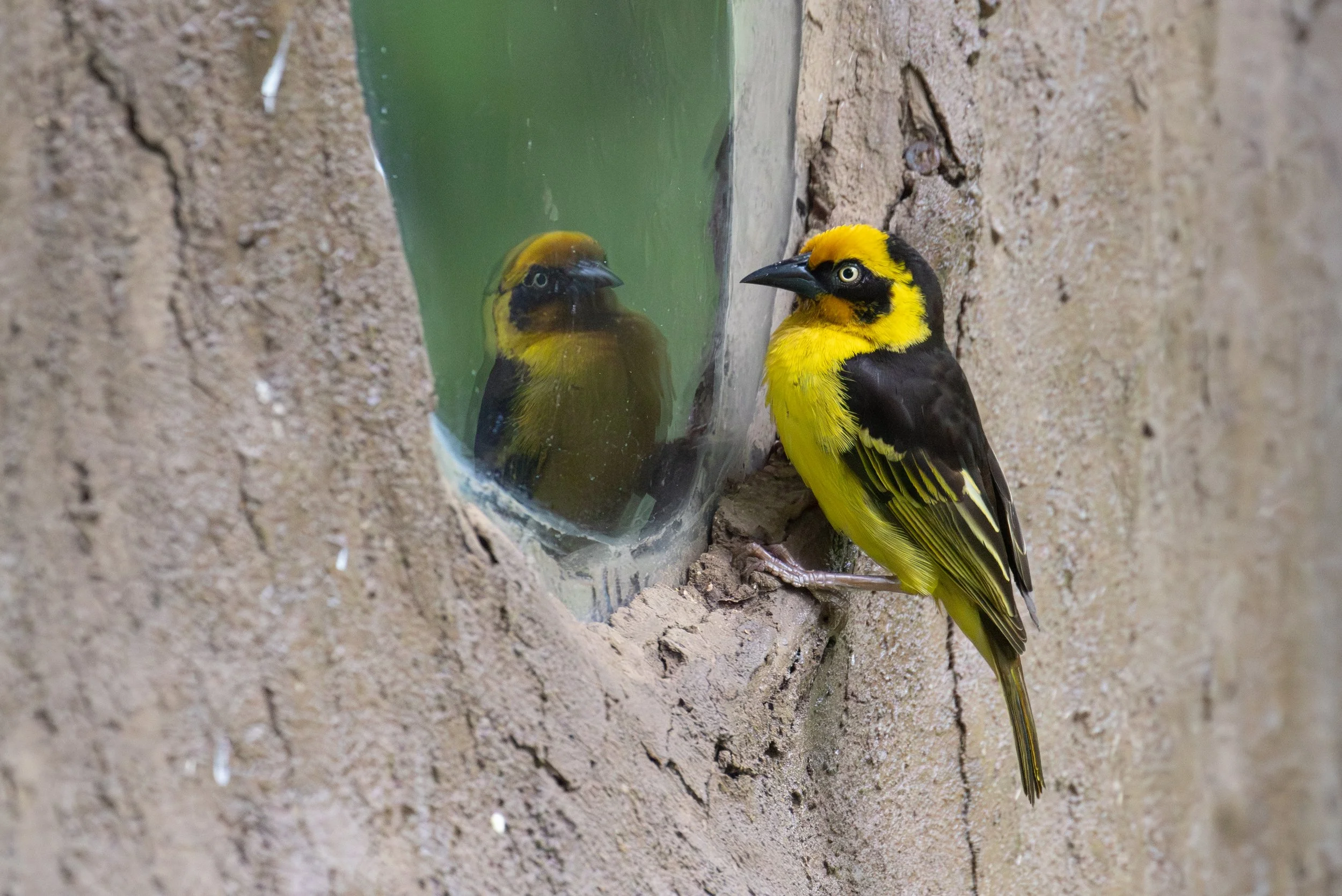
Baglafecht Weaver looking at its reflection
Eagles
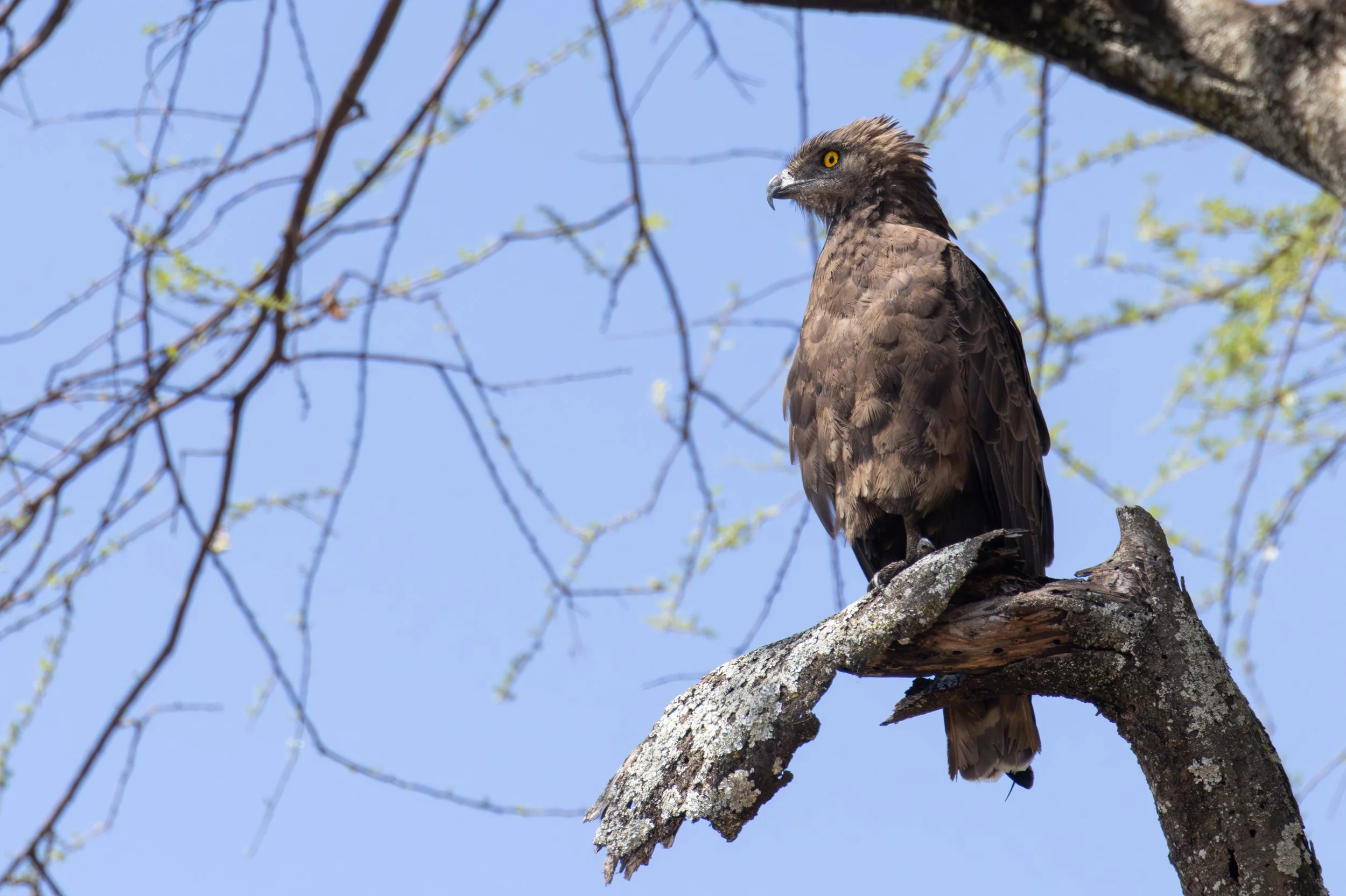
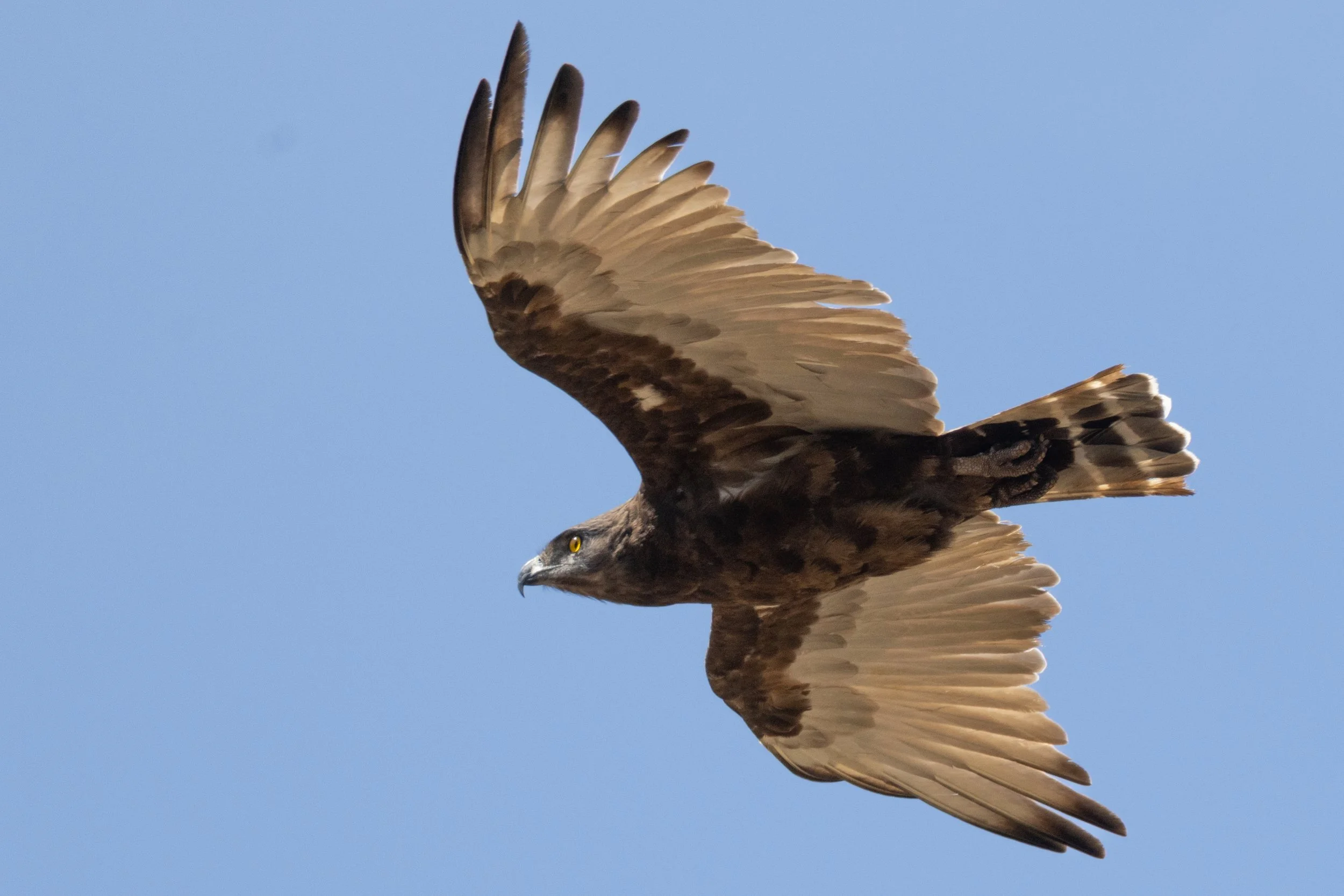
I live in an area where there are often hundreds of Bald eagles available to get shots of and rarely I might find a golden eagle if I'm very lucky. In Tanzania we were able to see a good number of different types of eagles just driving the roads of the parks. I know I missed a couple while we were taking shots of other animals. I was able to get pictures of 4 different types flying around us and sitting in trees as we drove by.
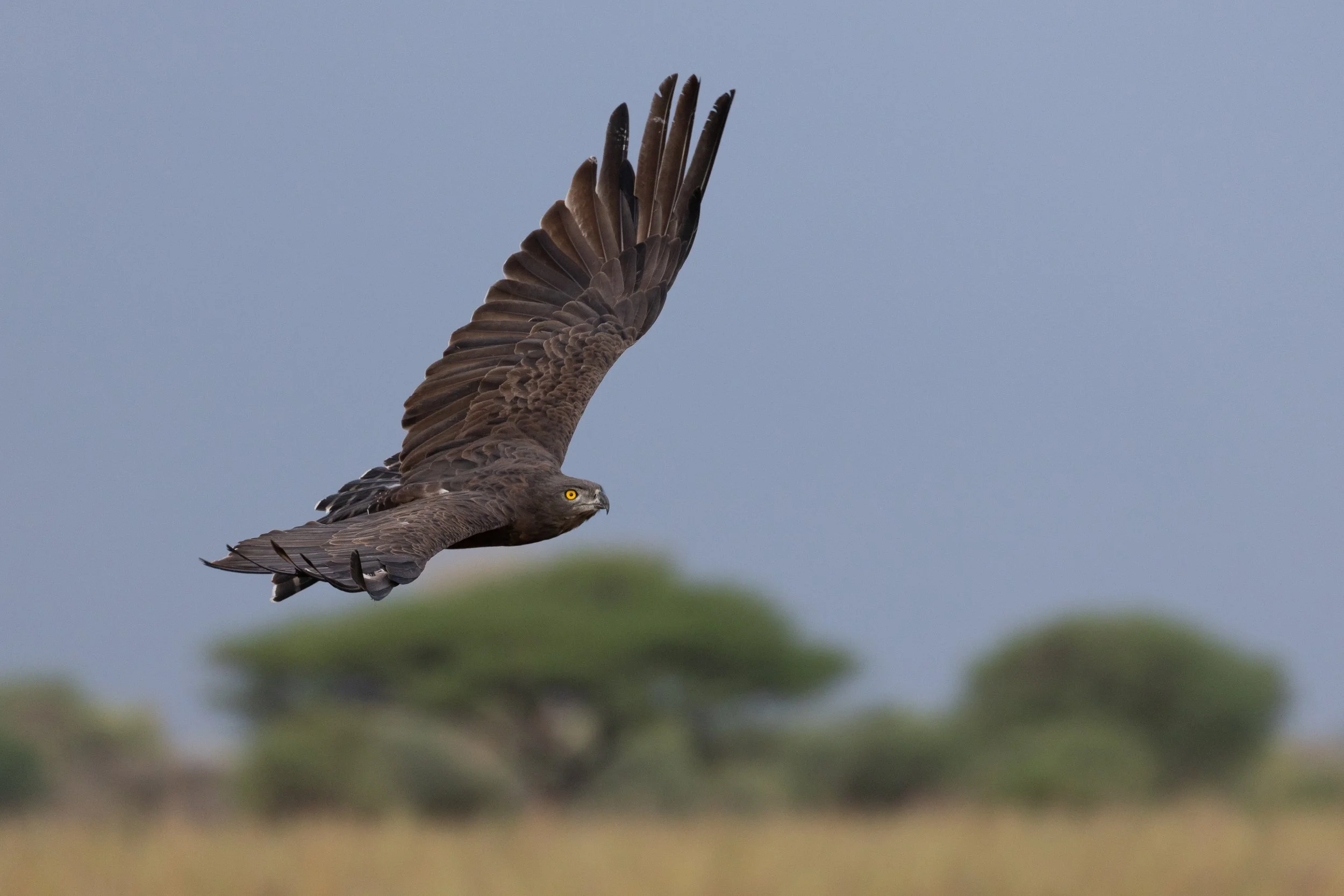
Brown snake eagle
One of the more common ones, would love to have seen one with a snake.
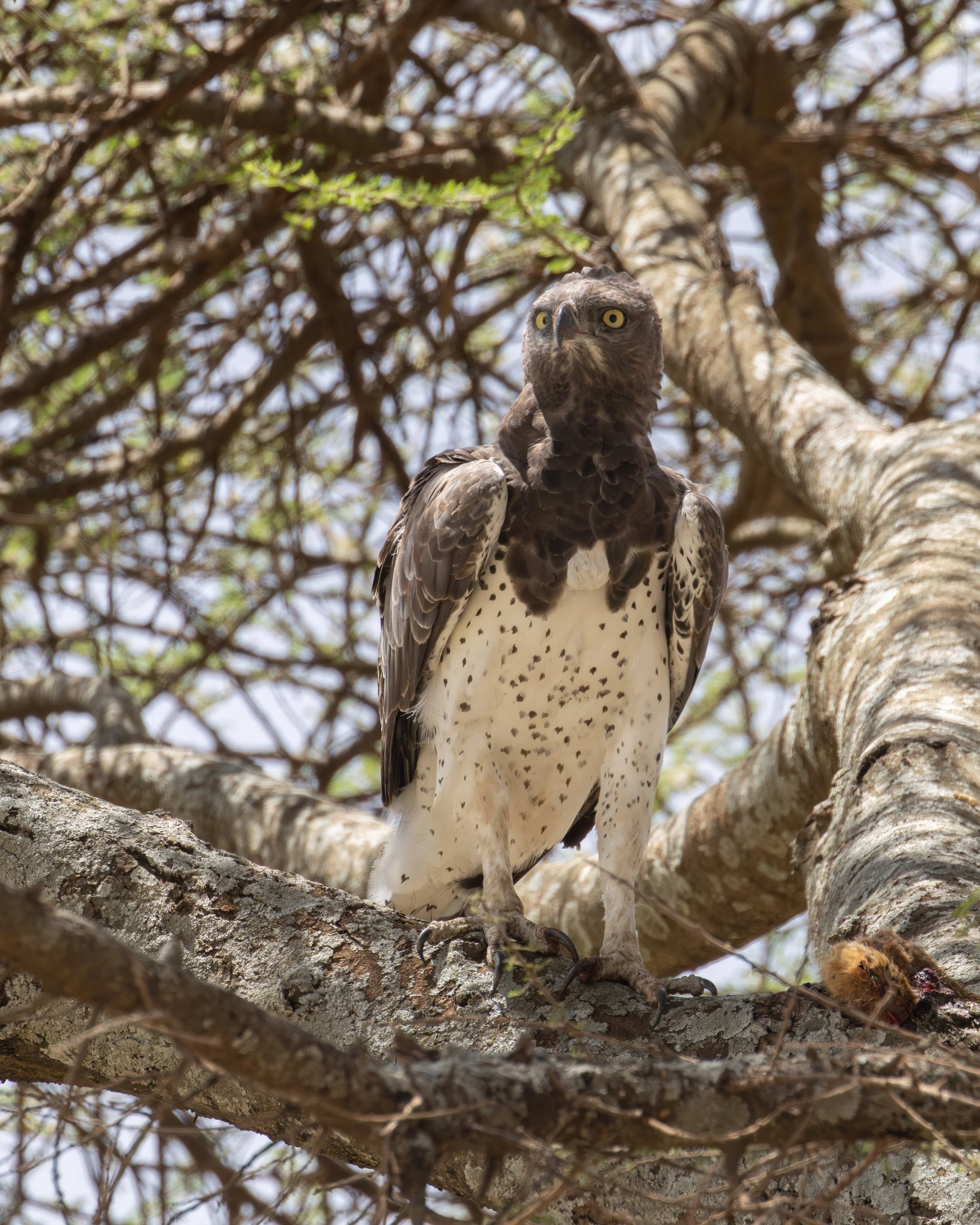
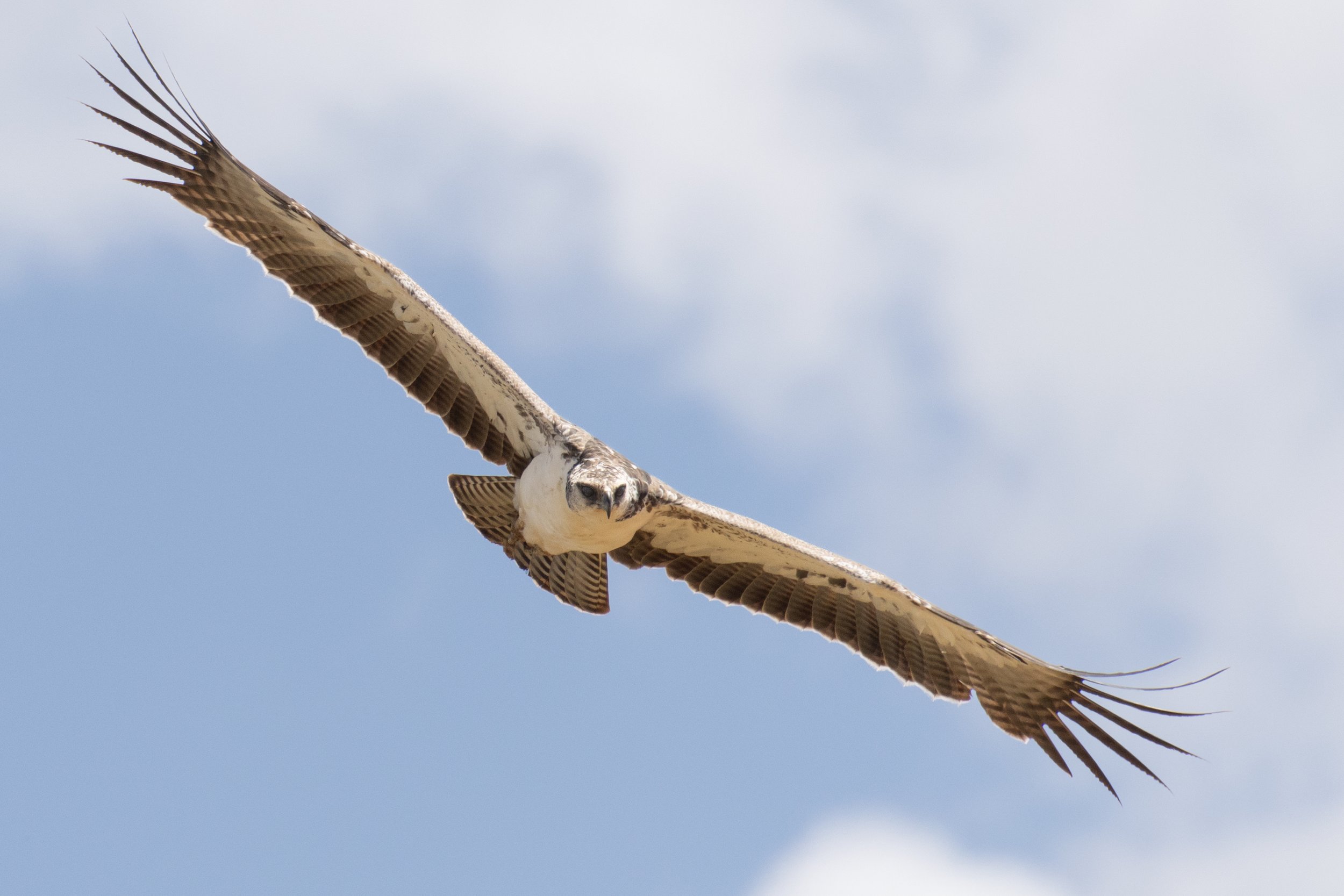
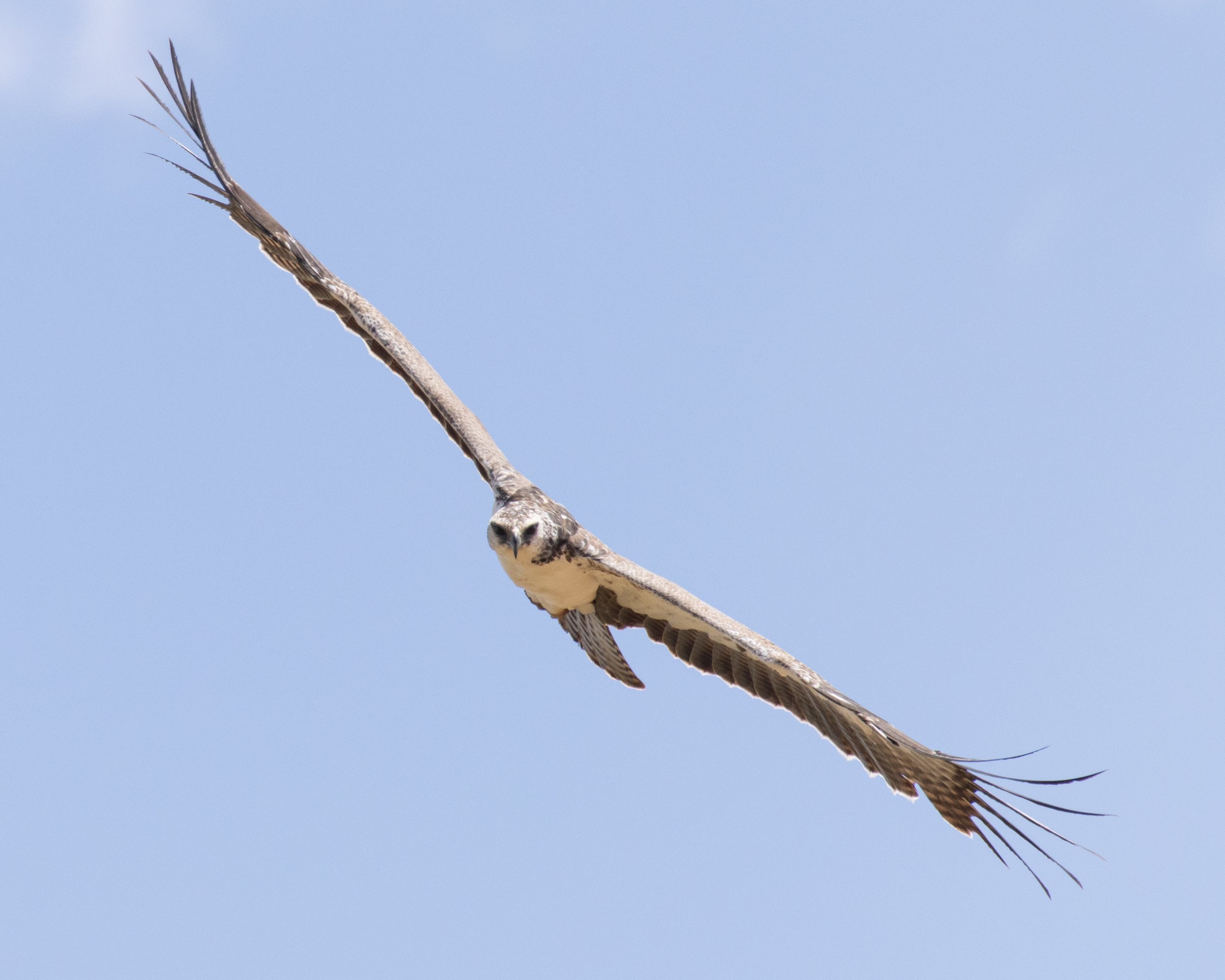
Martial eagle
One of the largest with a distinct white front and dark head. Sadly this was the only time I was able to capture one of these majestic birds.
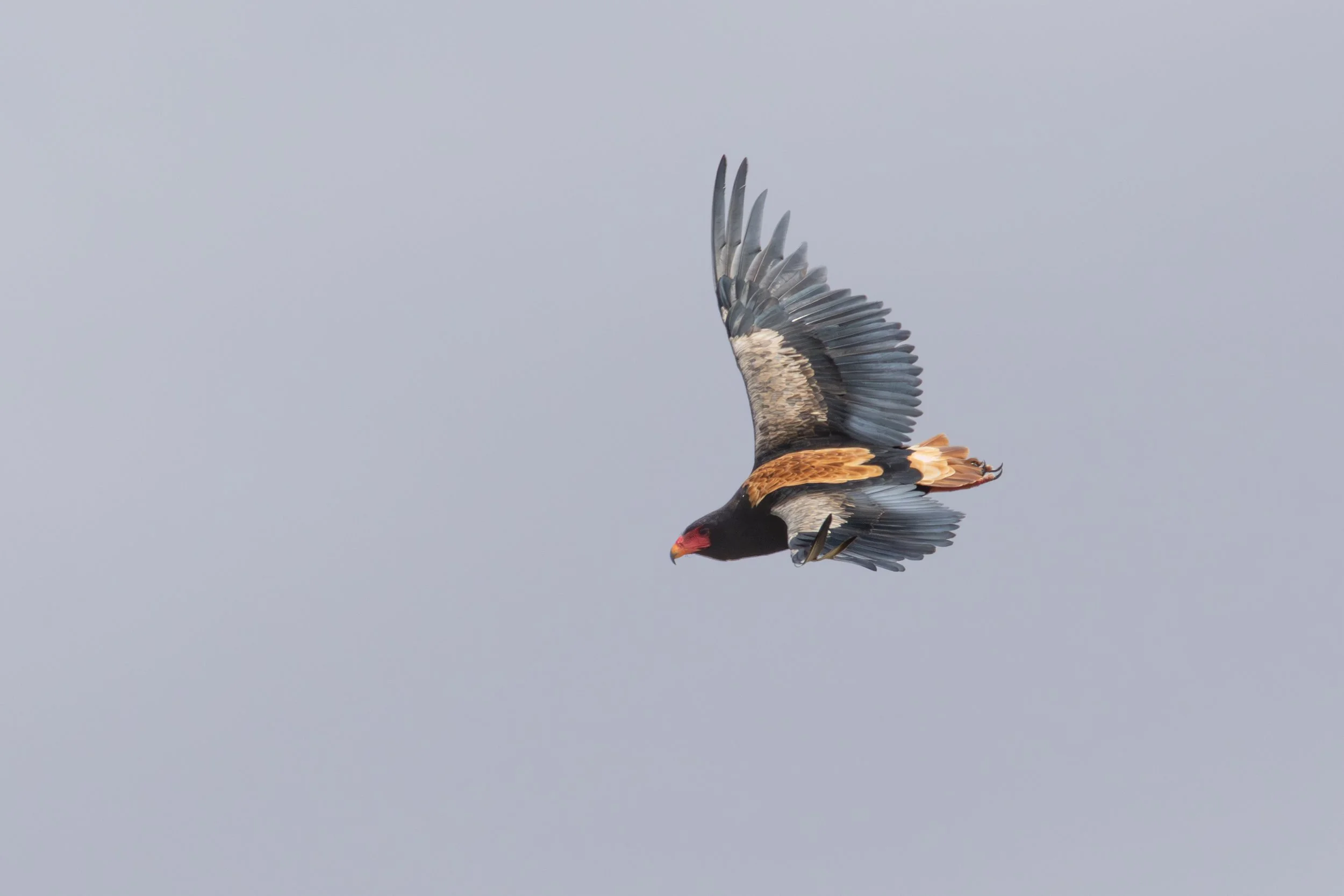
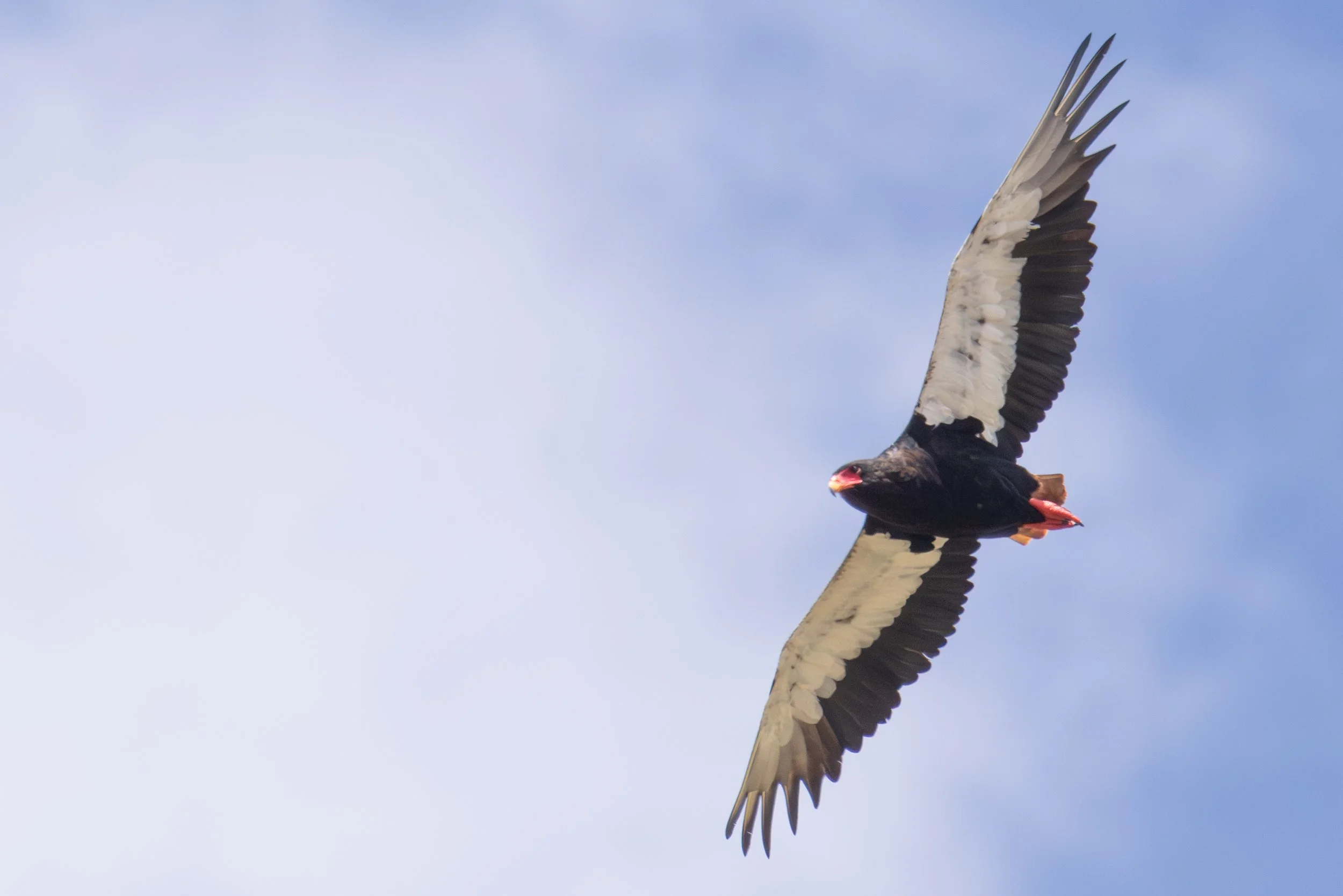
Bateleur Eagle
The Bateleur Eagle is mostly white and black but has a brownish patch across the back and onto the tail feathers.
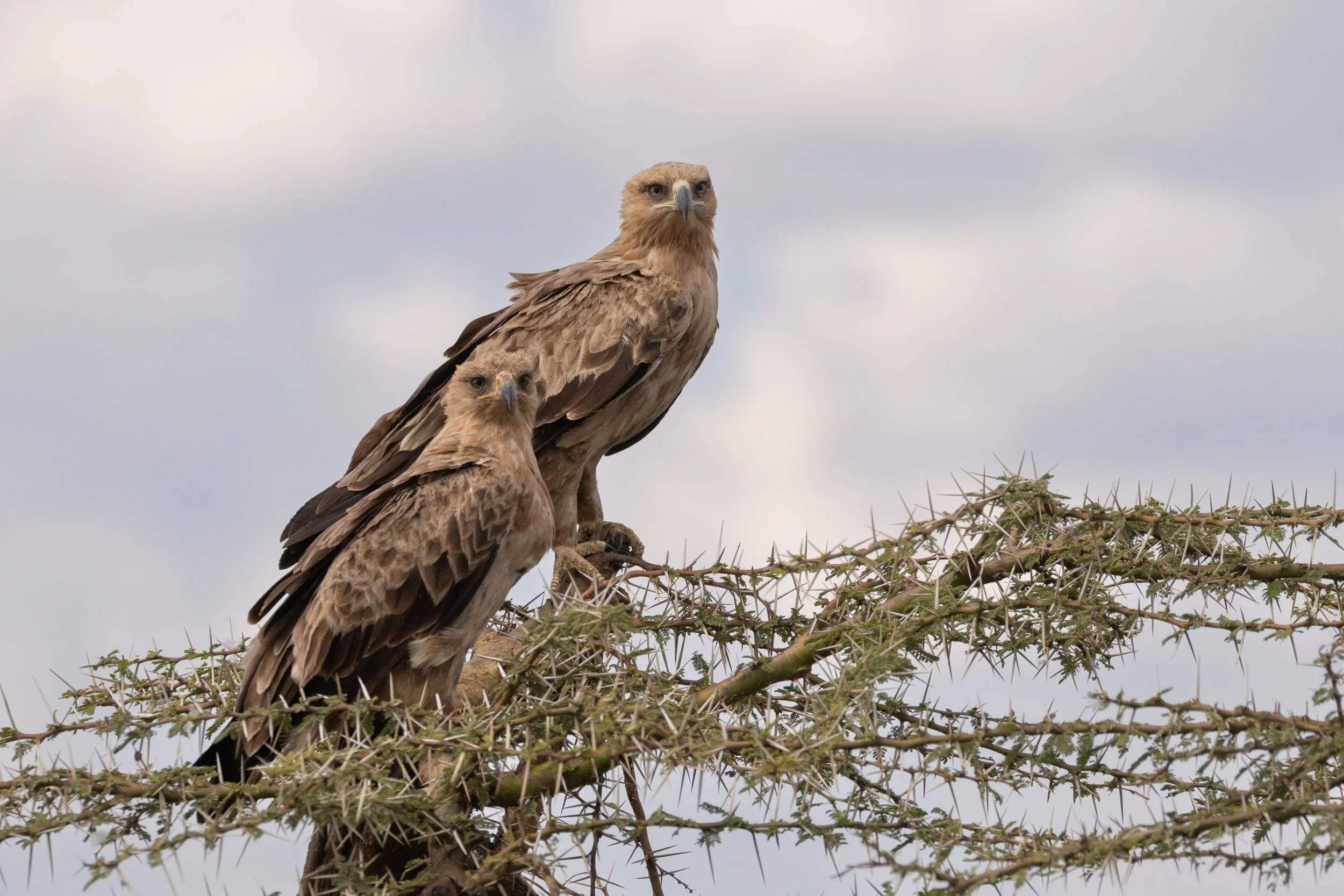
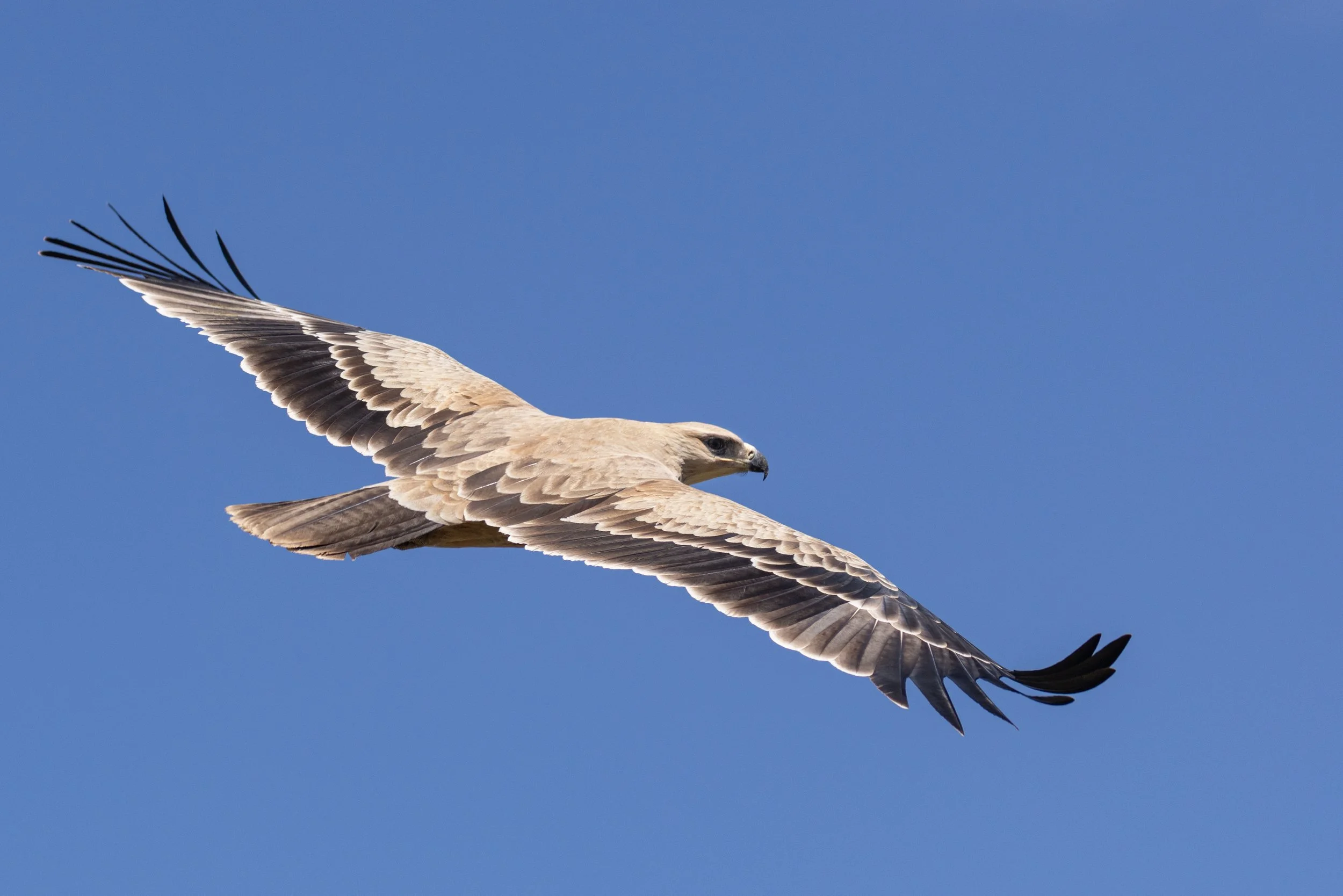
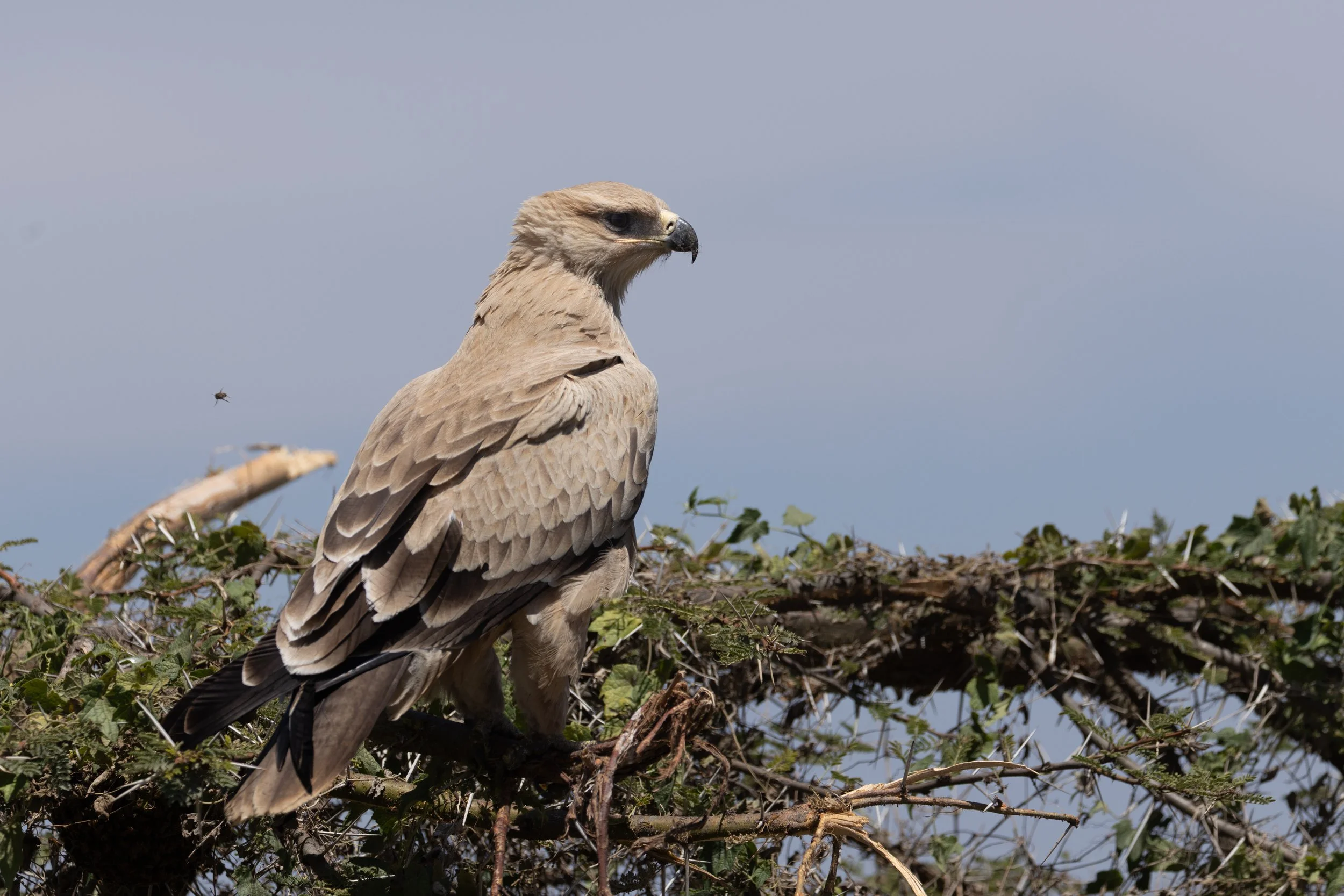
Tawny Eagles
Tawny eagles where often seen hanging out at the tops of the acacia trees.
Other birds of prey
Verreaux’s Eagle-Owl
Verreaux's eagle-owl with pink eyelids. An amazing bonus while we were watching a leopard in the tree below.
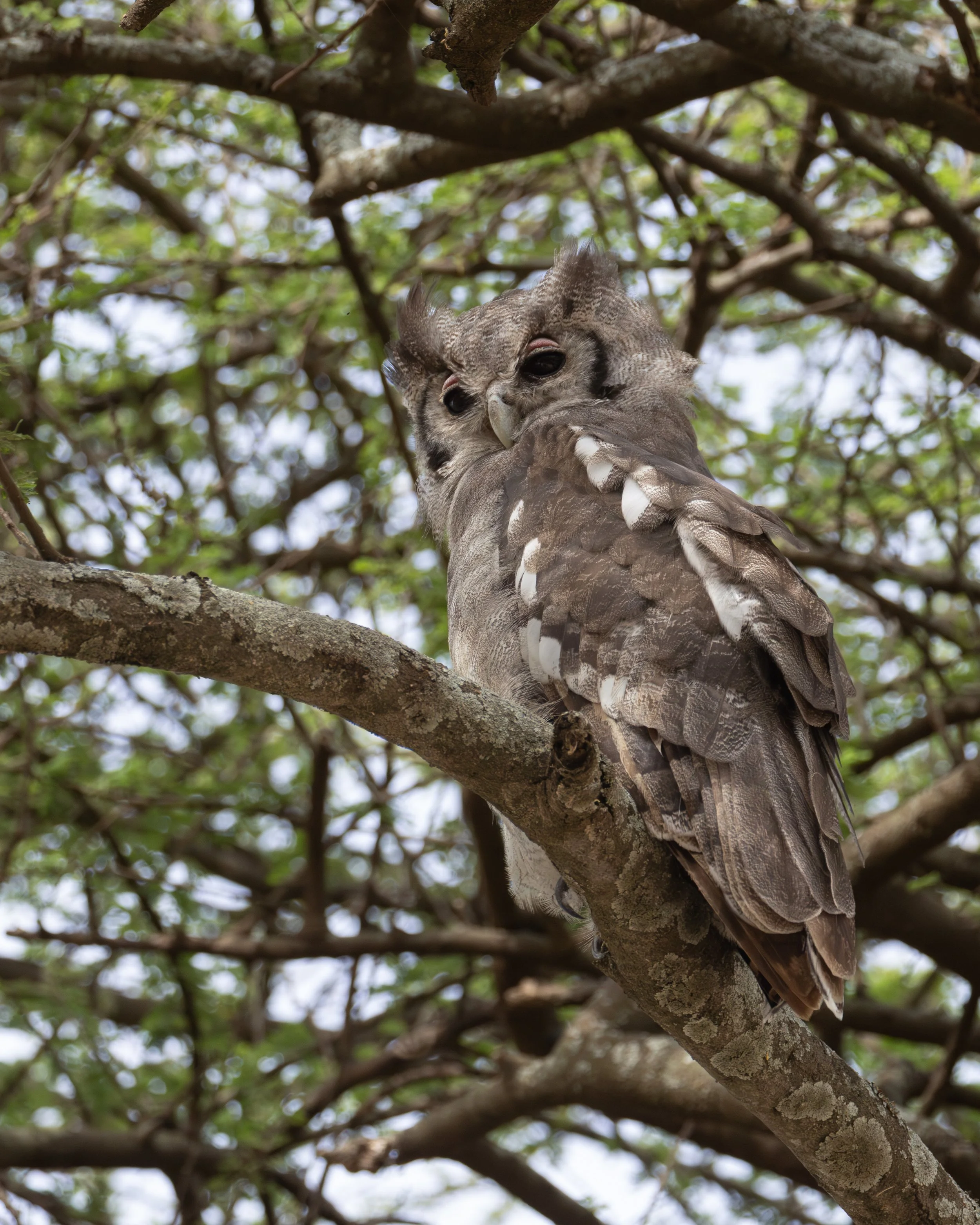
Verreaux’s Eagle-owl
Goshawk
Goshawks were another common bird seen in branches of trees, interesting looking birds that look like they are wearing striped knickers and a grey top.
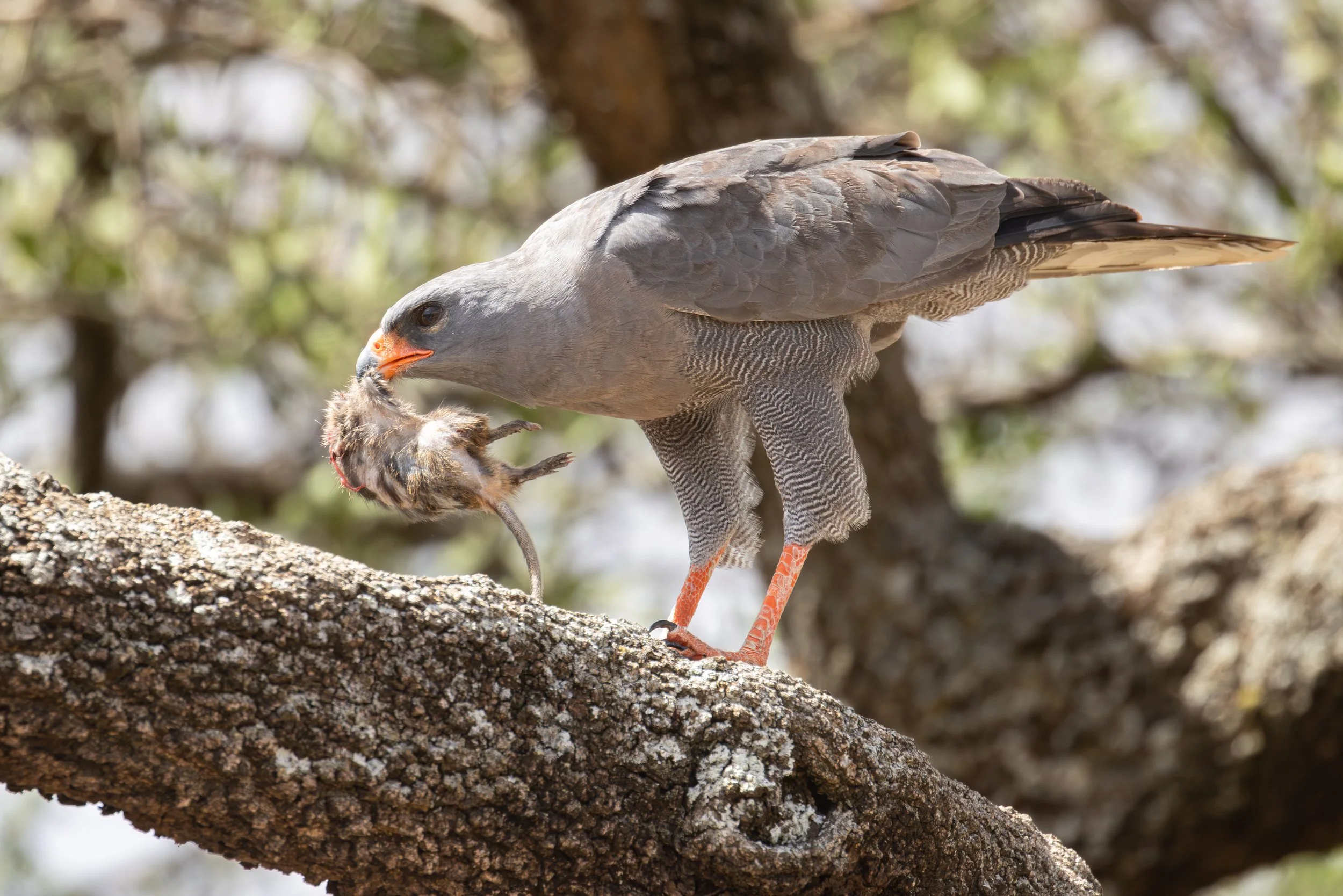
Goshawk with a little rodent for dinner
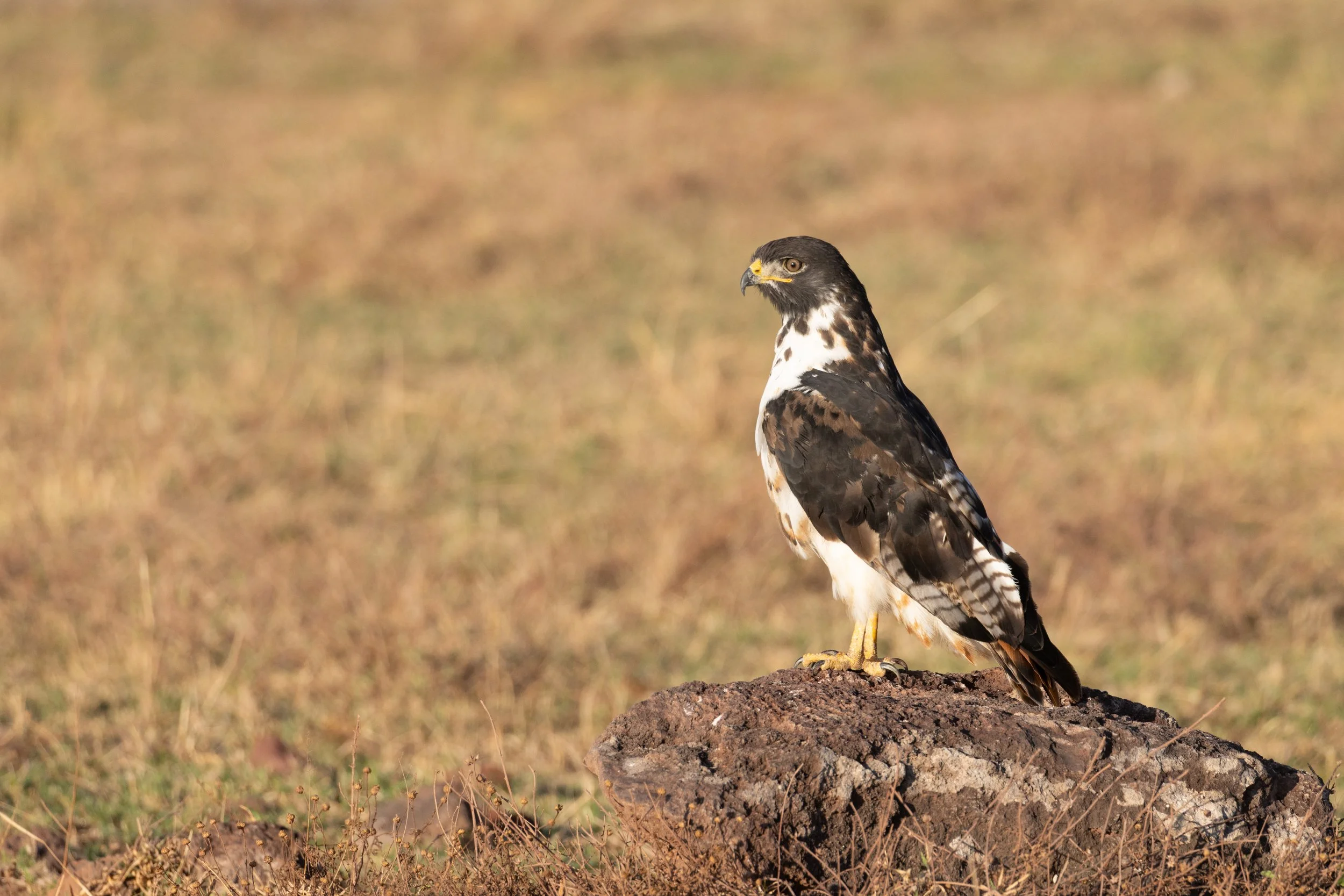
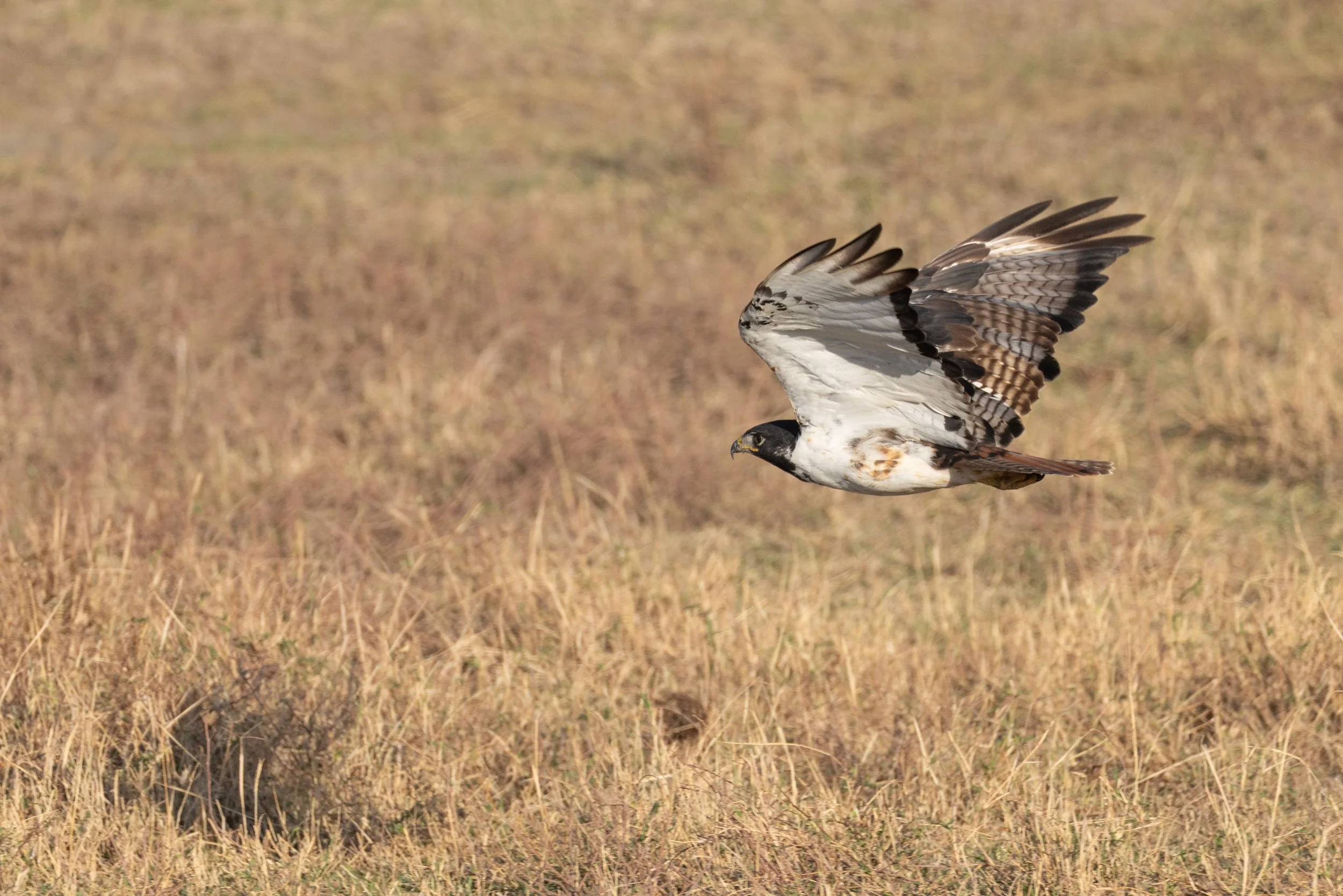
Augur Buzzard
Also got to see my first Buzzard, this one was an Augur Buzzard that seems to be hunting much like a northern harrier over the fields of grass.
Kingfishers
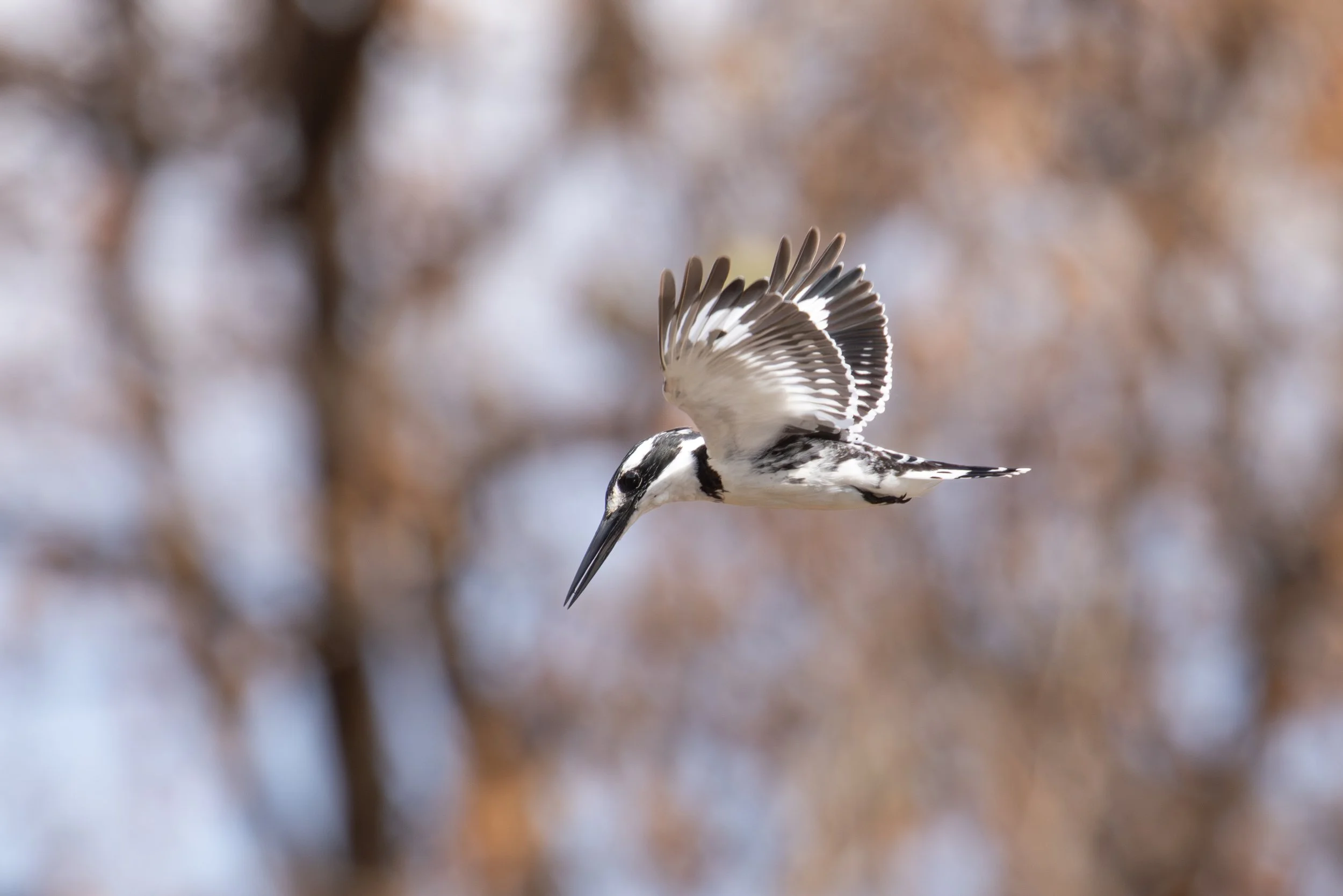
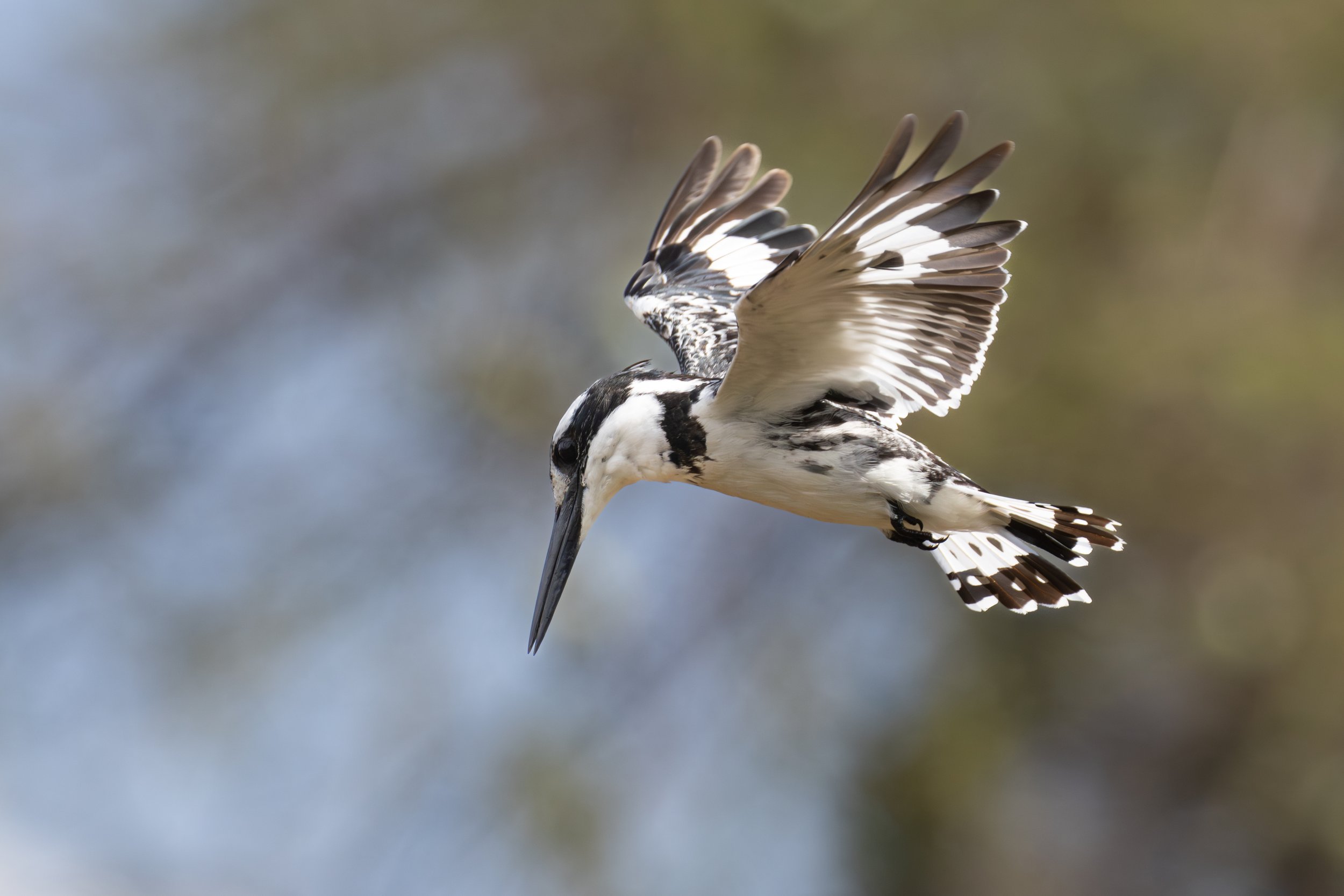
Belted kingfishers are pretty common in North America but that is the only kingfisher that we will see. Pretty much anywhere there was water and a perch nearby we saw kingfishers in Tanzania.
Pied kingfisher
African pygmy
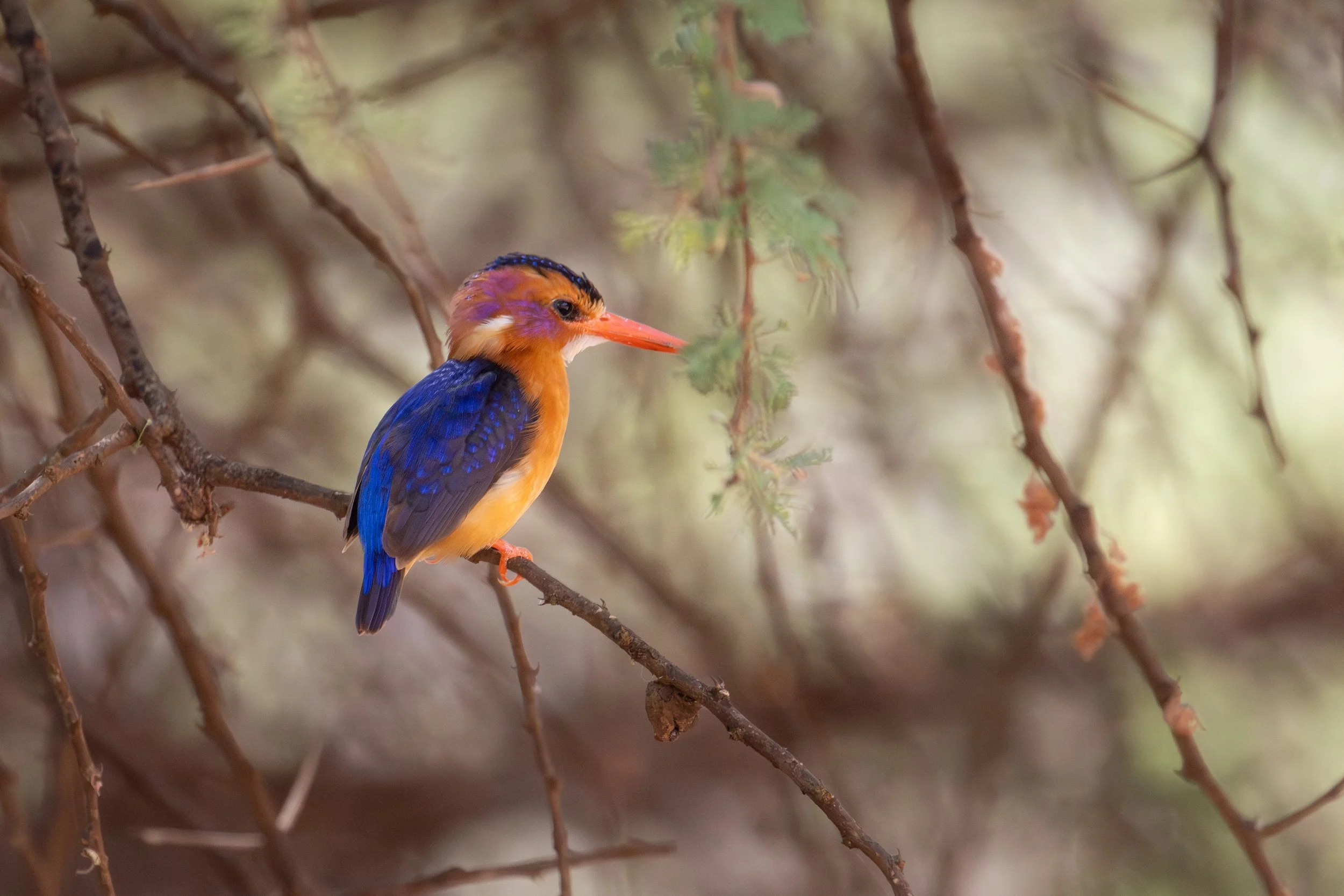
African pygmy kingfisher deep in the brush
grey headed
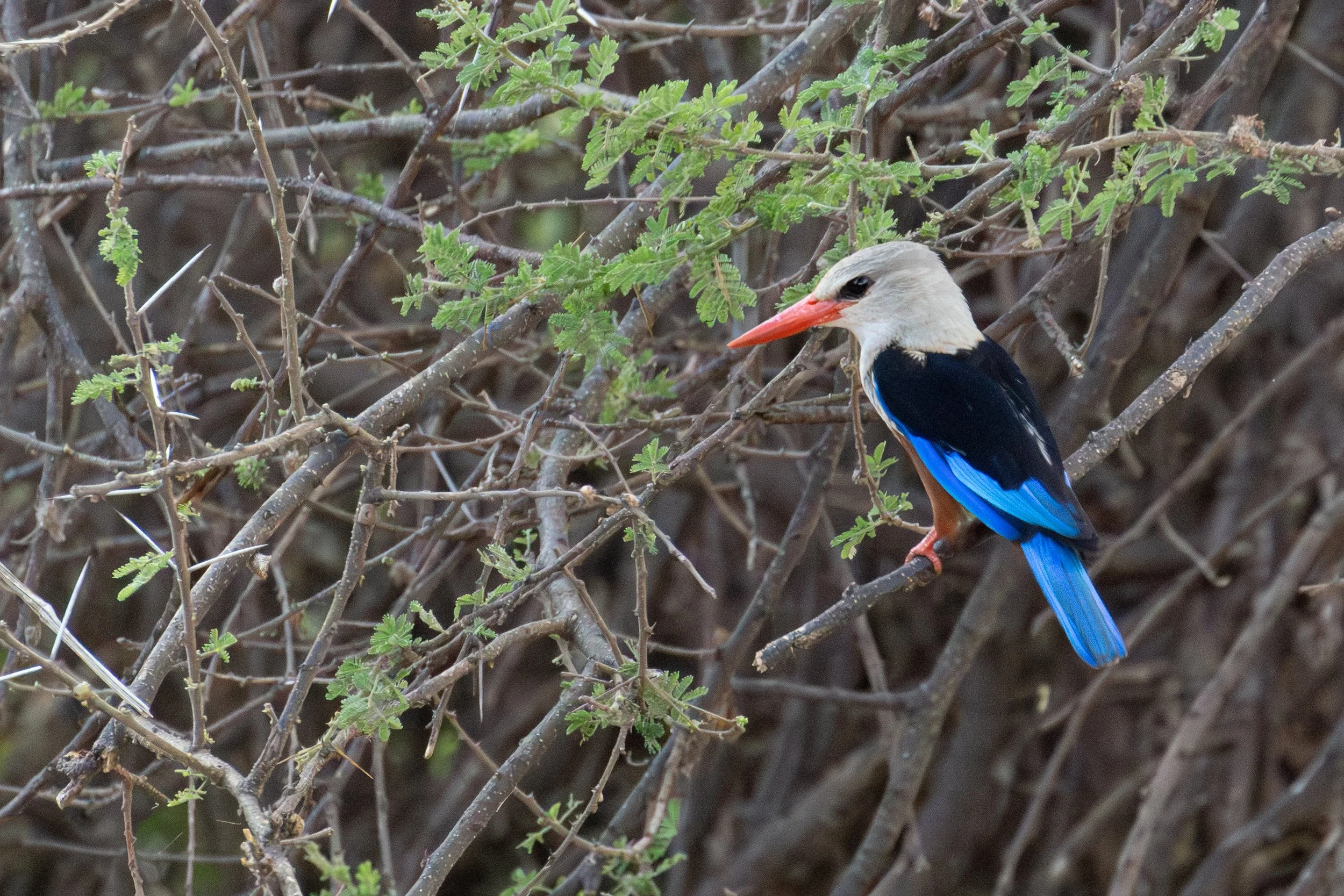
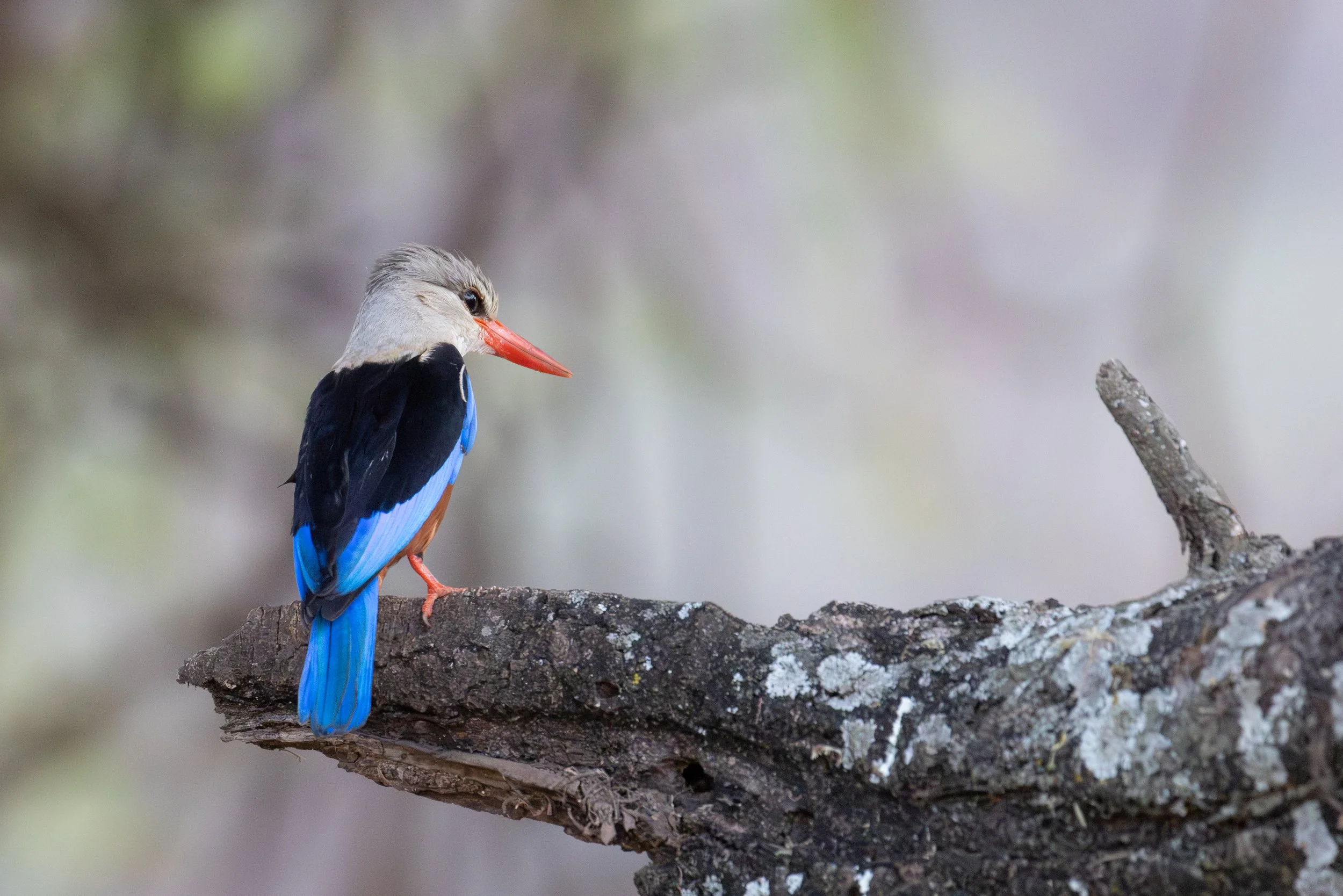
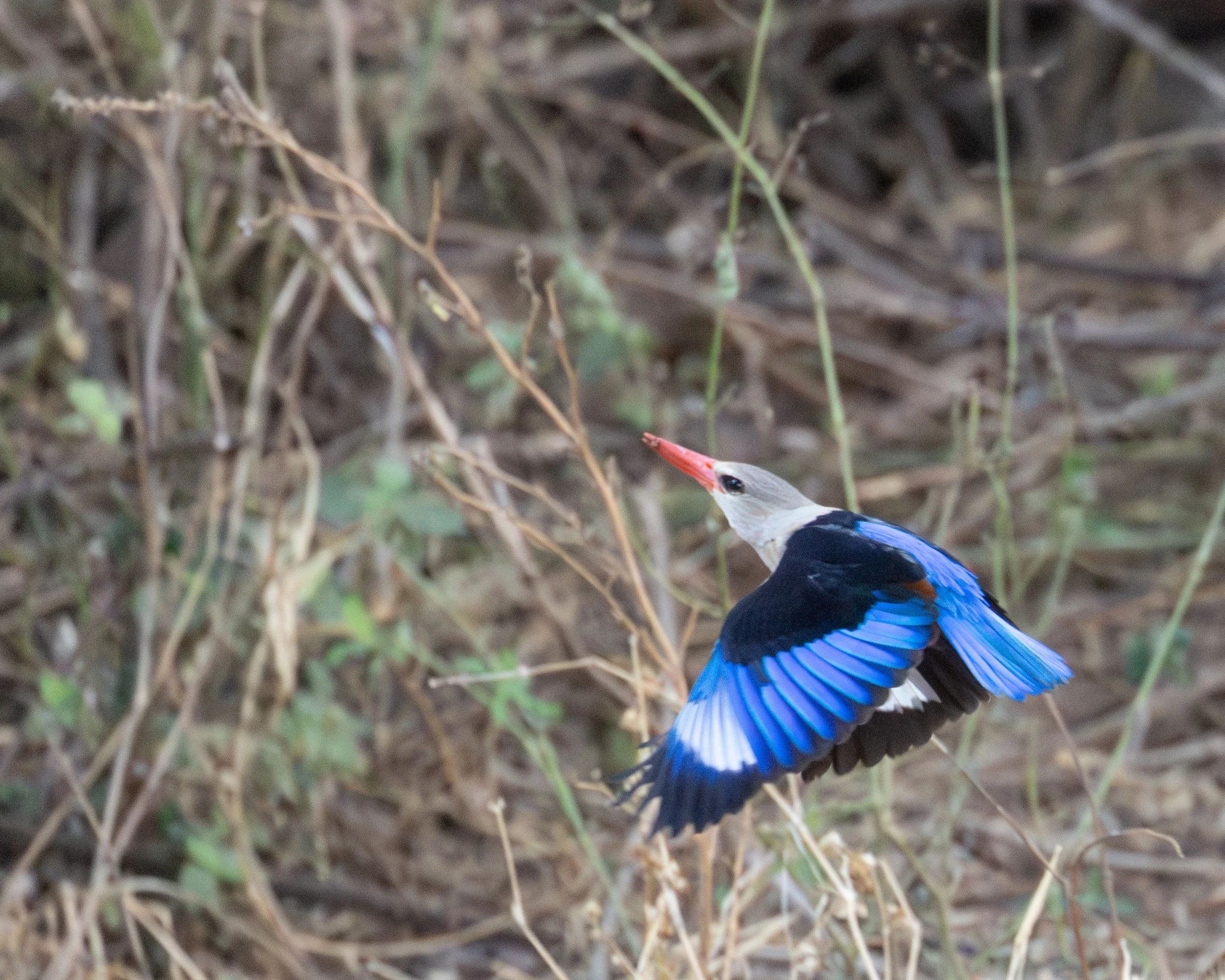
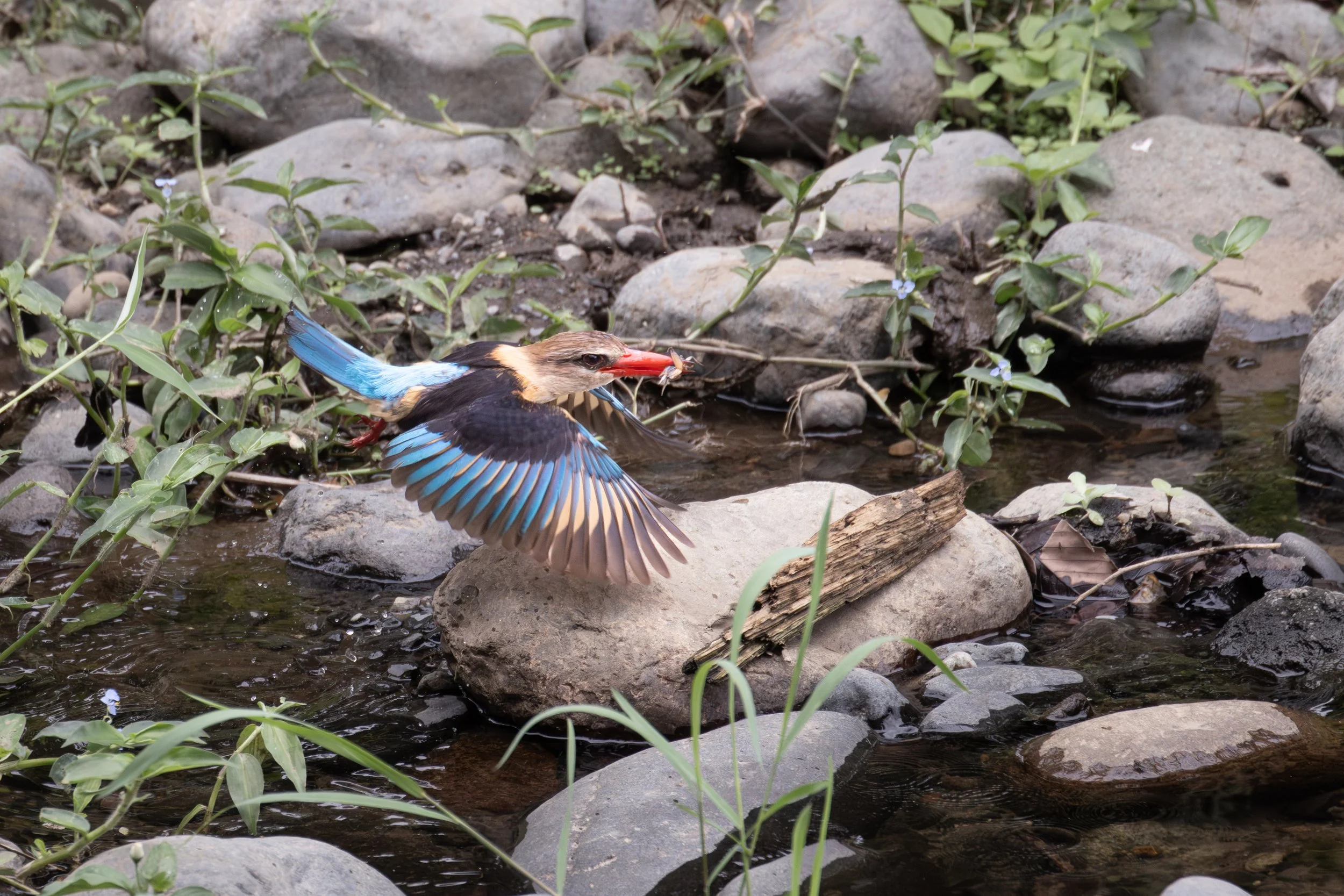
brown hooded
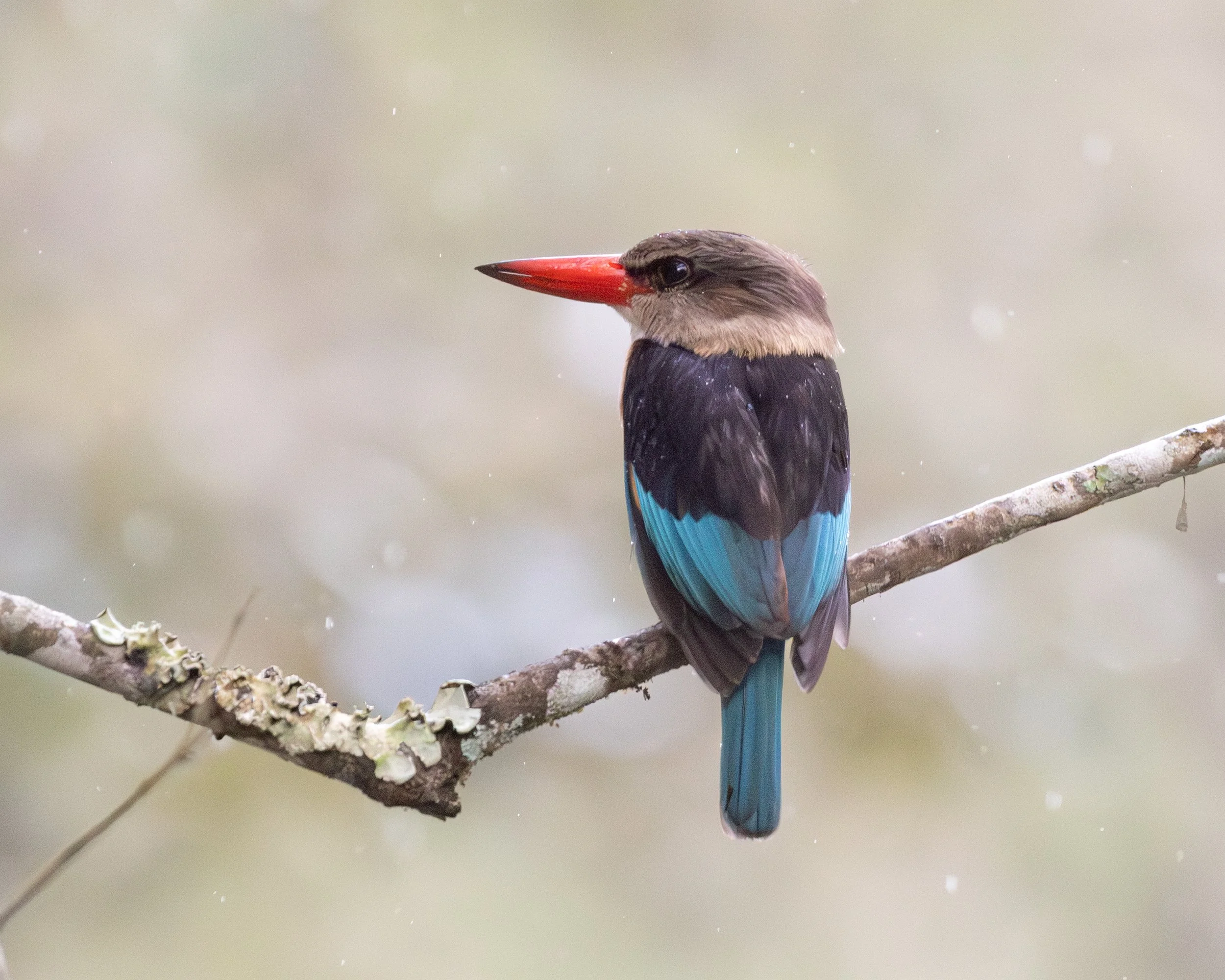
Brown-hooded kingfisher
Storks
We saw three of eight types of storks found in Africa. From one of the most beautiful (Saddle-billed) to definitely one of the ugliest (Marabou), they are large wading birds mostly feeding on small fish, frogs and other aquatic life although the Marabou stork will also follow vultures to a carcass.
Saddle-billed
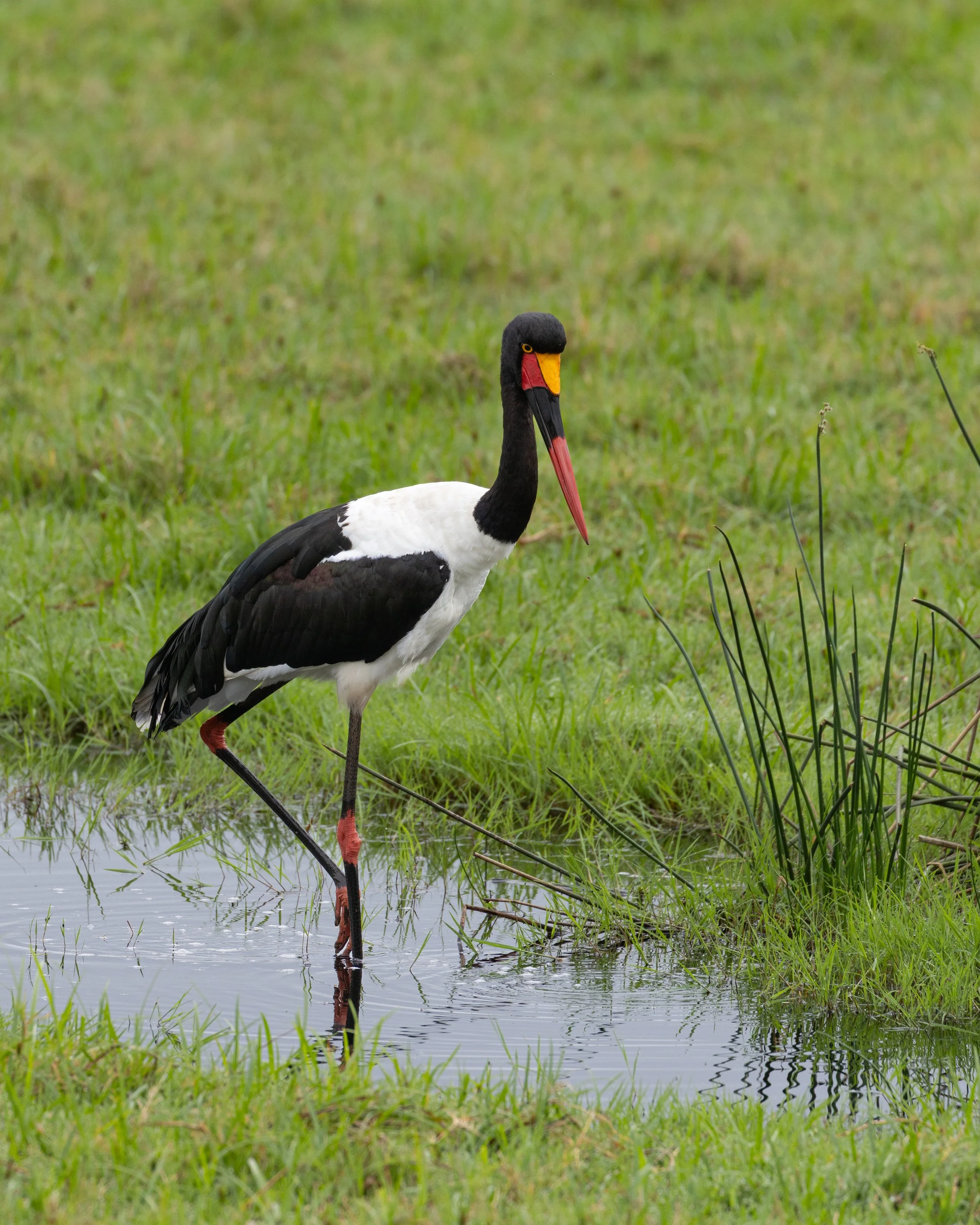
Saddle-billed Stork fishing in the wetlands
yellow-billed
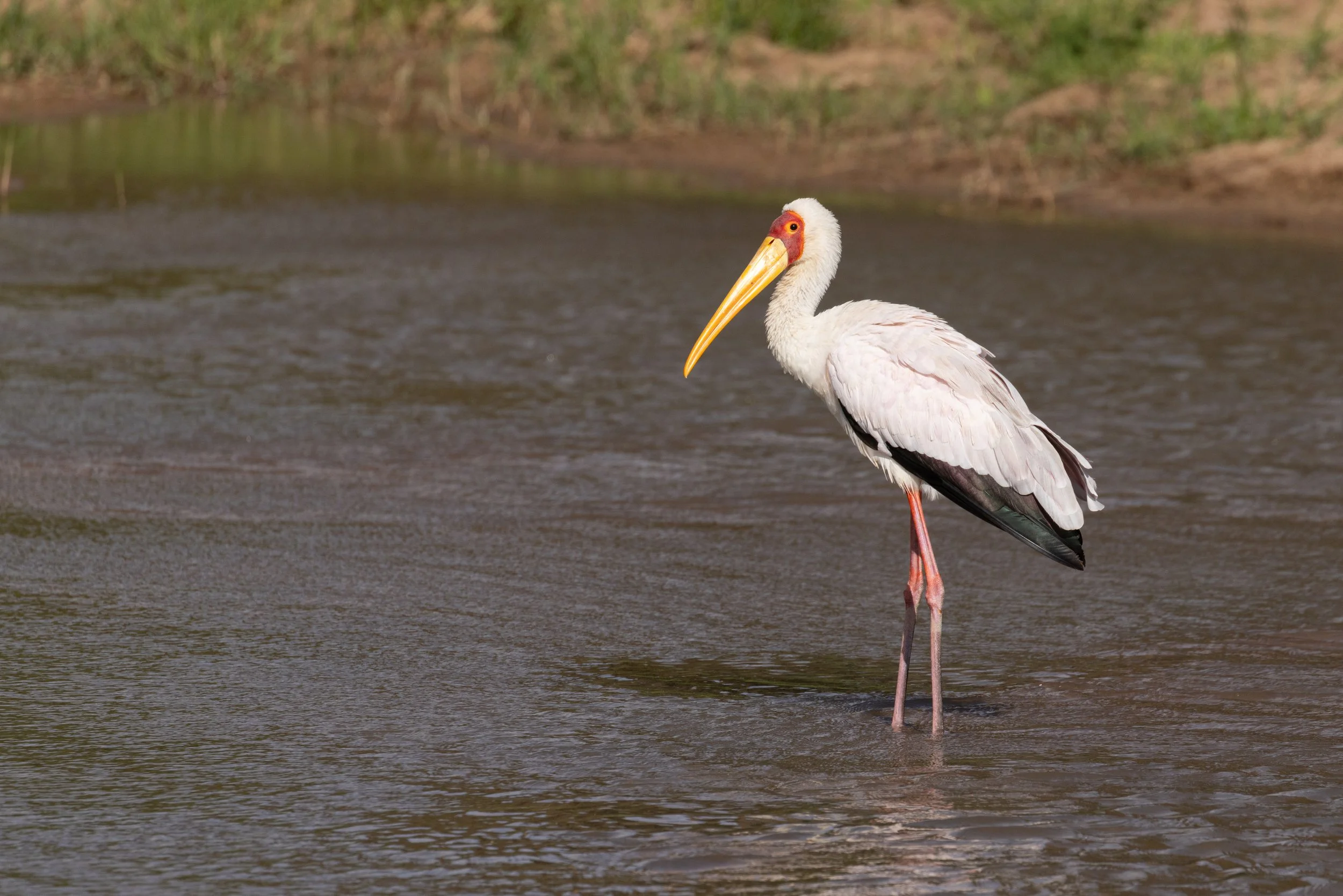
Yellow-billed Stork
Marabou
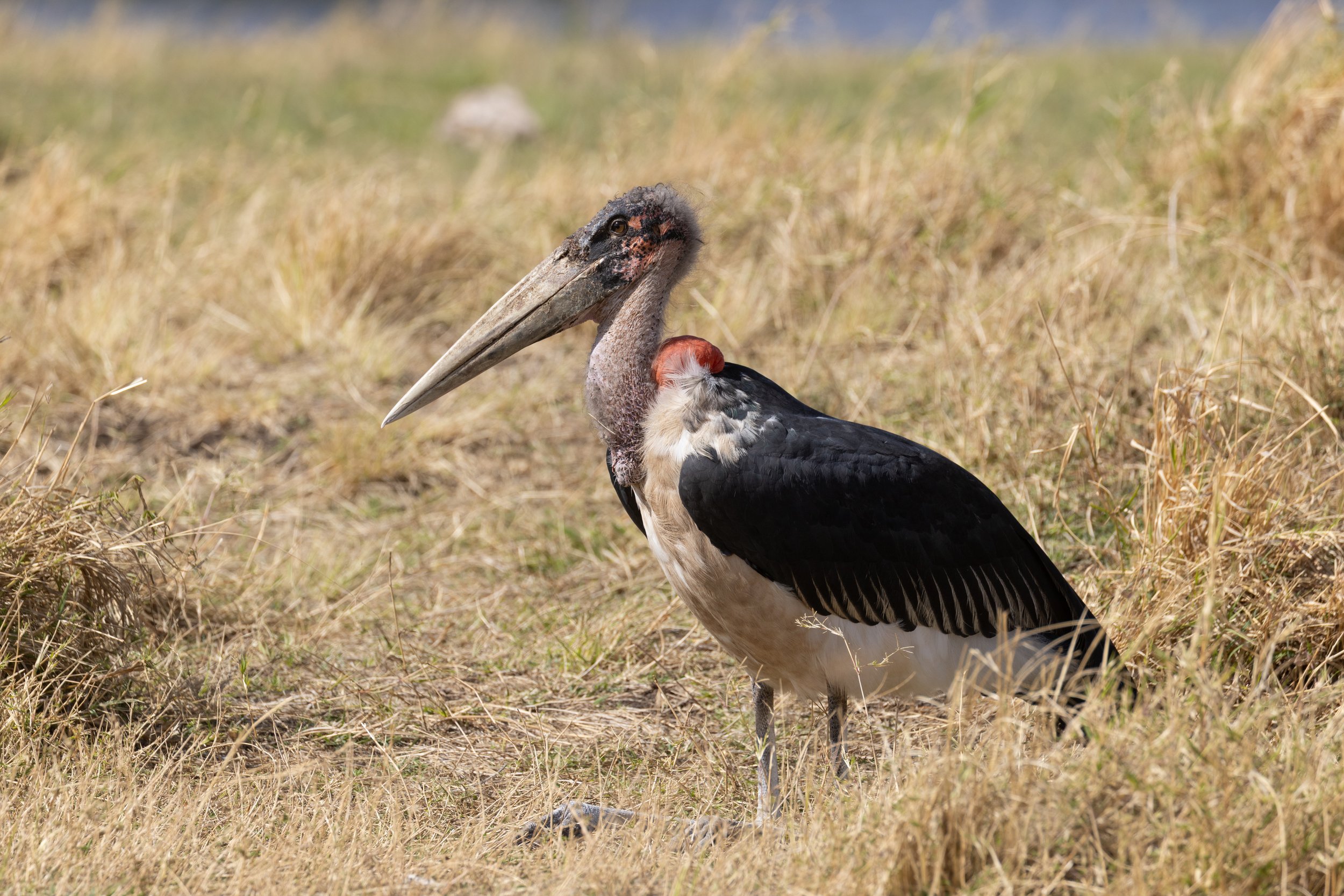
Marabou Stork
Bustards
Our first view of a bustard was the Kori bustard which our guide referred to as Slow walker. They did tend to live up to this name which made it fairly easy to get shots. The two other types we found in the Ngorongoro crater looked different but also seemed to just slowly wander around looking for food.
White bellied
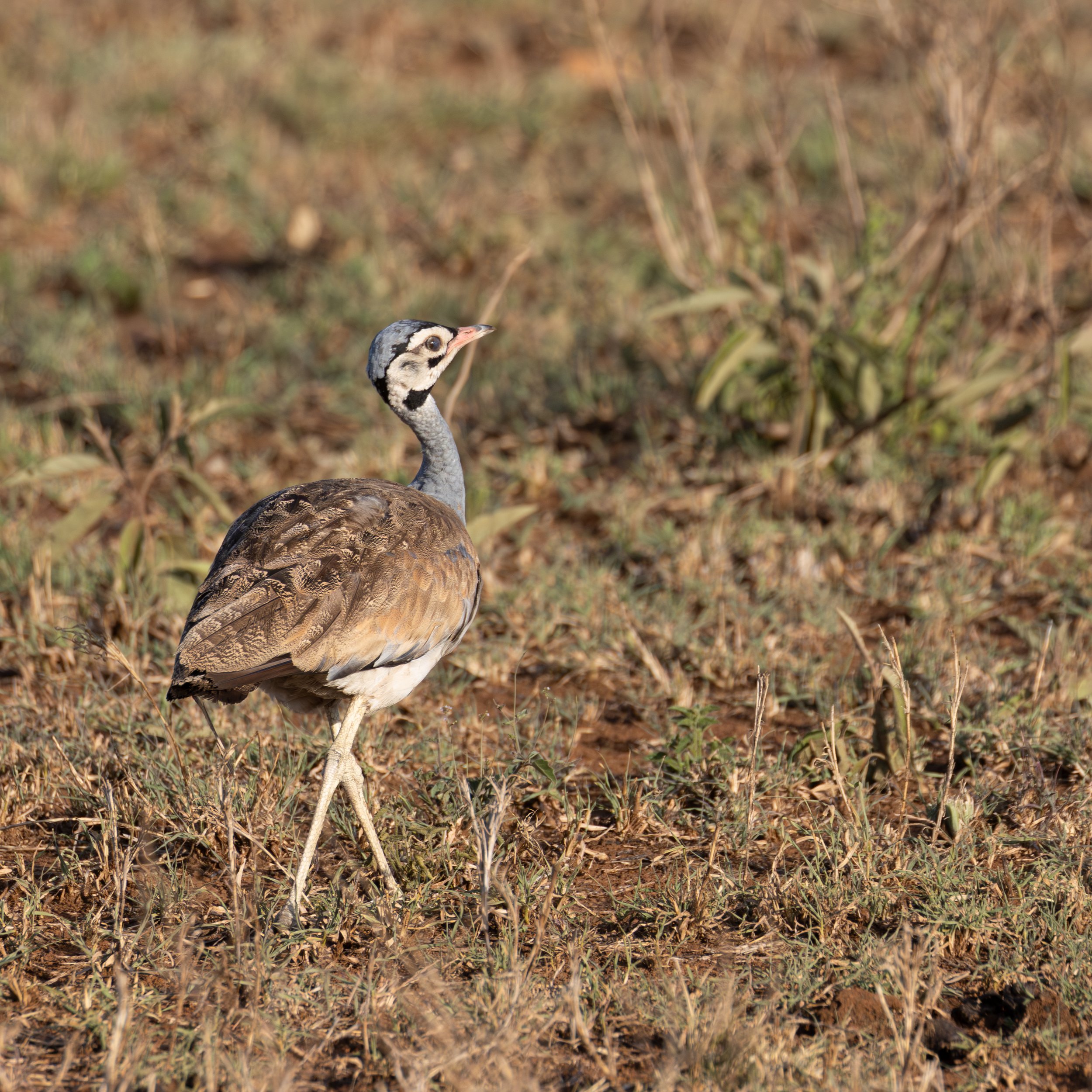
White-bellied bustard
black bellied
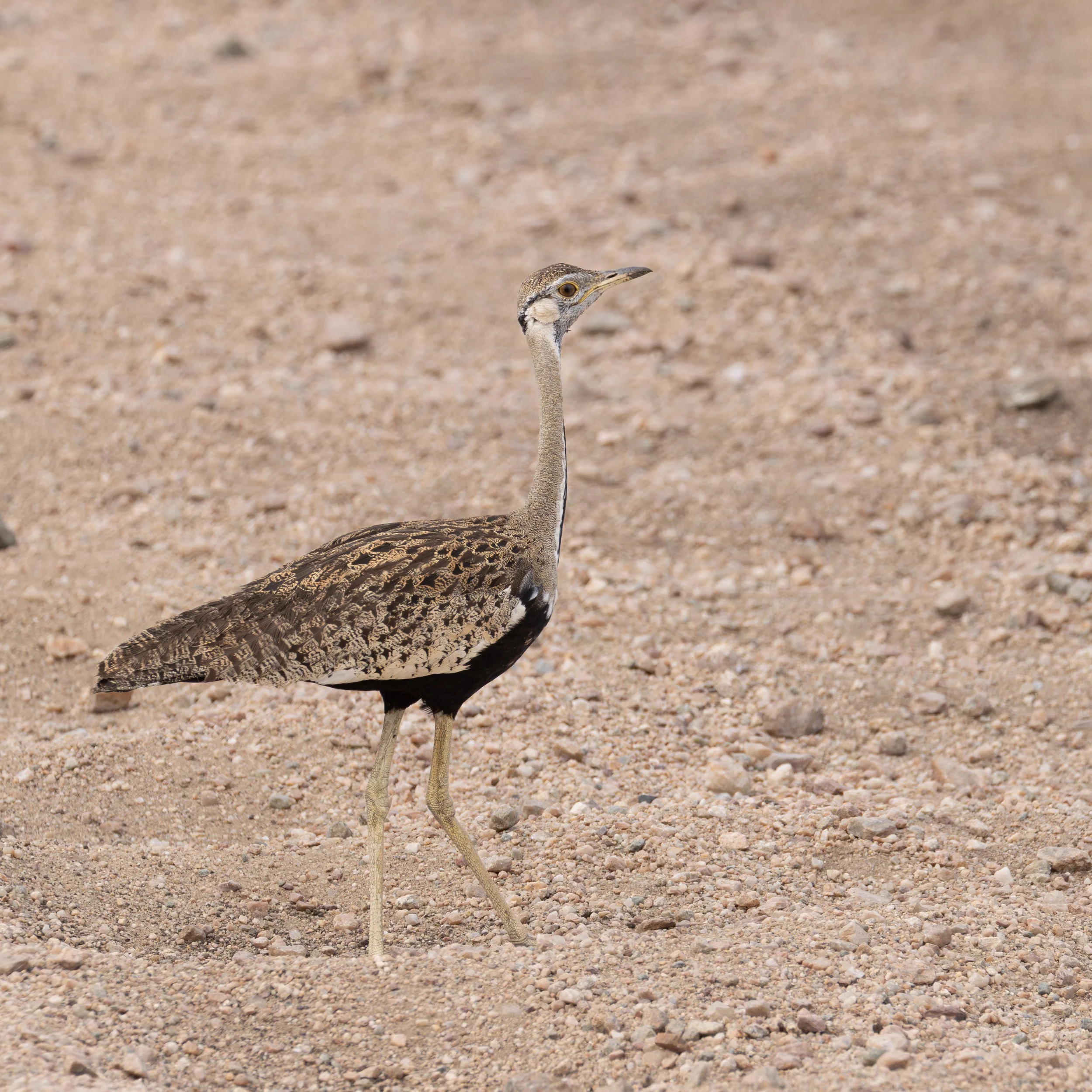
Black-bellied bustard
Kori
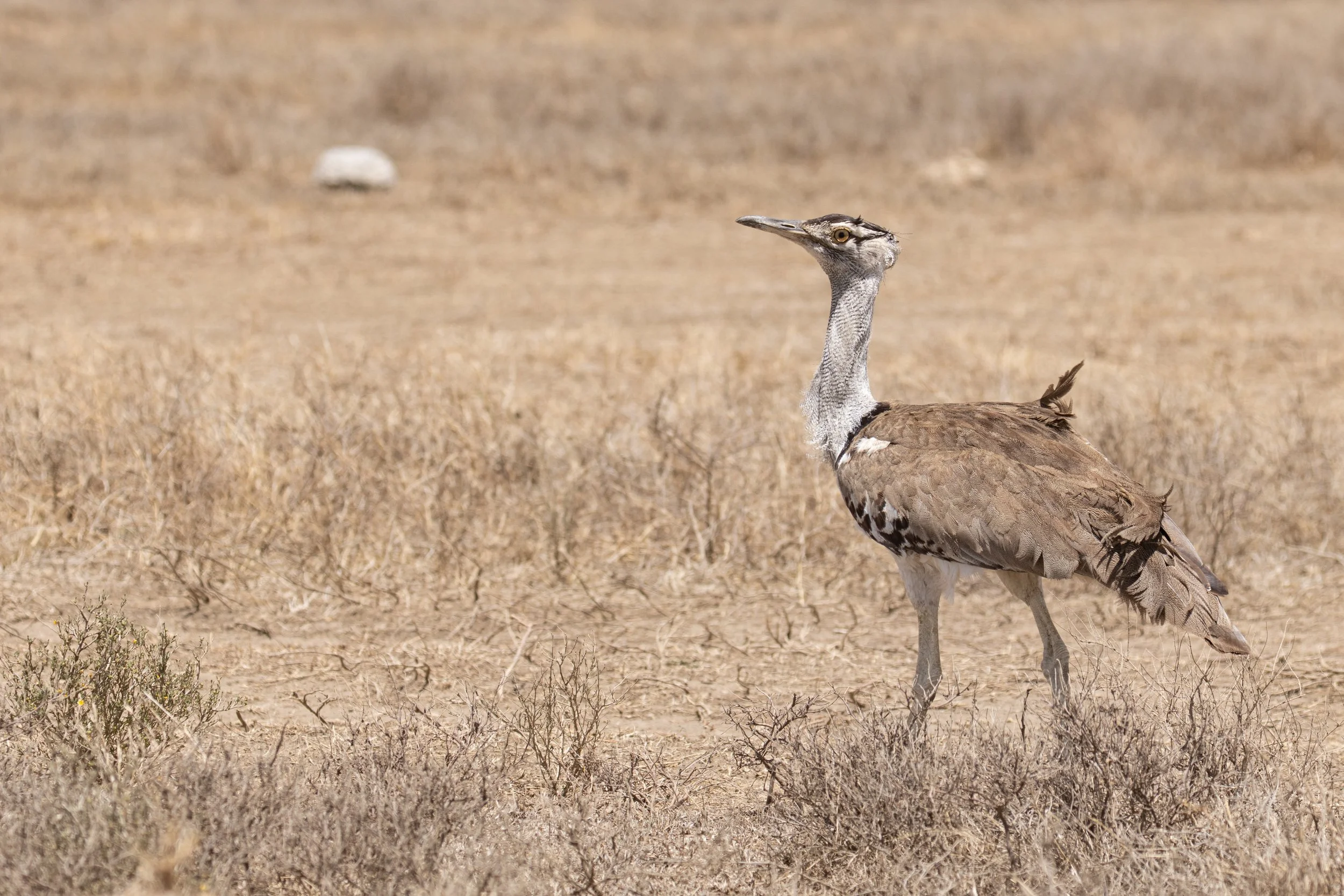
Kori Bustard
Lapwings
Lapwings, named for their zig-zaging flight is a shorebird related to plovers. There are around 25 species of Lapwing three of which we were able to see in Tanzania.
Spur-winged
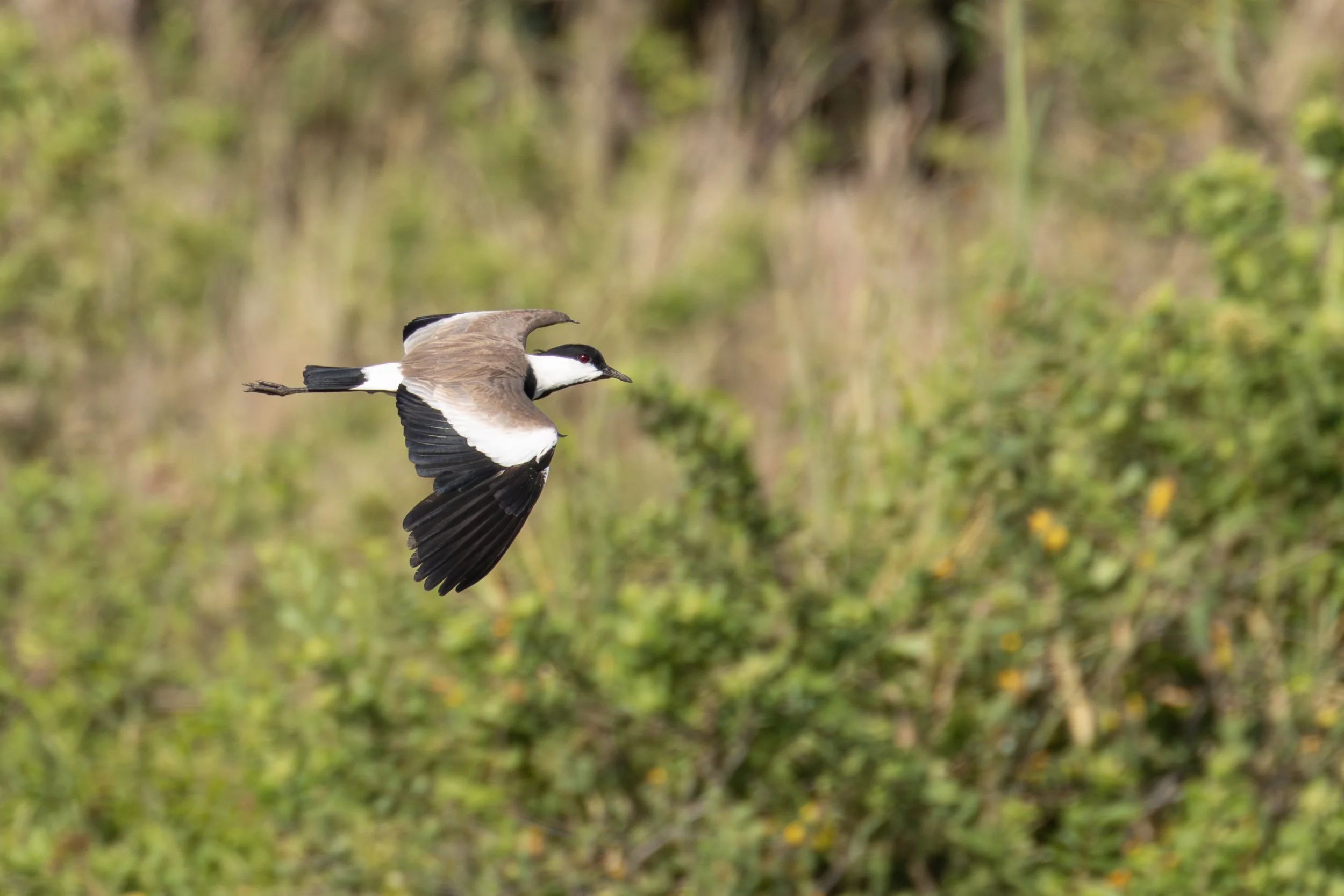
Spur-winged Lapwing
Blacksmith
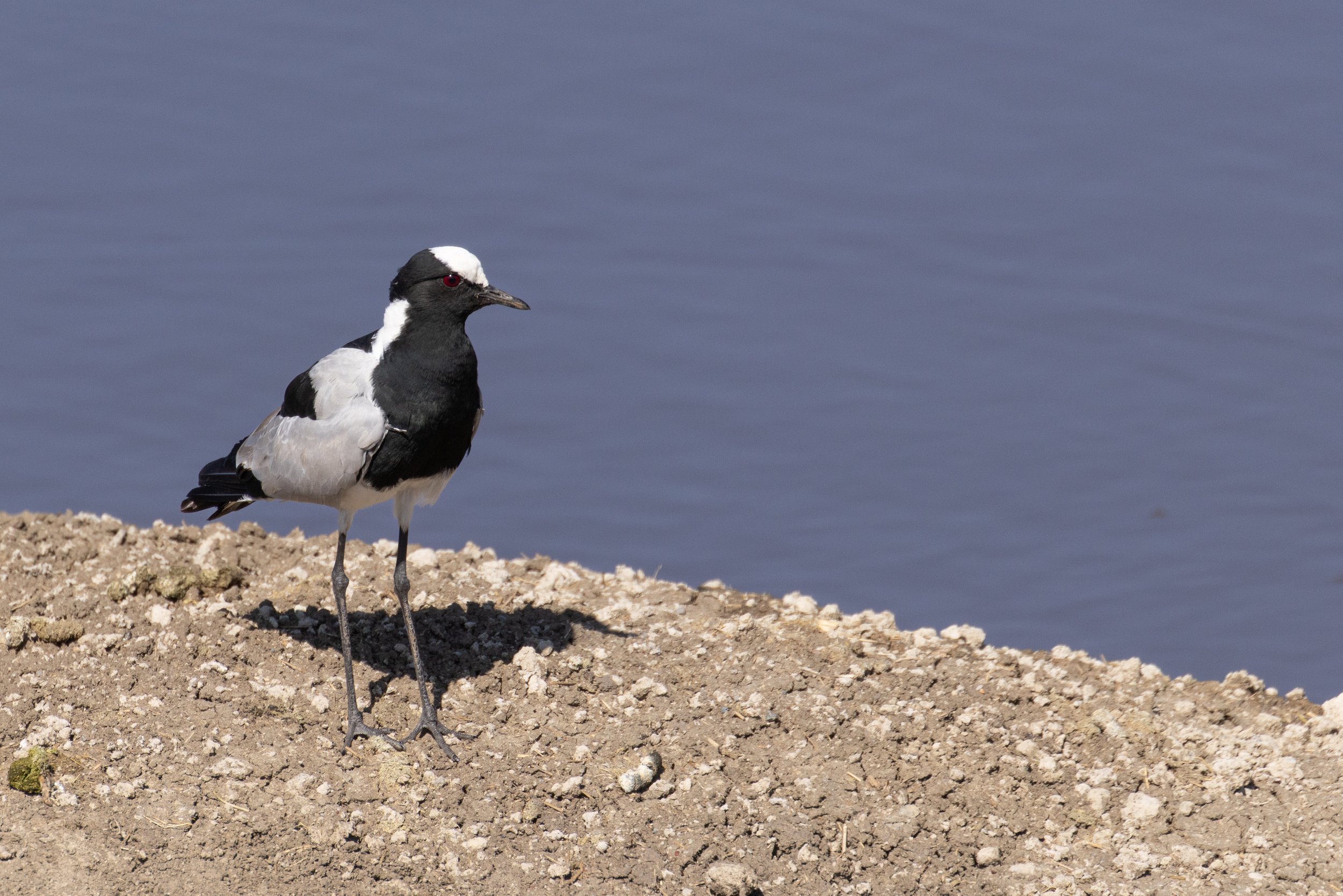
Blacksmith Lapwing
black-winged
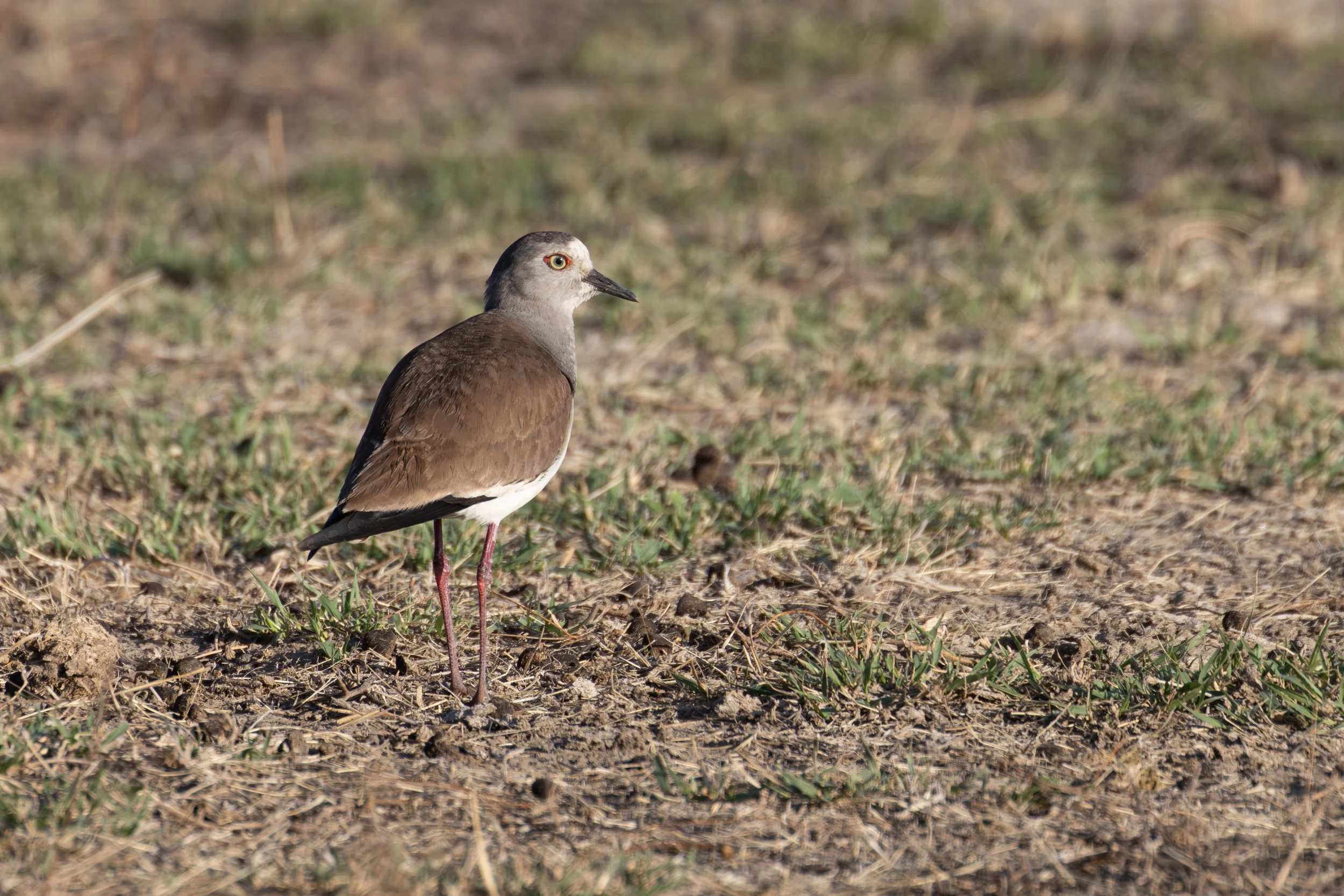
Black-winged Lapwing
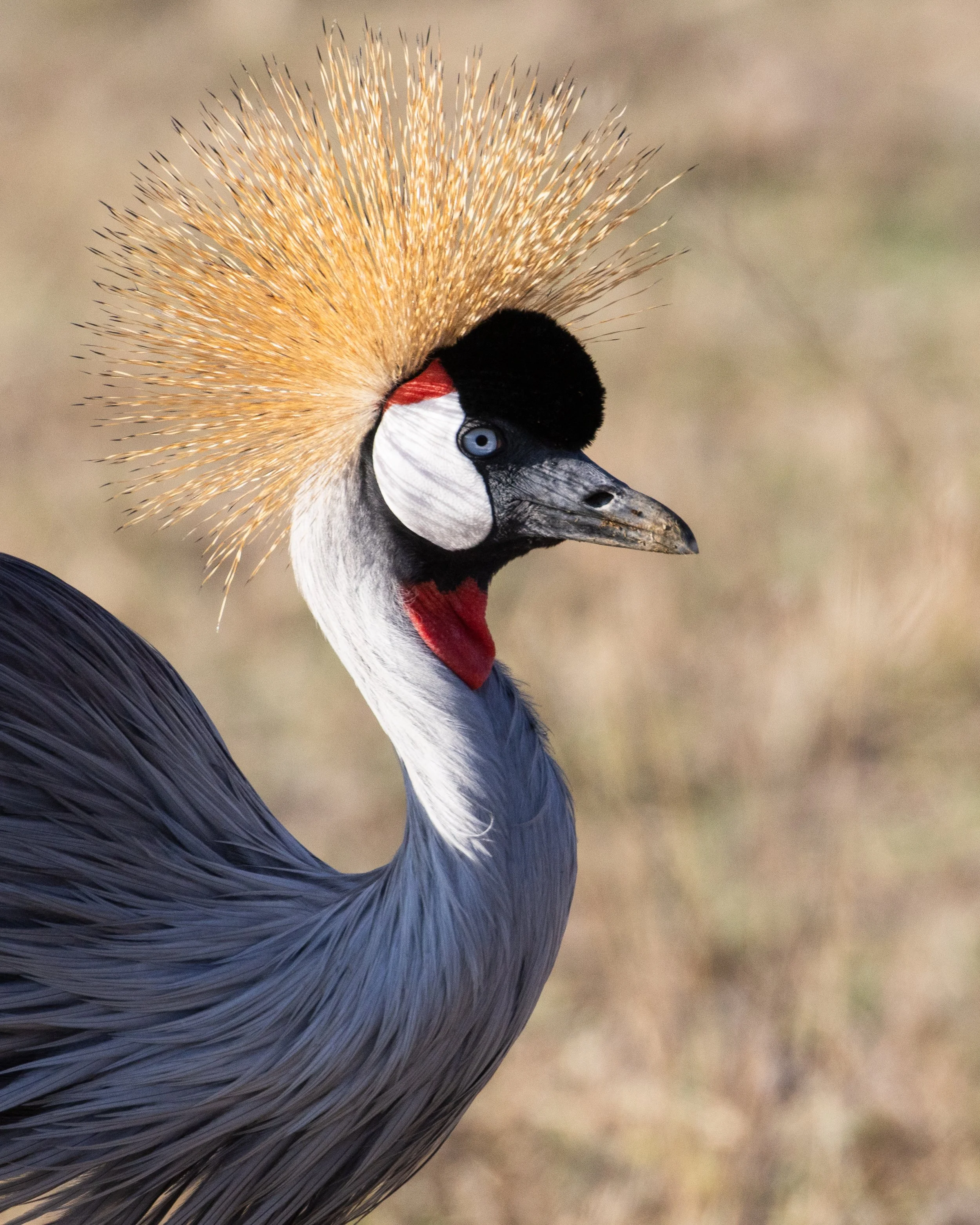
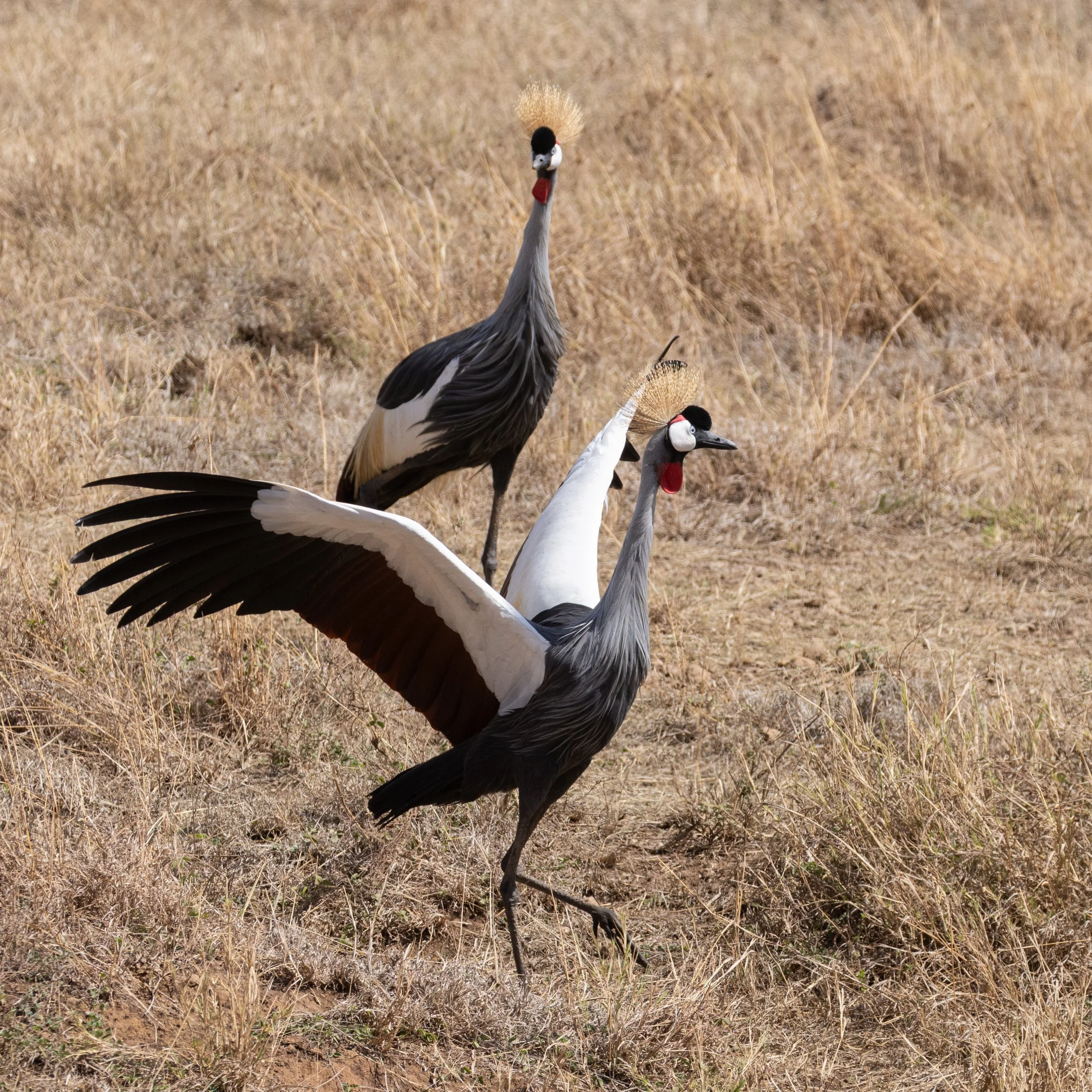
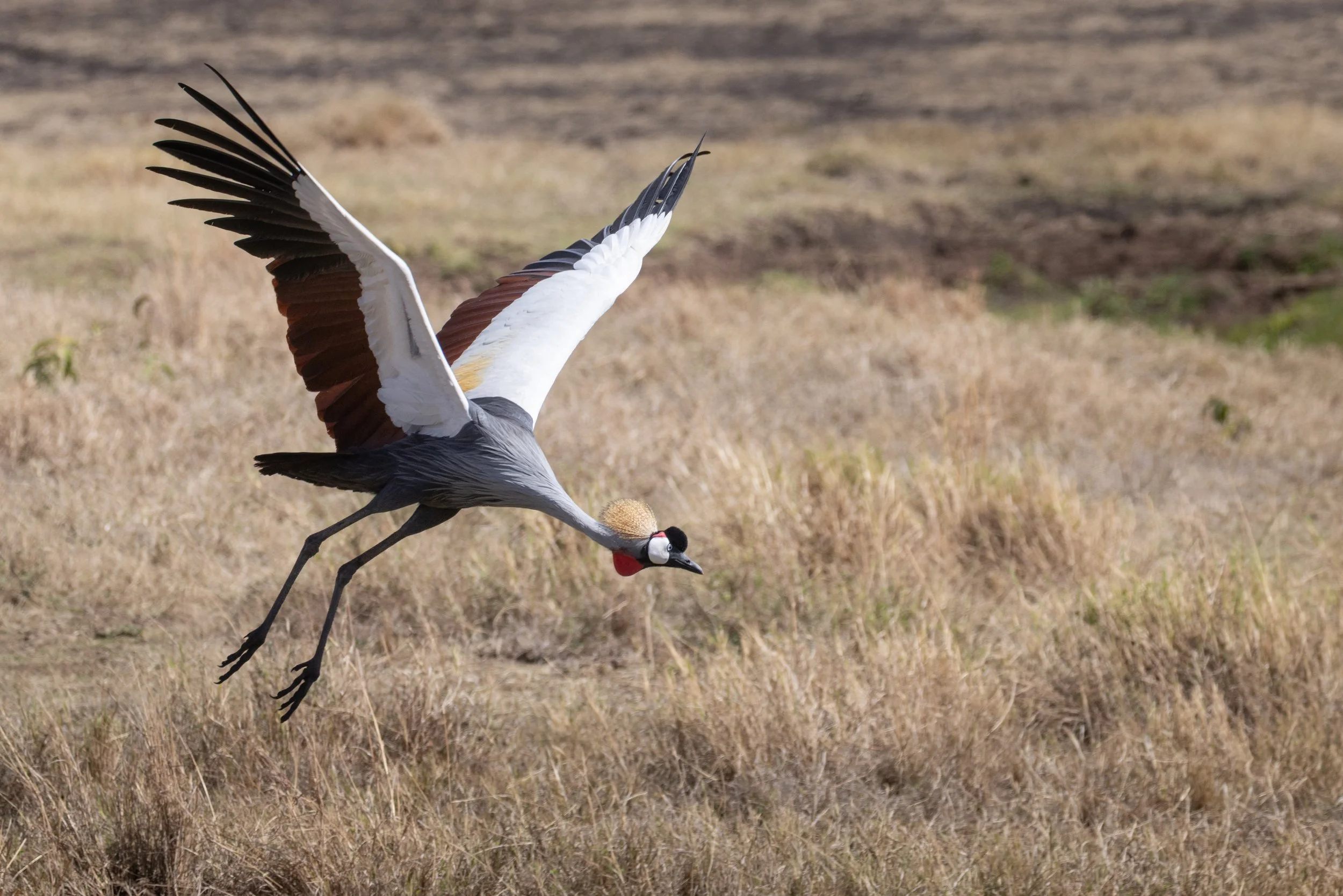
Grey Crowned Crane
One of the most striking birds hanging out in the grasses was the Grey Crowned Crane, a very colourful bird with a name that doesn't really suggest how interesting it is.
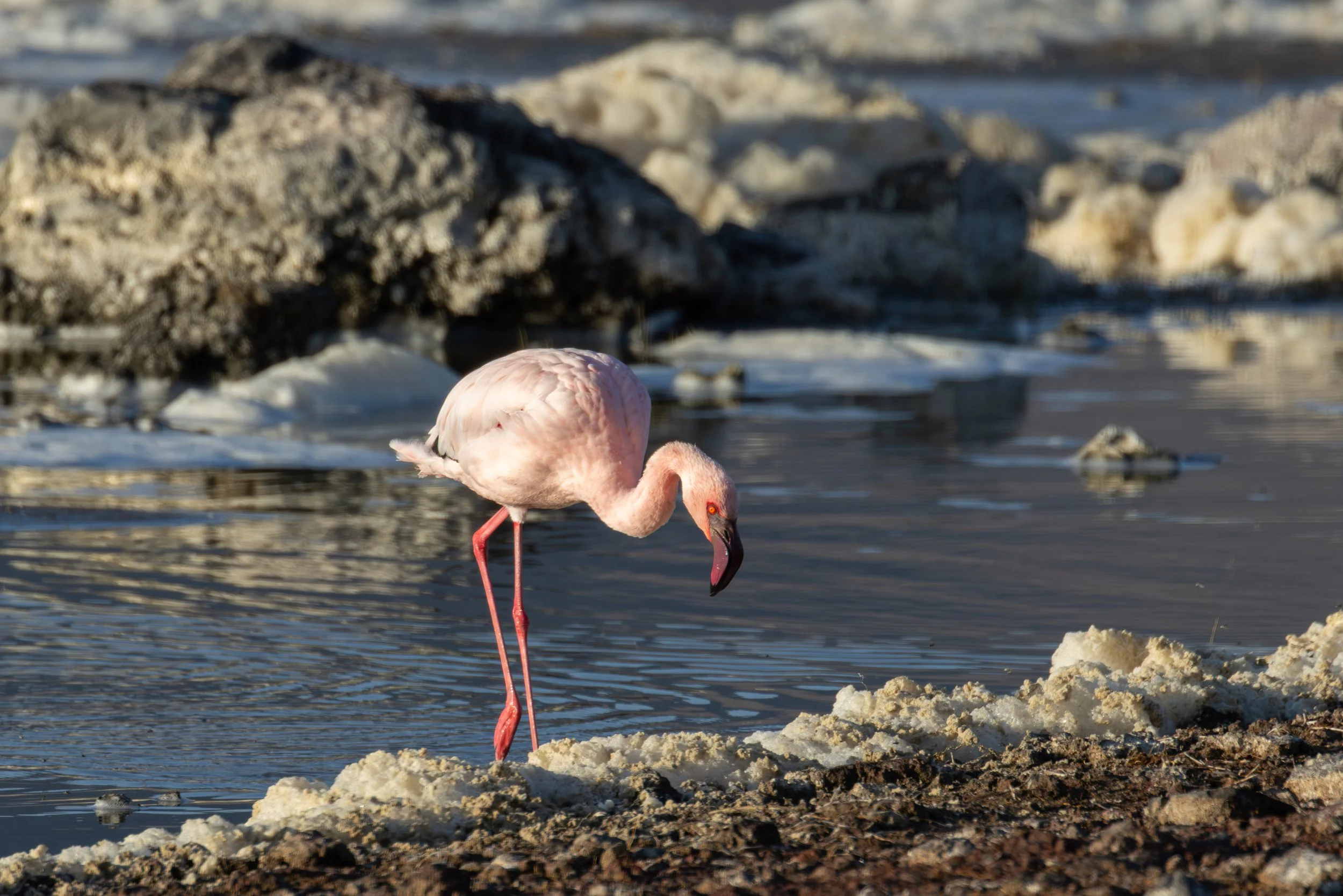
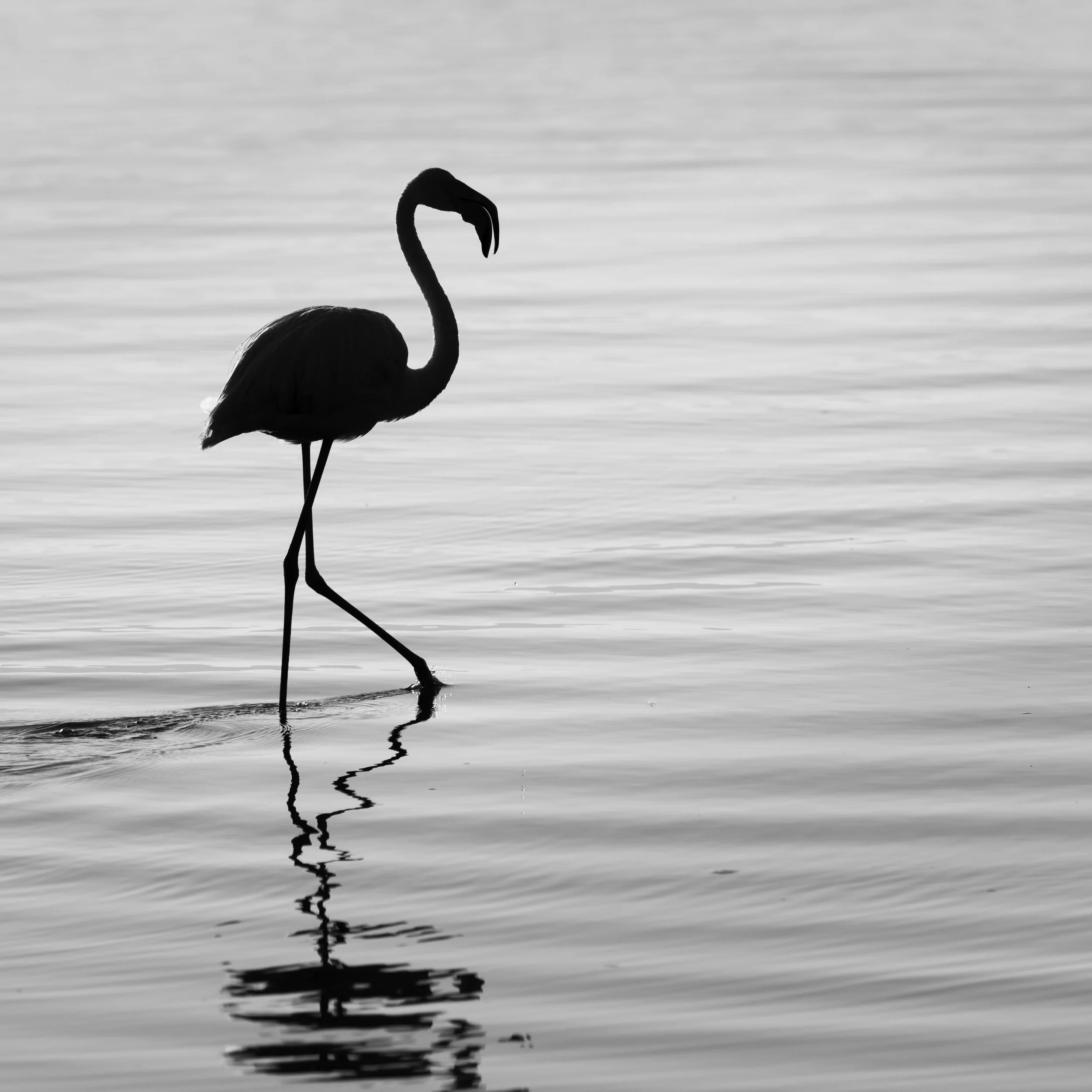
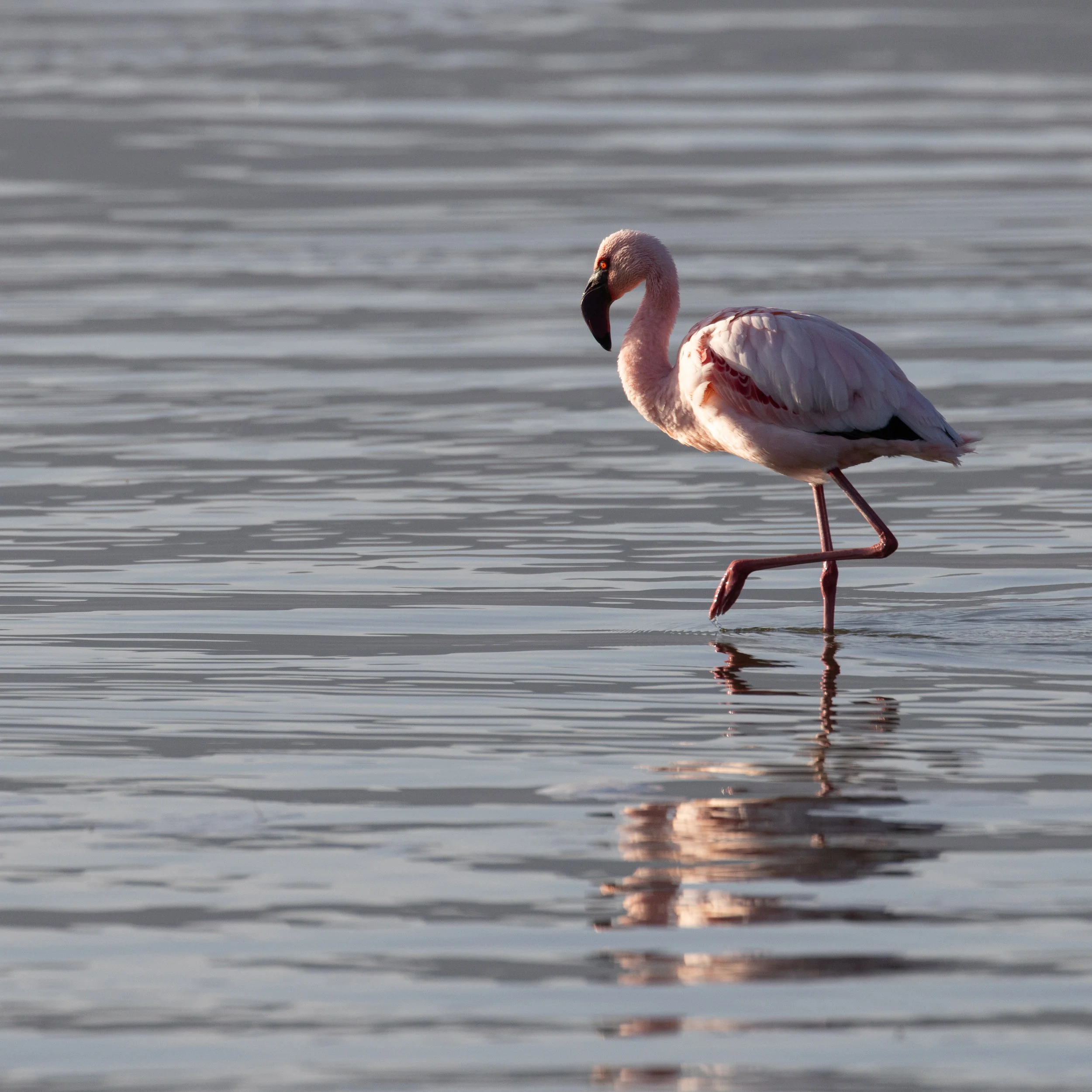
flamingos
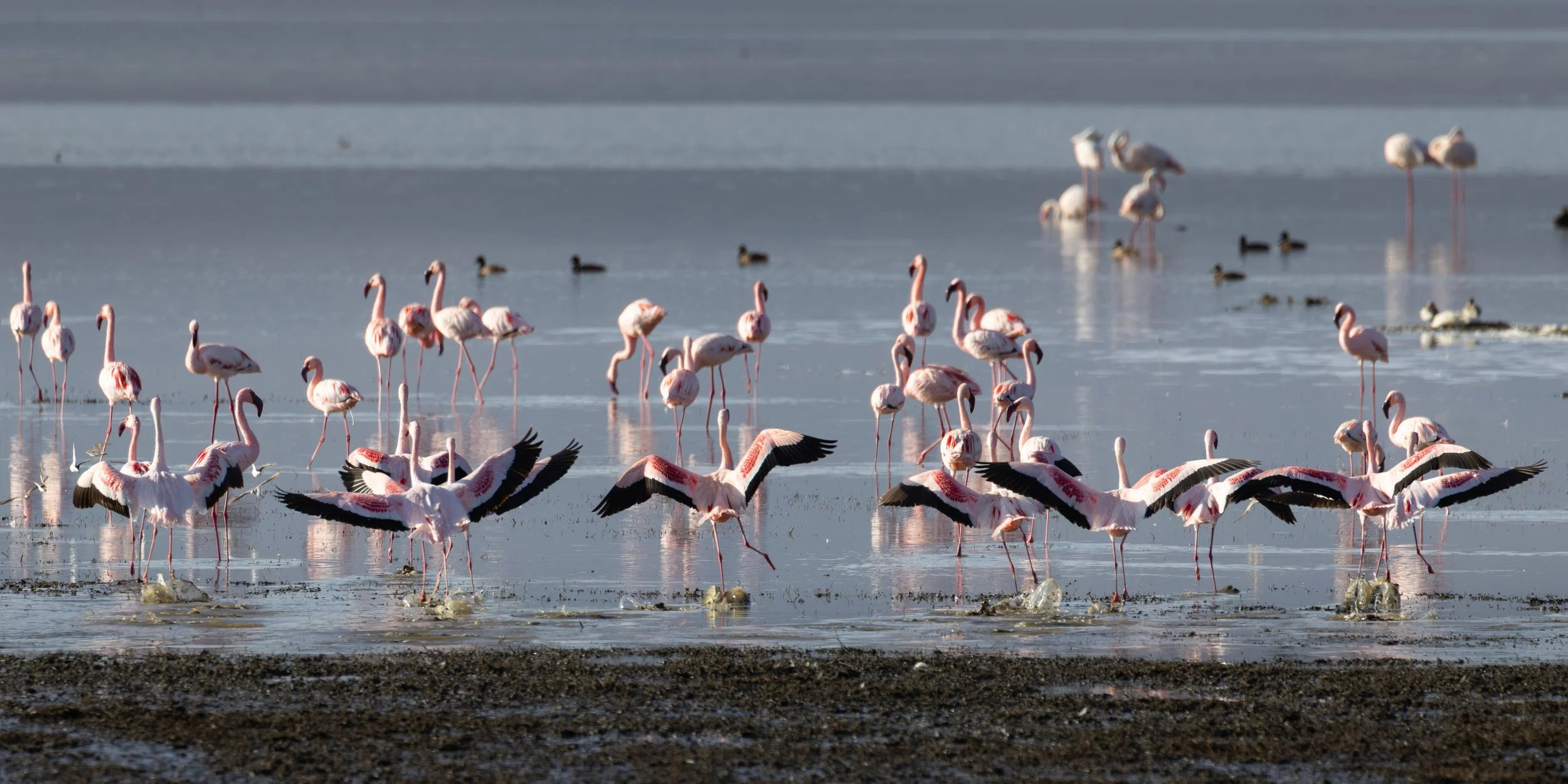
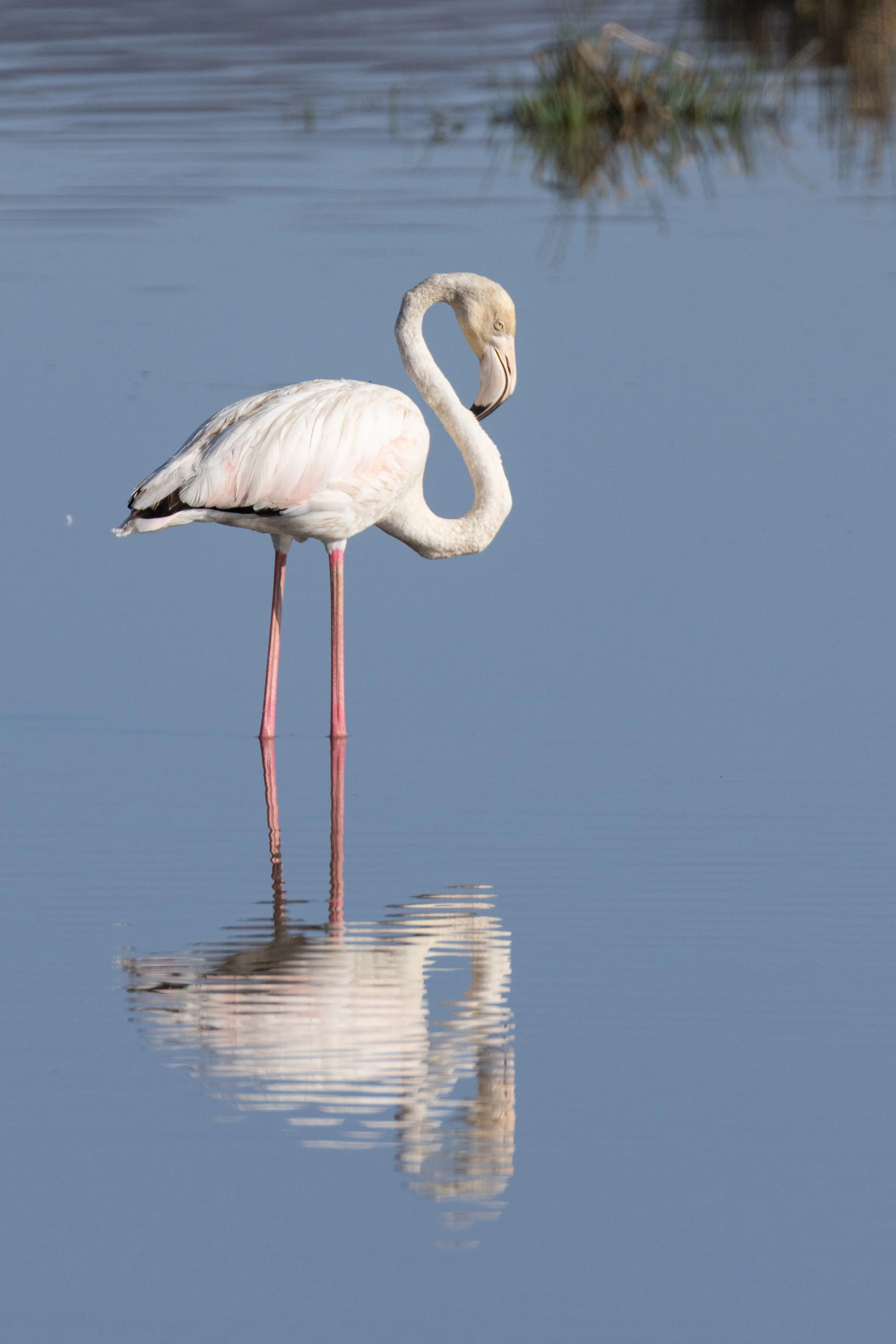
A large wading bird that is a filter feeder usually of brine shrimp where they get their distinctive pink colour from the carotenoids from the algae the brine shrimp eat. We found Flamingos in a number of shallow lake edges in Tasmania with the best views in the Ngorongoro crater.
Ostriches
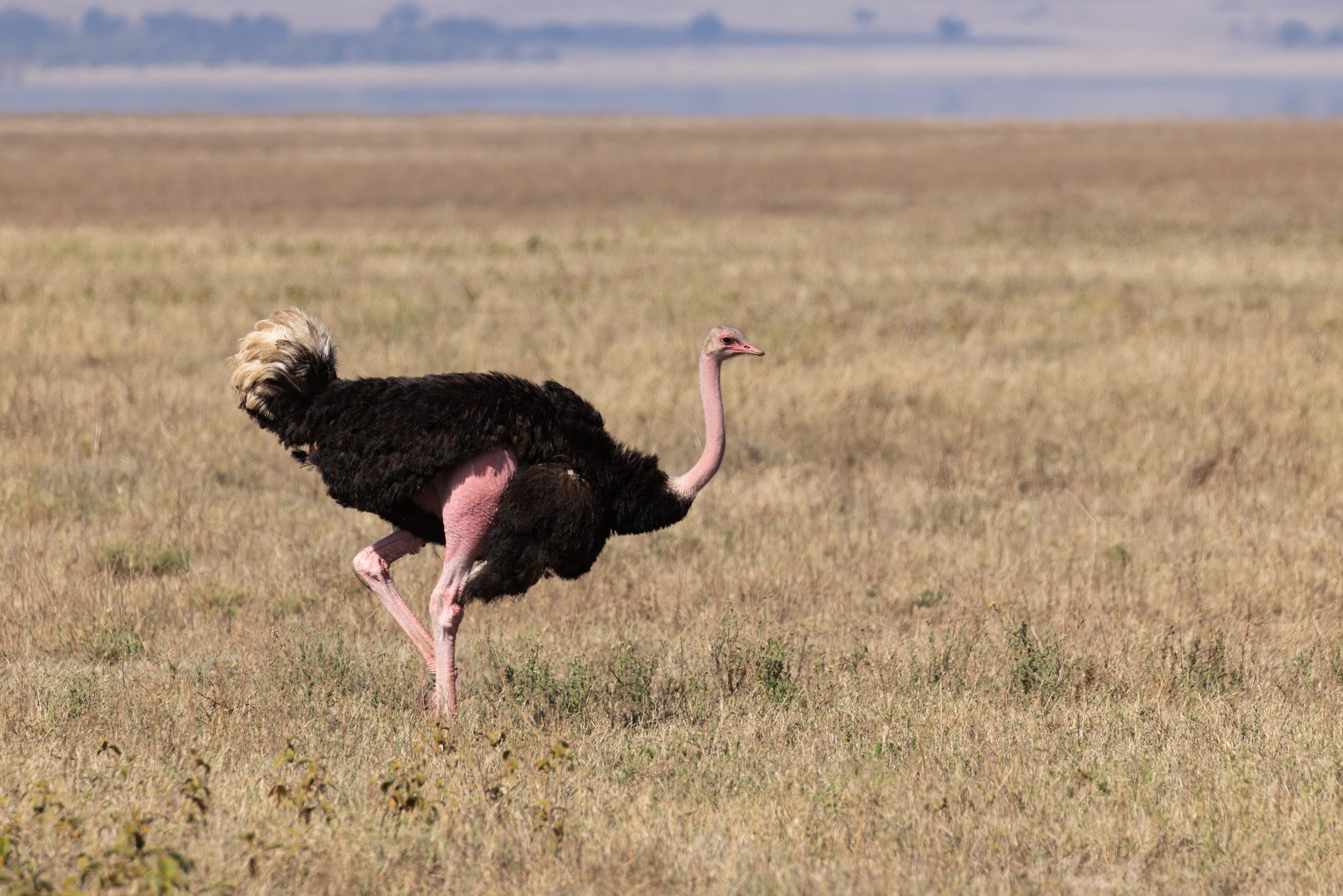
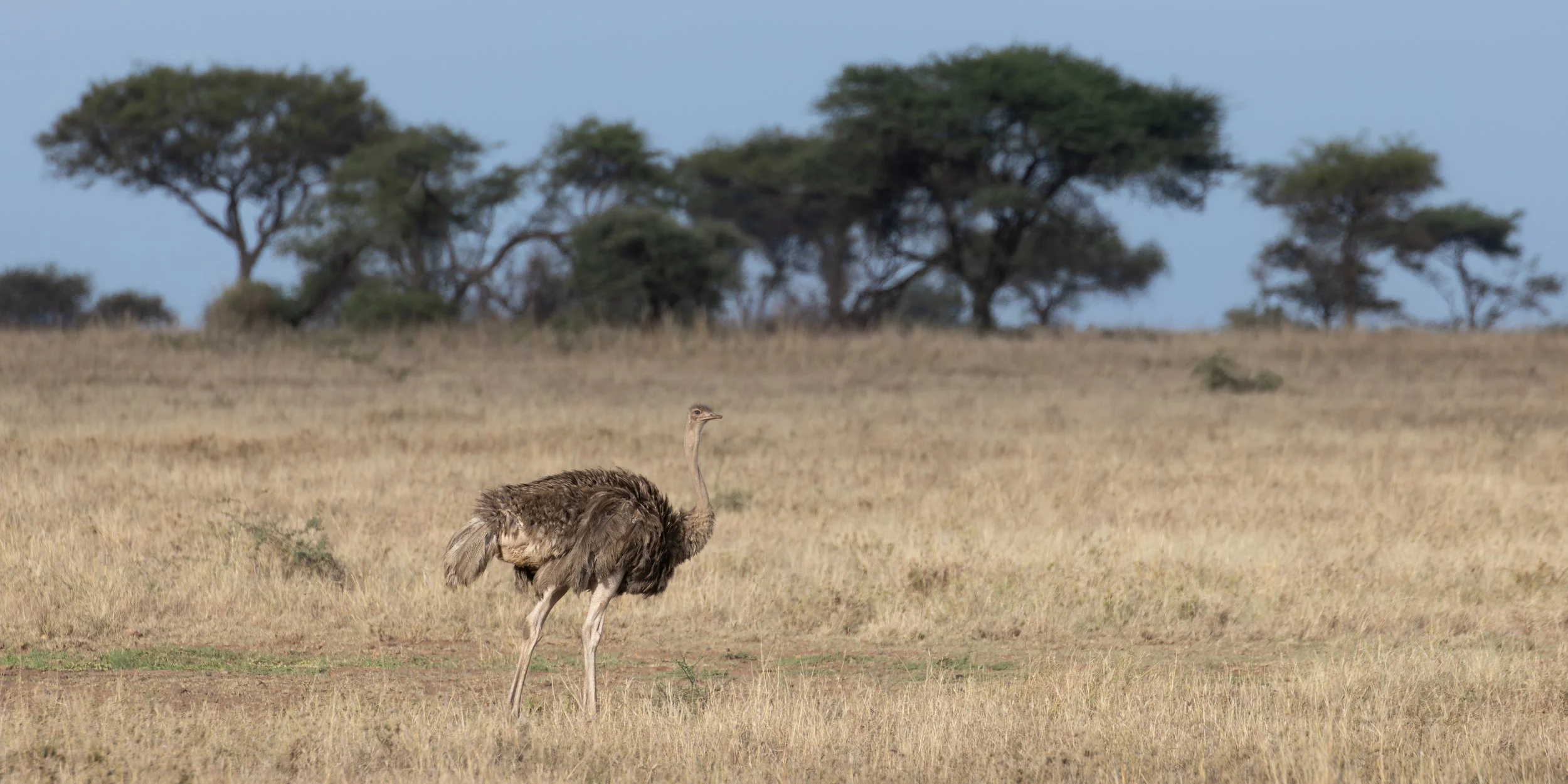
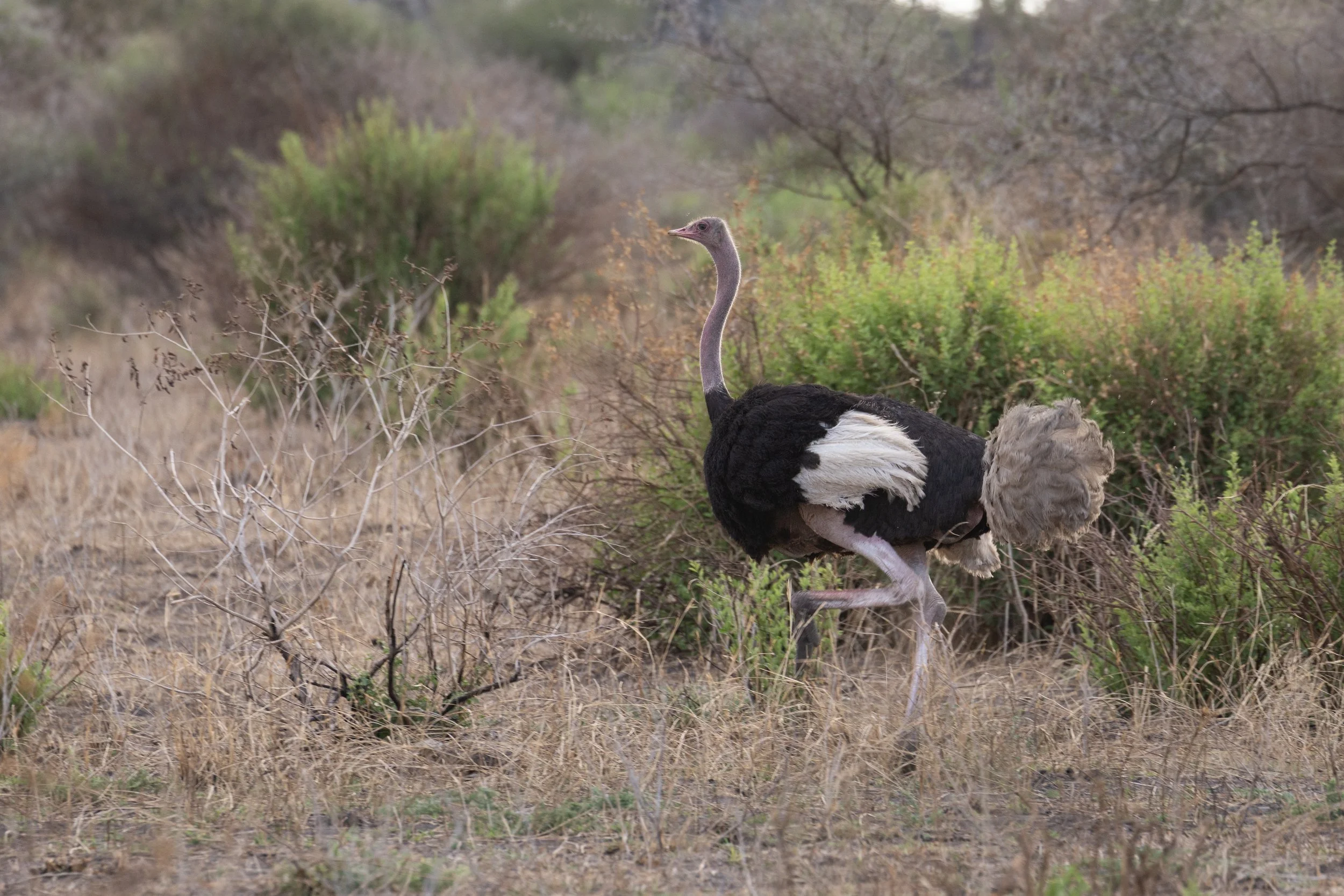
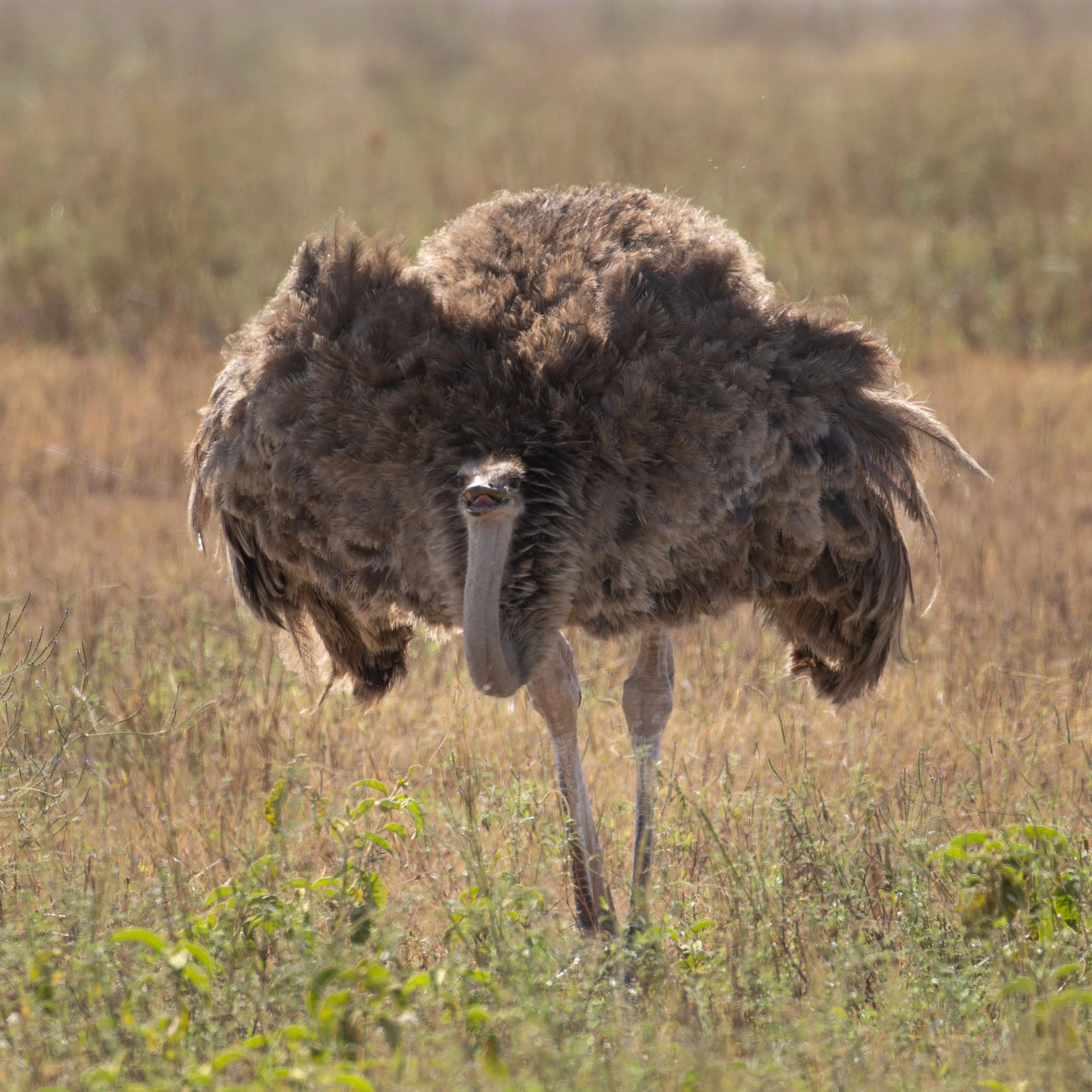
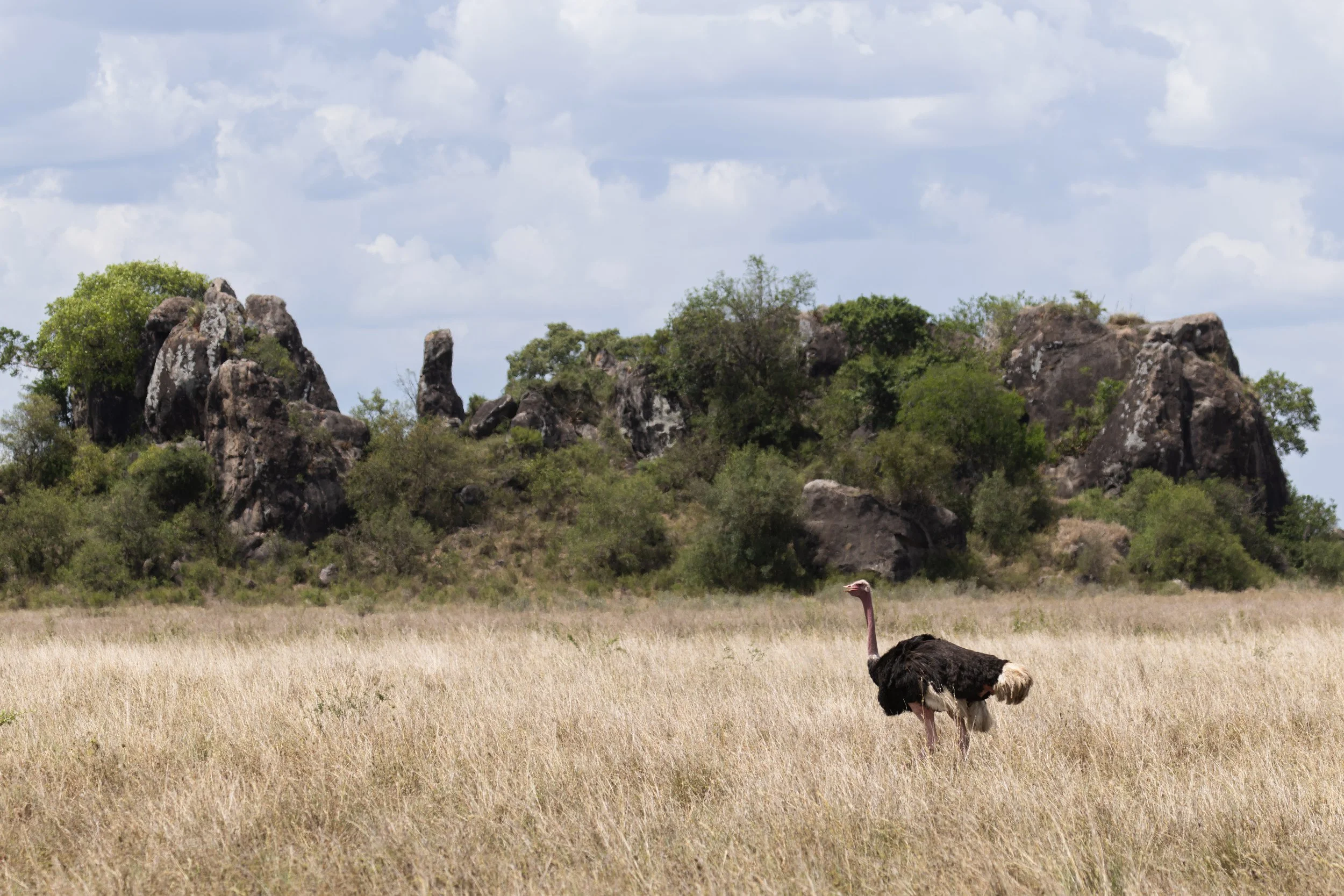
Probably the most iconic flightless bird, Ostriches were amazing to watch out on the plains of the Serengeti. Largest of all birds, they can run up to 70 km/h. Would love to have seen some of the young ones but not this time.
Others
lilac breasted roller
Beautiful colours on display, the Lilac breasted roller is not dimorphic with both sexes having the same colouration. Usually found alone or in pairs, it perches at the tops of trees, poles or other high vantage points from where it can spot insects, amphibians and small birds moving about on the ground. This makes it fairly easy to find and photograph.
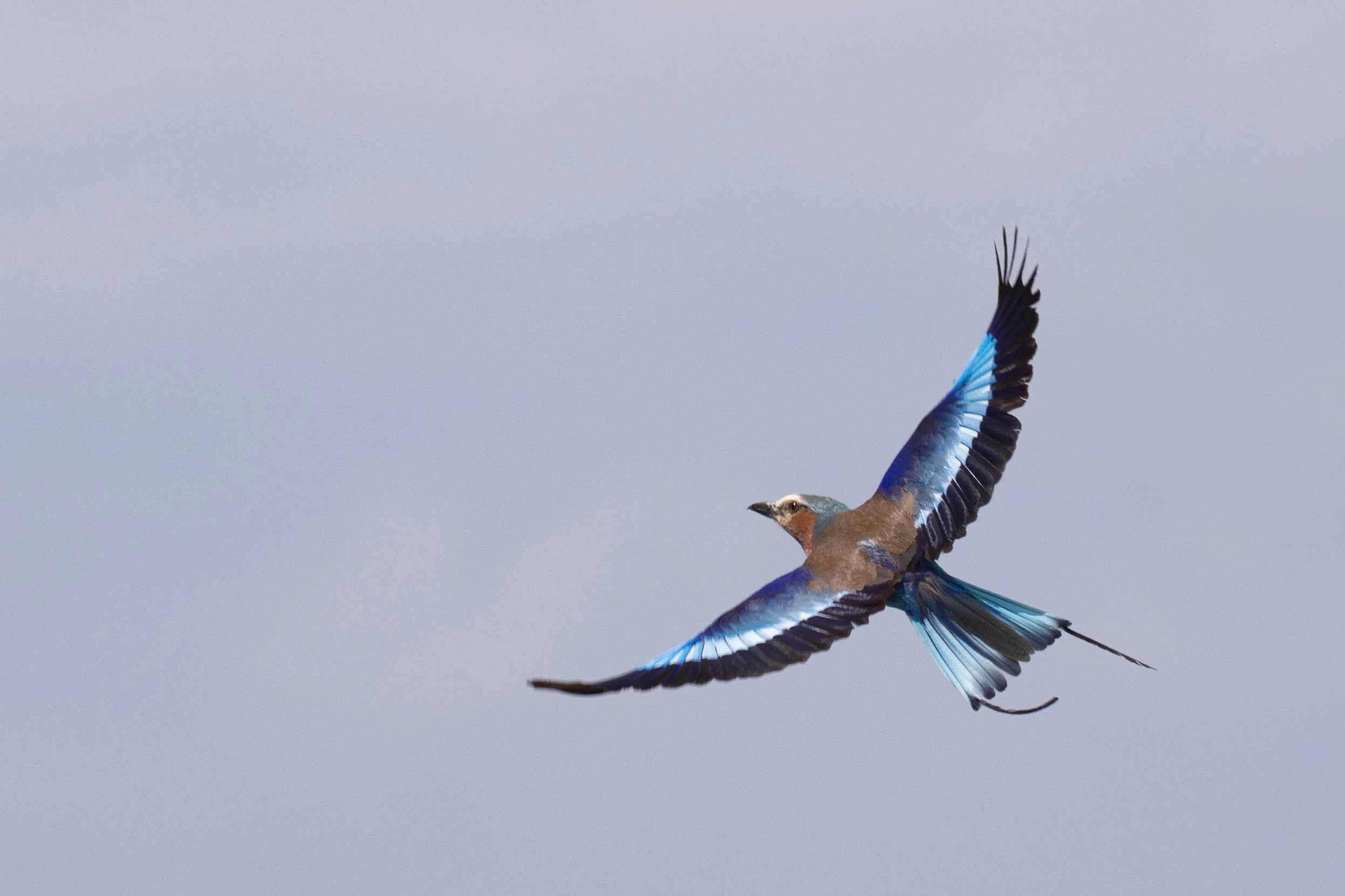
Lilac-breasted Roller
bronze sunbird
As you might expect from the beak on the Bronze sunbird it is a nectar feeder but it also feeds on small bugs. We were pretty lucky to see this bird as it tends to stay away from populated areas.
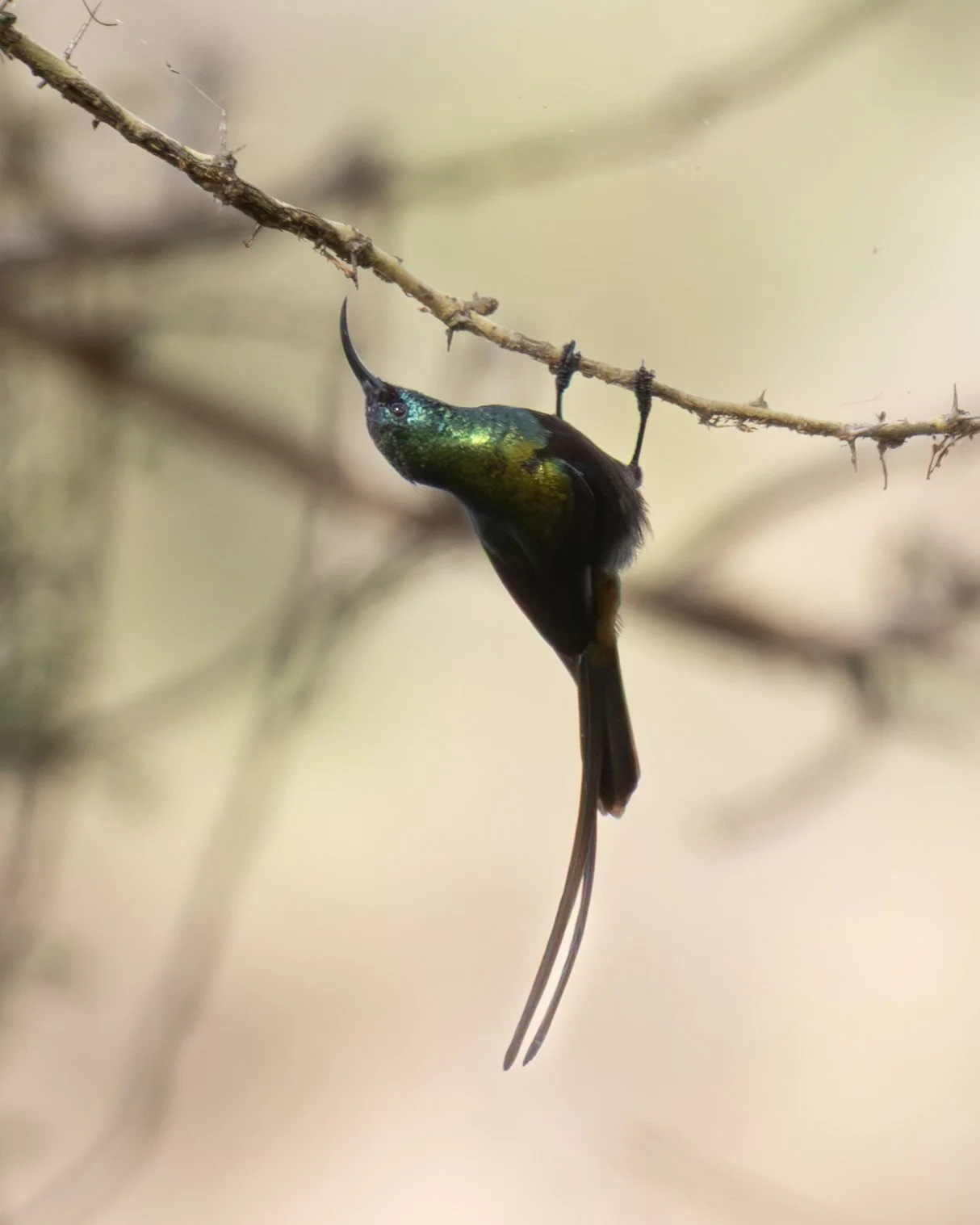
Bronze Sunbird hanging from a branch
Red-cheeked Cordon-bleu
This uniquely coloured bird shows off a turquoise blue chest and face with brown back. The male has the red cheek. Fairly unique to most passerines the Cordon-bleu females sing although not as complex as the males song.
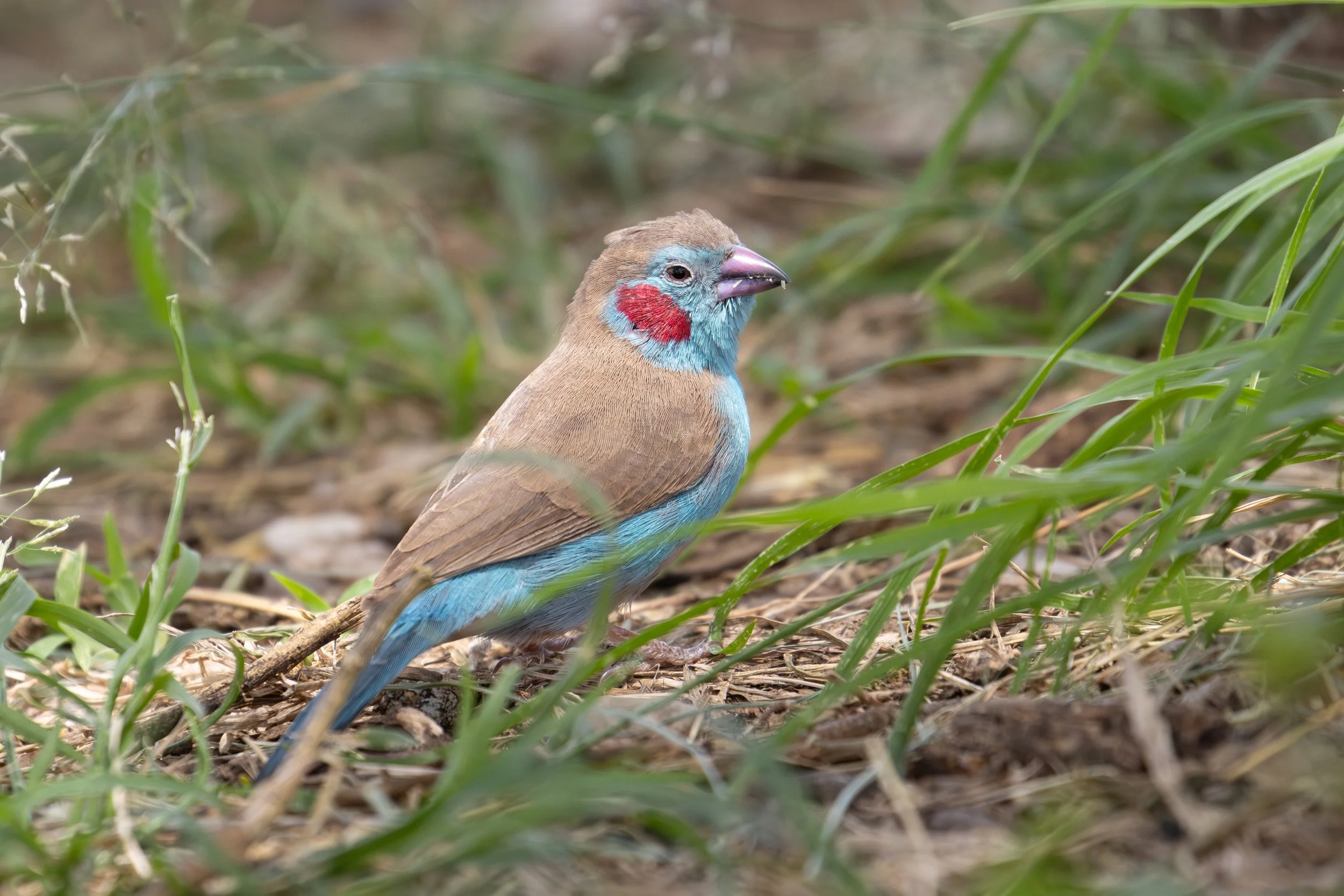
Red-cheeked Cordon Bleu
D'Arnaud's barbet
A colourful barbet with a yellow face and breast that are speckled with black, and a red undertail. Barbets get their name from the bristles which fringe their heavy bills.
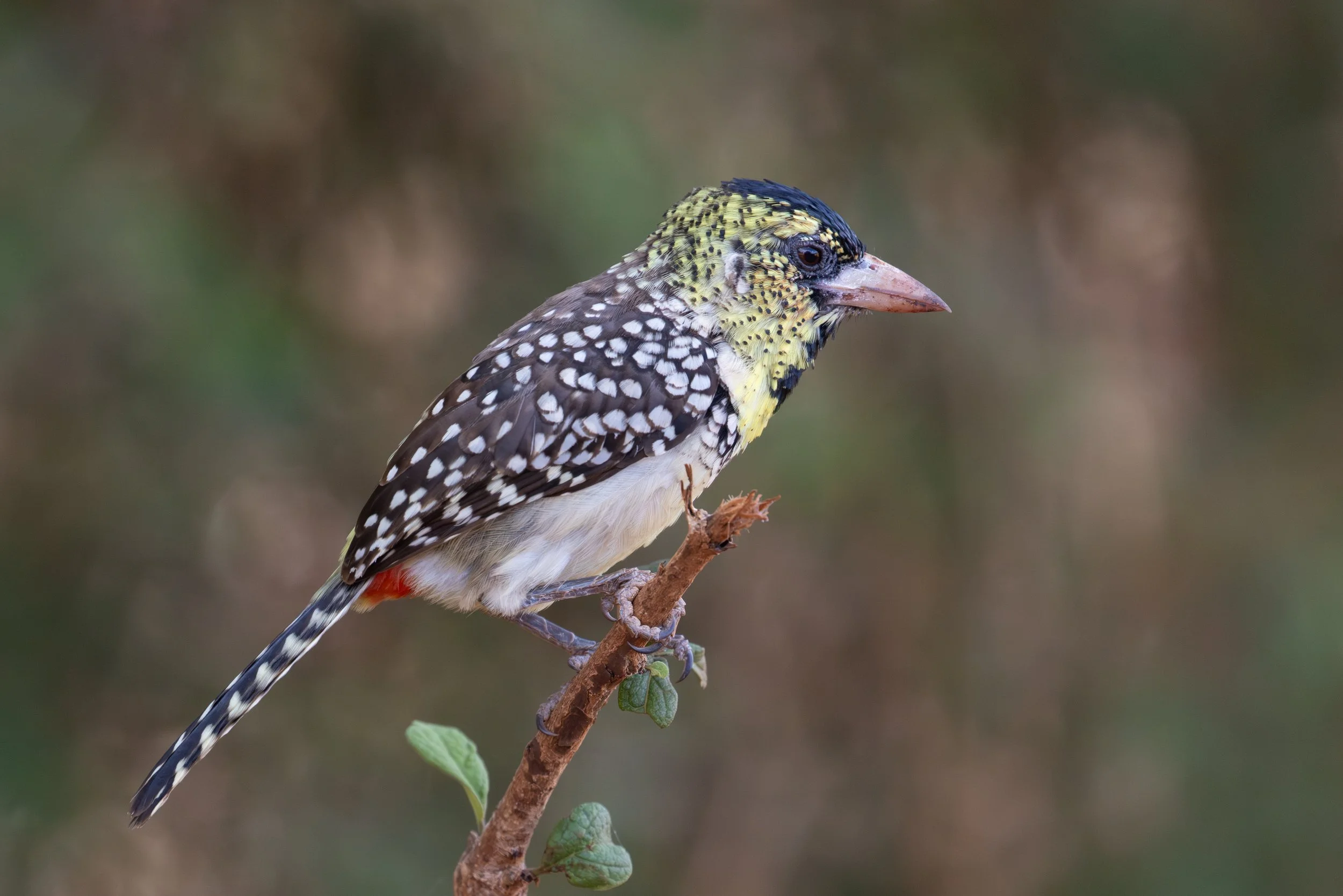
D’Arnaud’s Barbet
superb starling
A beautiful but very common bird similar in size to the European starling that is very common in North America now. At the beginning of our trip we couldn’t help but take pictures of this pretty bird but they were so common in many parts of Tanzania they seemed a bit like pests.
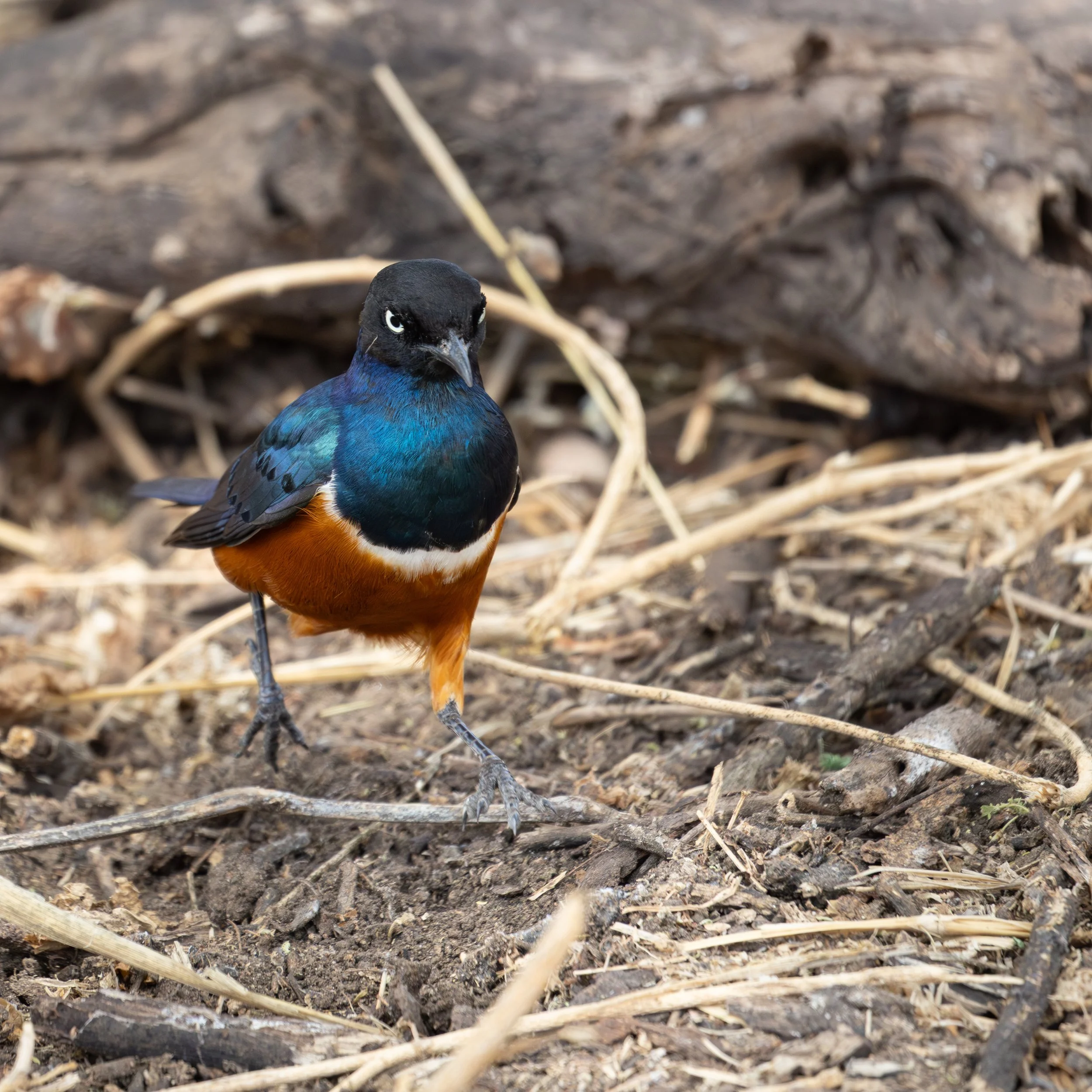
Superb Starling
violet backed starling
Another fairly common but beautiful bird, the violet backed starling tends to stick to the trees of Sub-Saharan Africa. Unlike the Superb Starling, they are highly dimorphic (females do not have the same colouration as the males).
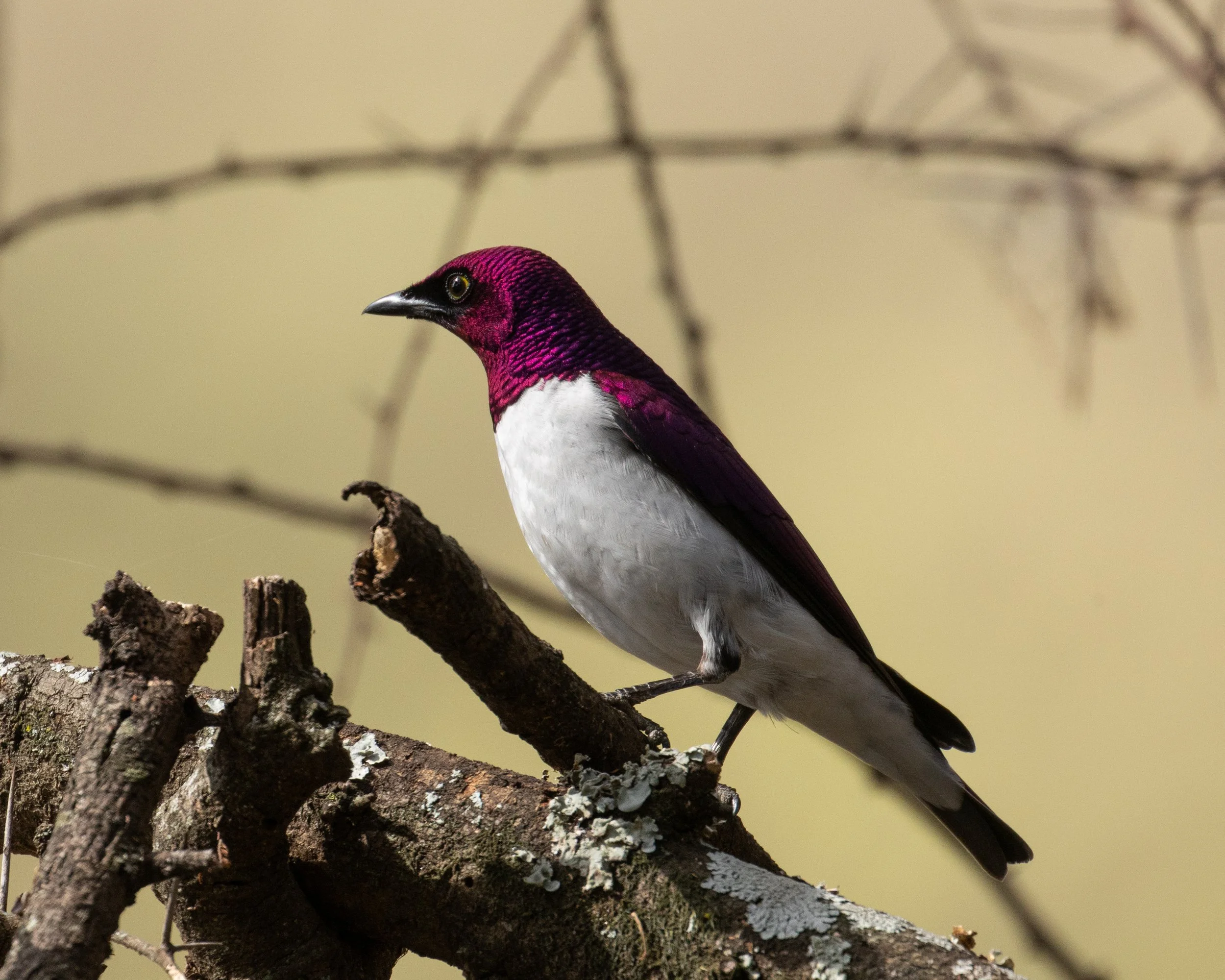
Violet-backed Starling
speckled mousebird
Largest and most common of the Mousebirds, they have fluffy hair-like feathering, brown crests, and long tails that measure over half the size of their bodies. This was the first bird we saw after waking up for the first time in Tanzania.
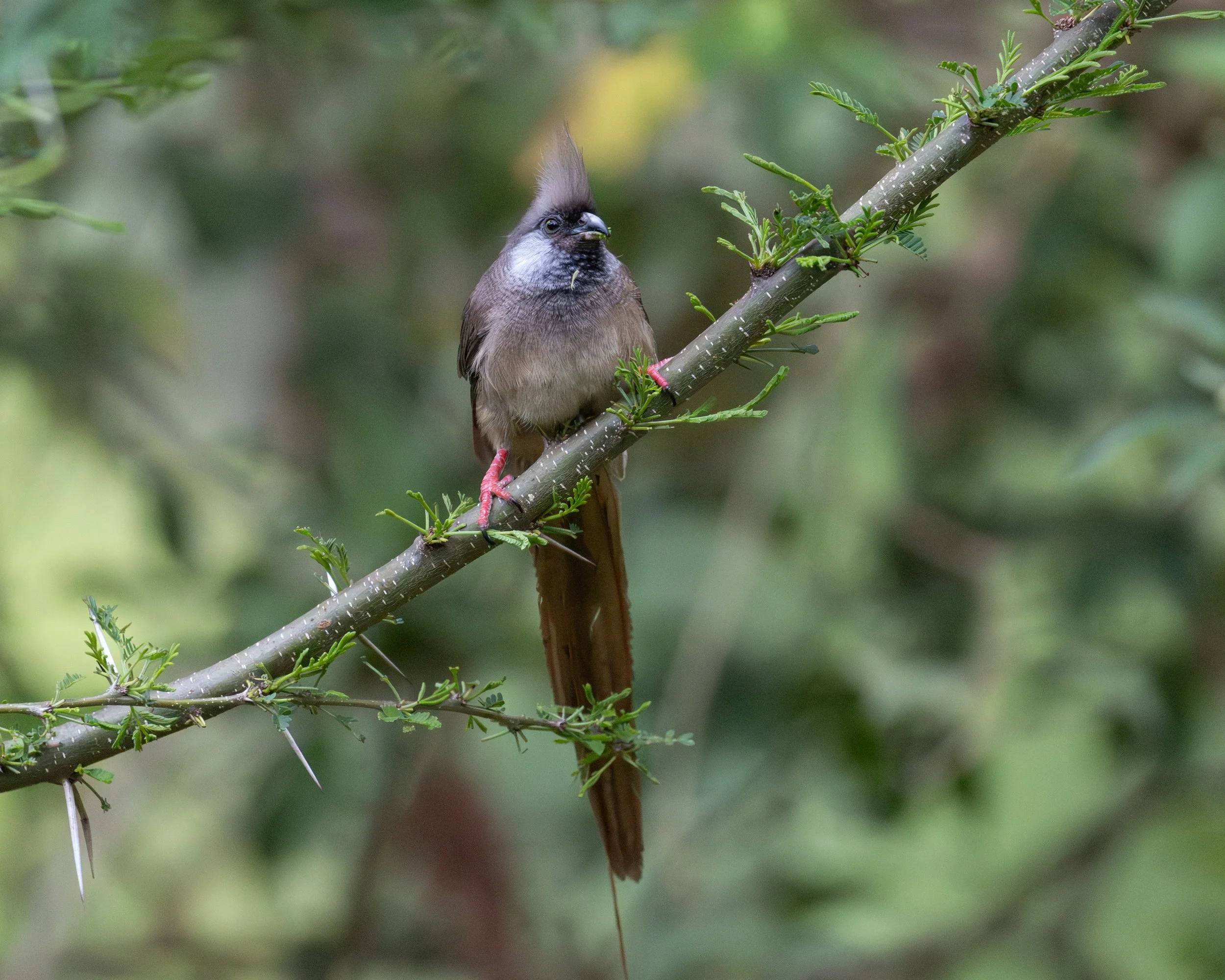
Speckled Mousebird
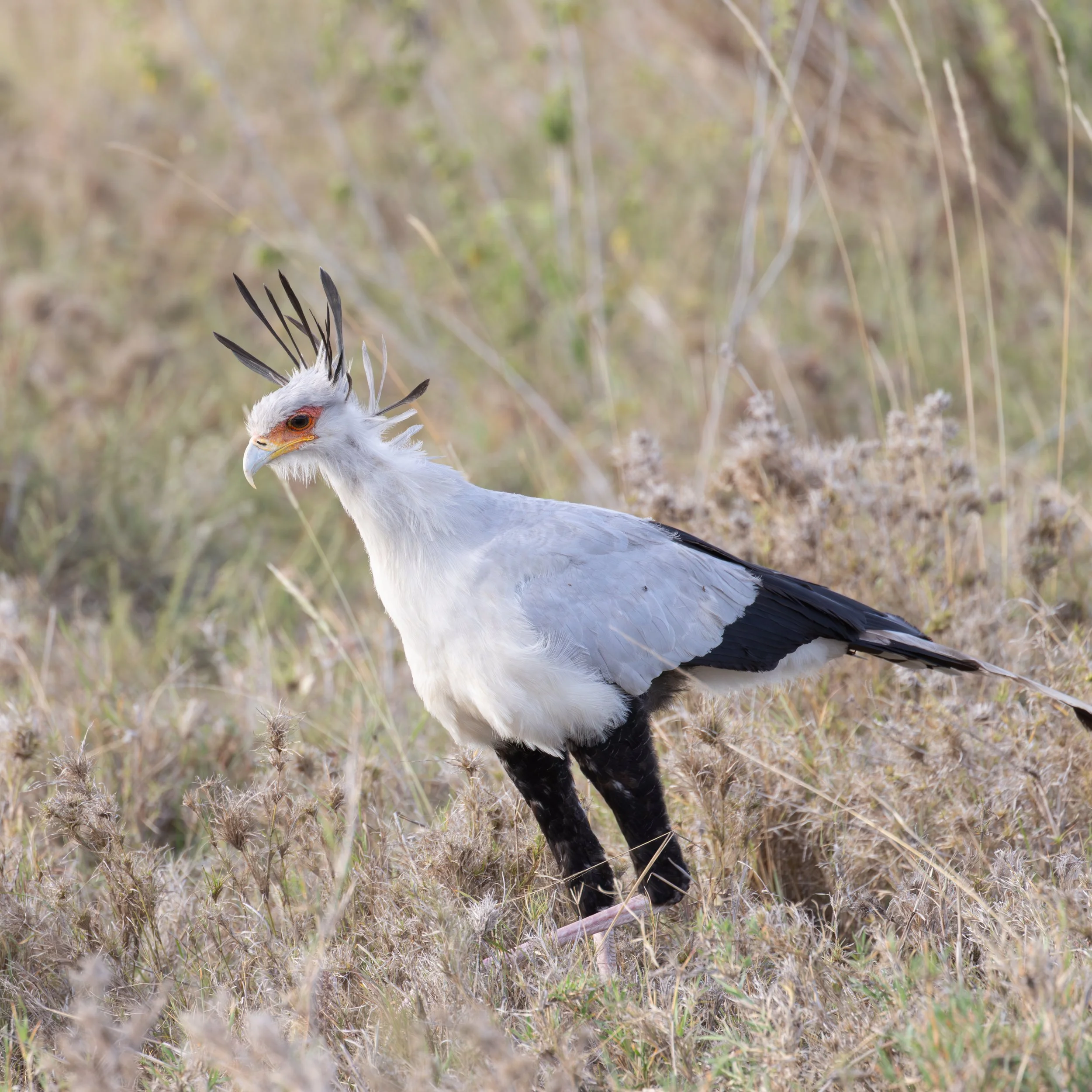
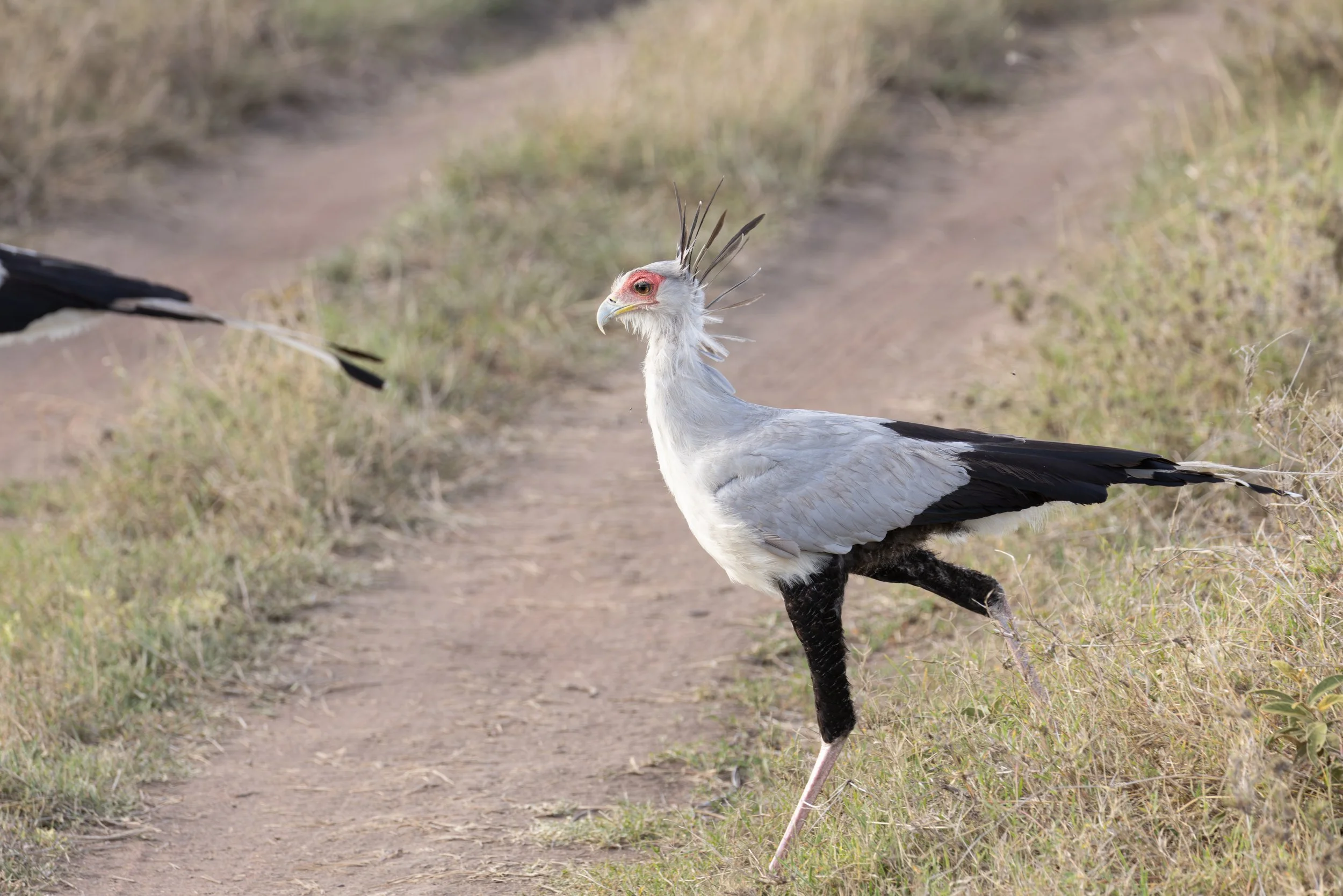
secretary birds
Another large bird in the Serengeti they are the tallest raptors standing up to 5 feet tall and have wingspans of nearly 7 feet. These birds hunt exclusively on the ground and are great snake hunters.
oxpeckers
Watching the behaviour of Oxpeckers on different animals is fascinating. They seem to both help and bother the buffalo and giraffe that we saw them hanging around. Their Kiswahili name askari wa kifaru, means “the rhino’s guard” are said to warn animals of predators with their calls. There are two types of Oxpeckers, a red-billed and a yellow-billed mostly seem to live in the same areas. I seem to have pictures of both types but the closest shots are of the red-billed.
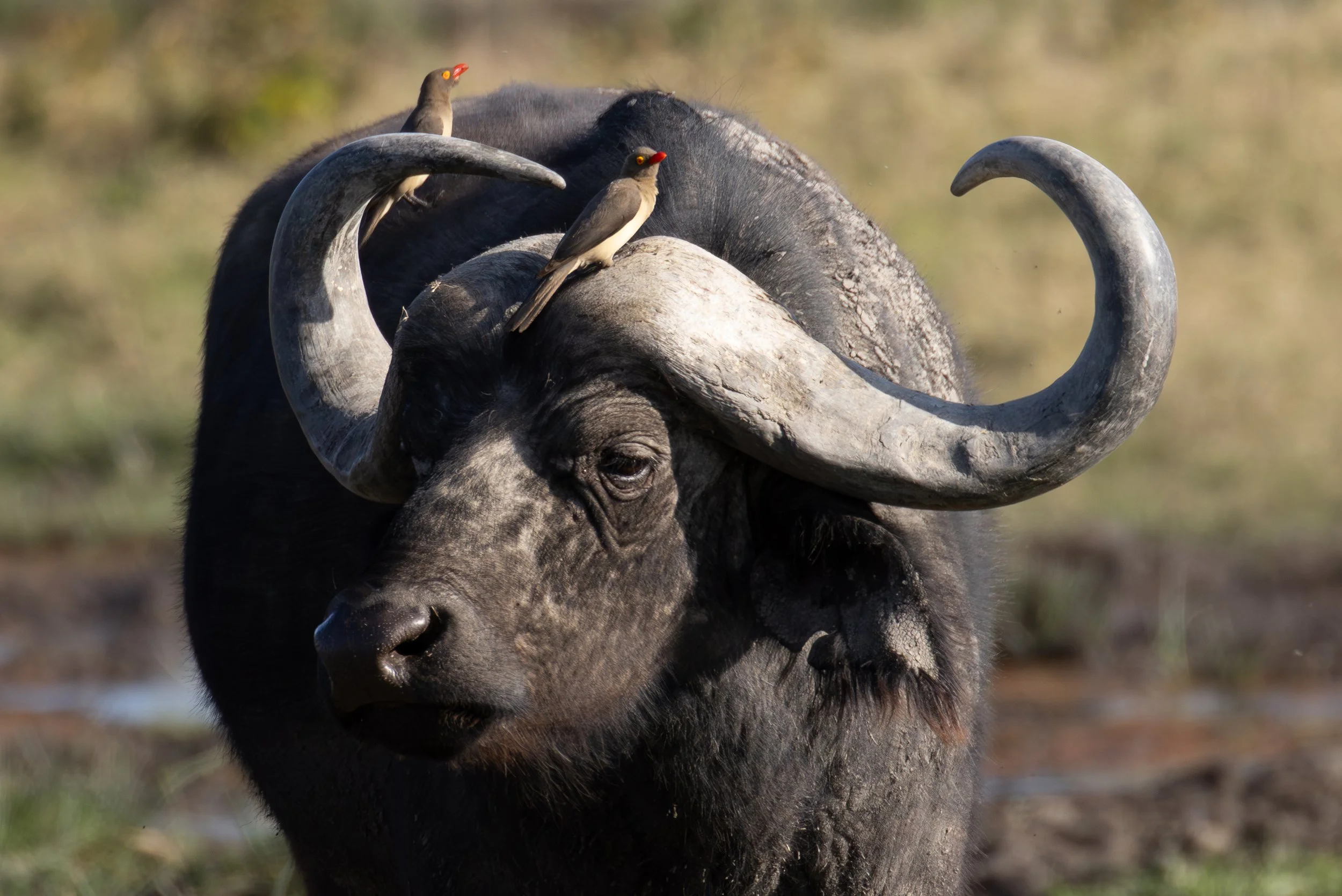
Red billed Oxpeckers on a buffalo
If we ever get back to Africa I think I will bring a slightly longer lens and maybe spend a bit more time on finding birds. Much like the plethora of animals on the African continent there are so many amazing birds to see and photograph. I’m sure I could spend most of the rest of my life doing photography in Africa and never get bored.
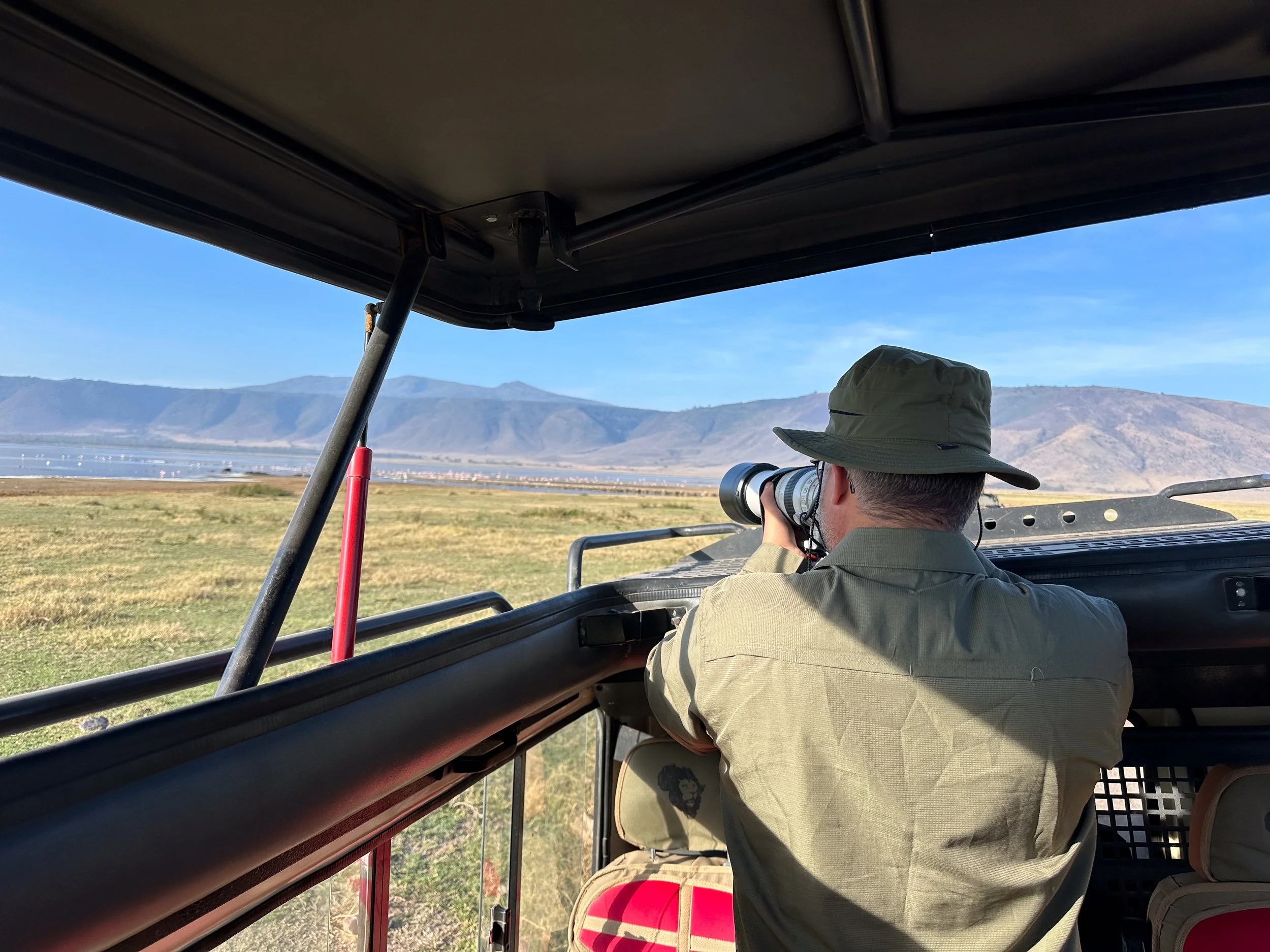
Did I bring the right gear to Tanzania?
I spent a lot of time before our trip looking at what other people suggested for the best gear for a Safari in Tanzania. Now let’s see if I made the right choices.
I spent time researching what other photographers take on safari. I asked other photographers what they found they used the most. I watched YouTube videos of safari trips as well as professional photographers out on safari shooting daily. Taking all that information into consideration I wrote an article on what I was going to bring with me, and it was pretty close to what I did actually take. The excepion was was the Sigma 500mm prime which I left at home. So how did it work out you might ask...or at least I'm going to answer that question whether or not you ask.
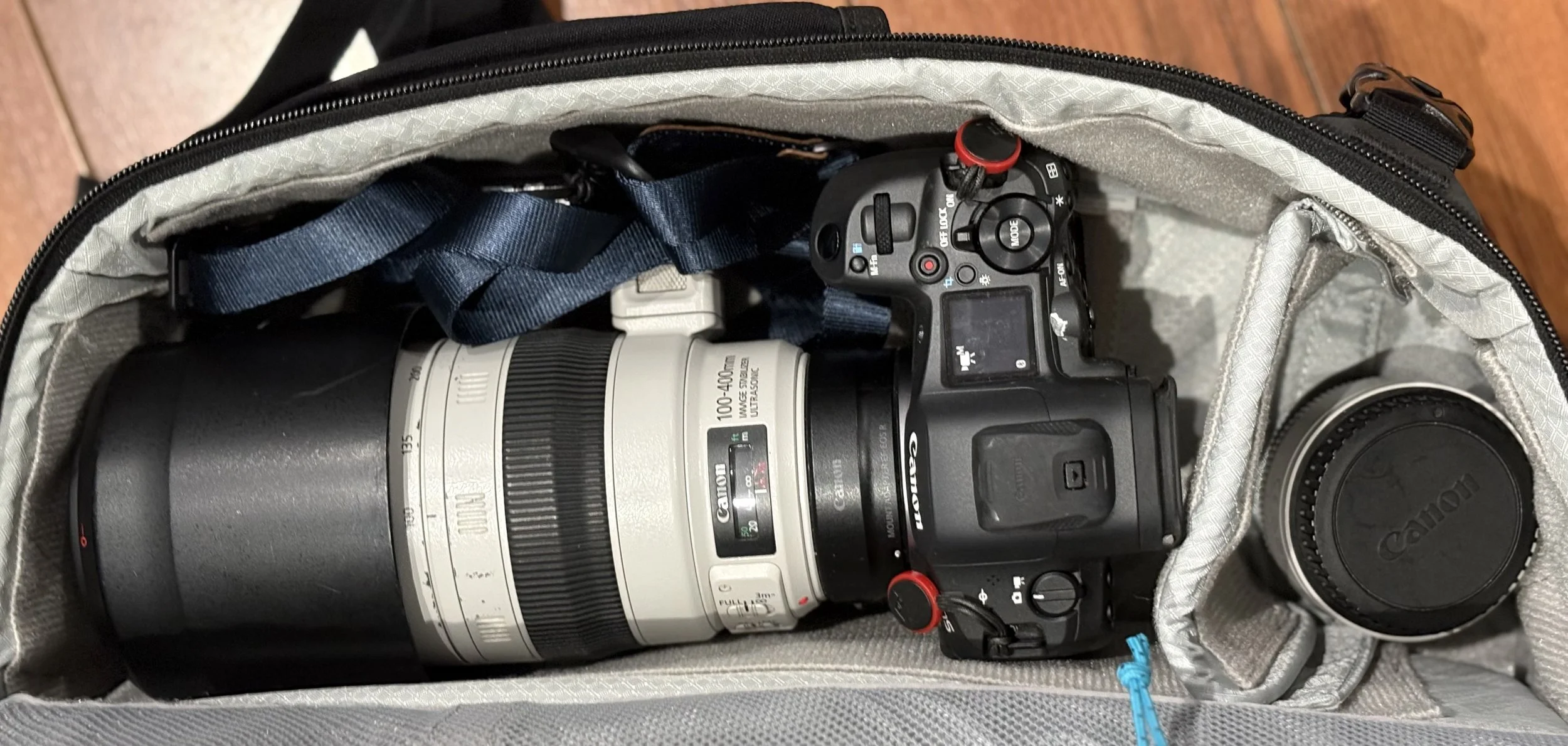
The Canon side of the bag with Canon R5 II, 100-400mm EF L lens and the 1.4 x Teleconverter
The thought was that I would prefer to have a telephoto zoom lens on one camera, and a wider lens on a second camera that would cover 90% of the focal range that I’d shoot while in the safari vehicle. I started with the 100-400mm lens on the Canon R5II and the Tamron 35-150mm on the Sony A7RV with a 14-35mm lens in the bag in case we had some chances for some landscape shots. I also carried the 1.4 teleconverter for Canon and a DJI pocket 3 for doing some video.
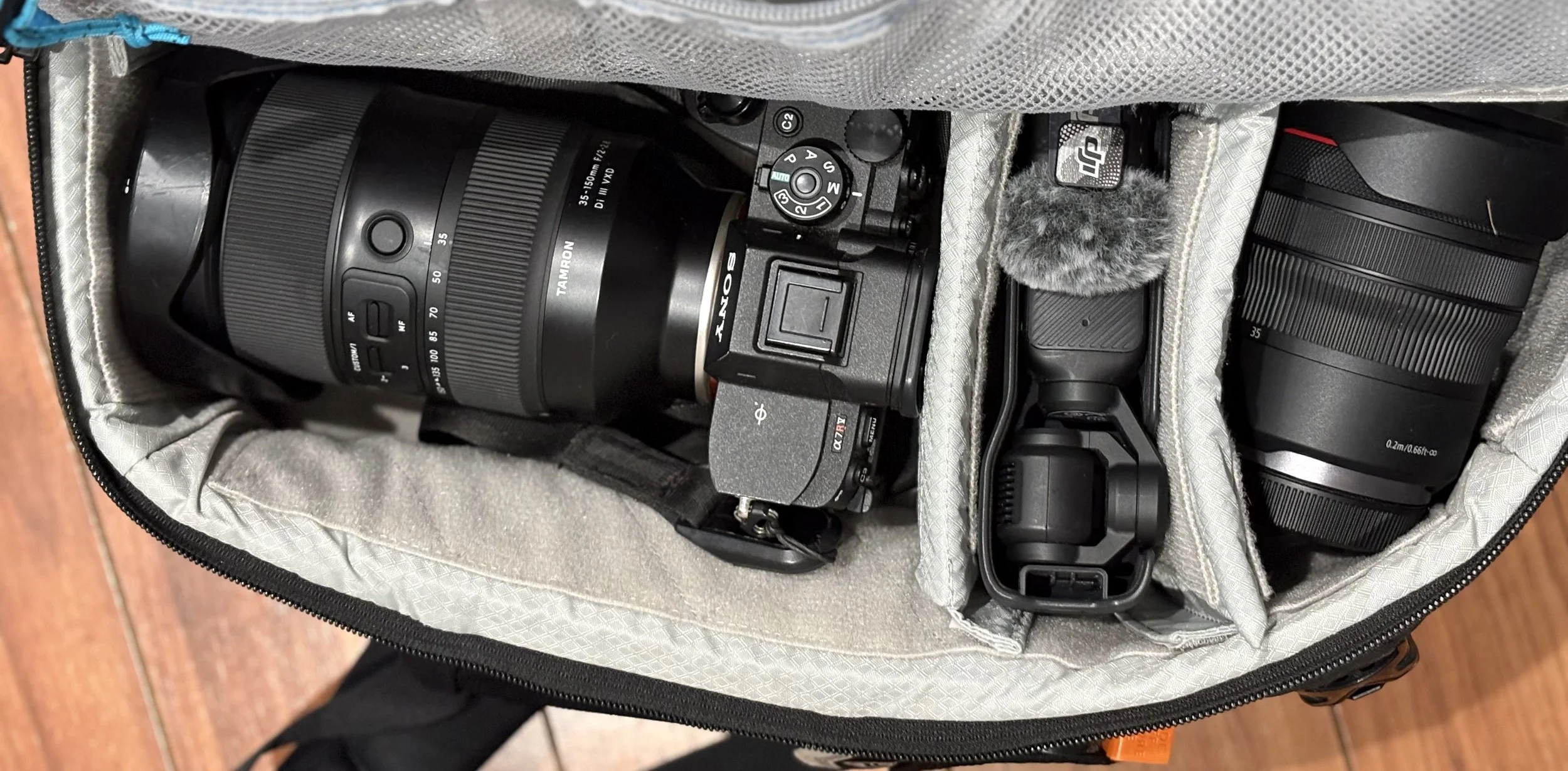
On the other side of the Gura Gear Kiboko 2 16L bag we have the Sony A7R5 with the Tamron 35-150mm, the Canon 14-35 f/4, and the DJI Pocket 3.
I was not expecting to do a lot of bird photography so I left the 200-600mm lens at home. I would love to have been able to use my 500mm primes but both were way to big to carry around with the other gear.
We knew we were going to be shooting exclusively from within the safari vehicle and had the ability to quickly grab one of the two camera. We were also aware that with other shooters in the truck, the possiblity of bumping into one another when shooting out the window or roof top was going to be an issue.
I can say now that I think I took the right gear. I did put the teleconverter on the Canon for much of the trip which gave me working range from 35-150 and 140-560 which was ideal for capturing the animals. We did see more birds than I had expected and there were times where I would have loved to have had a longer reach but for everything else the range was pretty much perfect and 560 was adequate for many of the bird shots. Weather wise it was sunny most of the time we were out so the limitation of smaller apertures of the telephoto didn't really hurt other than reducing the ability to have really nice separation of the subject when there was distracting frenetic backgrounds.
There are some limitations to what you can get when you have to stay in a vehicle and you are pretty much limited to shooting during the day. We did not get a lot of time near dusk or dawn with any animals so I didn't really need to have fast lenses for lower light conditions. It was also very hot during the day so even if I did have a longer lens, shooting animals far away was never going to be useful with the heat haze and shimmering out on the Serengeti plains.
At home I will use the 35-150 for shots where the environment the animal is in is as interesting as the animal itself but most of the time you are not so close that 100mm is wide enough to capture those shots. In Africa there are many times that animals come quite close to the vehicle, and many more times where an elephant or giraffe fill the frame even at 35mm. There were a few times it would have been interesting to get an ultra wide shot of a couple of elephants but the challenge there would have been getting the camera out the window with a multi-tonne animal only a couple of metres away. In any case, with the amount of dust flying around I was definitely not going to change lenses in the vehicle so I left those types of shots to the iphone wide angle lens.
Typical shooting through the canopy with the 100-400 while the 35-150 was ready for any closer shots on the bag at my feet
In general while we were driving through the parks I would have the 100-400 on a strap while standing looking through the roof of the truck with the 35-150 sitting on my camera bag at my feet. We would usually spot an animal (or group of animals) in the distance our driver would find a good spot to see and then we would get a few shots off. Once we were happy with that, our guide would usually find a spot where the animals were like to move towards which allowed us to get ready for closer shots and decide our compositions. Many times the animals would cross fairly close to the truck giving us multiple angles. With many of the big cats we would just sit and watch them as they relaxed in the sun, playing, sleeping and scratching. In these cases I would go back and forth between cameras grabbing closer individual shots and wider shots of the whole family.
While we were in motion I would grab the DJI pocket 3 with its gimballed camera and do a little bit of video of the scenery and as we approached some of the animals.
The one camera I didn't use was the Sony ZV1. It’s a nice point and shoot video oriented camera that I will often put on the hot shoe of my cameras to get a video of what I'm shooting. This was not practical in the safari vehicle. That camera just sat in the camera bag the entire trip.
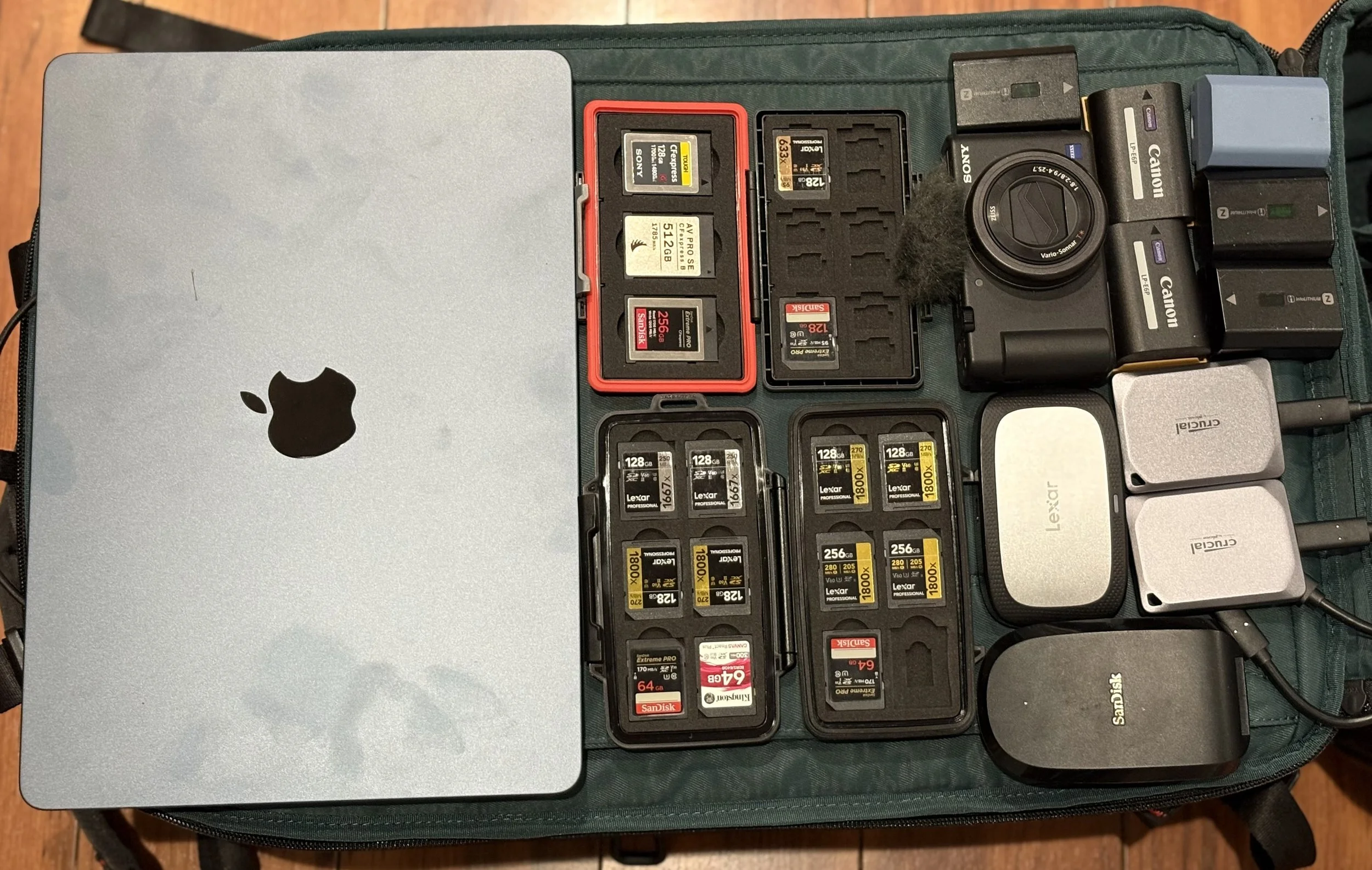
Everything else that was in the bag including Macbook air, plenty of extra cards and batteries, SSDs and card readers for backups and the Sony ZV1
With the other accessories, I had plenty of SD/CF express cards and only needed one SSD but I do like having more than necessary for media. The Macbook Air that I purchased for the trip was fantastic. It was very small and light but was capable to quickly download everything we shot daily whether or not we had power available, and was able to do processing of video and pictures just as quickly as my main computer. I will be happy to travel with this laptop for years.
Battery wise I usually used on full battery each day and started on the second and was able to charge each night so I had enough. I could easily last 3 full days with the Sony batteries but would have likely needed another Canon battery if we had no power available for more than 2 days.
I brought a puffer for blowing out dust and used it every night, but since we didn't change lenses in the field I didn't have to clean the sensor during the trip. I did bring a bunch of sensor cleaning kits and luckily didn't need them. I will always bring them after finding dust on the sensor on our trip to Australia a few years back that took forever to remove via software.
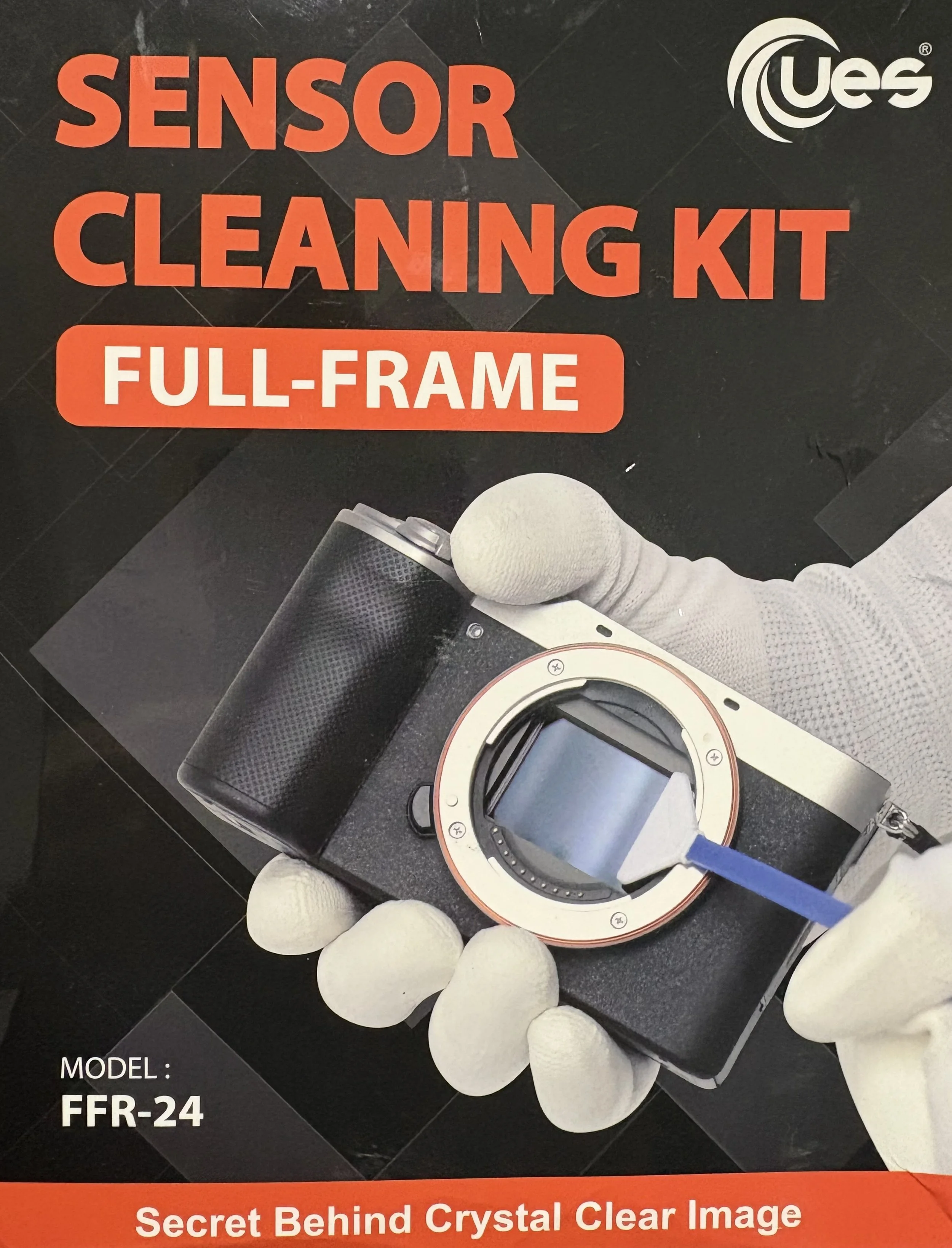
I’ve learned that having a couple of these on a trip can save a lot of work removing spots afterwards.
Thanks to all the advice and research I think I had exactly the gear that I needed for the trip. I would always like to have bigger and brighter lenses but they are impractical for plane travel and can be a pain when you are limited to shooting in tight quarters with other photographers also needing space to shoot. I would likely not take the Sony ZV1 on a similar trip and it is likely the only change I would make if I did the same trip again.
Having 2 different brands of cameras means that I couldn't switch lenses between them if I had a problem with one of the cameras. Usually I like to have that redundancy but at this time that is the best gear I had available. Replacing the Canon gear with a Sony camera that is as useful is not in the budget especially since that would leave a number of expensive glass out of the game. I would have been just as happy using the 200-600 instead of the 100-400 since I often used it with the teleconverter anyways but at the moment I don’t have a second Sony camera that is nearly as good as the Canon R5II for resolution and speed (and likely won’t in the near future).
Tanzania - Antelope
When you go on safari you mostly think about animals like the big 5, the exciting huge animals and the big cats. Maybe you think about apes and monkeys or all the birds but rarely do you hear about people going to Africa specifically to see the animals the are most often on all the other animals menus. These are some of the most numerous animals on the continent with amazing herds that migrate during each season but other than the wildebeest that are famous for trying to cross rivers full of crocs, we only think of the antelopes basically as food for the cats.
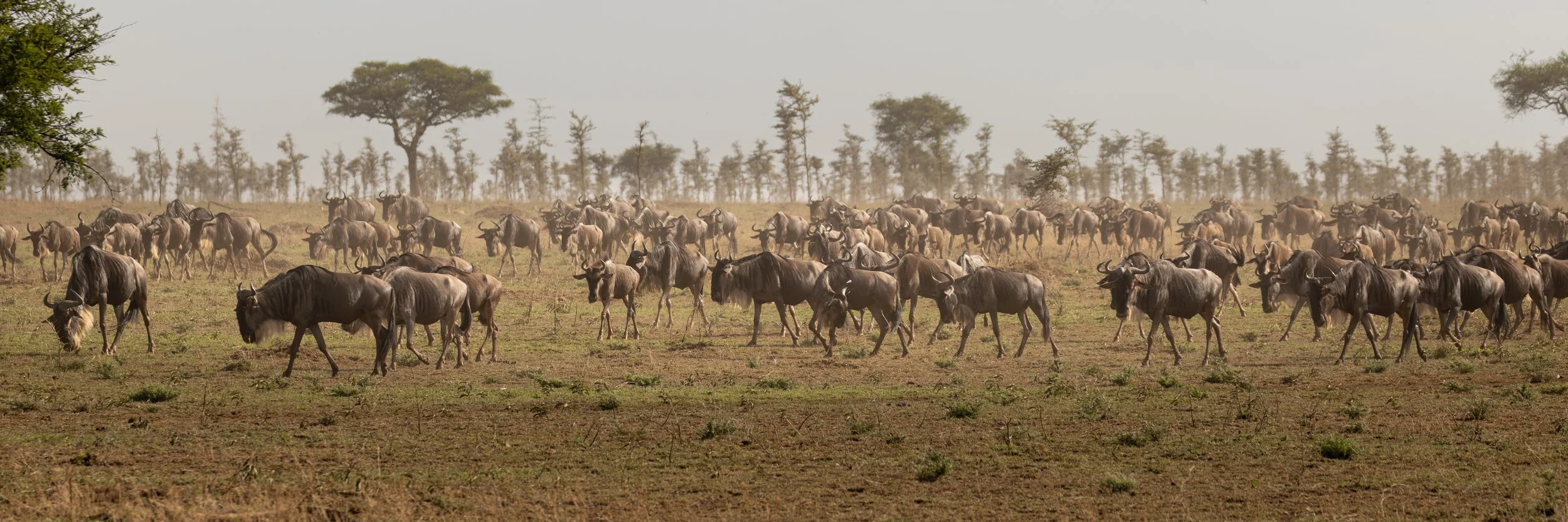
Wildebeest on the Serengeti
When you go on safari you mostly think about animals like the big 5, the exciting huge animals and the big cats. Maybe you think about apes and monkeys or all the birds but rarely do you hear about people going to Africa specifically to see the animals the are most often on all the other animals menus. These are some of the most numerous animals on the continent with amazing herds that migrate during each season but other than the wildebeest that are famous for trying to cross rivers full of crocs, we only think of the antelopes basically as food for the cats.
There are approximately 70 different species of antelope in Africa with around 20 species in the Serengeti totaling over 2 million migrating antelope. On our 2 week trip we managed to see 12 different species from our safari vehicles.
Gnu (Wildebeest)
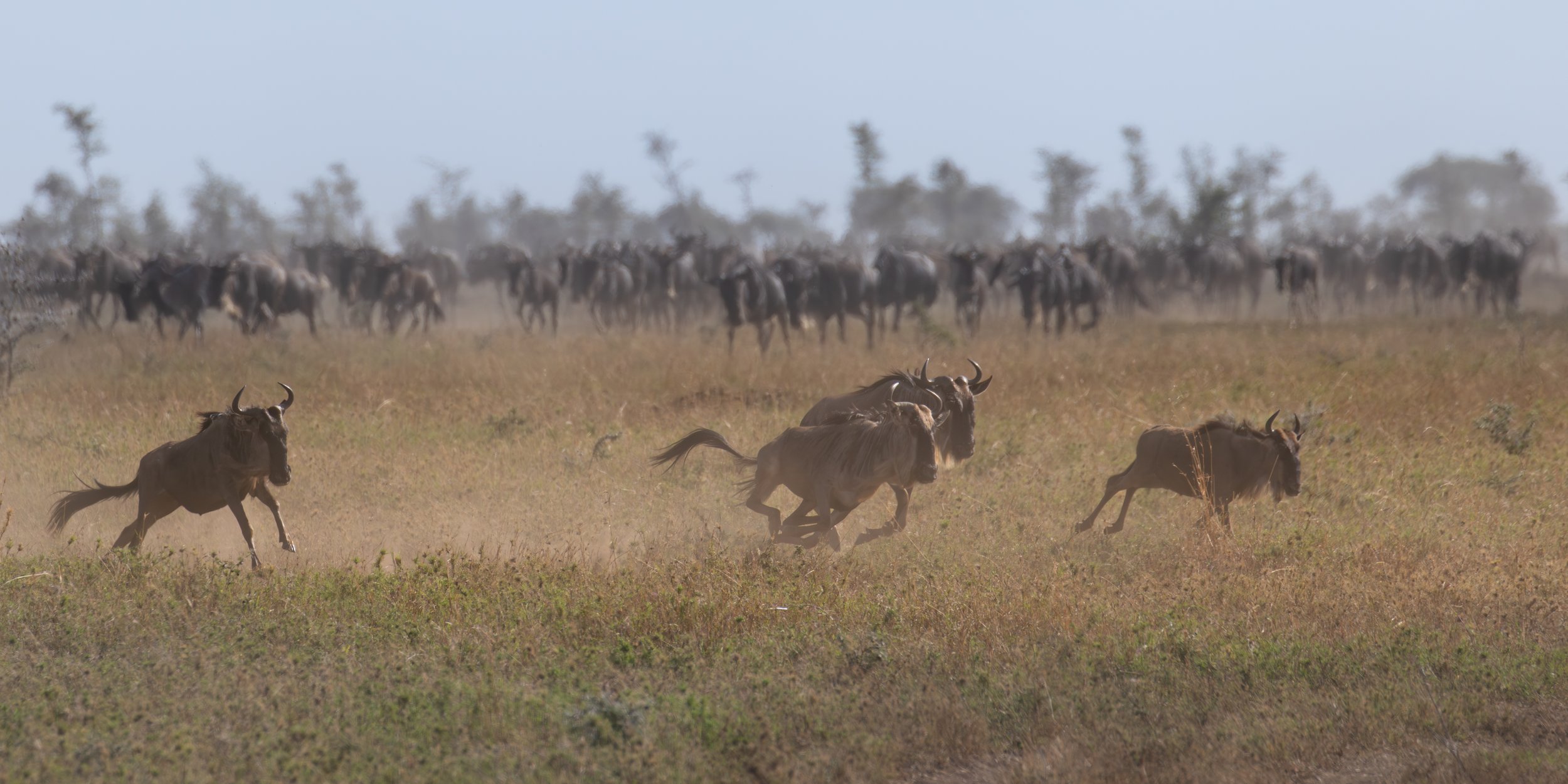
The dust rises as the wildebeest cross our path on the Serengeti
Approximately 1.6 million Wildebeest (gnu) and more than half a million gazelles are the largest numbers and we saw a good number each and every day that we were on safari.
We were very lucky to see the numbers of wildebeest we saw on this trip, according to our guide they were in much larger numbers than expected for the time of year. Often found with zebra, they were hard to miss as they were visible in a line as far as we could see with a constant dust cloud above the herds as a telltale of what is coming.
The main migration events that everyone comes to see are normally in January to March for the calving in the south and the Mara River crossing in July to October. We may not have seen them in the numbers of those times but it was still the largest gathering of animals I have ever seen so pretty spectacular.
Gazelles (Thompson's and Grant's)
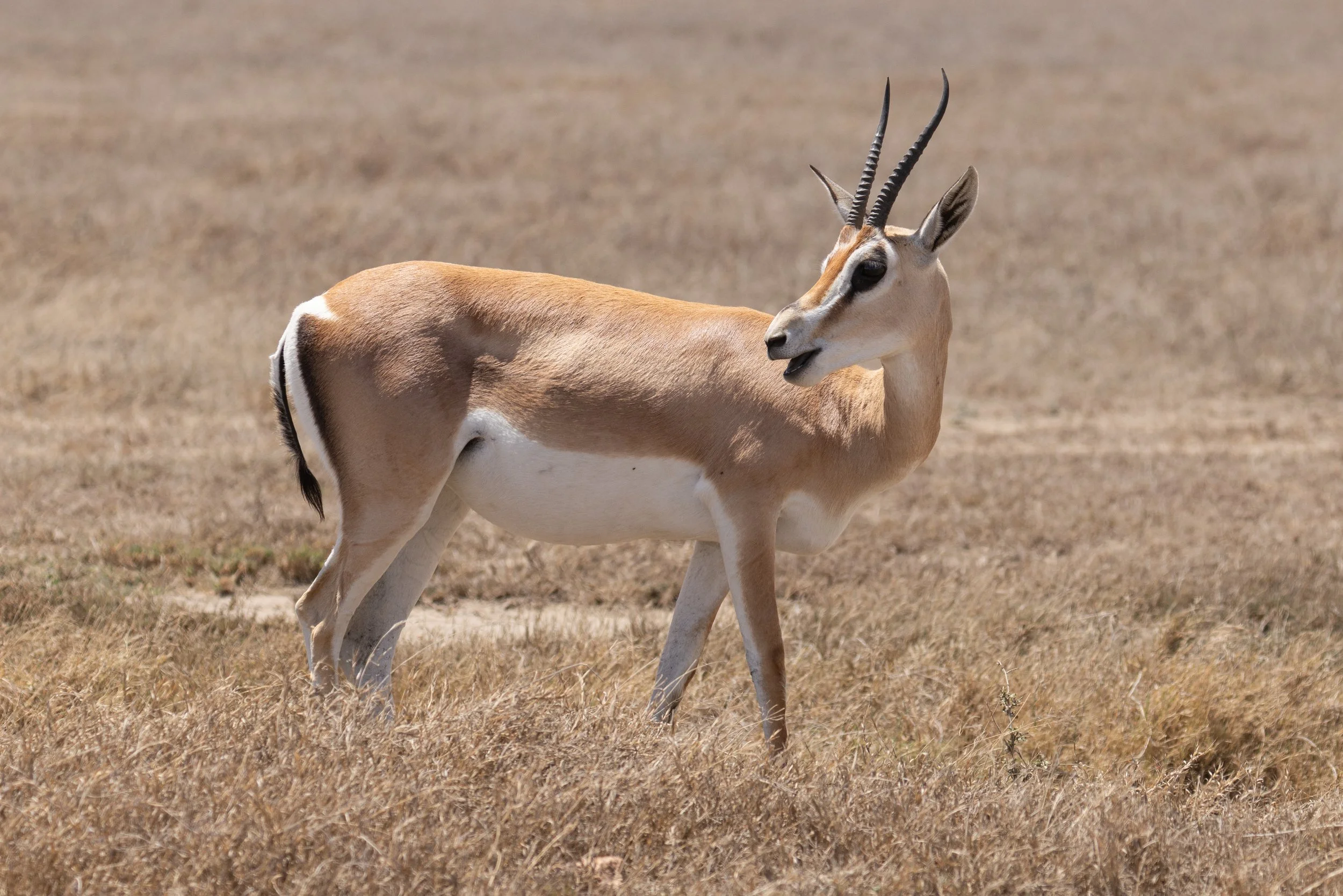
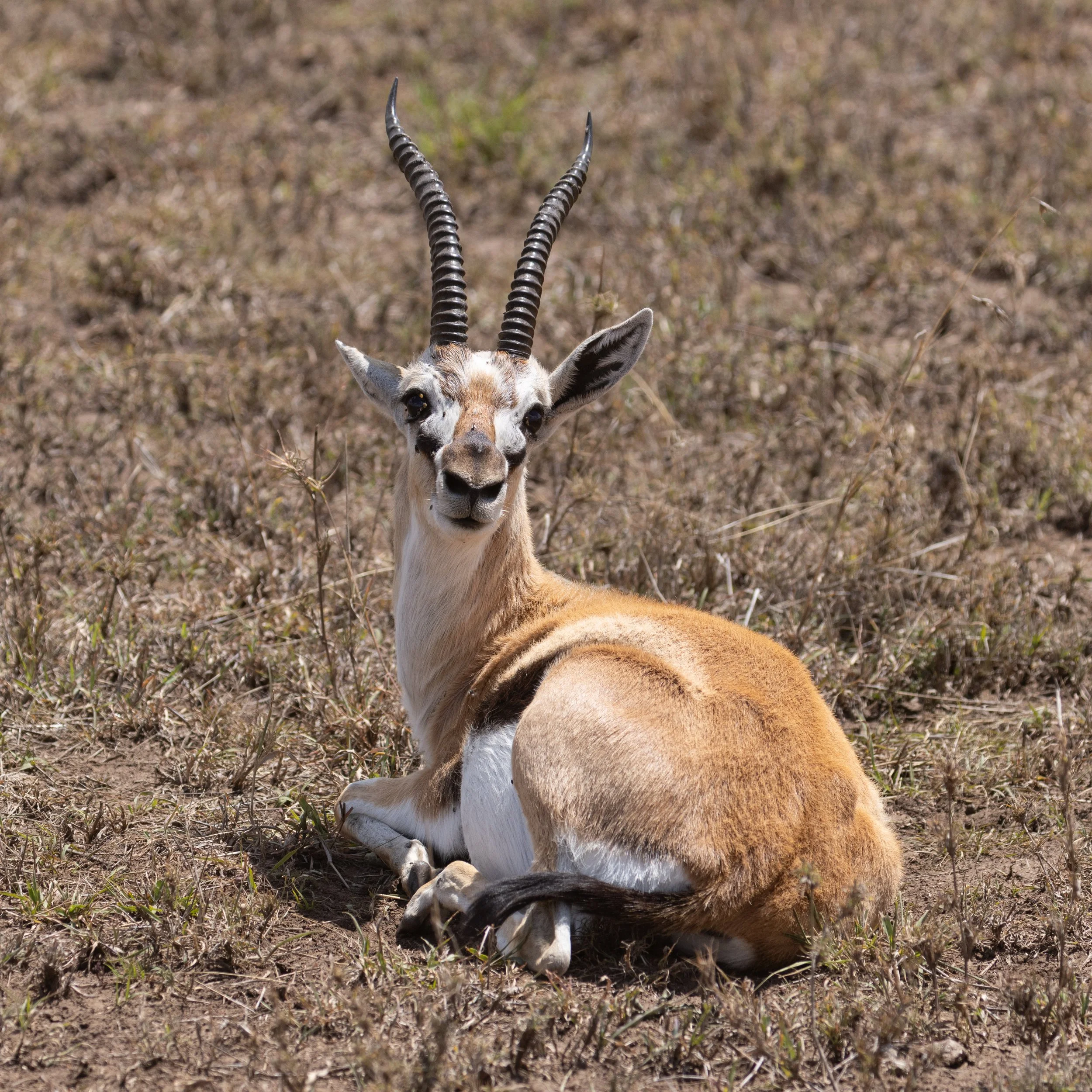
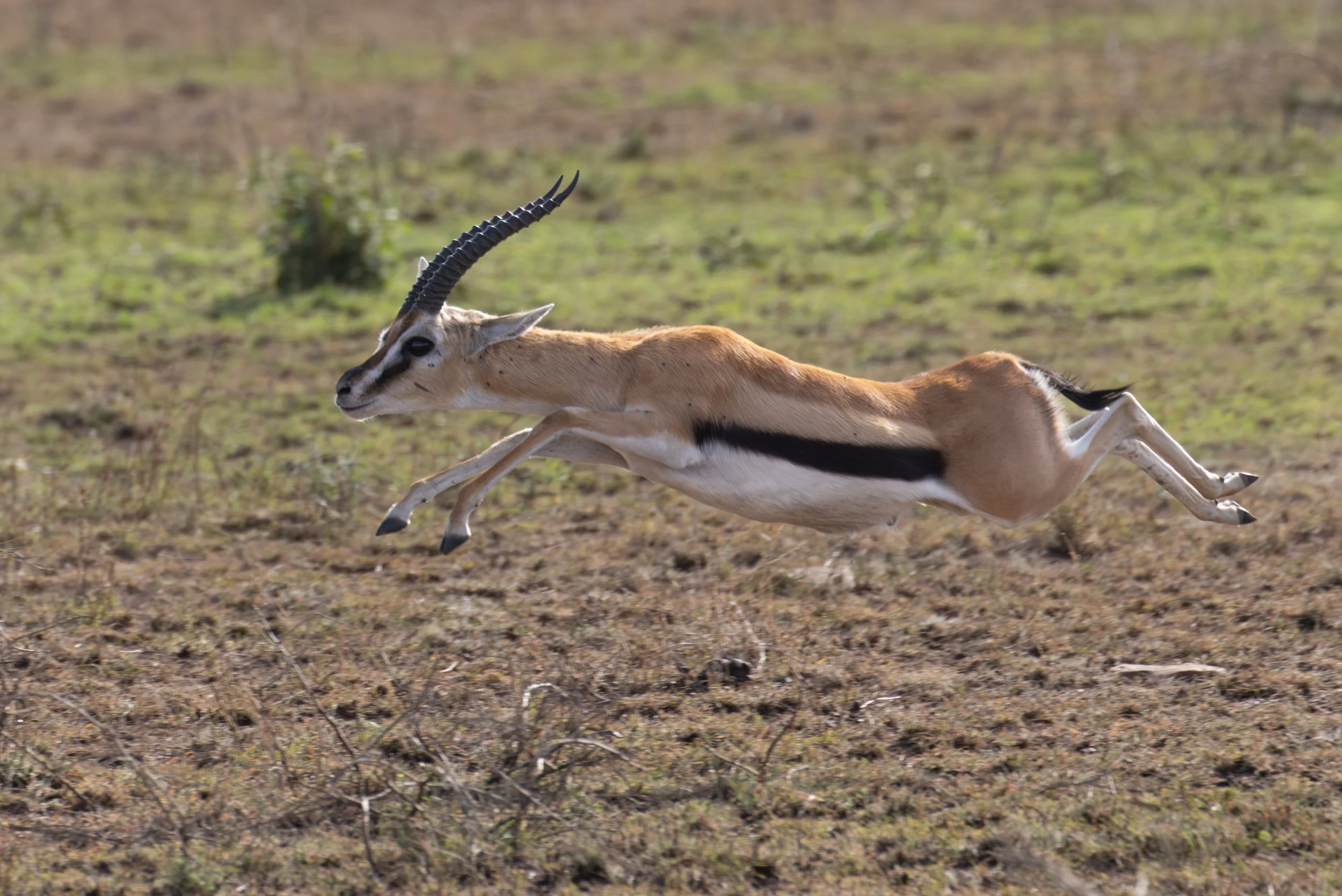
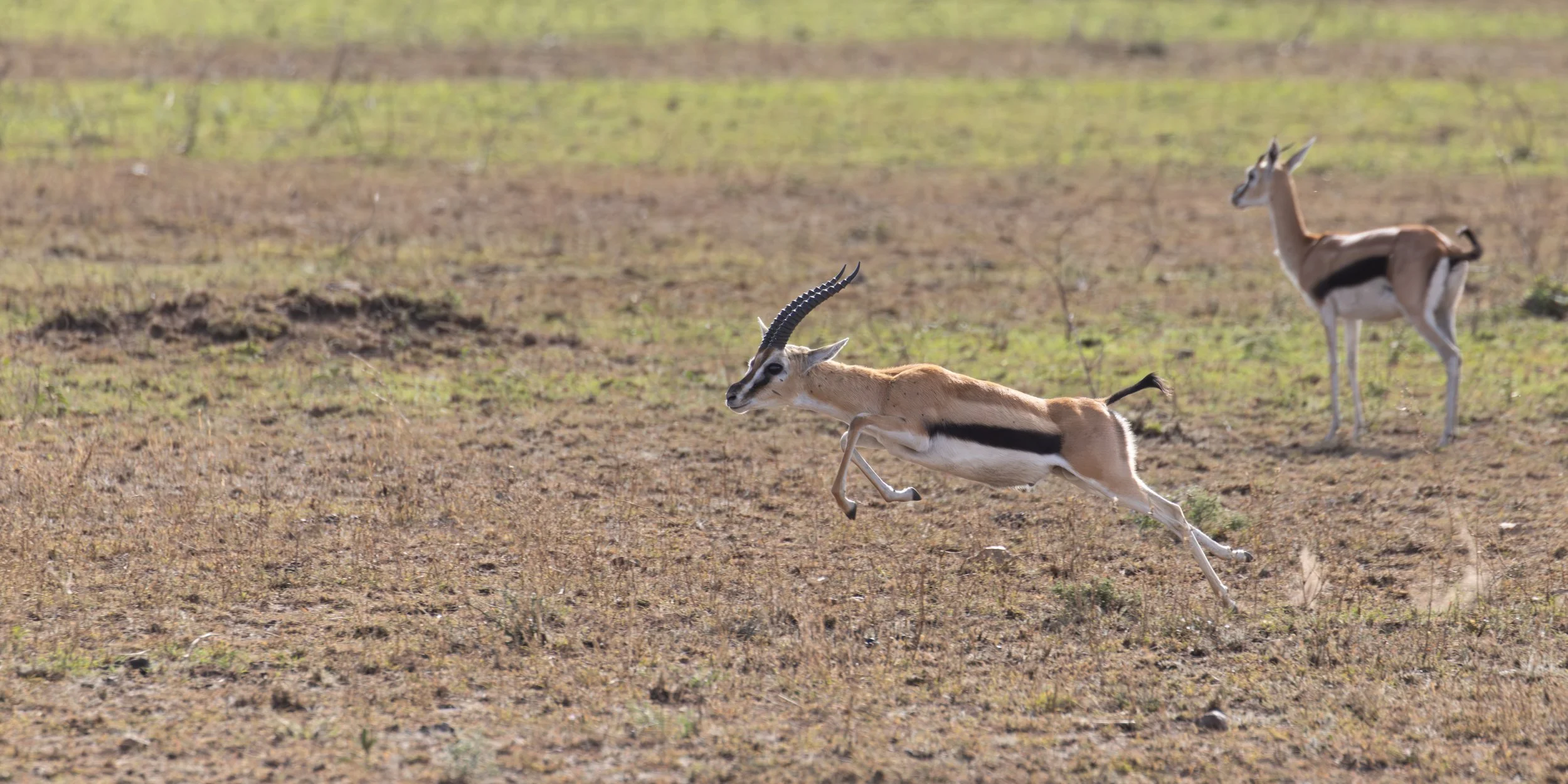
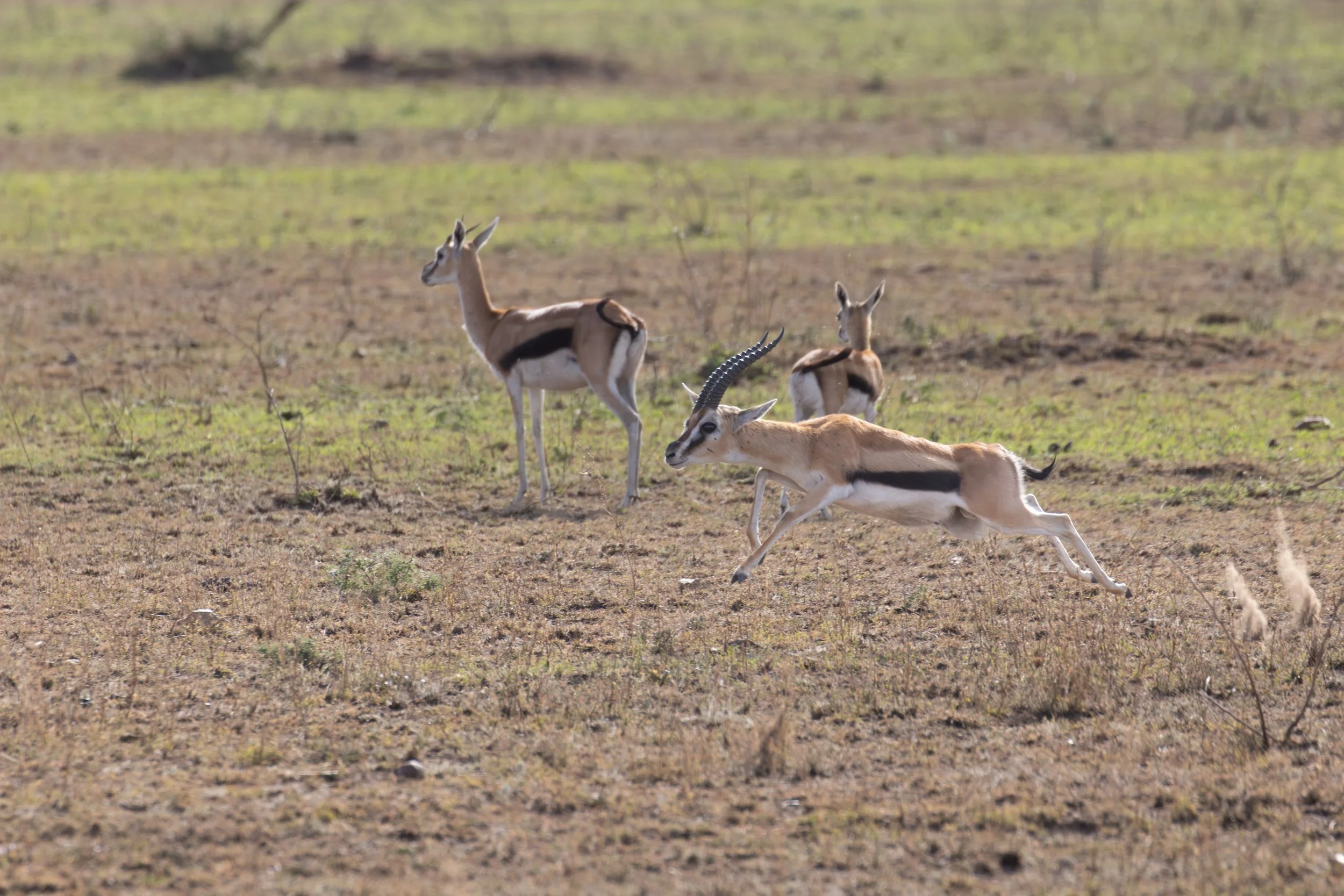
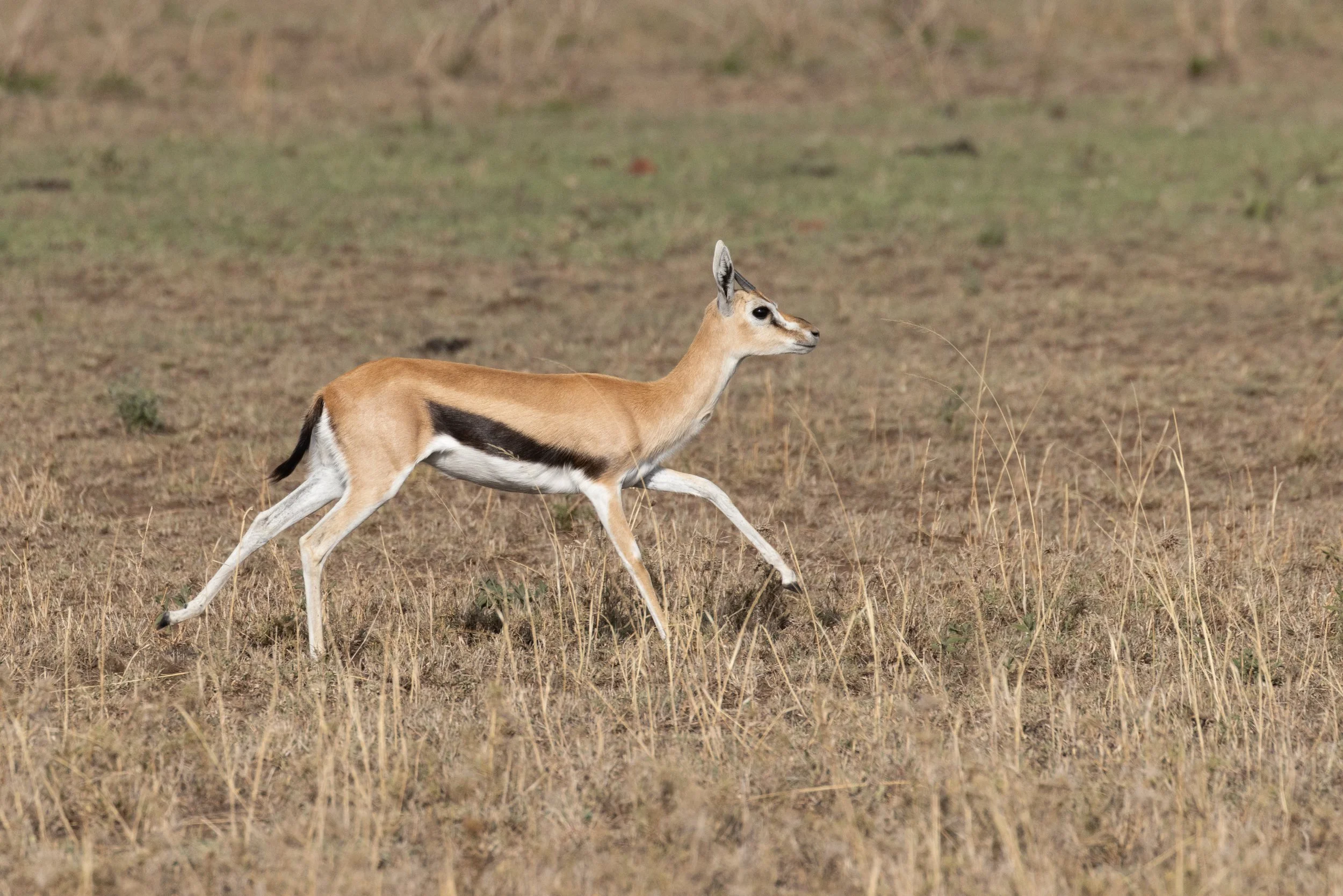
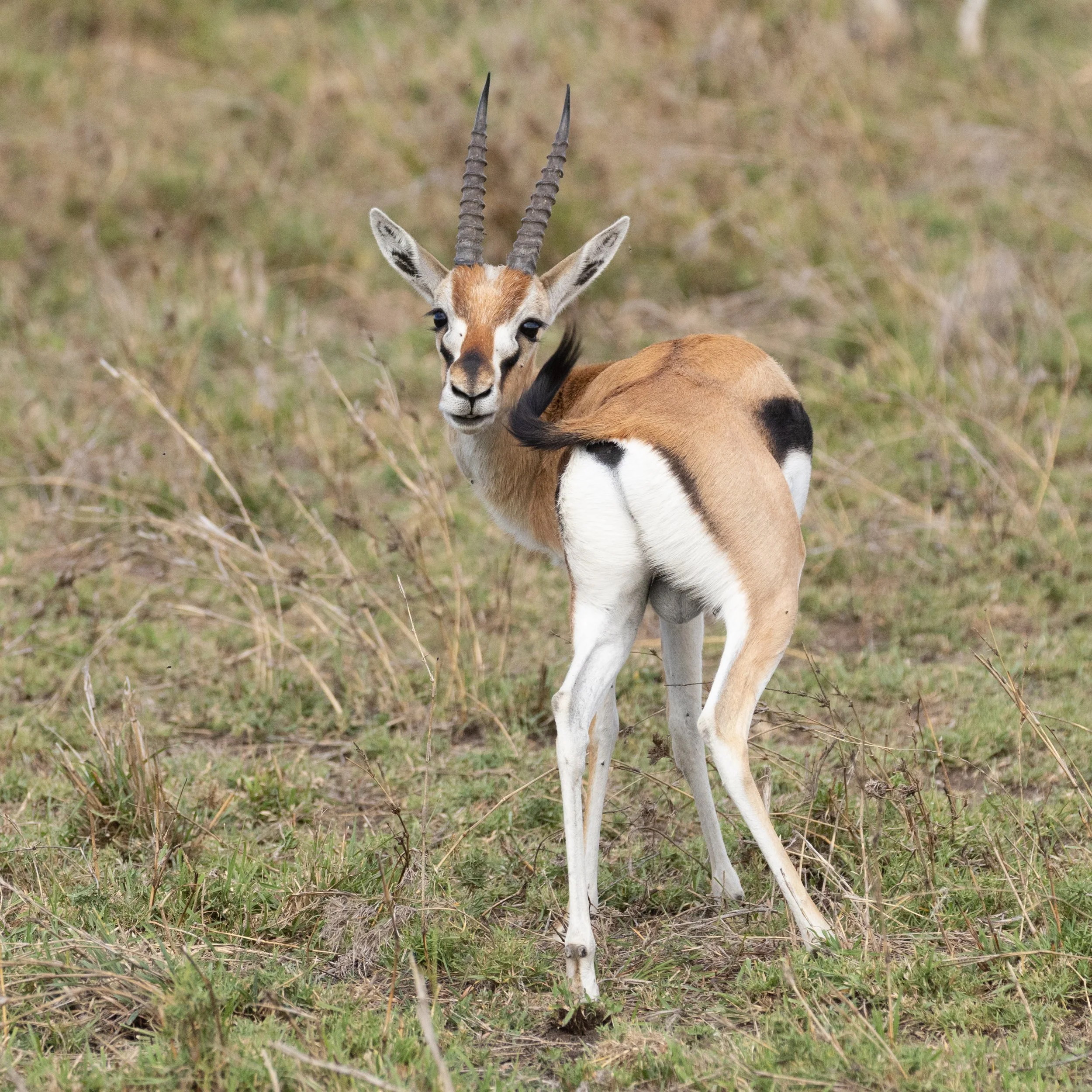
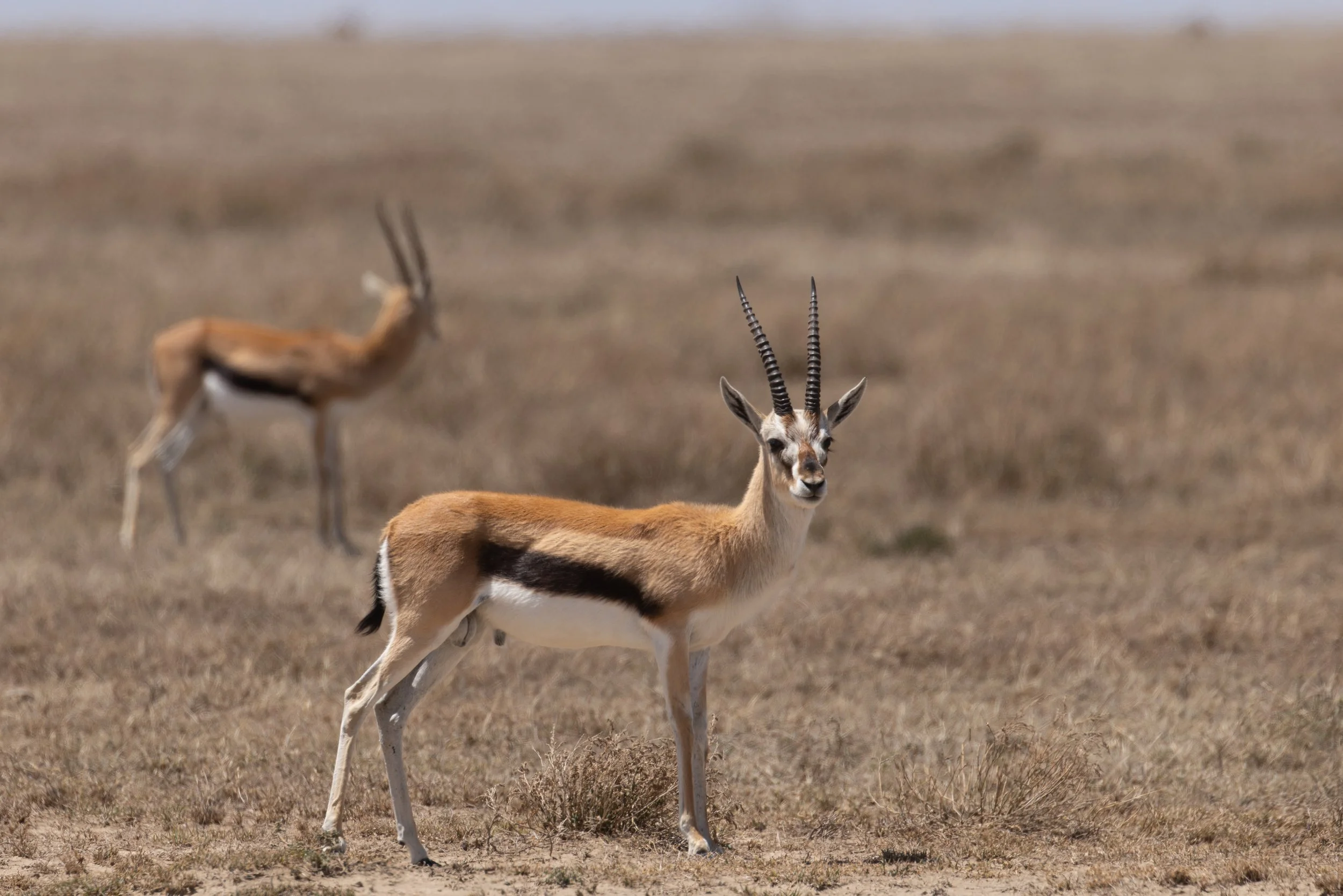
A constant sight in the Serengeti, most of the ones we saw were the Thompson's Gazelle but we did see some Grant's here and there. The Thompson's gazelle, which have a large black stripe on the sides, were often along the roads and were pretty active. Mostly grazing but they had plenty of time for play since there didn't seem to be a lot of danger in the areas we saw them at least not visible danger.
Impala
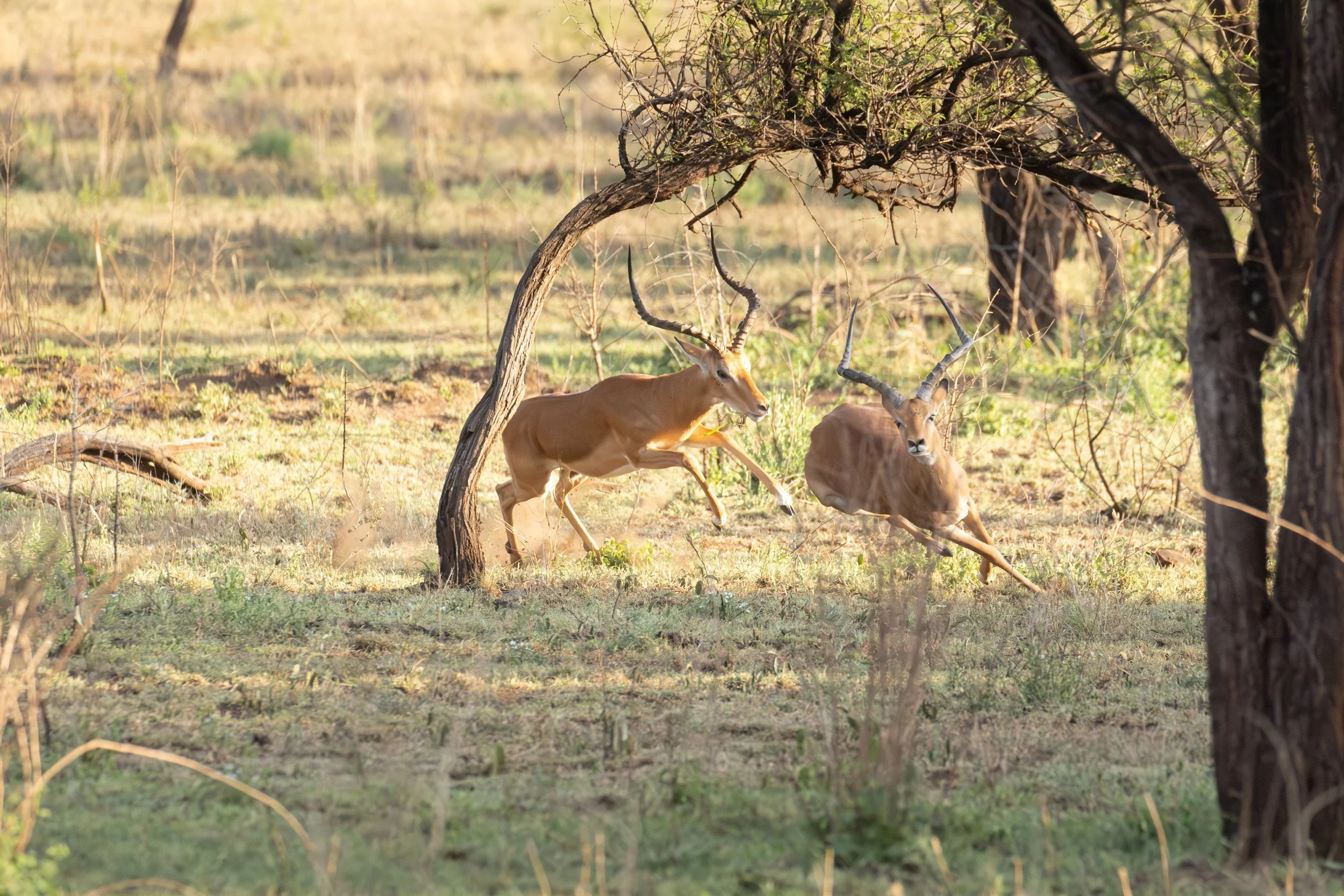
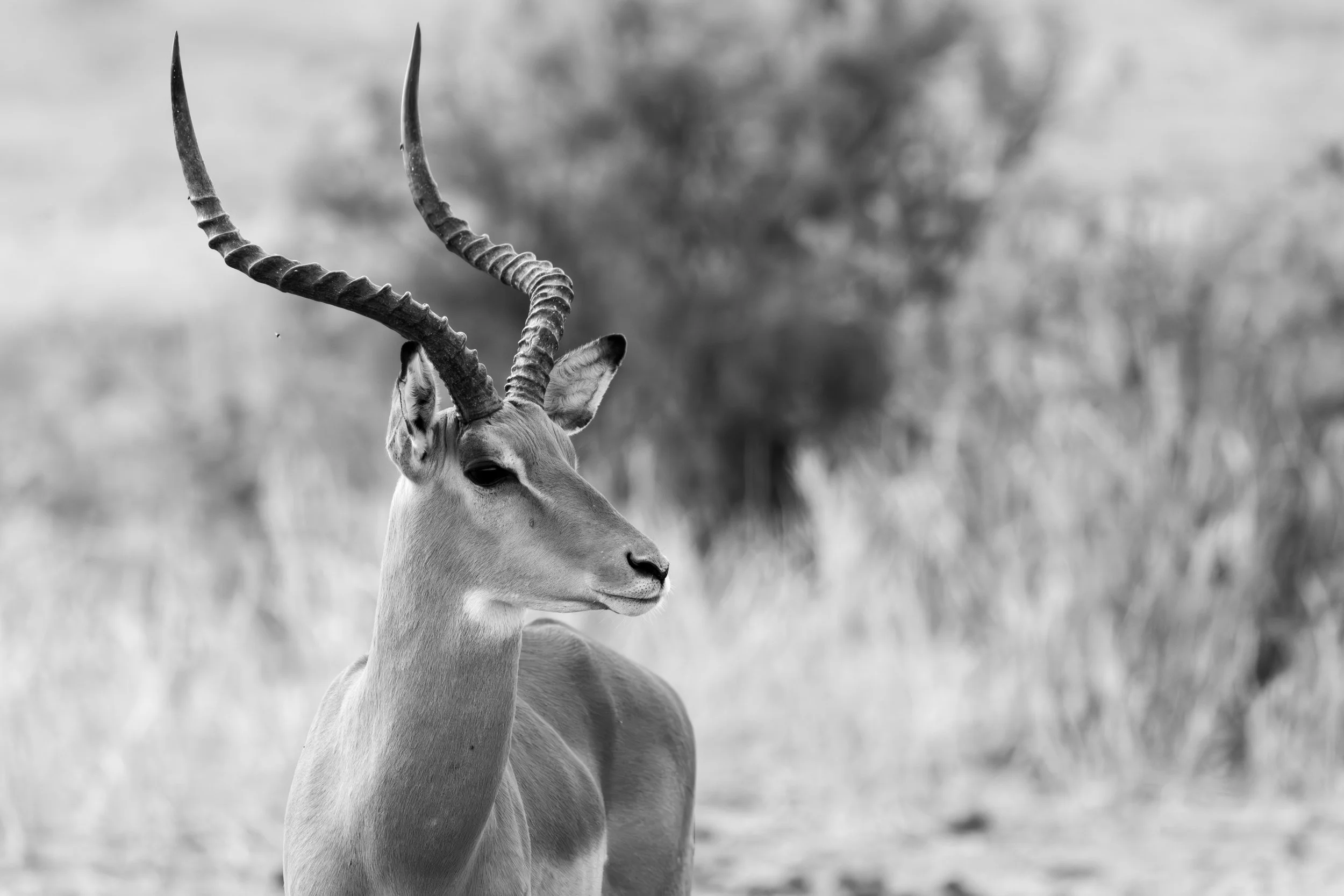
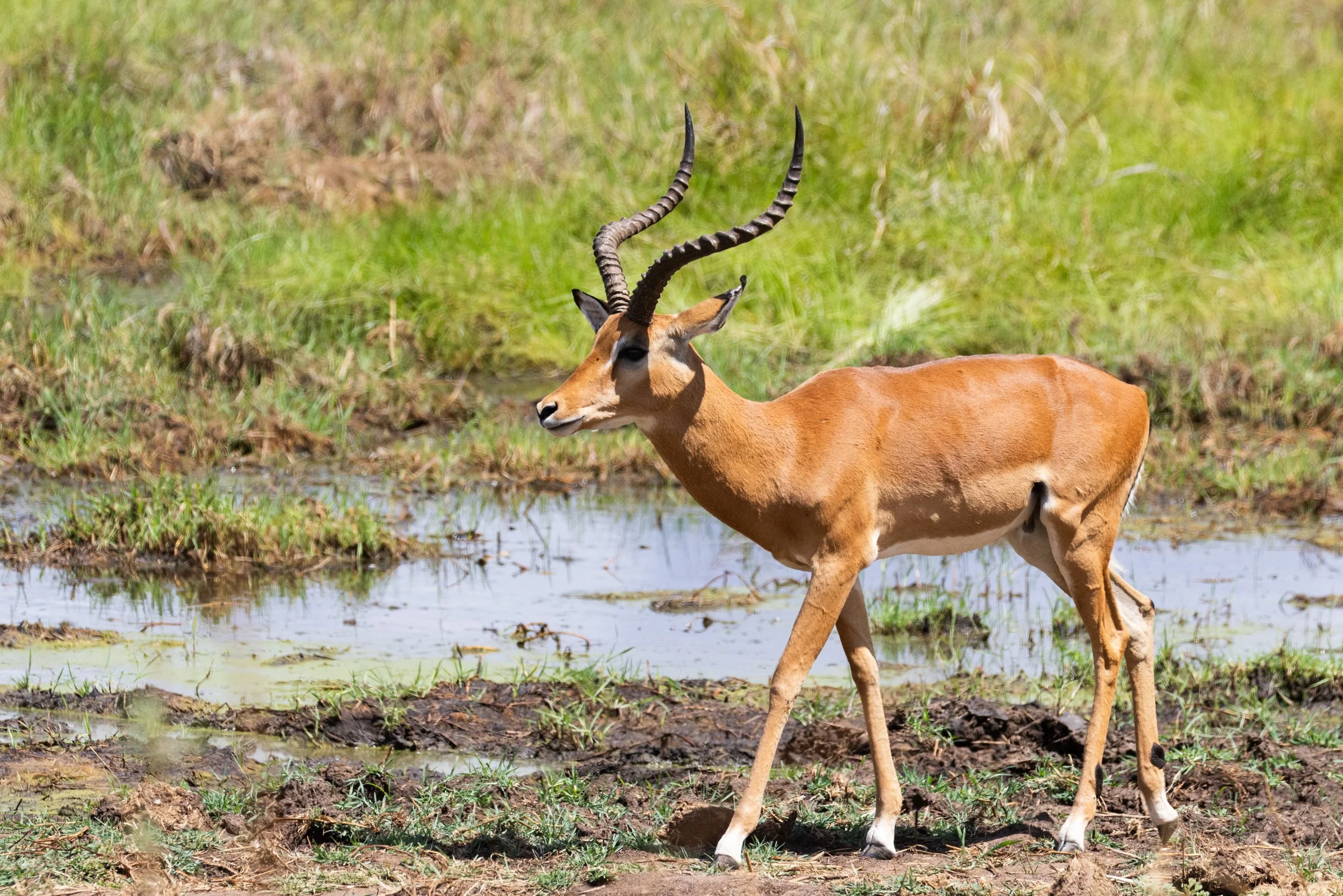
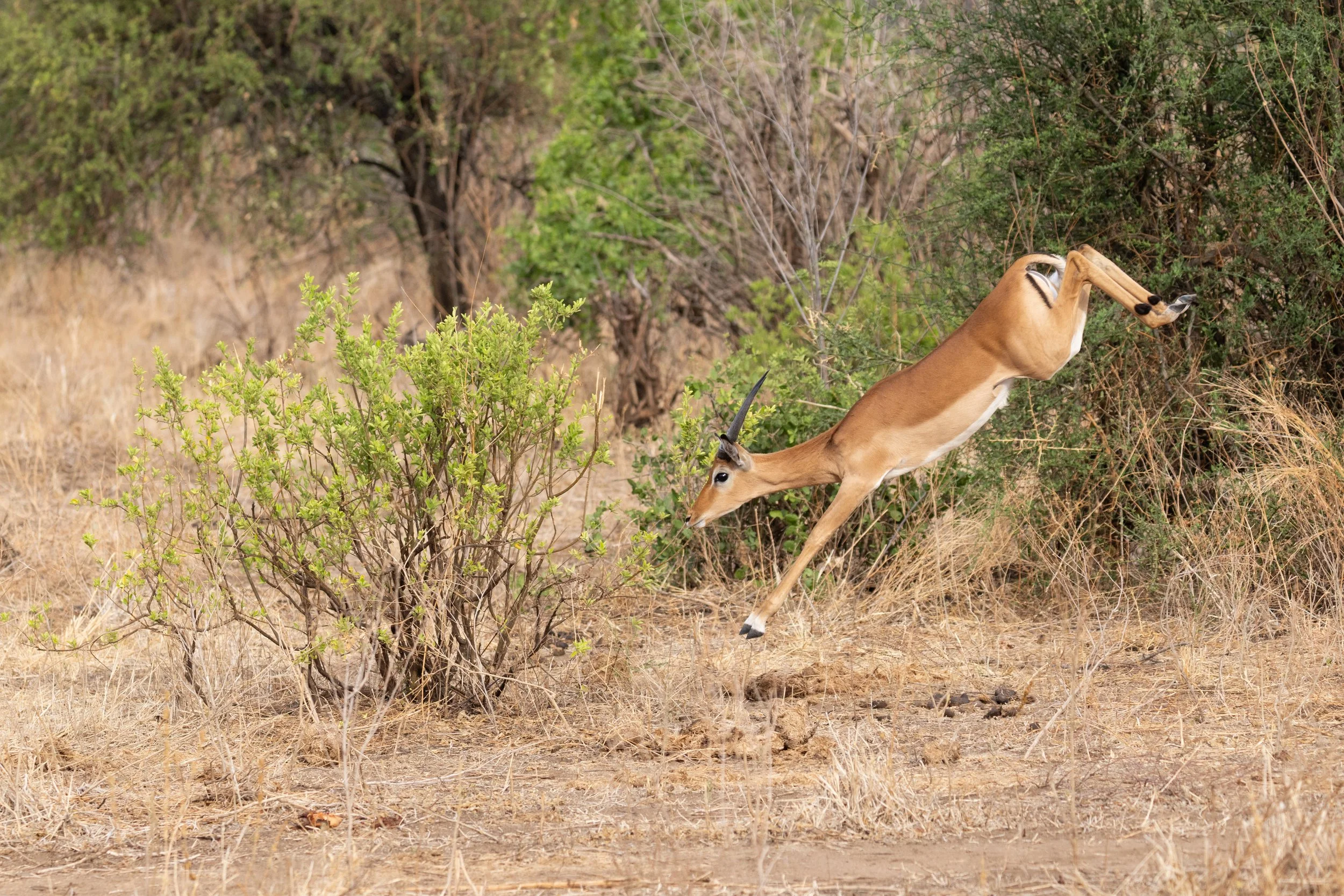
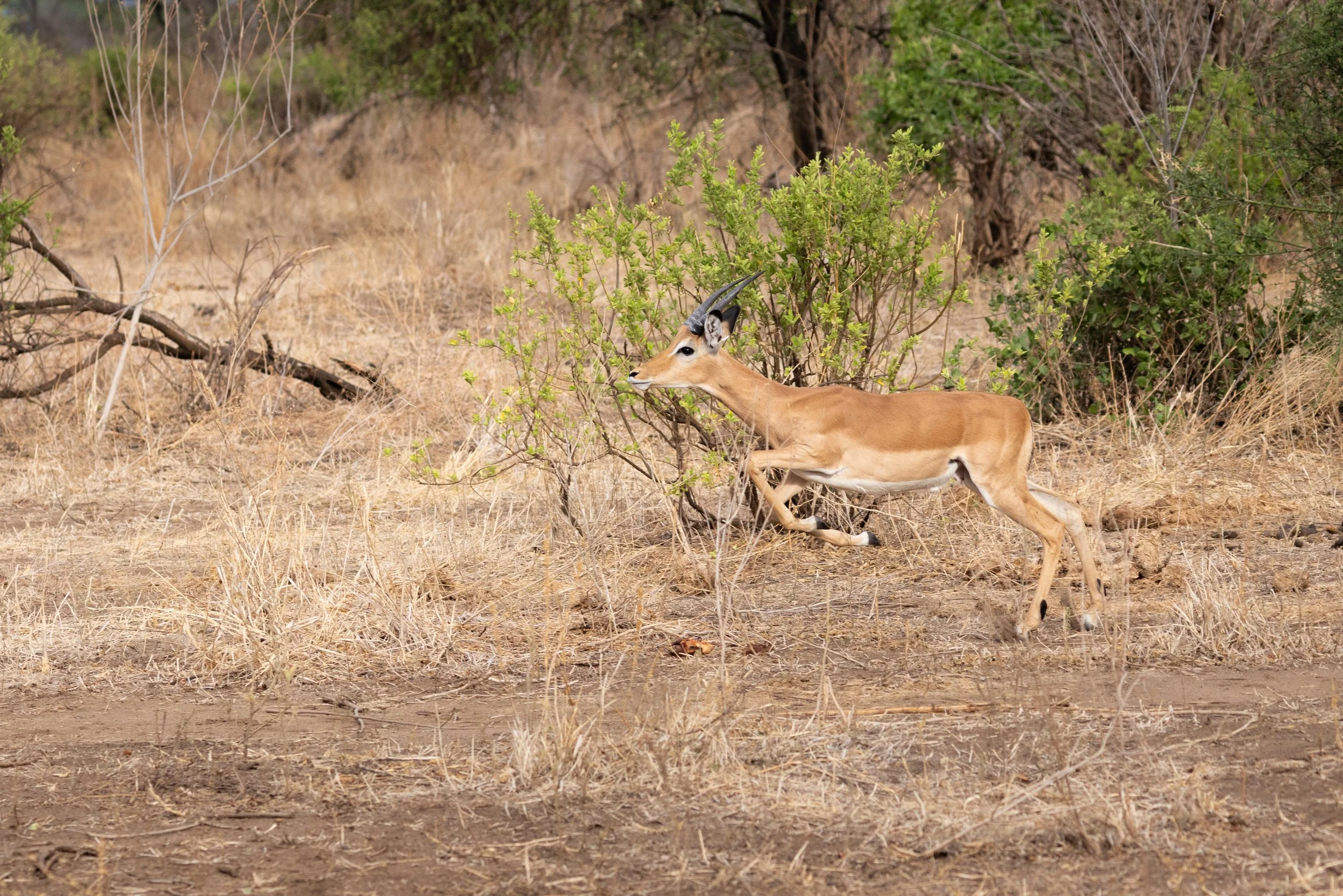
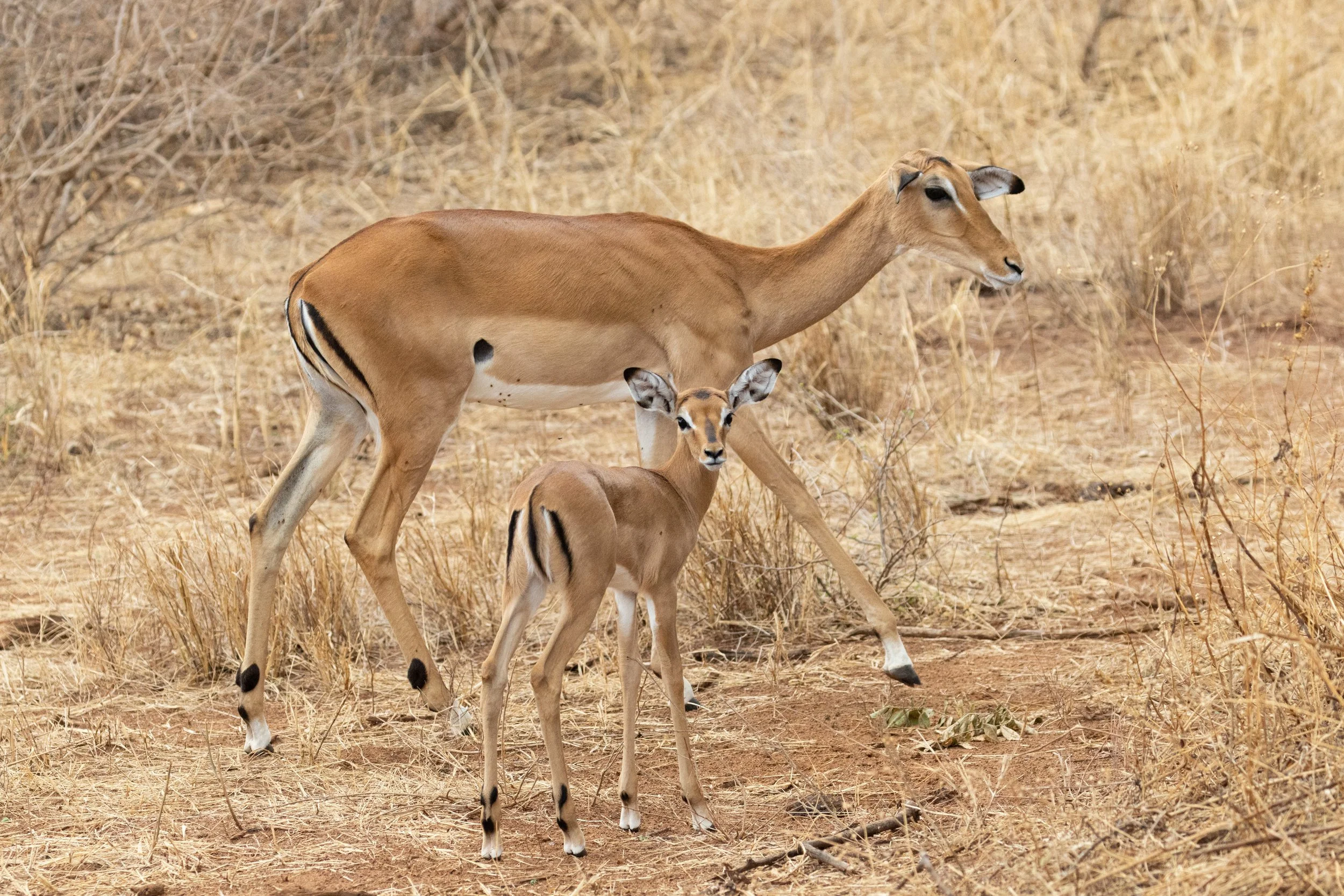
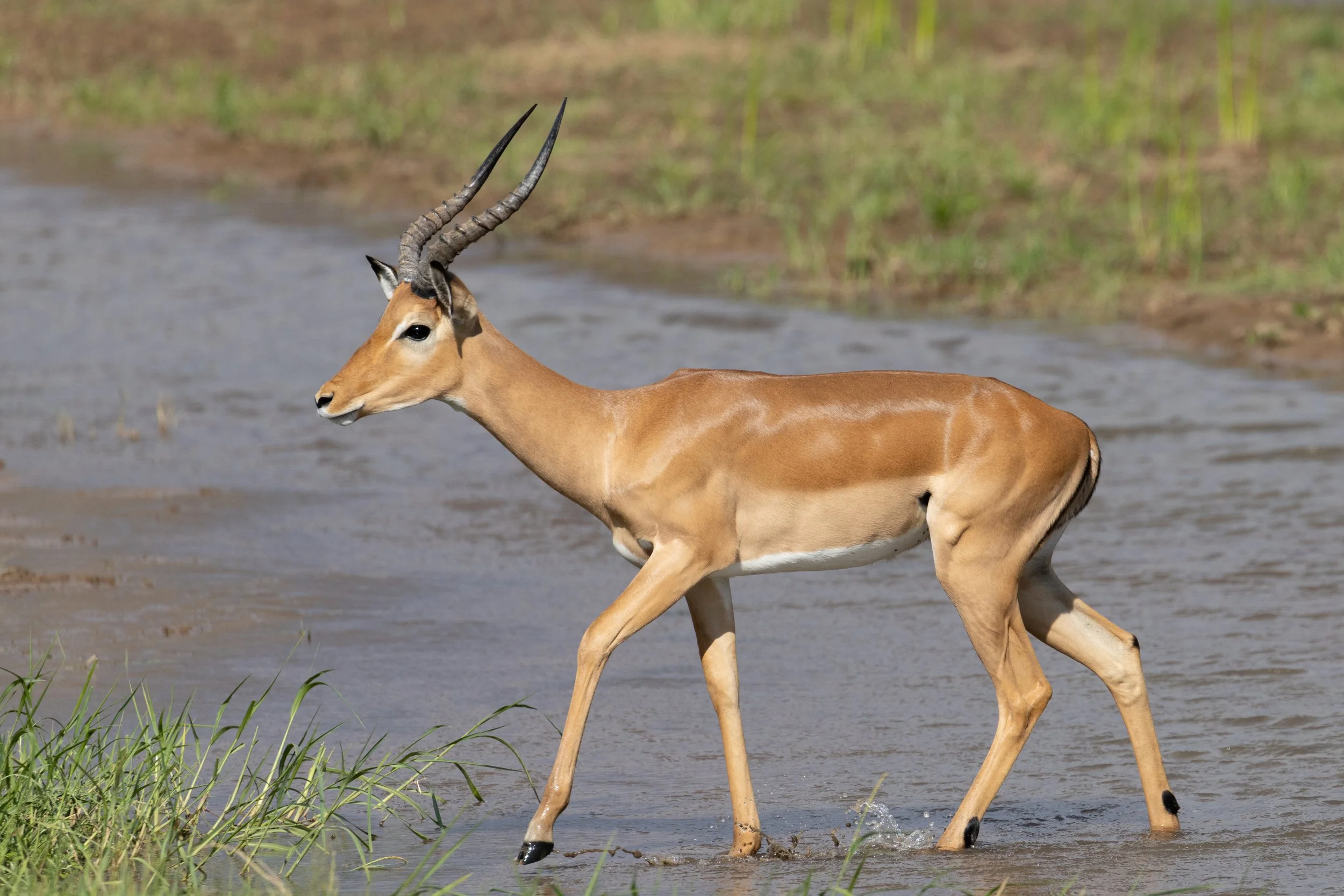
The next most common species we saw were the Impala with their amazing speed and huge jumps, the white patch over the eye and the black stripe on the tail make them fairly easy to discern from the Grant's gazelle.
Waterbuck
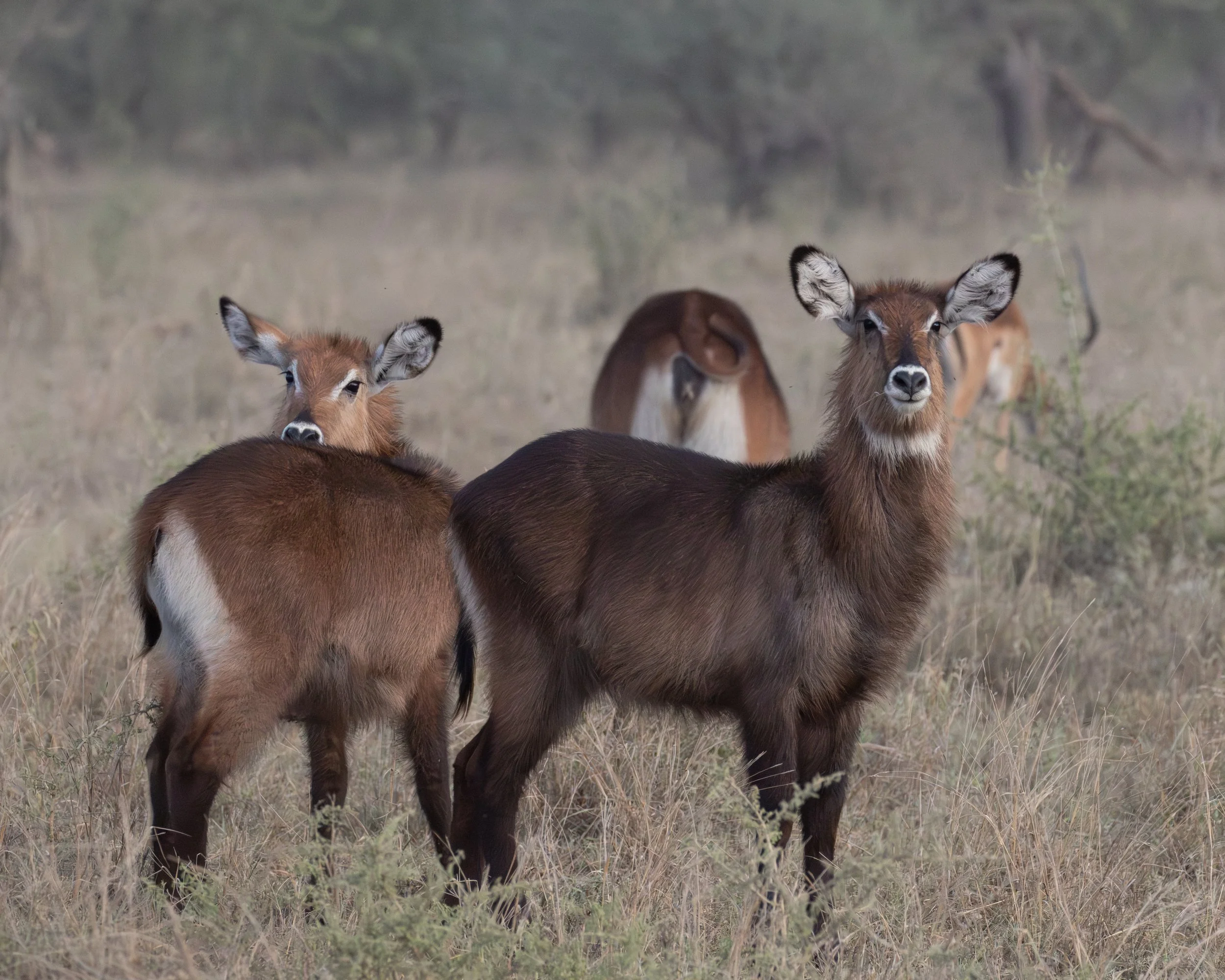
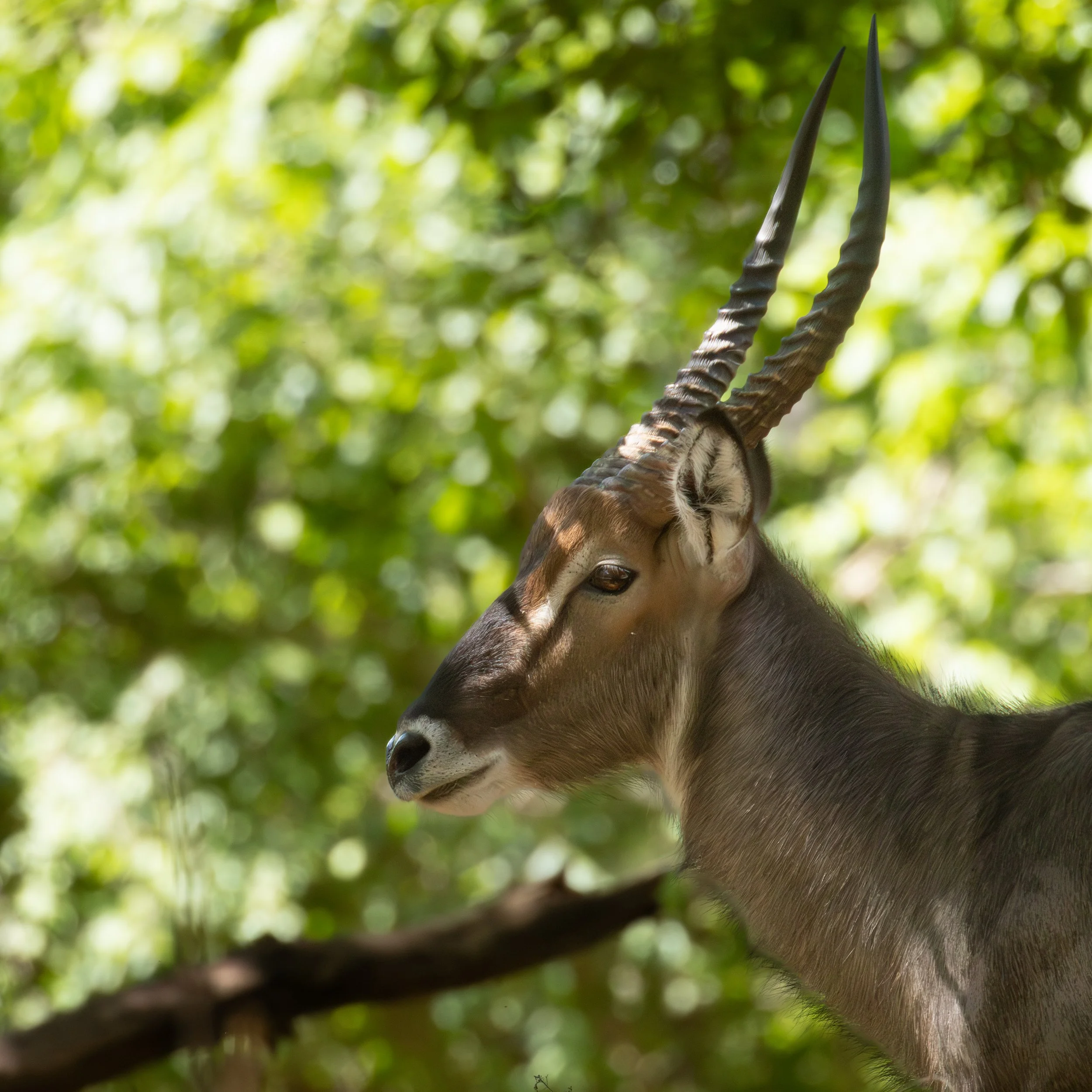
A relatively large antelope with large round ears and white patches above the eyes and a distinctive marking on the rump that our guides referred to as a toilet seat. Most often seen near water their coat has a water repellent oil layer to help protect it from moisture. The males have long ringed horns that can grow as long as a metre.
Bushbuck
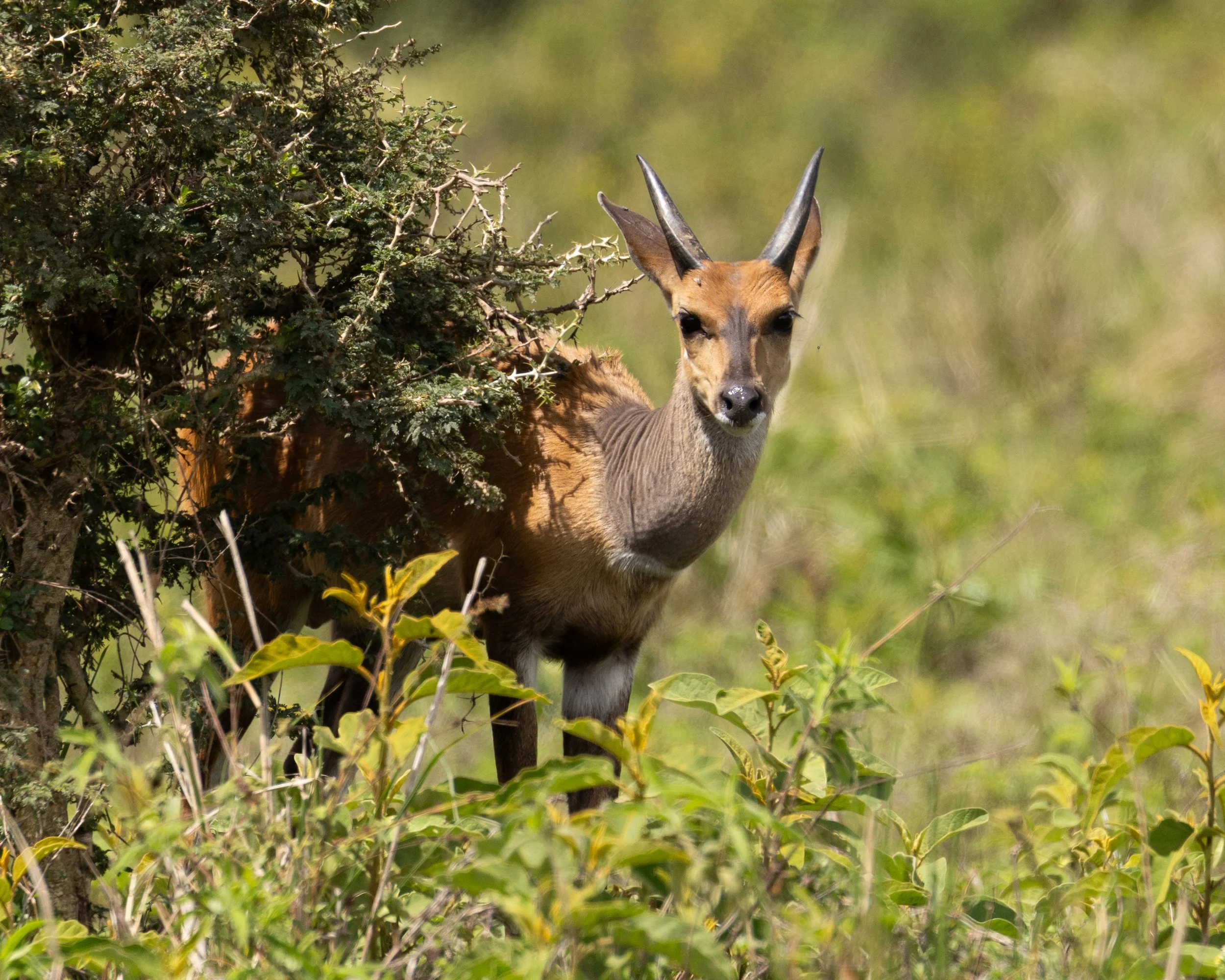
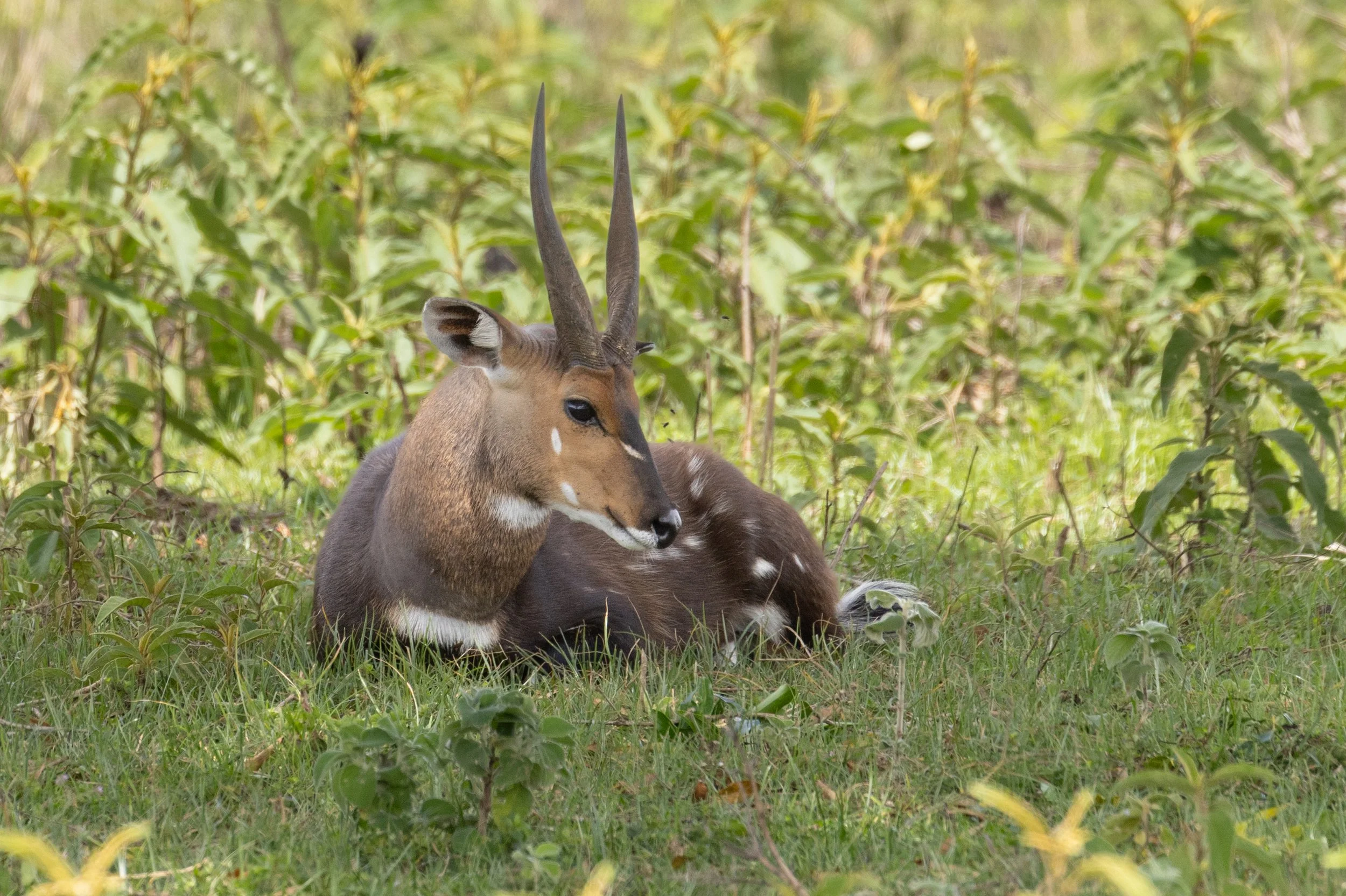
One of the more solitary antelopes, it spends much of its time as the name would suggest in the bush. Males have large spiral horns but the females of the species do not have horns. It has geometric white patches on its ears, chin, tail, legs and neck. Habitat loss is the biggest threat to the bushbuck as agriculture and settlements remove the vegetation they like to stay in.
Bohor reedbuck
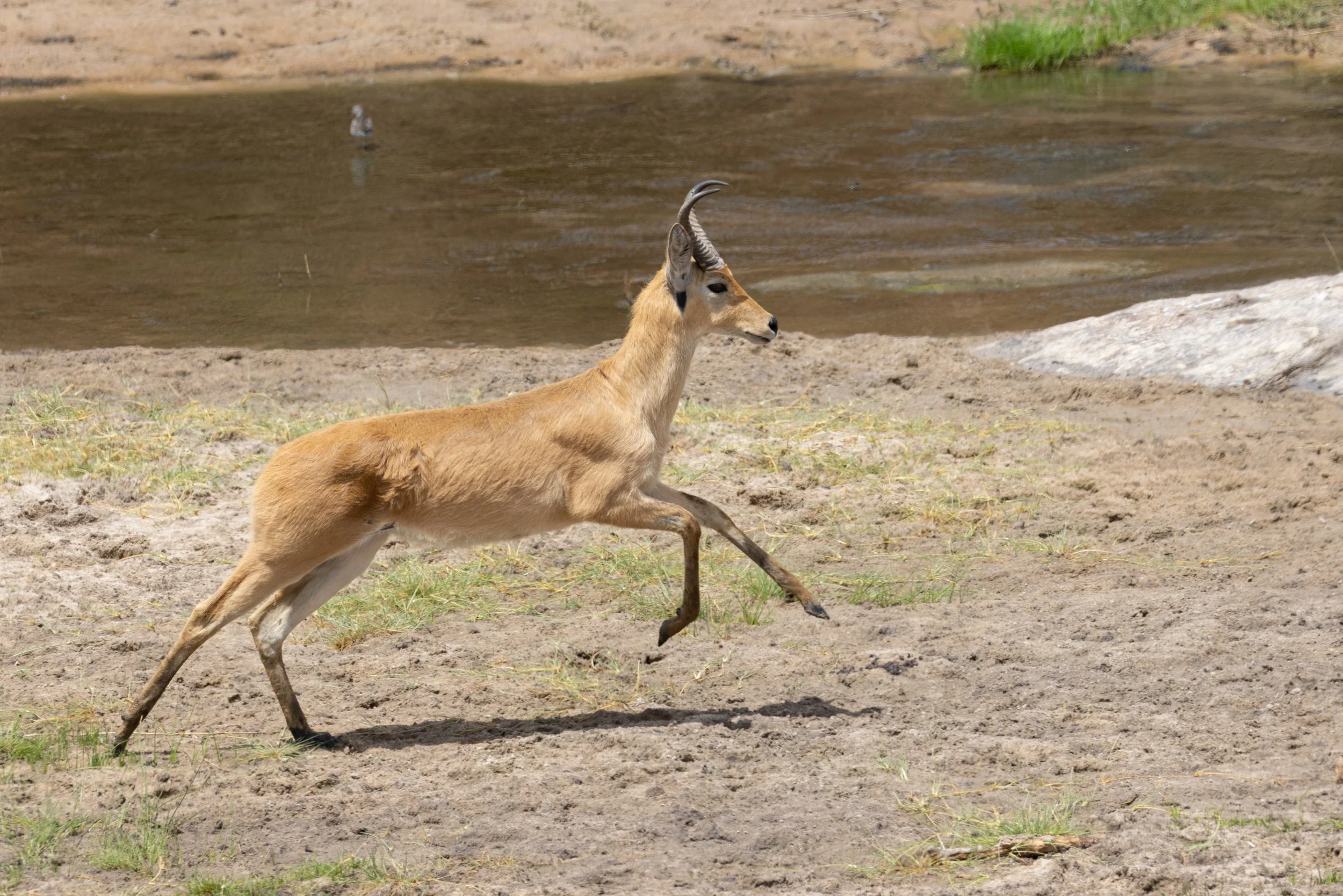
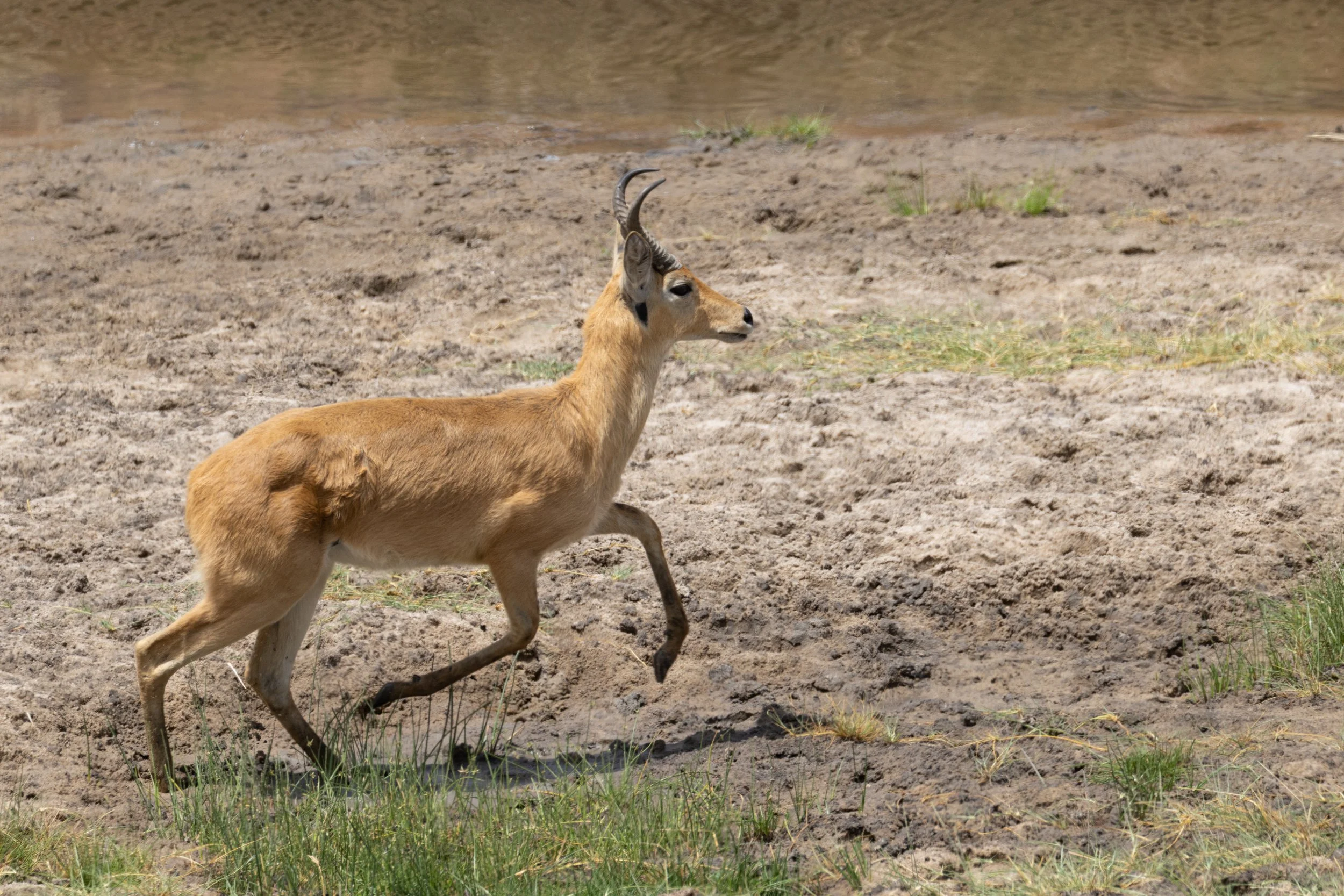
Another antelope most commonly spotted close to water sources in the Serengeti. They most often prefer to graze at night so we were pretty lucky to find some. The males have a distinctive horn that extend backward from the forehead and then hook slightly forward.
Klipspringer
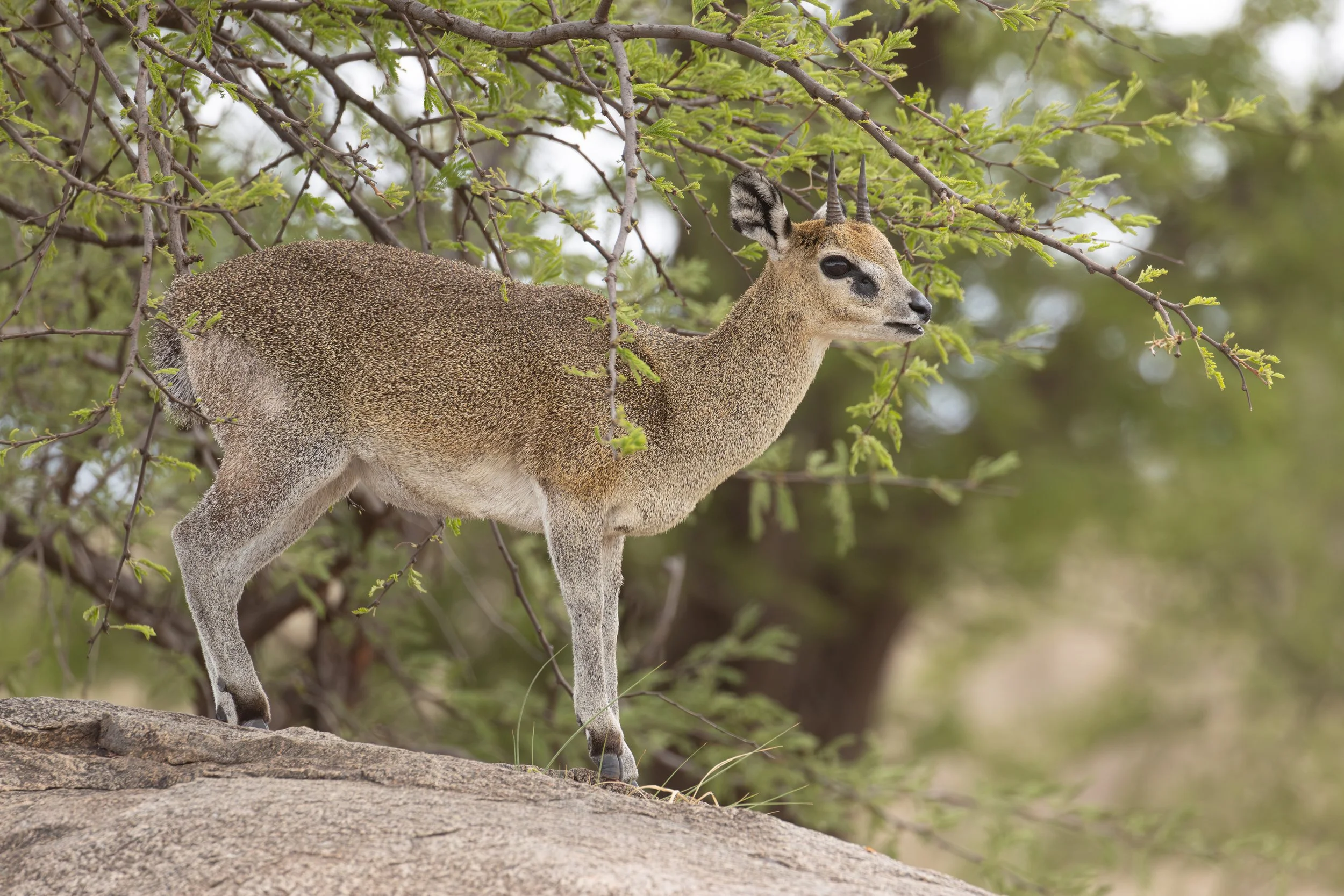
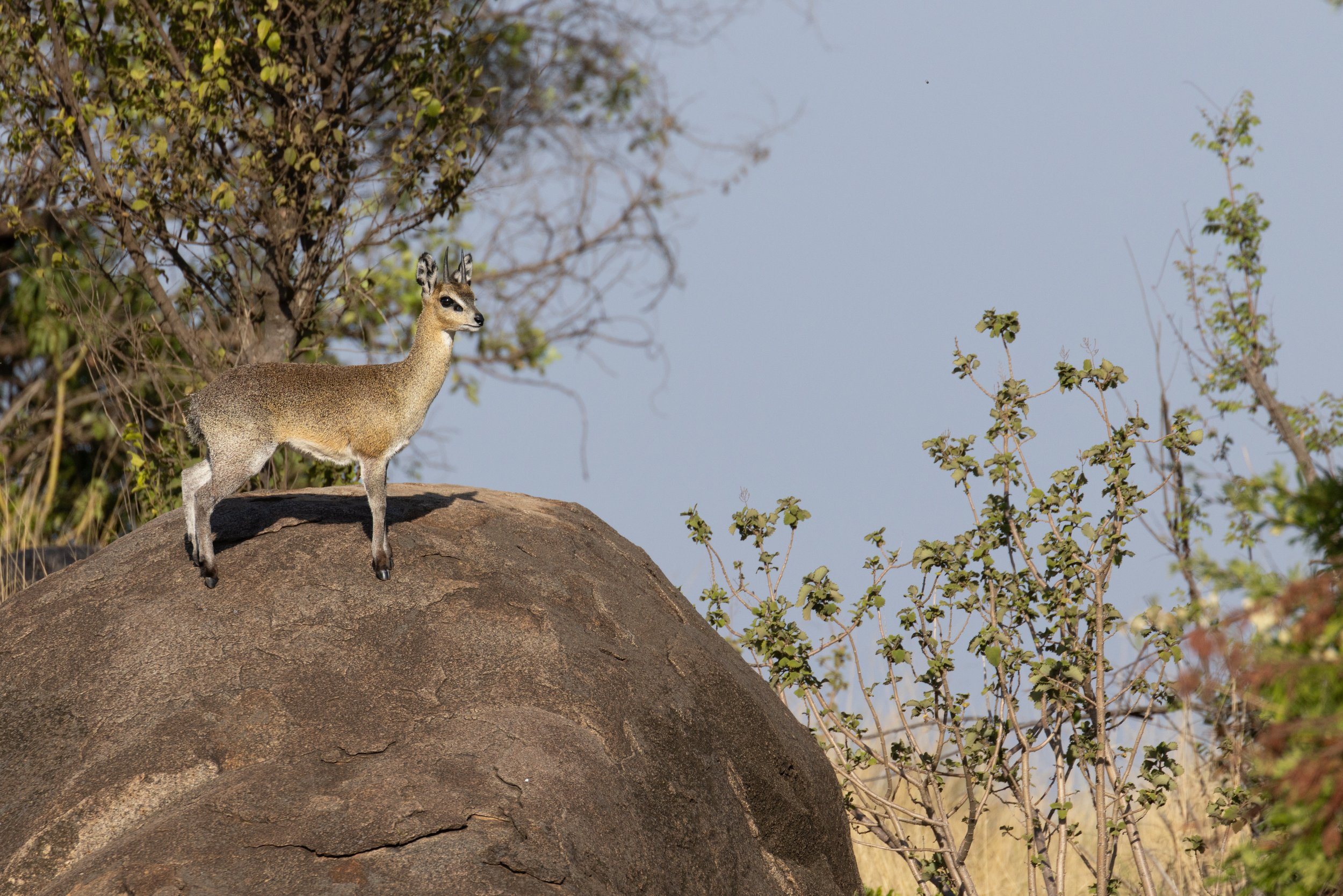
These tiny, sturdy antelope live in the more mountainous areas of the Serengeti, and seem at home on top of rocks. Males seem to like to stand guard watching for extended periods from high spots.
Dik-dik
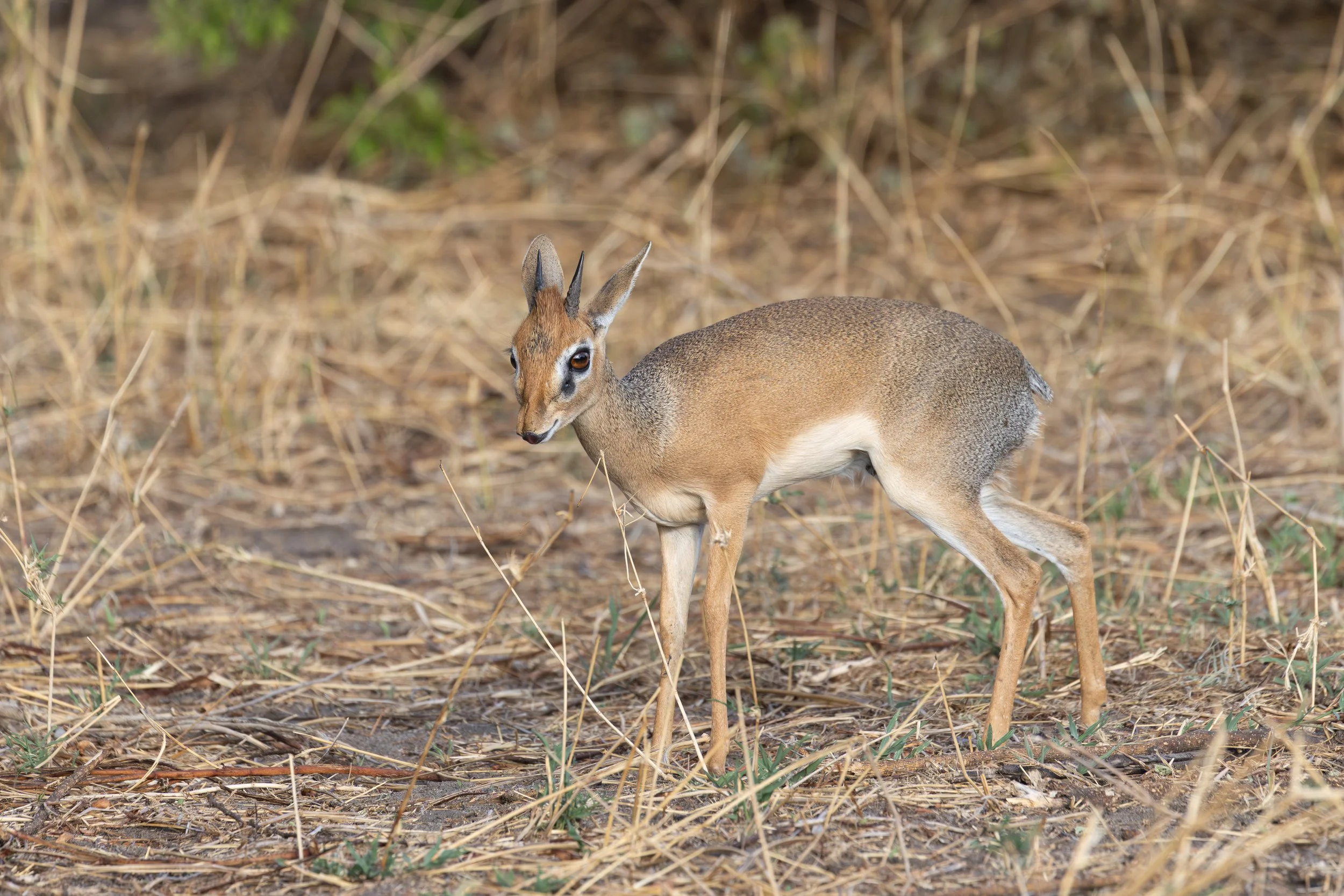
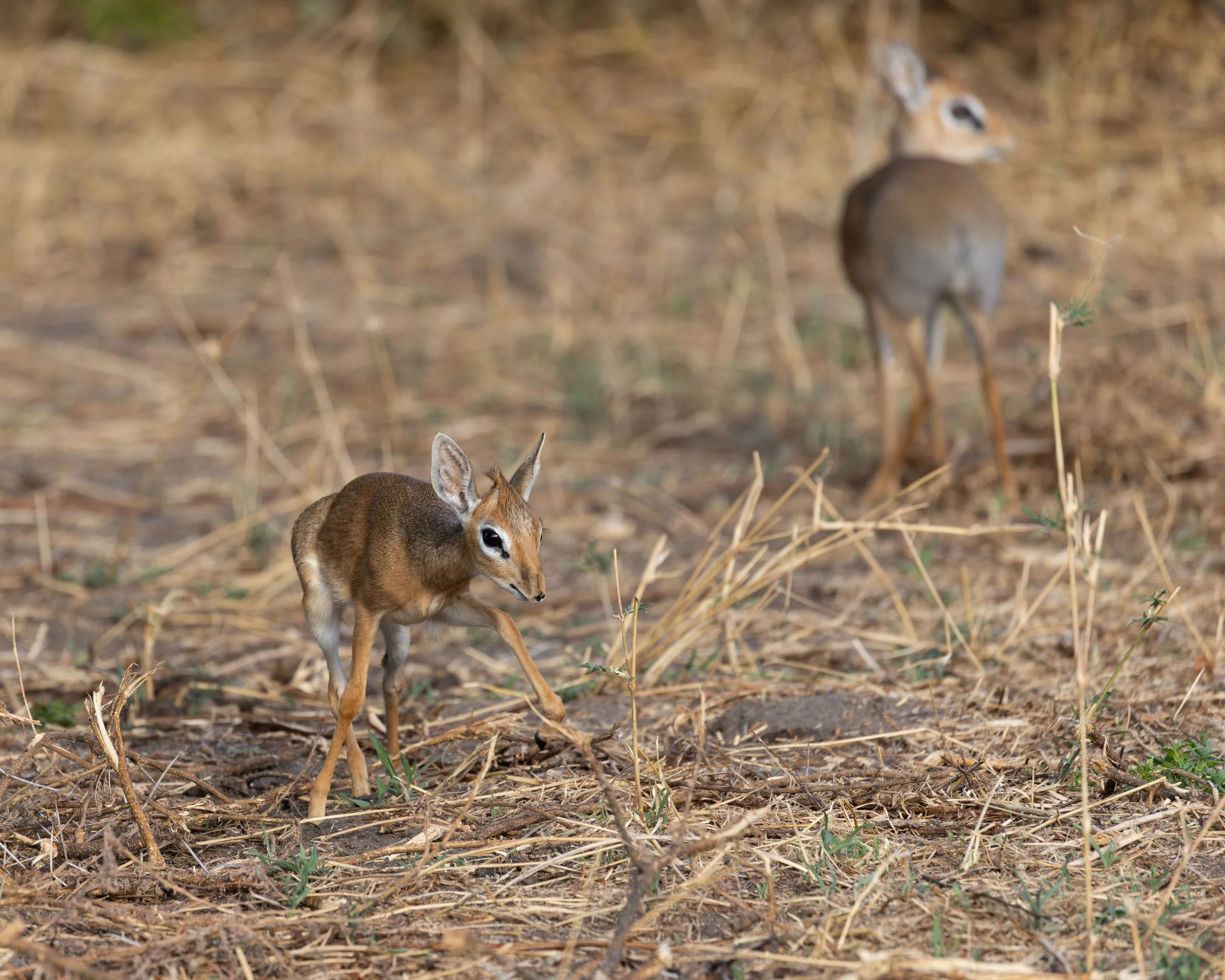
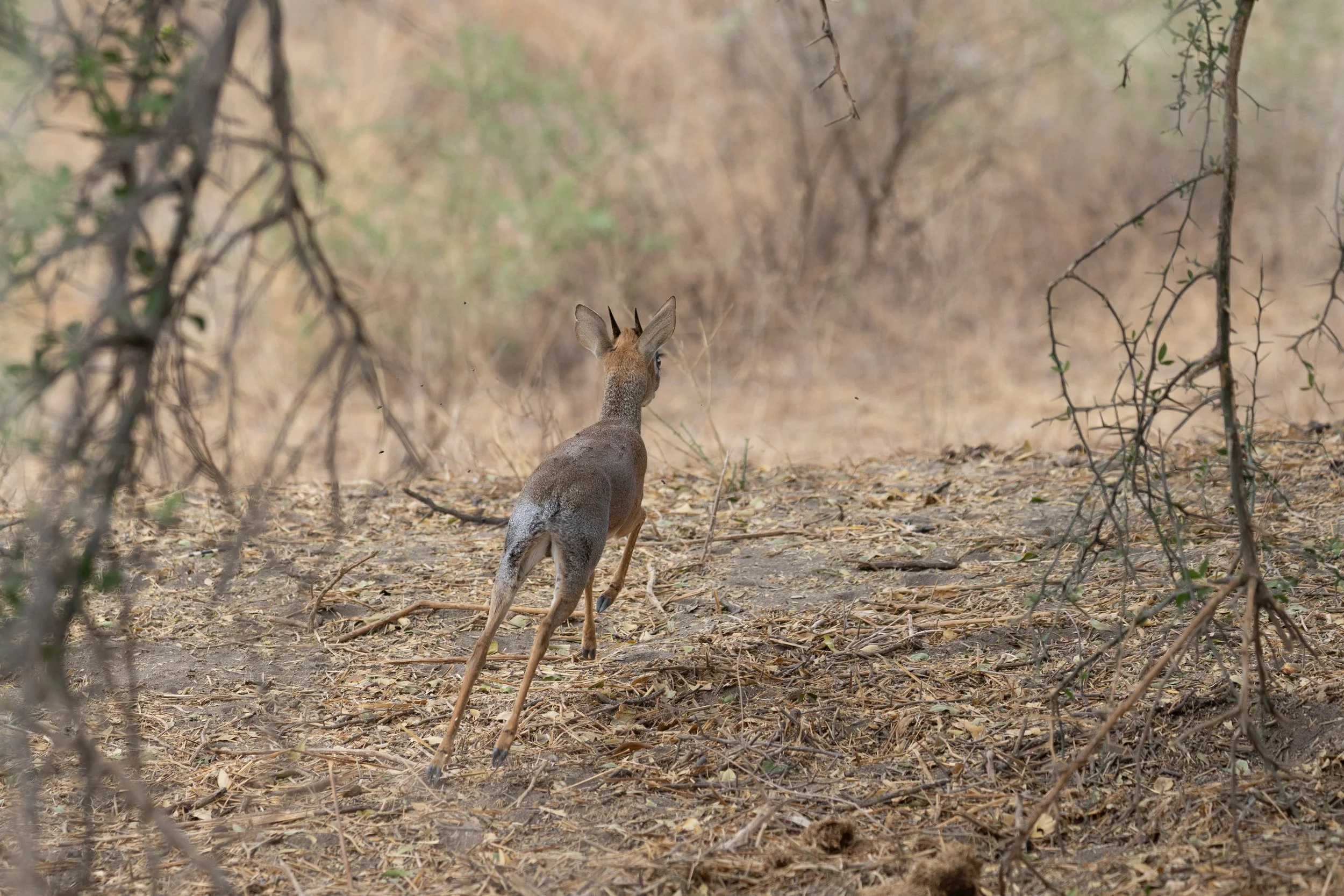
Similar in size to the Klipspringer but much more dainty looking the Dik-dik are often found in thick vegetation. These are the smallest antelope on the Serengeti, they have an alarm call that is the dik-dik sound which gives them their name. Distinguishing features are the elongated snout and dark spots at the corners of the eyes which are glands used for scent marking.
Topi
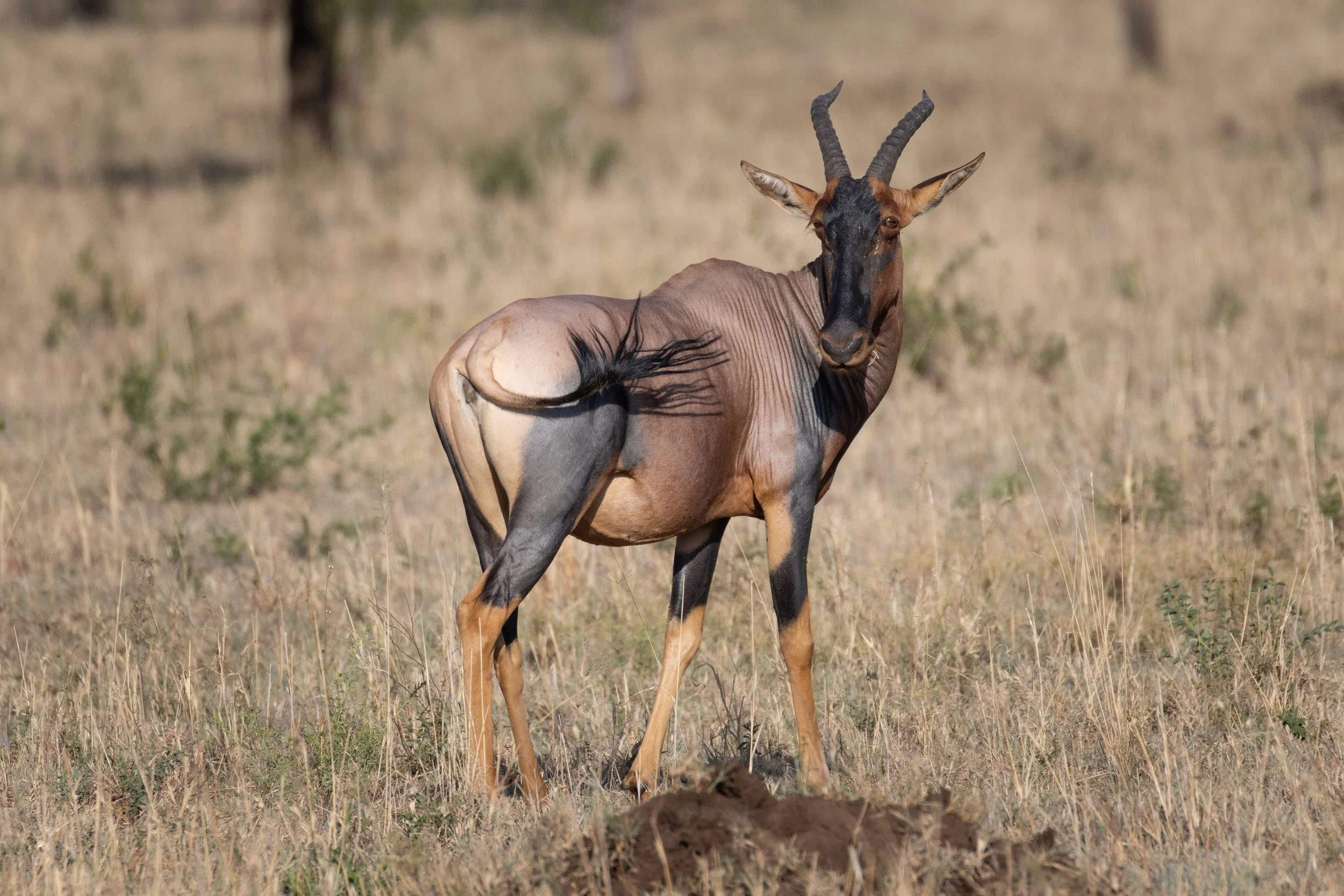
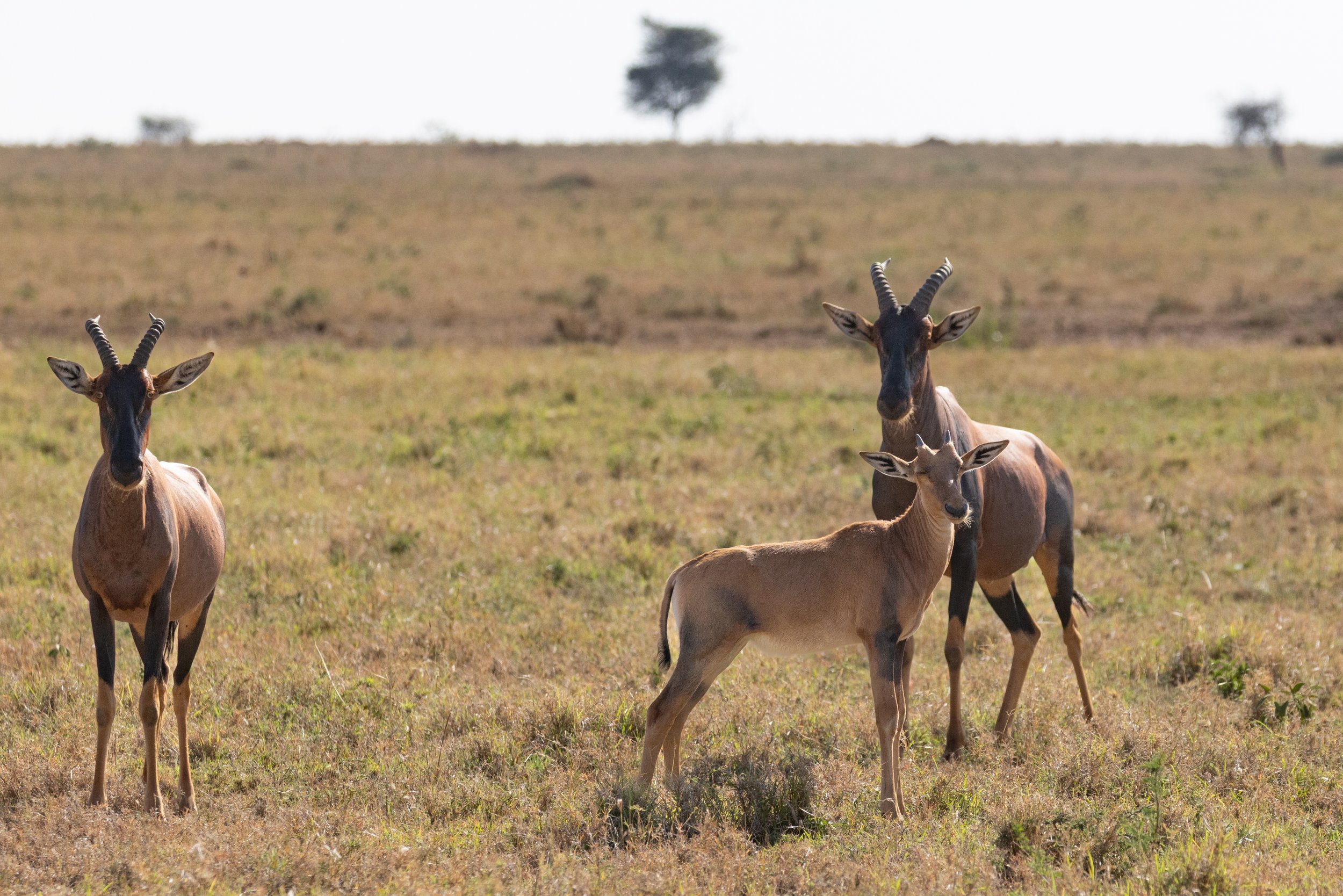
A medium antelope with a reddish-brown coat and black patches that appear on their faces, hips and legs. This is one of the more common antelopes estimates of around 300000 individuals. Similar to the Hartbeest but a bit smaller and doesn't have as long or narrow facial features.
Hartbeest

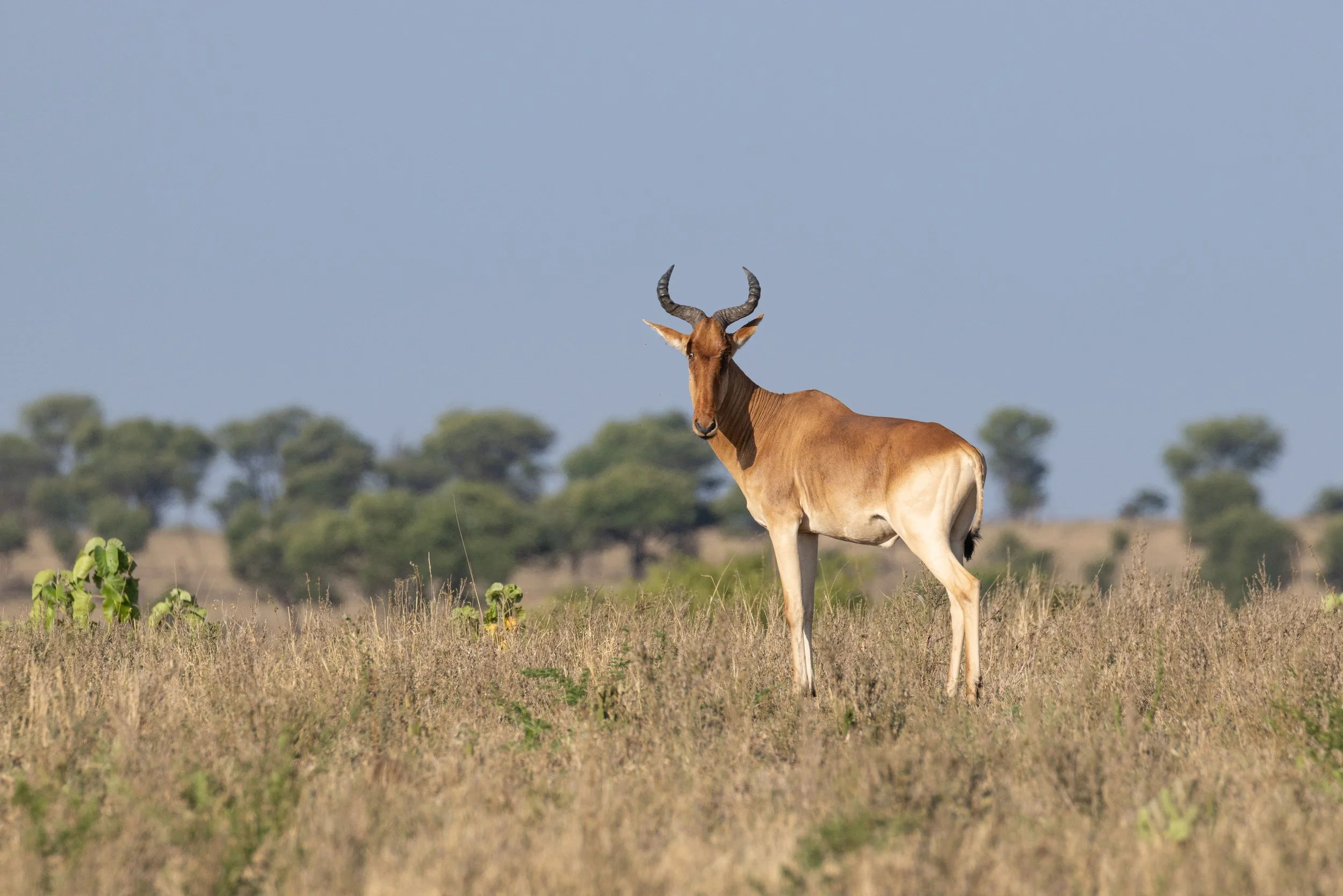
Another medium sized antelope with an elongated head, steeply sloping back, long legs and "bracket" shaped horns. Running at up to 70km/h it is one of the fastest antelopes even though they might at first look a bit clumsy.
Eland
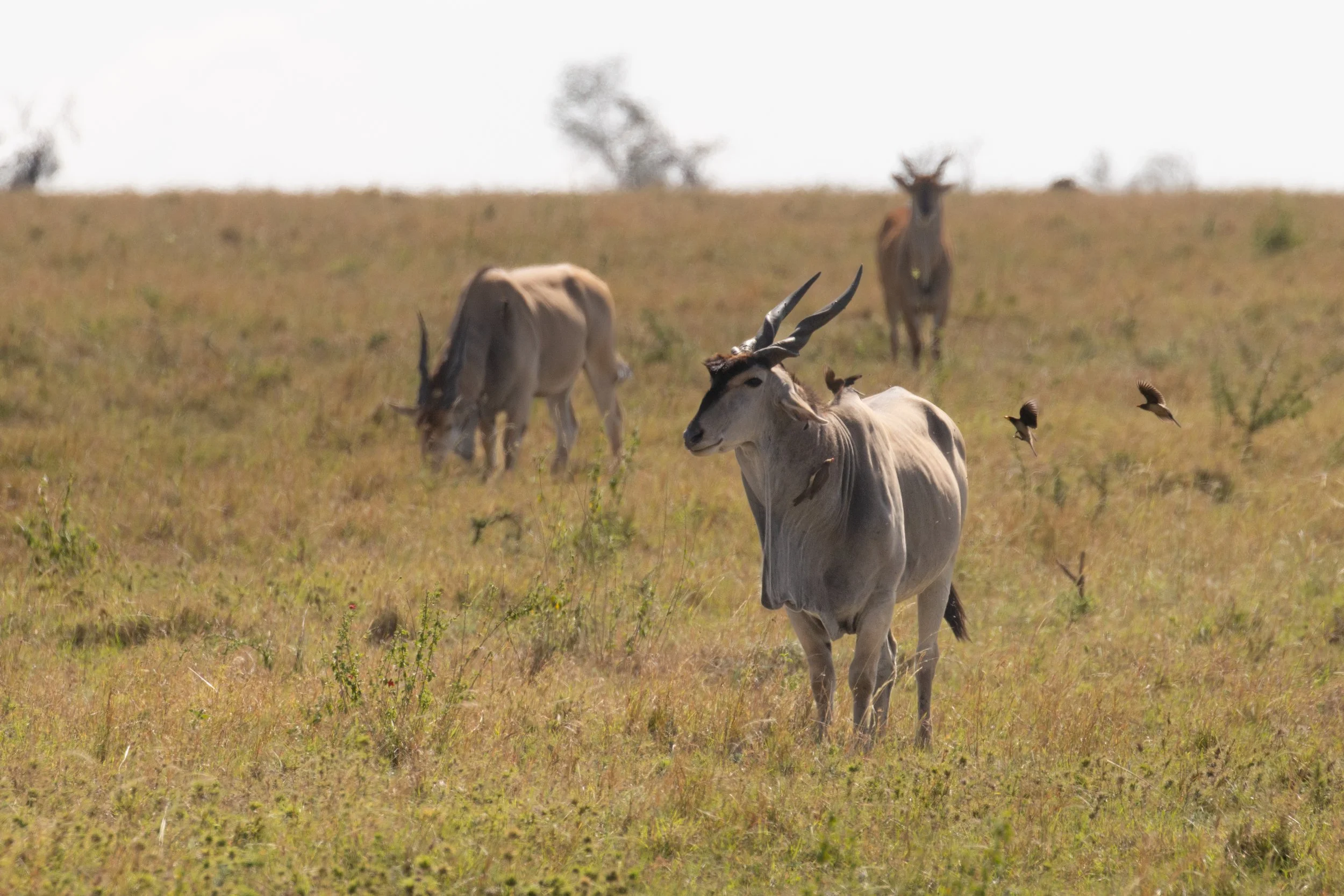
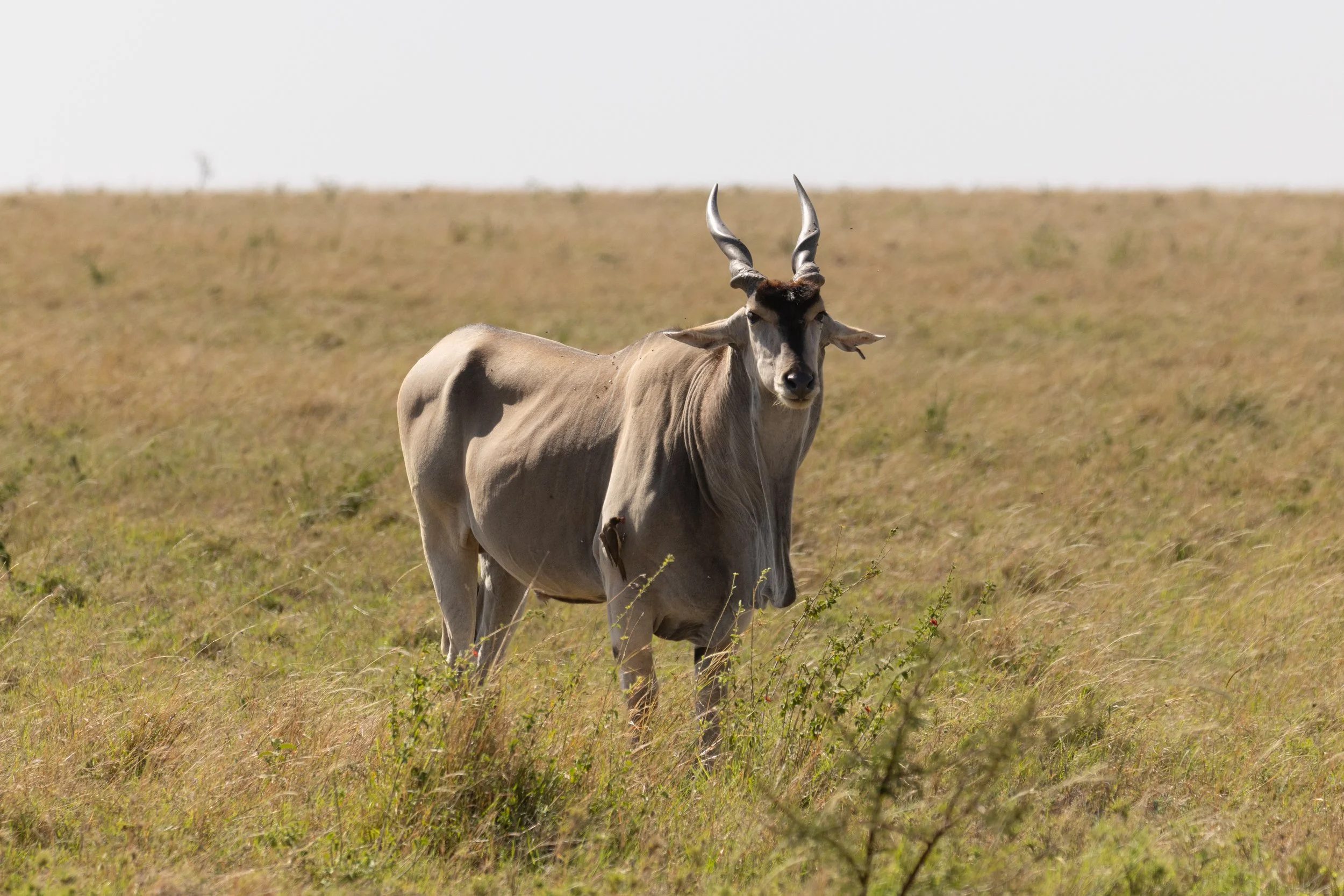
The largest of the antelopes at up to 1000kg, it could easily be mistaken at first sight for an ox or large cow until you see those horns. The elands has spiral shaped horns and prominent dewlaps under their neck.
Often just considered food for big cats, antelopes are so varied in Tanzania and especially in the Serengeti they were a constant draw for their activity and just shear numbers. Even though we were constantly hoping to see a big cat hunting one of these animals they were worth it on their own. I probably wouldn't do a safari just to see these animals alone but I was very happy to spend time just watching the antics of these creatures. If you do go on a safari don't forget to spend some time watching and photographing antelope, you might even get to watch as they run for their lives although I'm pretty sure they would rather just eat and play.
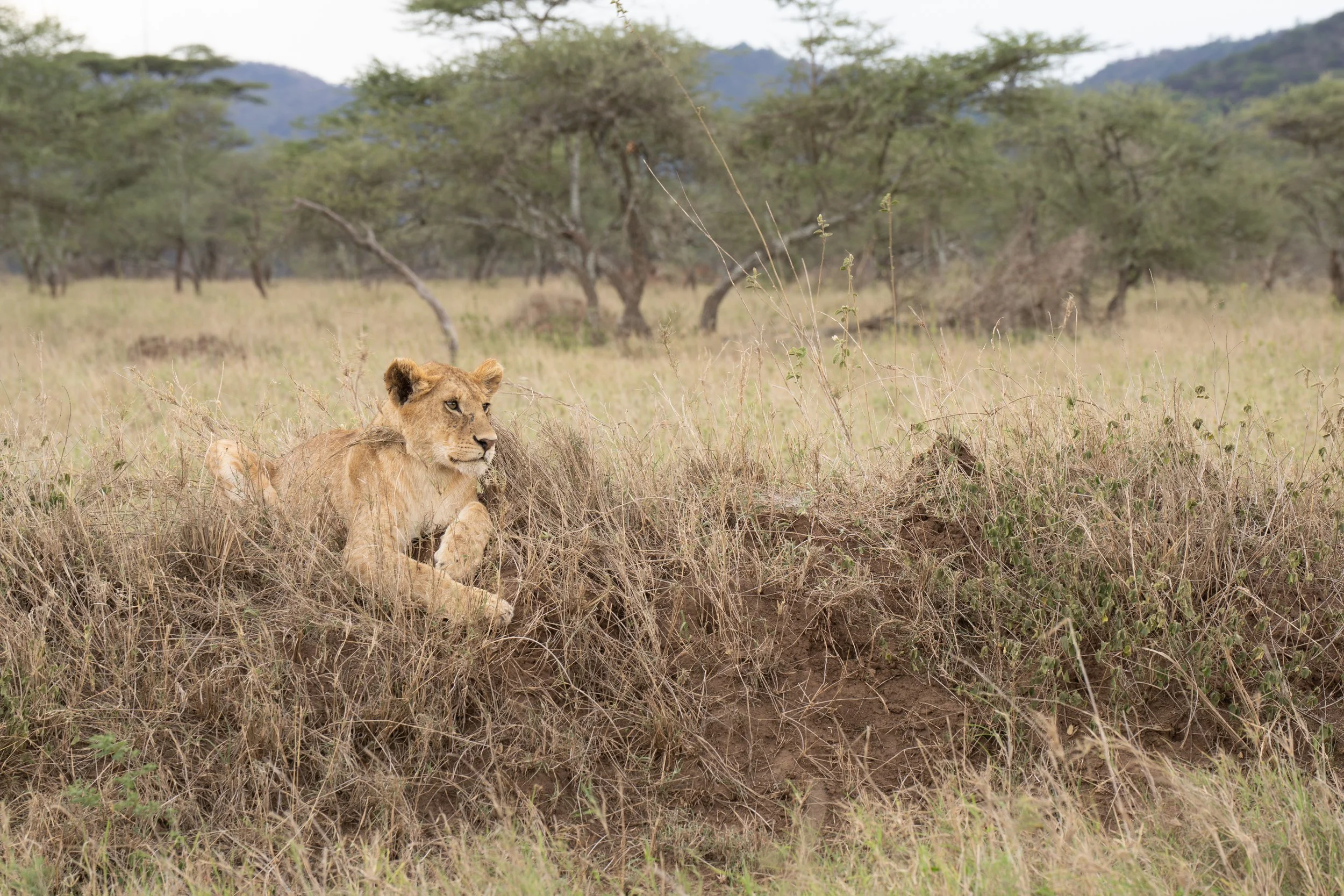
Tanzania teaser- Start with the big five and add a few
As a child I remember getting up on Saturday mornings to watch cartoons and nature shows like New Wilderness or Wild Kingdom. Years later, as a nature photographer, my dream has always been to go to Africa to live that life, even if only for a short time.
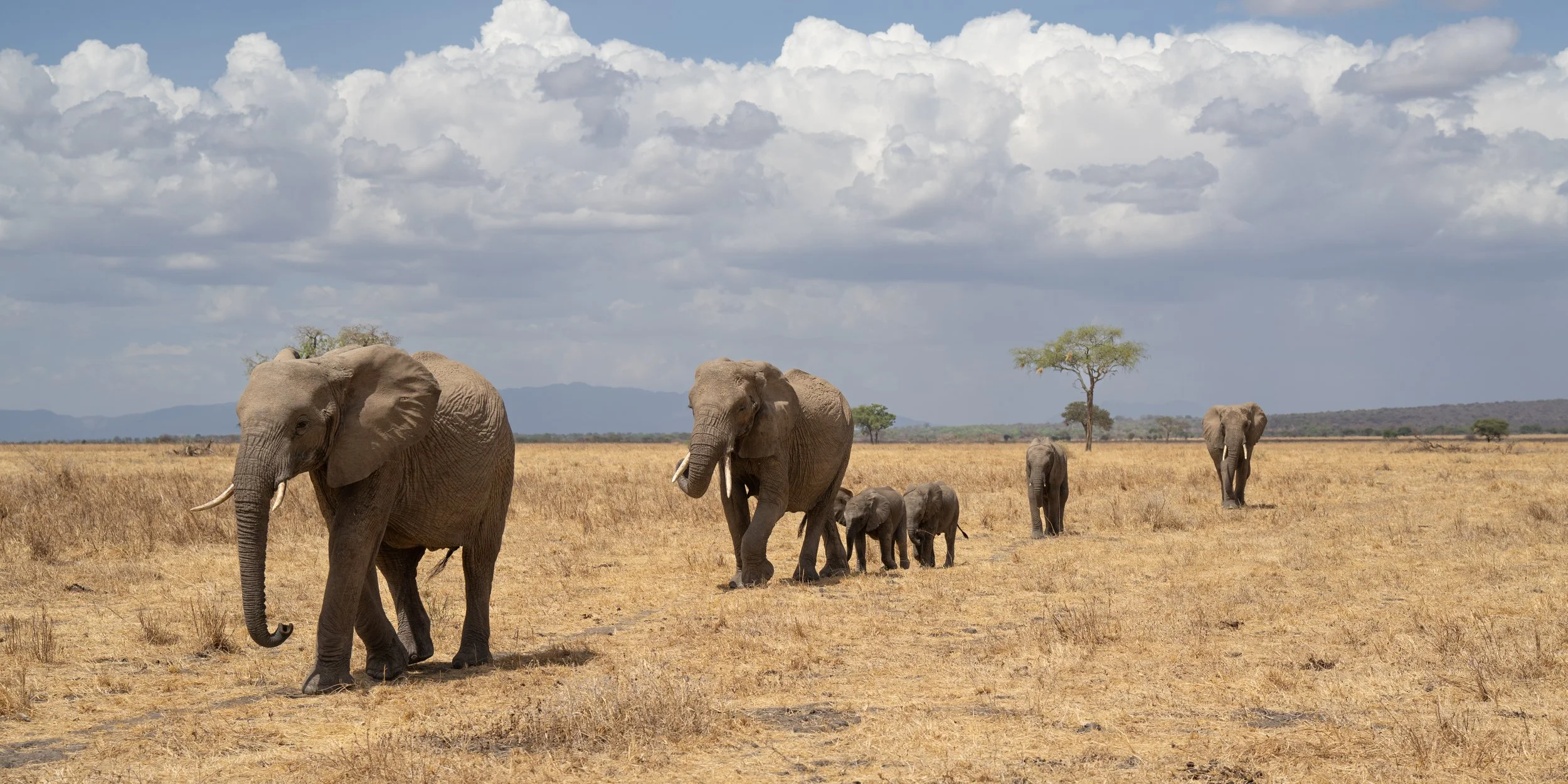
Elephant family slowly making its way towards the river for a drink
Growing up in small town Ontario, I remember waking up on Saturday mornings to one of two exciting things; Cartoons and Nature shows. I probably never really grew up because I have never gotten over either of them. We only had 3 TV channels and had to move the antennae each time we wanted to change the channel. So with the TV guide in hand, we would plan what shows to watch. We had just a few options but Lorne Greene's New Wilderness, Mutual of Omaha's Wild Kingdom and Untamed World are the ones I remember and it was always the African Safari episodes that kept me imagining myself in a safari vehicle exploring with a camera.
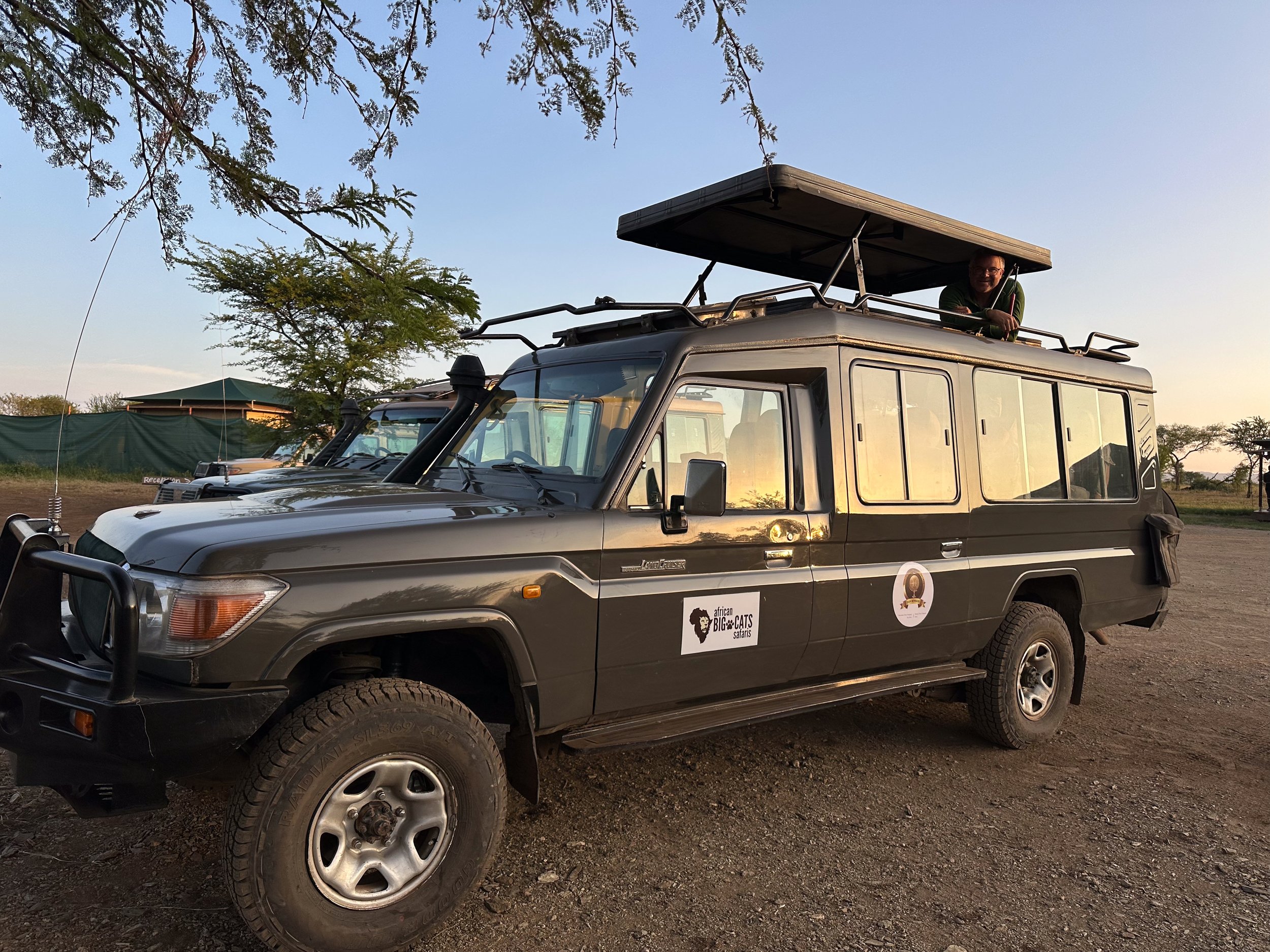
Standing in our Toyota Land Cruiser. Looks pretty similar to the ones I saw on TV as a kid. (Photo by Salwa Farah)
Years later, as a nature photographer, my dream has always been to go to Africa to live that life, even if only for a short time. Nearly a year ago, we made plans for a 2 week trip to Tanzania with a group of nature photographers. With just one week to go, we got news of protests that resulted in deaths during the Tanzanian election. This resulted in a number of countries making statements basically saying "do not travel" to Tanzania. Needless to say, I was stressed out and a bit depressed with the idea that the money we had put towards a once in a lifetime trip may be gone. Fortunately, after going back and forth with the safari company and reassurance from customers on the ground in Tanzania, with the exception of one couple, we made the decision to go. The trip was a success and I believe I got almost everything I wanted out of it. My inner child saw everything he dreamed about and more.
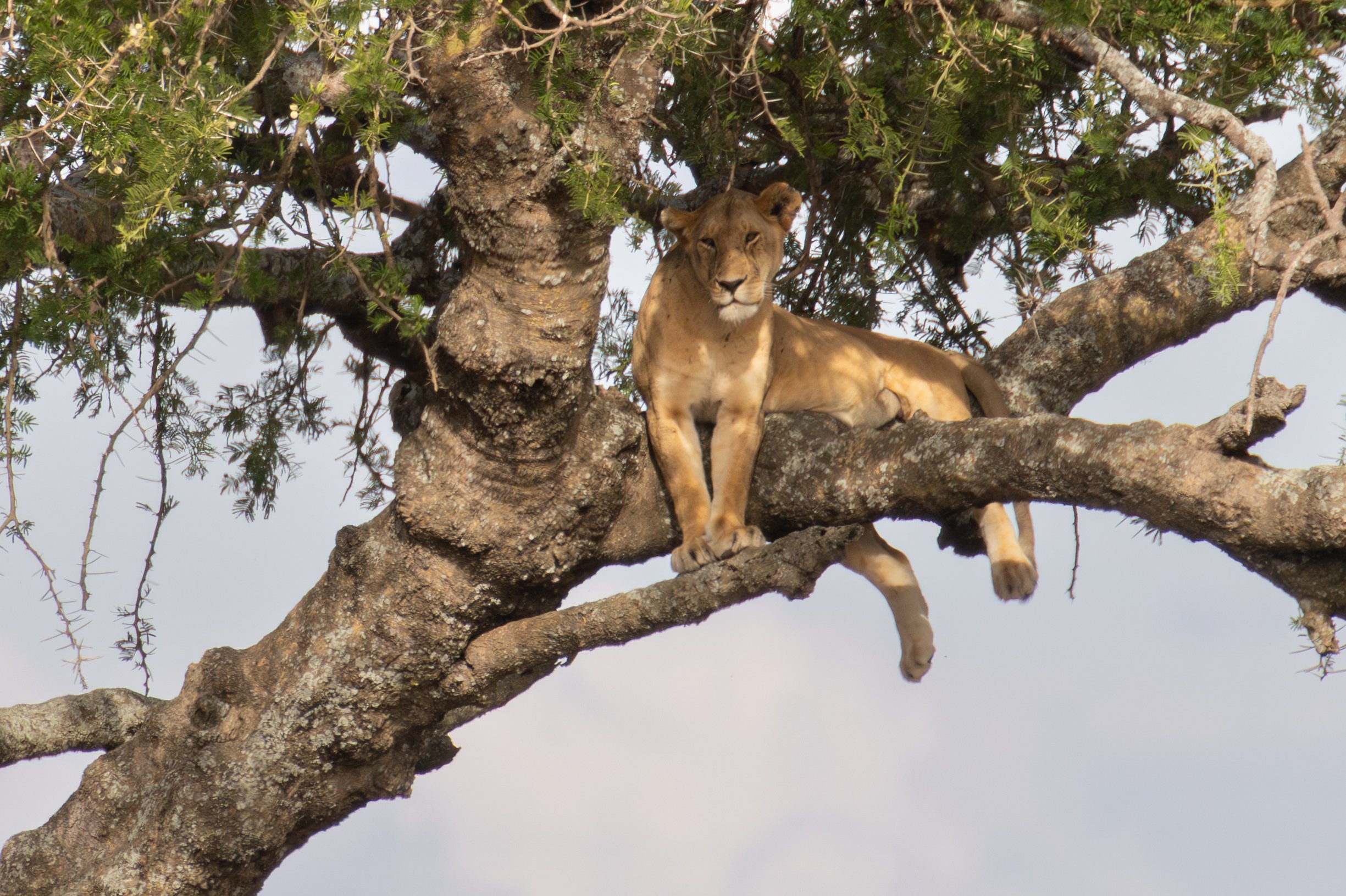
I didn’t realize that lions climbed into trees as often as they do.
Getting the big five animals in Africa was certainly one of the goals, but it wasn't about ticking things off a list. I really wanted to get to see these animals living their lives. It wasn’t about just getting a pretty portrait of each. For the big five I can say we managed to get good pictures for 80% on that goal. There was so much more to see than the big five, and I'll explore those later, but for now let's take a look at some of the big ones, let's call them the big five-ish.
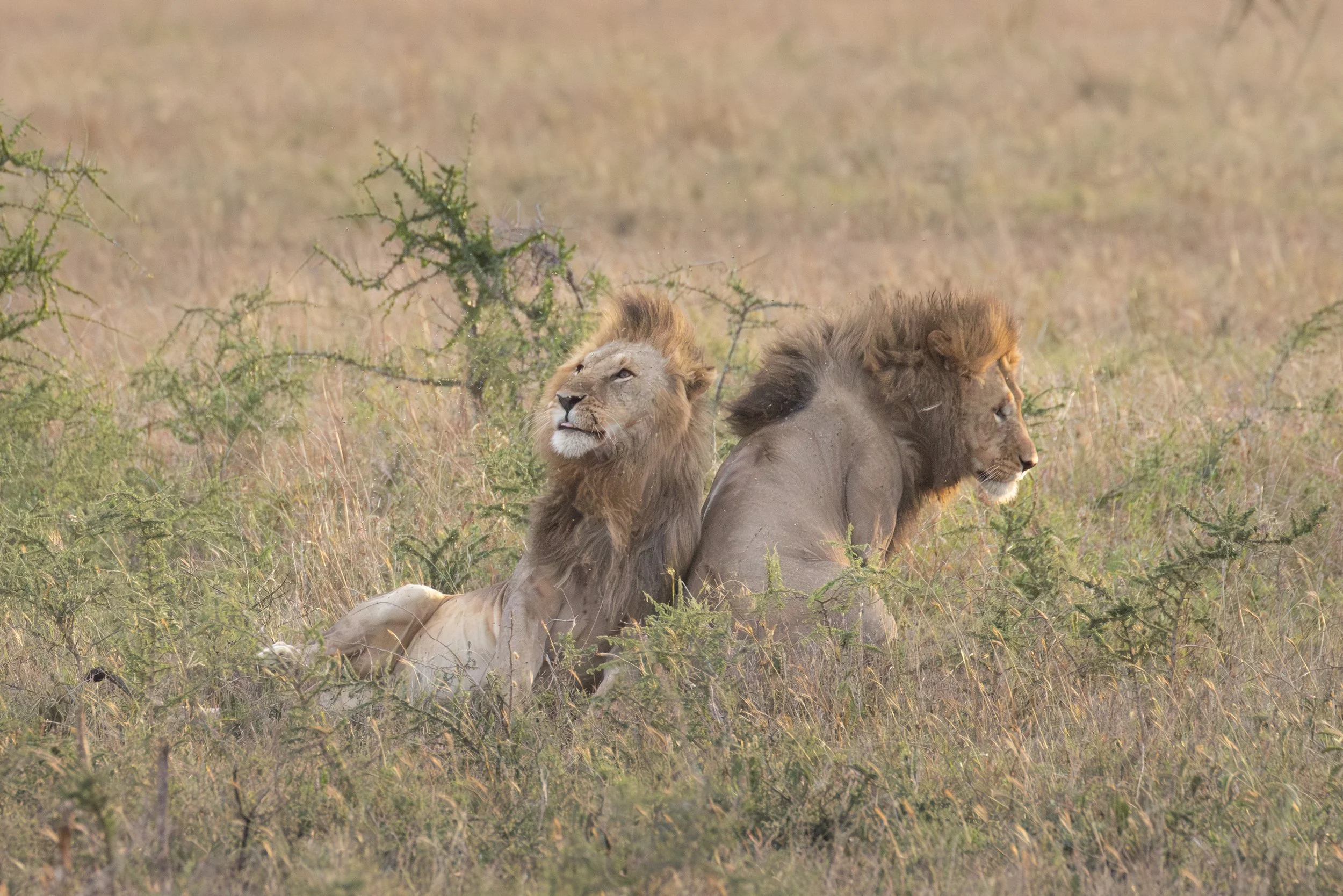
A pair of male lions doing a bit a of dance before lying down to rest on the Serengeti
So, let's start with what is the accepted definition of the big five. They consist of elephants, lions, leopards, buffalo, and rhinos. For me the "ish" part adds in giraffe, hippos, and cheetah.
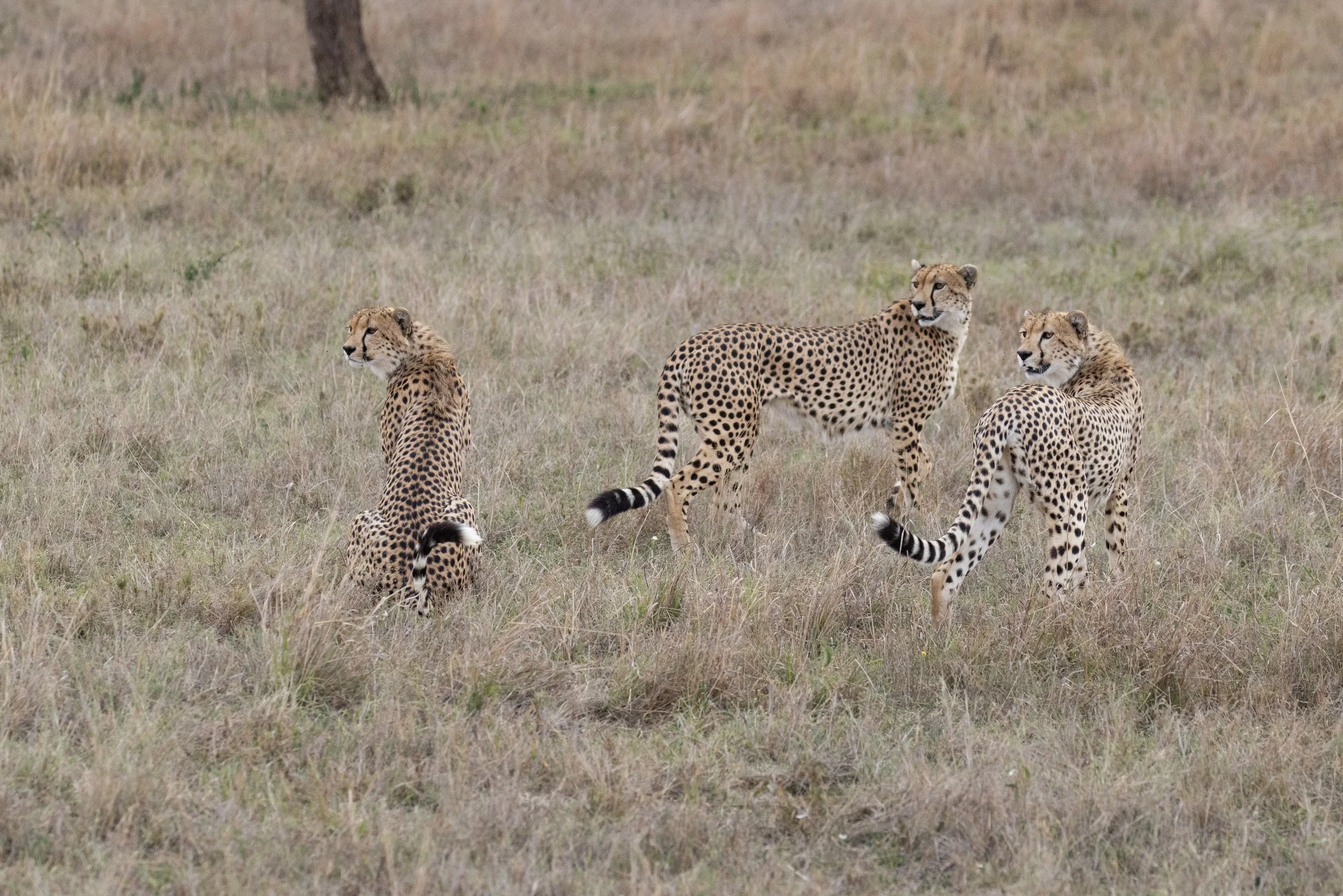
Three cheetah taking a quick look back before heading off.
With nature photography in Canada you can usually count the number of animals you see on a single hand, On our first day out in Tanzania, we saw a half dozen giraffe in the first 5 minutes of crossing into our first National Park, and things got even better from there.
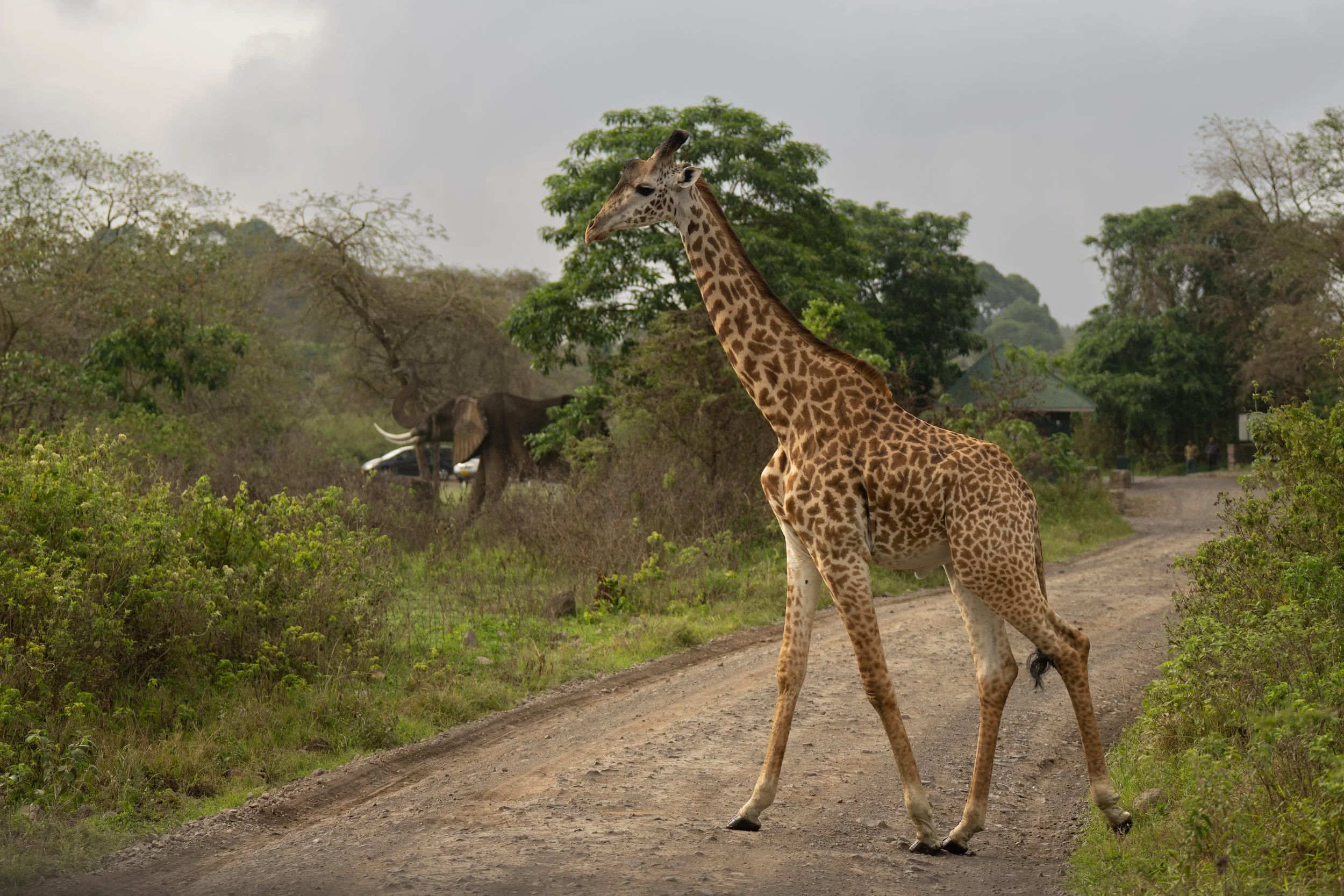
Giraffe at the entrance to Arusha National Park with an elephant statue in the background near the gate.
Giraffe
Giraffe are an interesting challenge to photograph, especially from a truck that can't leave the road. This is where the Tamron 35-150mm lens became the most useful not only for big subjects that were up close, but also for those shots that include more of the environment. We saw giraffe almost everyday, and in so many different environments. These are a majestic animals that I could easily take pictures of daily without ever getting bored.
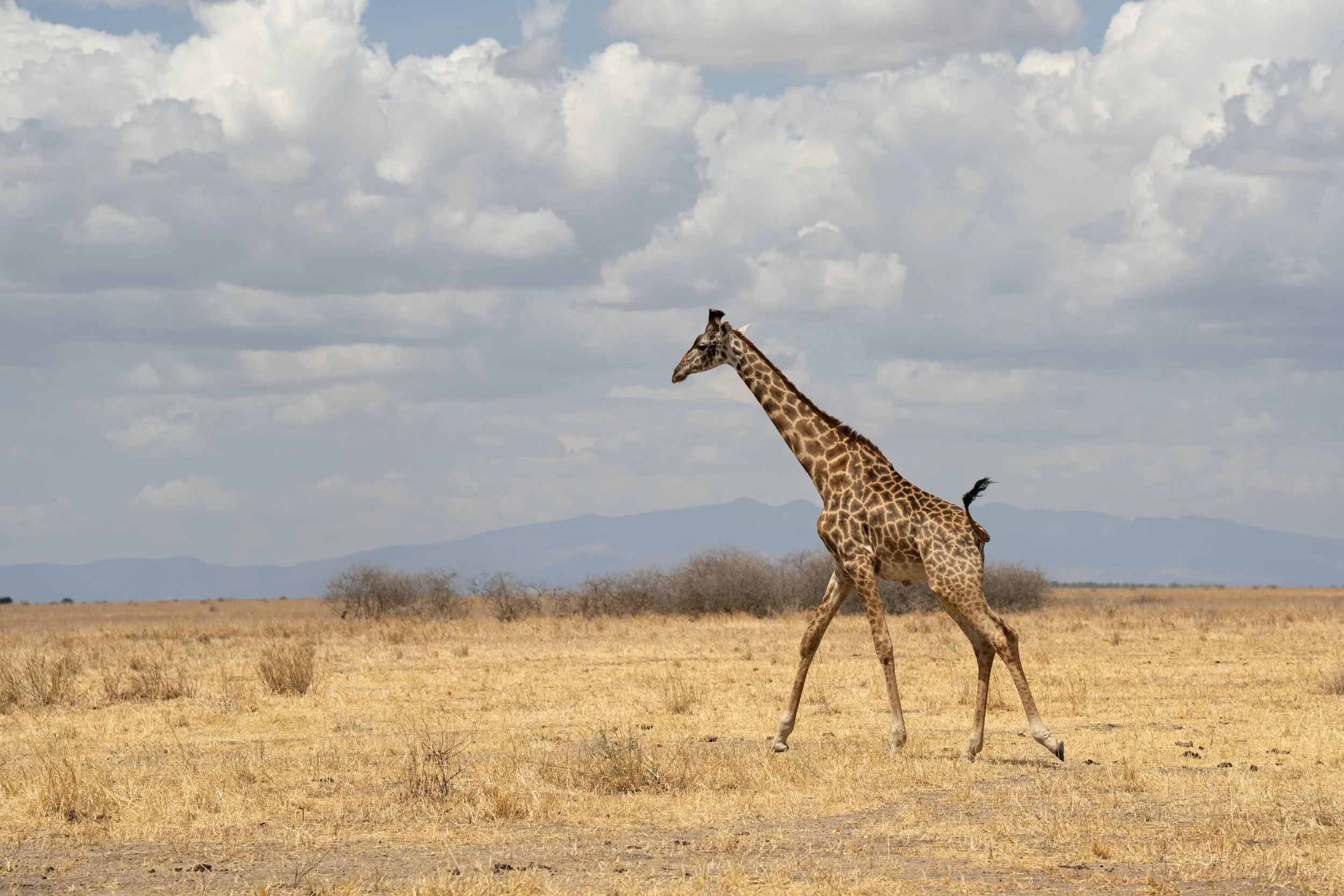
Lone giraffe wandering across the stark grasslands
Elephants
While the Giraffe were fun to watch, usually one or two at a time, the elephants on the other hand were most often seen in family groups. The interactions between the elephants made for the best shots, I really had no idea how active they were and how much they interacted with each other. This was a show again I could watch over and over again. We watched them walking together slowly in long trains to reach water, but once they got there they were like a bunch of children in a playground.
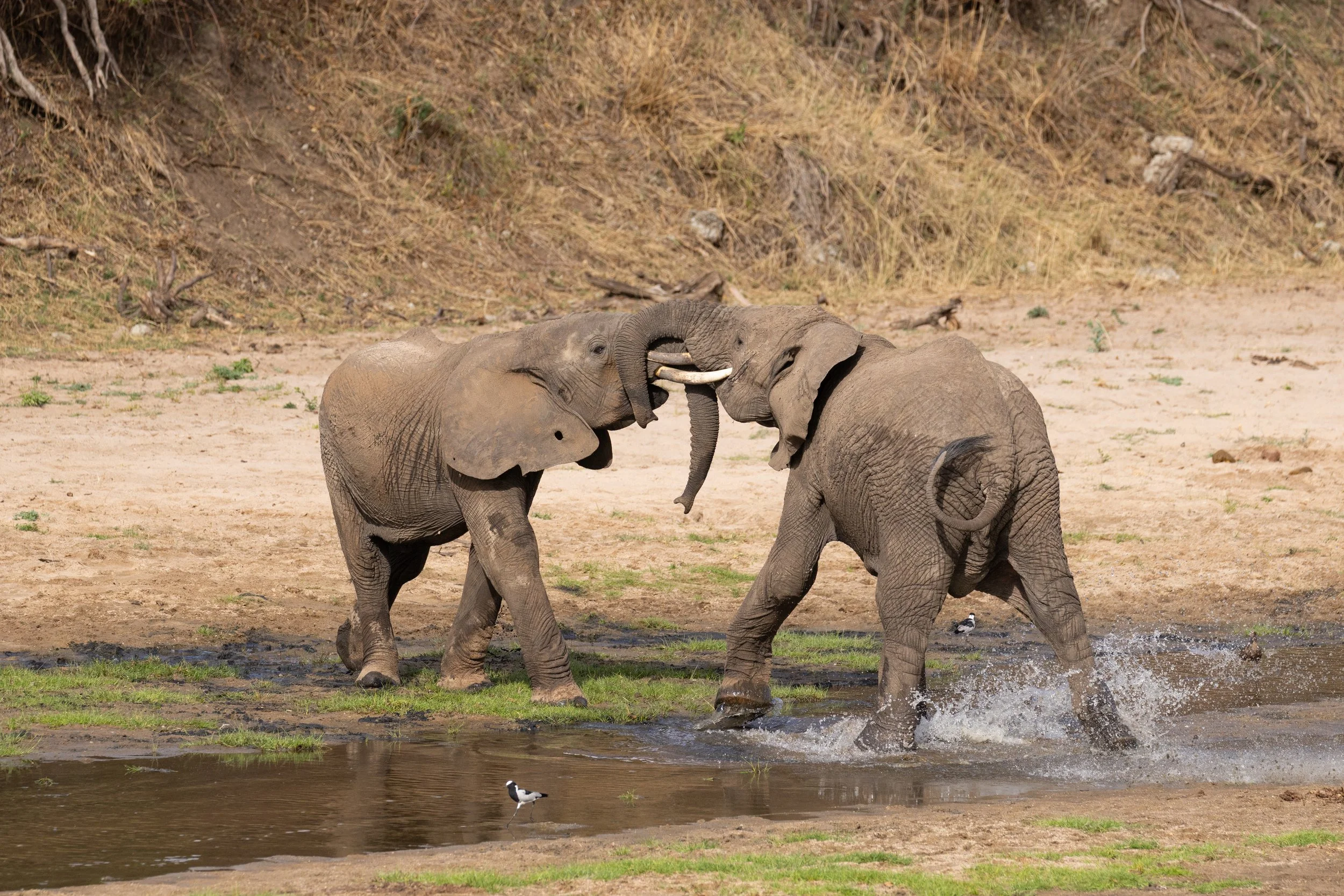
Two elephants play fighting in the water left in the river basin
Sometimes they would play fight, other times they sprayed water or dirt over their hides, and the little ones would fall and roll in the dust, as if they were still discovering how to use their legs and trunks.
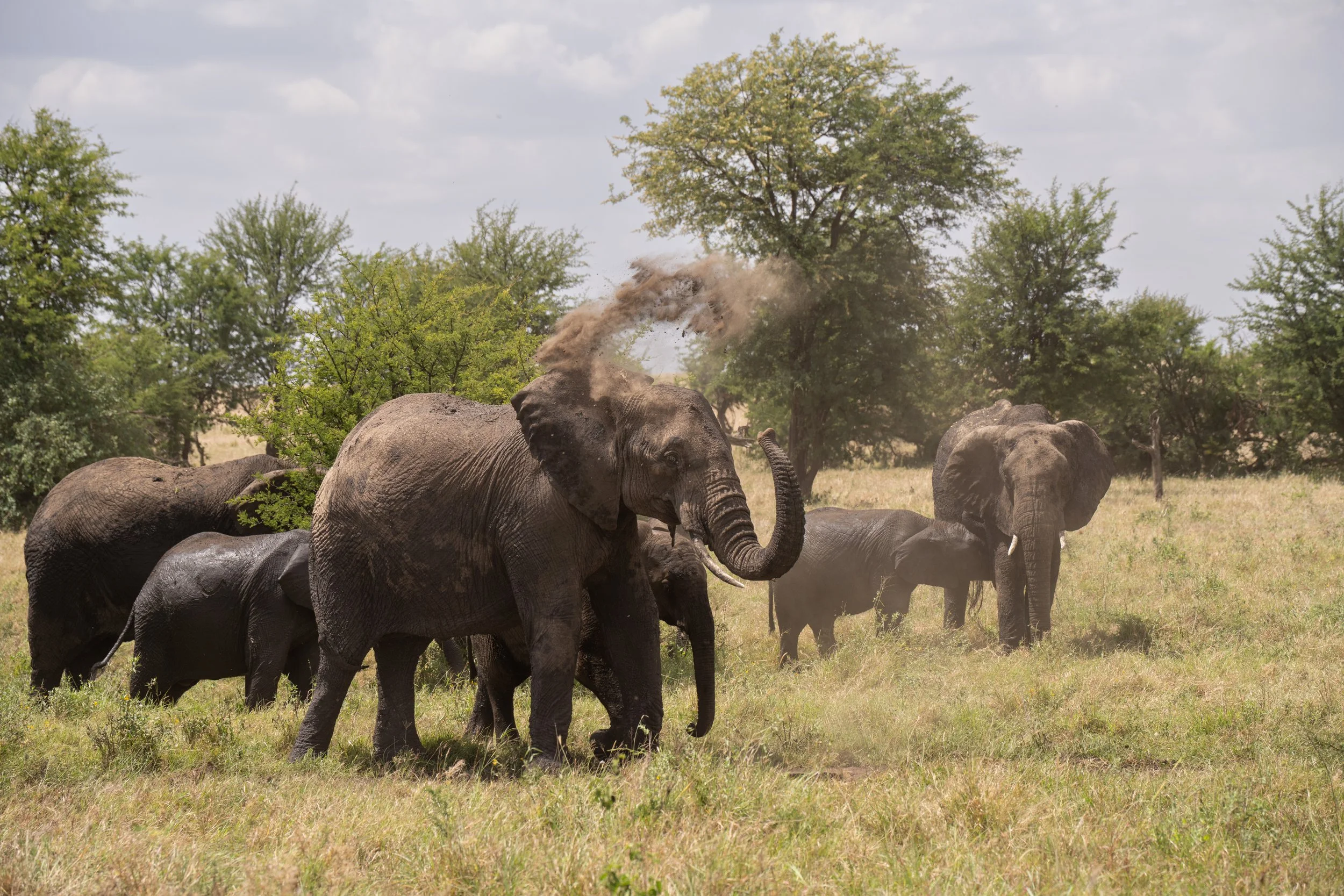
Spraying a little dirt overhead, I’m assuming it helps with the bugs or the sun.
Lions
Most times of the year you are limited to staying on the roads in Tanzania’s National Parks, so getting to see lions at first was mostly a case of seeing them at a far distance as they lay under the shade of a tree to escape from the heat of the sun. Fortunately, the more we explored, the more lions we saw. We found several families resting near the road and another group hanging around in a large sausage tree.
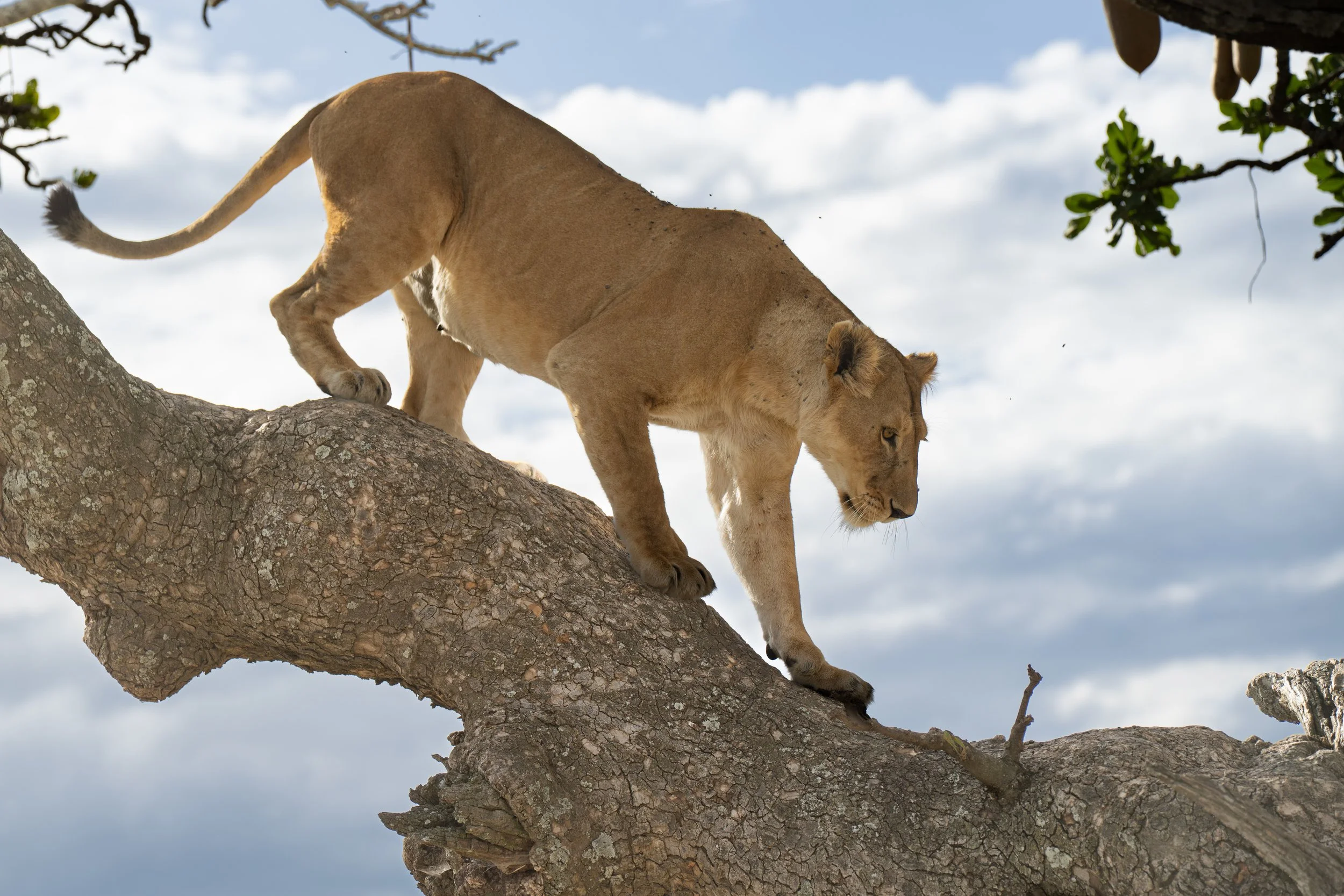
Lions are not quite as agile as leopards when it comes to climbing but this one managed pretty well
These animals are so used to the vehicles that most of the time they barely noticed us, and when they did it was in passing as they used the shade of a truck to get out of the sun before making their way towards a watering hole. Luckily for us, most of the time we got to enjoy the lions by ourselves. Although this wasn’t the busiest time of year for safari’s, there were occasions when we saw lions in a tree with a bunch more vehicles. I managed to get a shot of one descending from the tree with a Land Cruiser in the background.
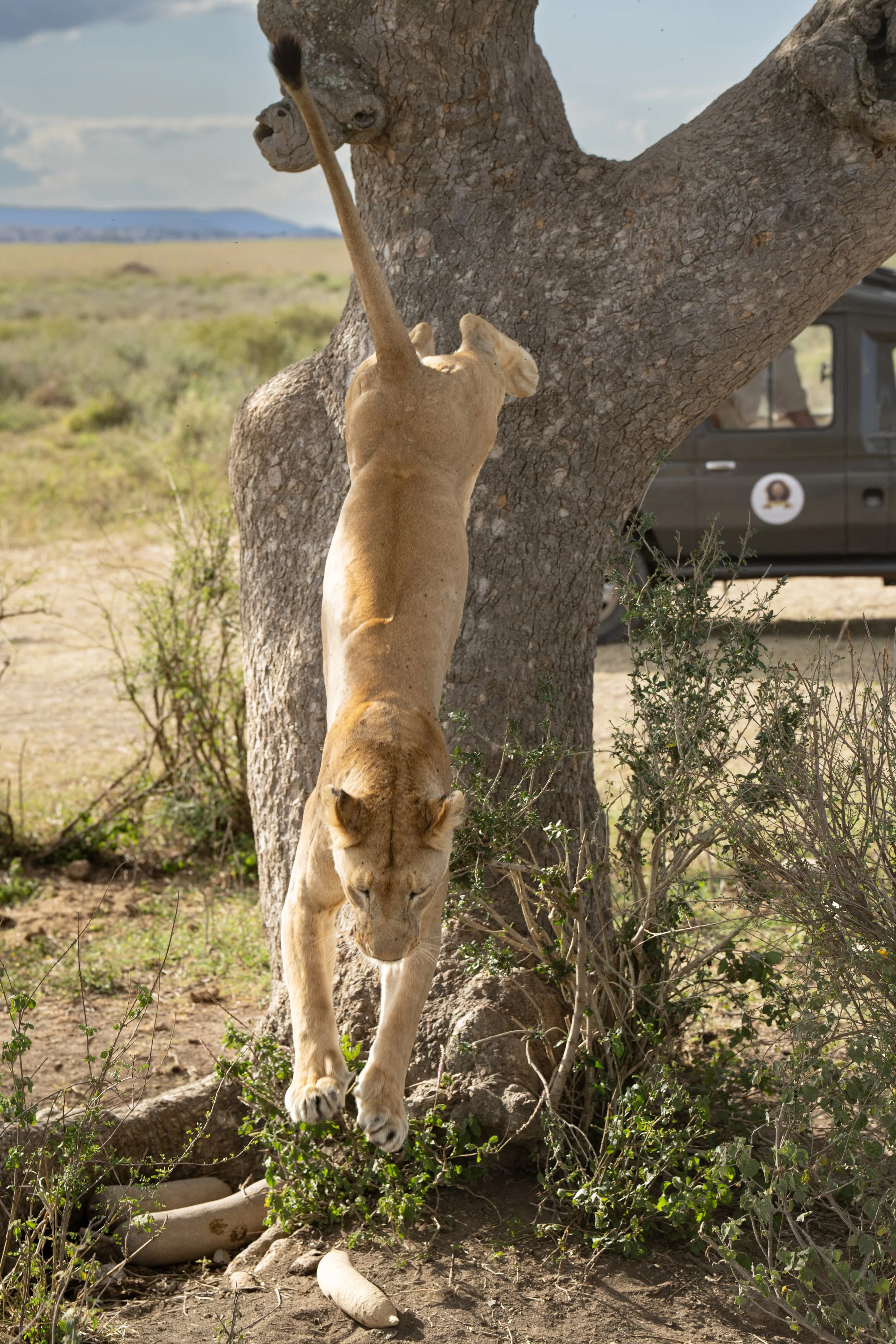
With safari vehicles in front and behind, this lion acted as if we weren’t there at all but wandered behind our truck to get out of the sun for a bit before heading back to the rest of the pride.
We were lucky to see many lion cubs, sometimes playing with the rest of the pride lazing in the sun and with a couple that were a little curious about us.
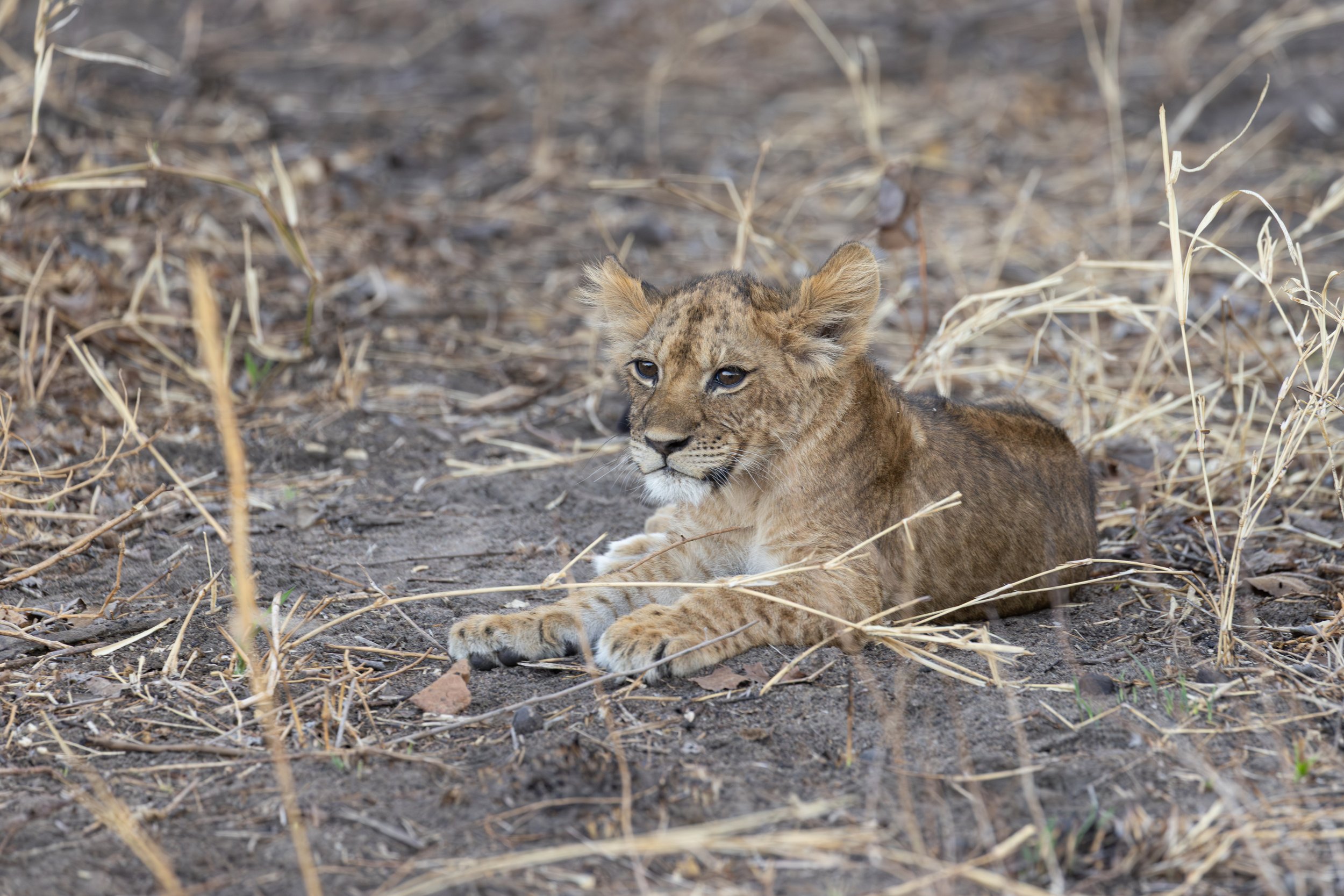
Fuzzy and cute, lion cubs seemed to act a lot like house kittens, curious and energetic but often a bit clumsy.
Leopards
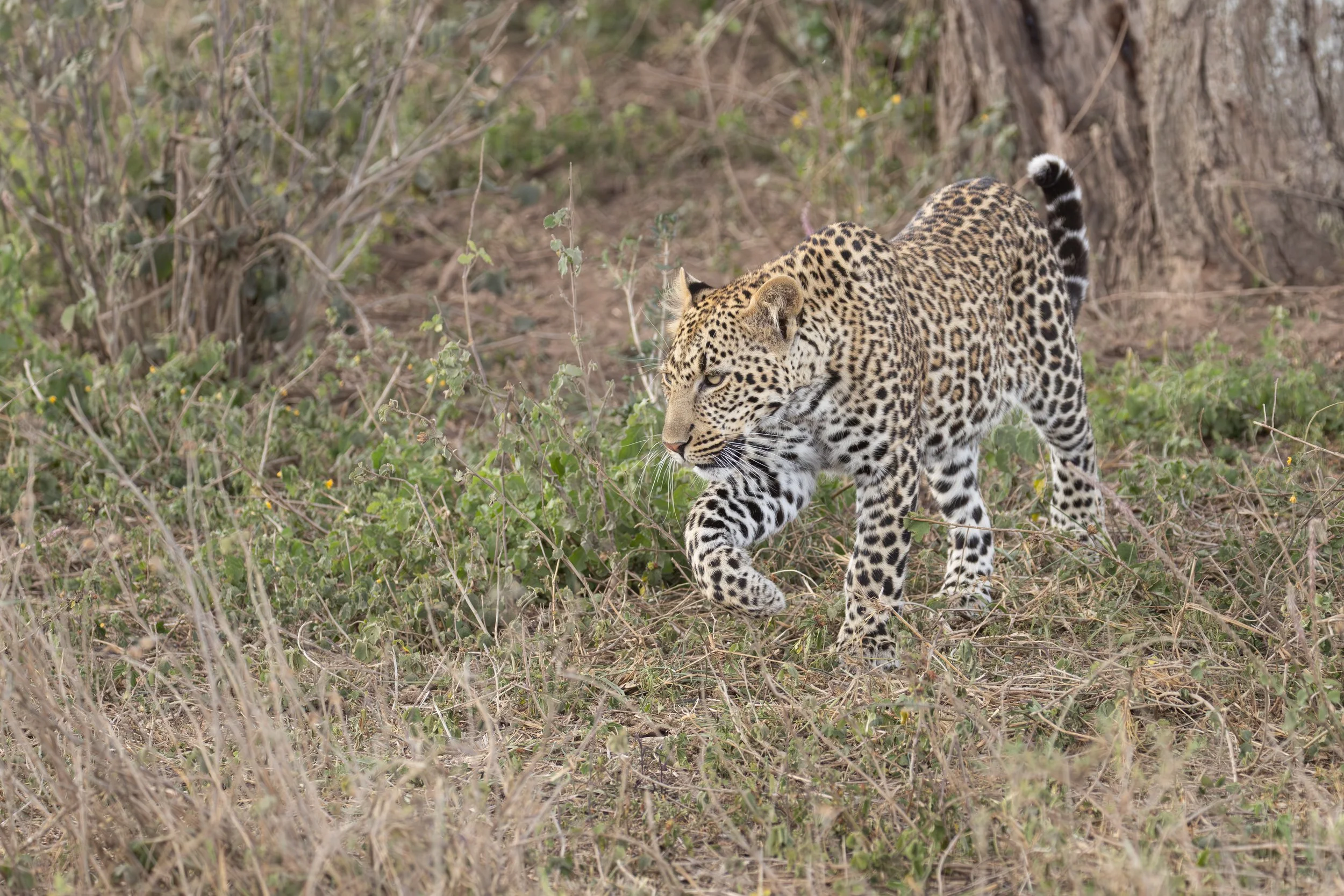
I can say that we were very lucky to see several leopards on this trip. Our guide was pretty thrilled since typically they can only get a glimpse of them in a distant tree. Instead, we got to spend a good amount of time watching one resting in a tree, another coming down from a tree to start to hunt, as well as another beside a tree after an unsuccessful hunt for a mongoose.
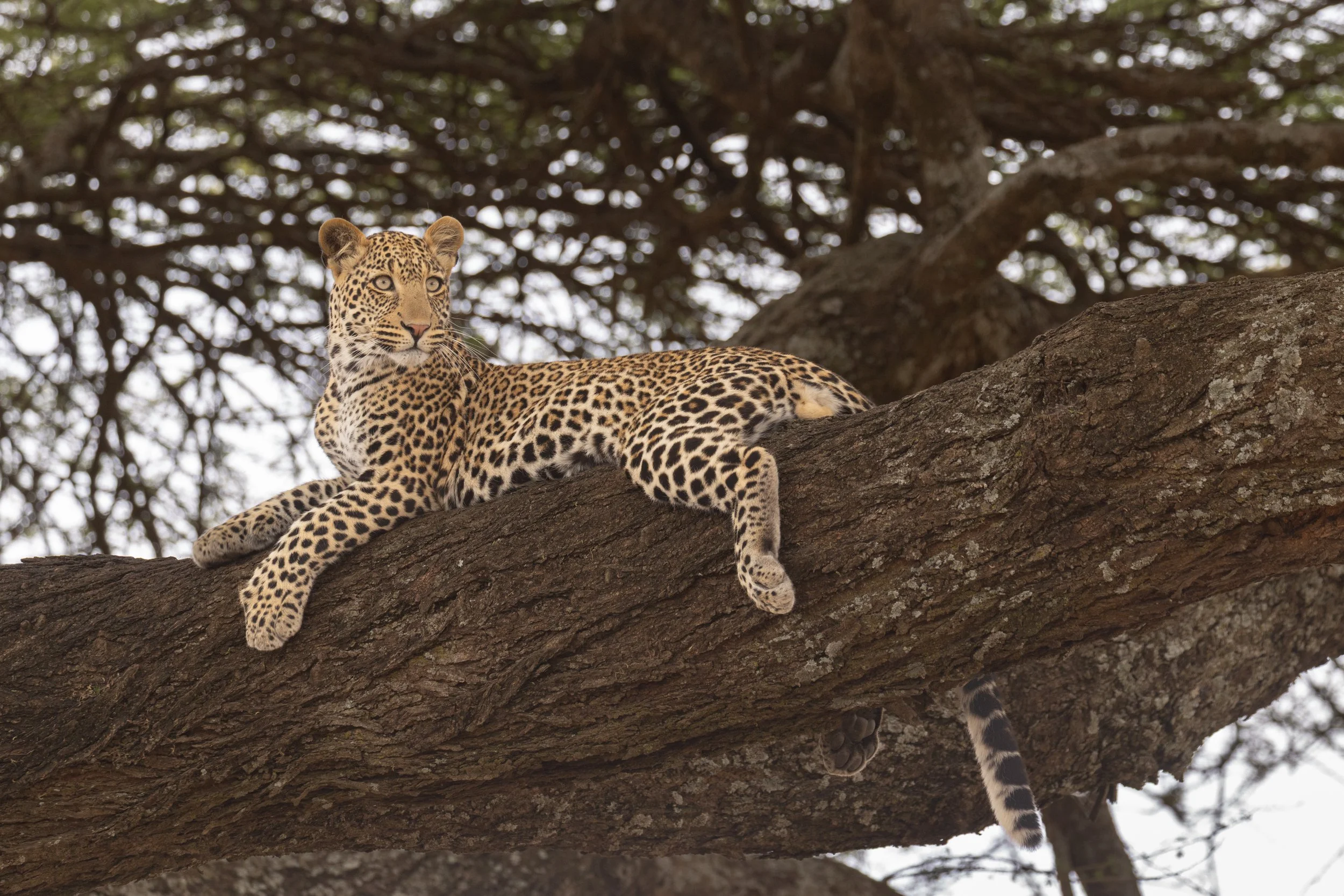
lone leopard in a tree noticing something interesting back behind us
Although the light was challenging to get great shots, the fact that we were able to spend as much time with this elusive cat made it worth having to do a little work to get the best out of the shots.
Buffalo
Cape buffalo were a little difficult to get interesting photos of, at first we only saw them far away in small herds and often mostly hidden in the brush, but in the Ngorongoro crater we got to see a larger group of them in a wet, muddy open area. One of the photographers in our group was on a mission to get a picture with oxpeckers on the buffalo which, after patiently waiting, we did manage to get exactly the shot he wanted. I also managed to get something, but the composition I really wanted would have been a backlit headshot.
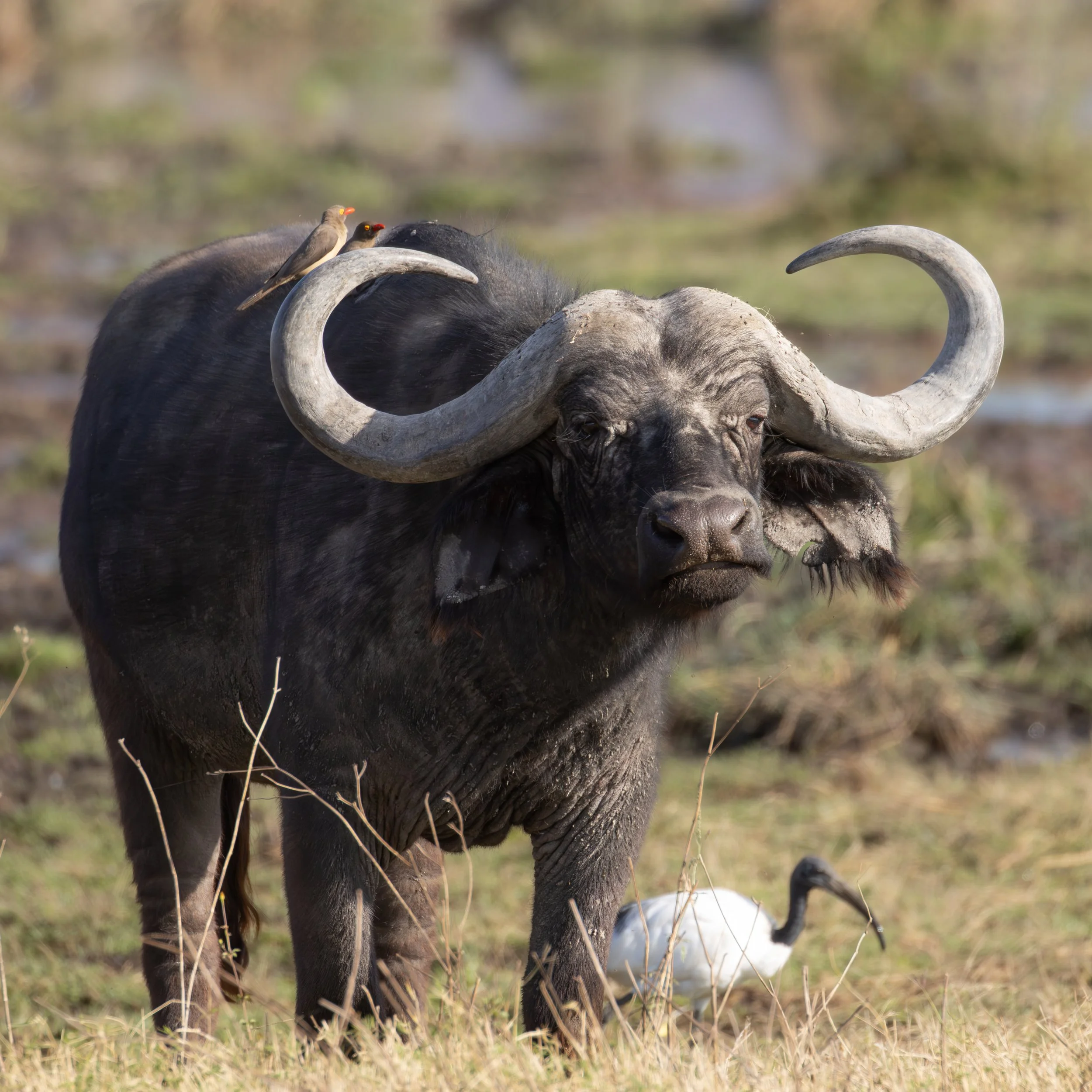
Cape Buffalo with a pair of oxpeckers in the Ngorongoro crater
Rhinoceros
Salwa wanted to see a black rhino, from our first day out it was on her list and it wasn't until the final day that we had a chance to see them. In this case that was pretty much all we can claim is that we saw a couple as it was from a long distance though many trees with a significant amount of heat haze in the air. I only managed to get a couple of shots off, and I think I can at least say for certain that it was a rhino but I'm not going to be showing off any of these photos. I think in this case I'm mostly disappointed about the fact that rhinos now need to be protected so much due to human predation and over tourism that they have had to close down many of the roads to allow them a bit of room away from people. It is our own fault and I hope that some of the work being done will mean that these magnificent animals will have a future. For now, I can live without getting a nice picture.
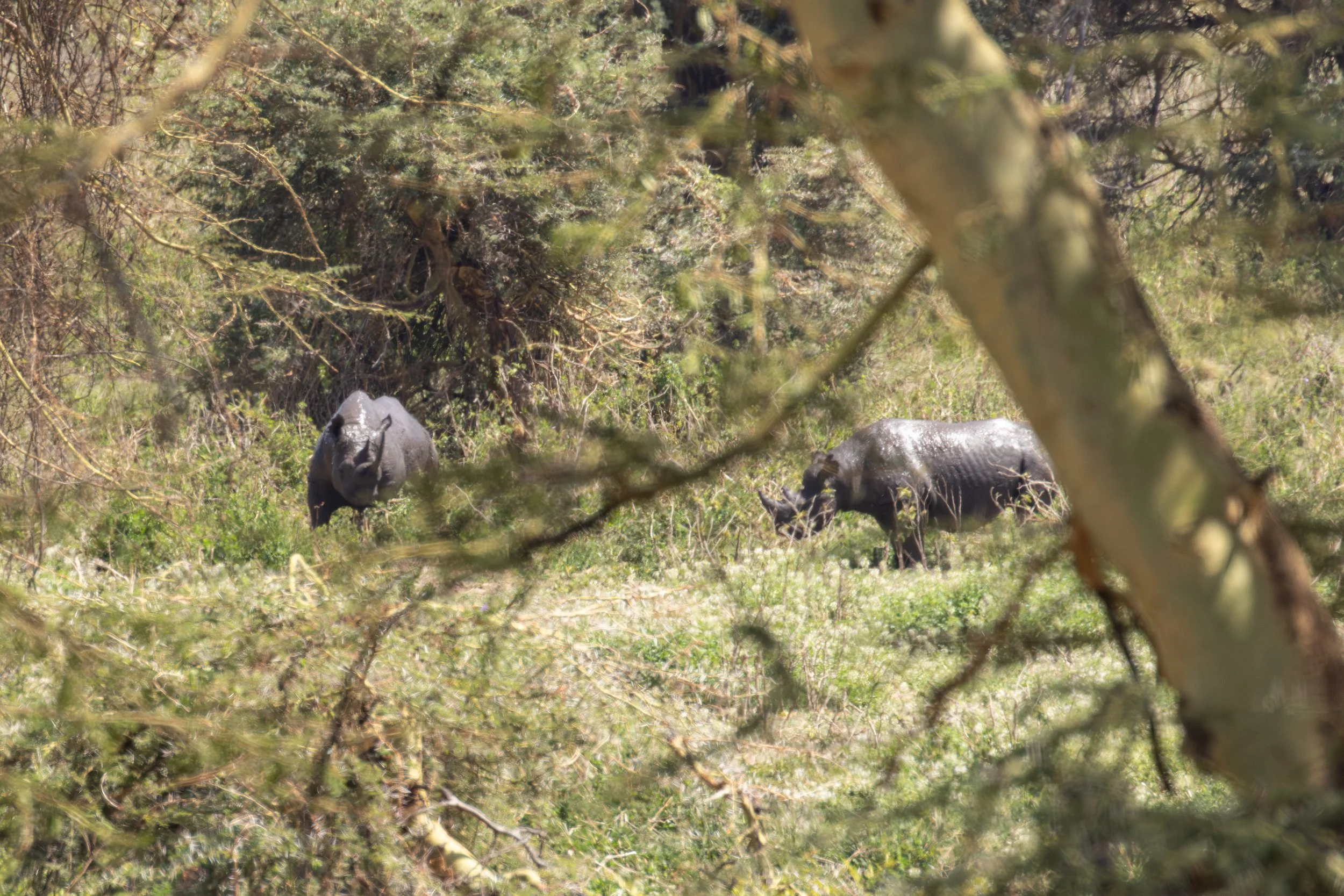
Highly cropped image of two black rhinos deep in the bushes on a hot afternoon in Ngorongoro conservation area. Not a great shot but at least we got to see them on the last day.
Cheetah
From day 1 of the trip, when asked what I wanted to see, it was always a cheetah on the hunt. While I didn't get to see one at full stride chasing an antelope I did get to see a mom with two cubs and three active cheetahs on the plains. I think these were my favourite moments from the entire trip, and something that child watching TV on Saturday mornings can now say he got to see in person.
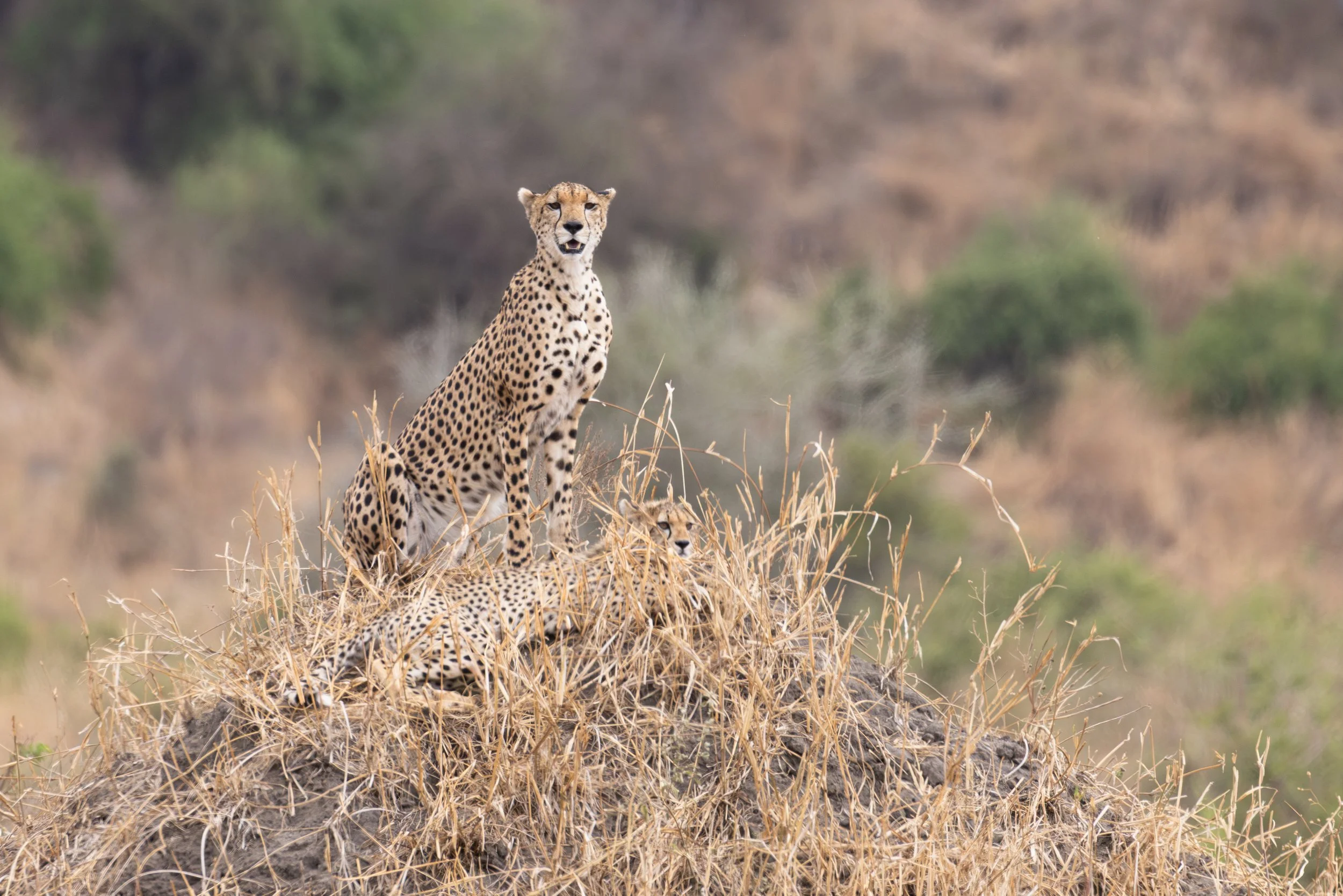
Cheetah mom and cub on a termite mound to give it a bit better view of anything wandering by
Hippos
Anytime we came close to water and the air smelled rank, there was a good chance that we might be close to some hippopotamus. The rainy season had not quite started yet so most of the time we found hippos in muddy, putrid ponds where they were all squeezed close together. Hippos seem to be rather ornery creatures, but I suppose I would be as well if someone was flinging dung in my face with their tail.
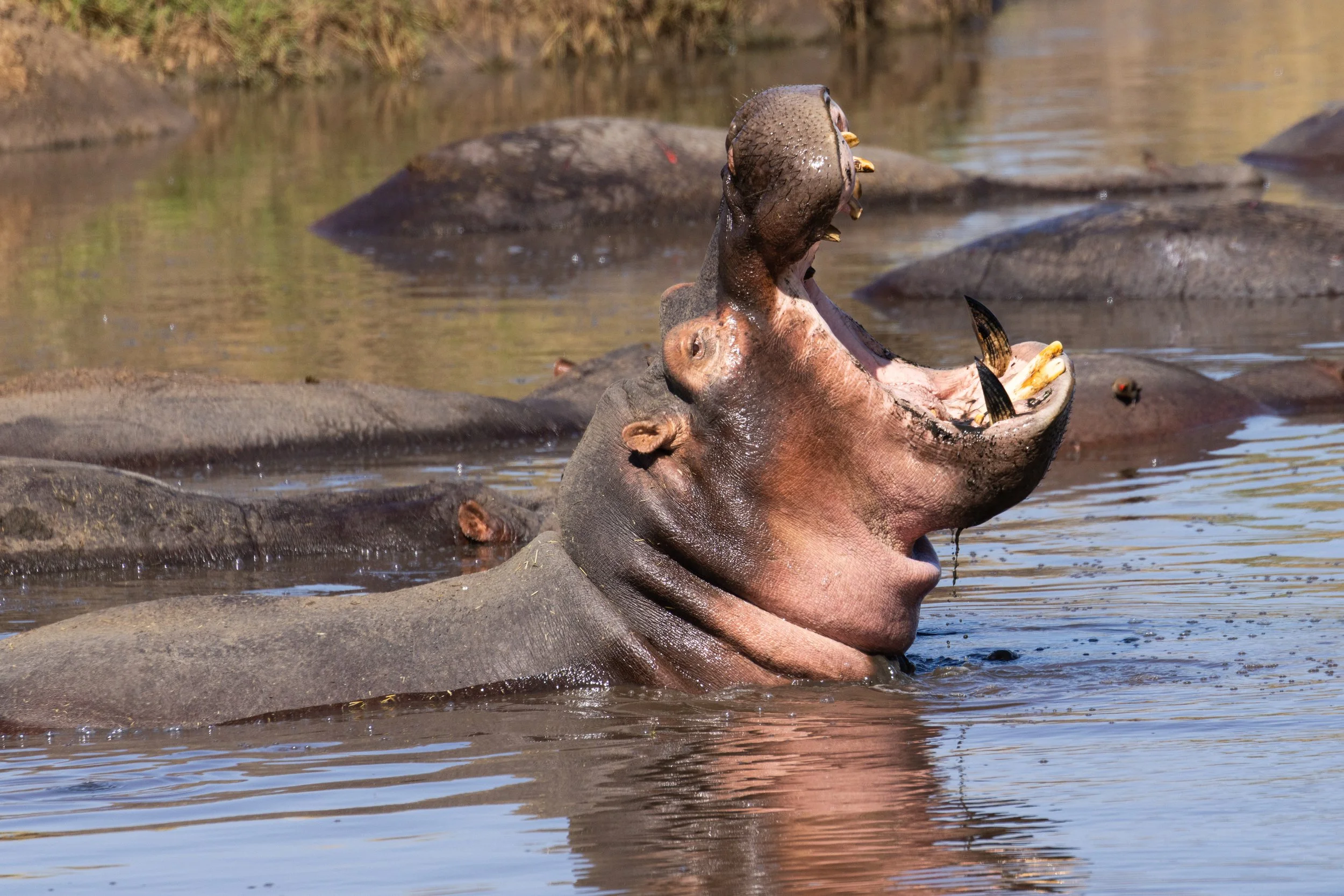
Big yawn, very big teeth and a lot of attitude.
The one thing we watched numerous times that I hadn't expected was hippos rolling over with their feet up in the air on a regular basis. It helps to keep their backs wet and muddy so they don't get sun burnt, and it was amusing to watch.
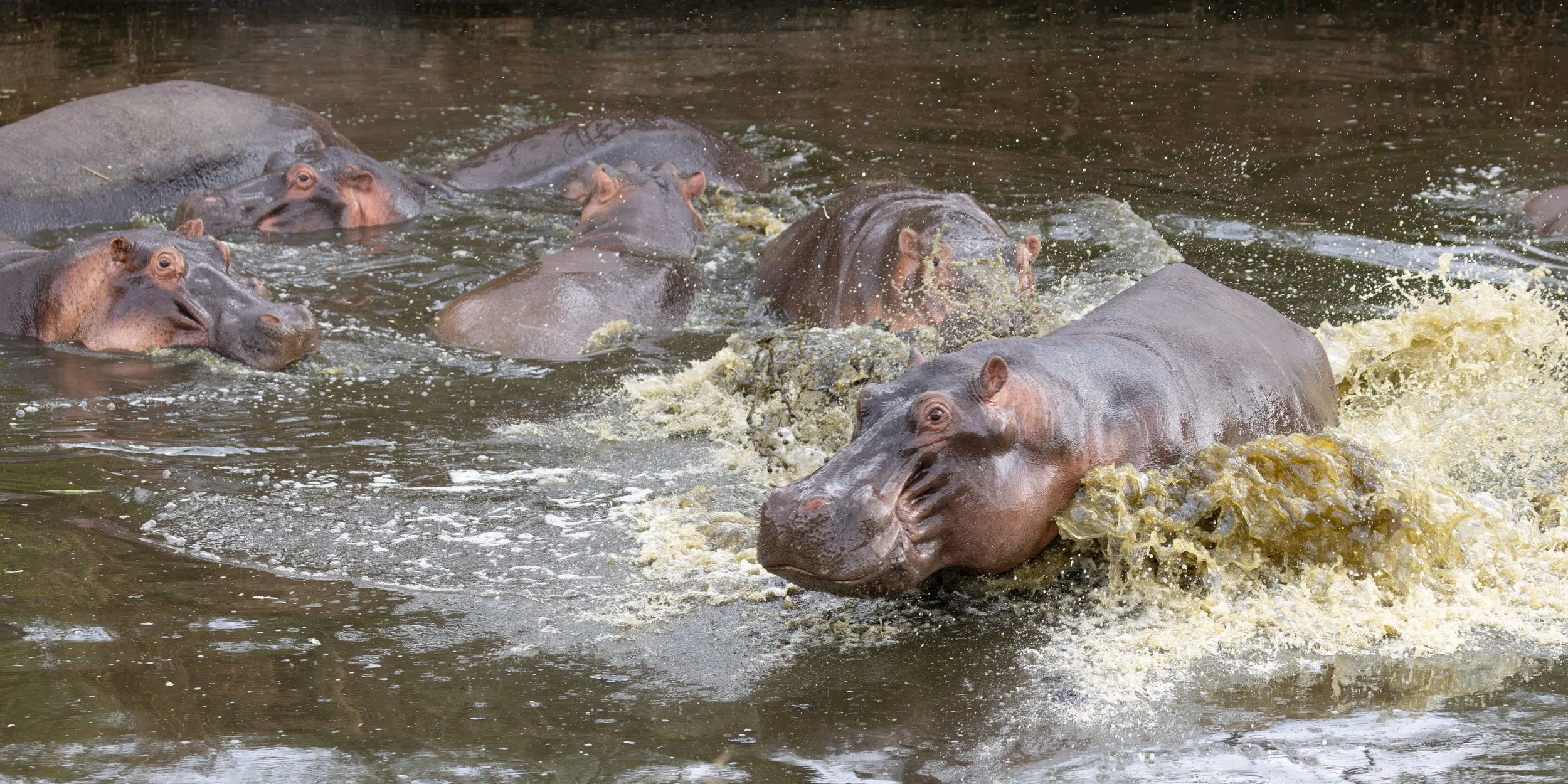
Hippos can move very quickly in water, and tend to raise a good bit of muck while doing so
While we can certainly call the trip a success on the basis of seeing and photographing the big five, there was so much more to see. So many antelopes of different types, numerous birds everywhere, lizards, smaller mammals, and monkeys. We travelled through Arusha National Park, Tarangere, Lake Manyara, the Serengeti and Ngorongoro crater over 10 days. I’ll have many more photos to share in the next few posts. You can take a look at the Tanzania Gallery for some of my favourites.

What's in my bag for Tanzania
We started planning this trip more than 8 months ago so for once I have plenty of time to consider what I need/want to bring with me from a gear perspective.
Option 1: In the left side Canon R5II with EF 100-400 lens attached, 14-35 f/4 RF lens, set of magnetic filters. On the right side we have the Sigma 500 f/5.6, Sony A7R5 with 35-150 f/2-2.8 lens, DJI Osmo Pocket 3, Canon 1.4x EF teleconverter.
We are not long term planners, usually deciding on trips a few weeks ahead and then just doing our own thing without a major schedule or others to rely on. This year we decided to finally do an African safari, basically a trip of a lifetime for us, but we are doing so with 3 other couples. This is a photography trip and we are all nature photographers so at least we will have the same priorities for the most part. We started planning this trip more than 8 months ago so for once I have plenty of time to consider what I need/want to bring with me from a gear perspective. I normally carry a long telephoto zoom and a big white telephoto prime for much of my photography closer to home but I don’t think this is going to be the best gear for this trip. Taking that gear on a number of planes would also be challenging so I have really had to think about what we are going to be shooting, the distances from the subject, how much gear and how heavy my bag will be.
I’ve watched a number of different youtube shows from other photographers on different safaris to try to get some idea of what will be most useful that can all fit in one backpack. The general consensus seems to be that unless the trip is mostly birding you will not really need a super long lens. 400mm is likely as long as will be needed most of the time and with some of the bigger animals you may be close enough to need a normal or wide lens. I always like to do some landscape work while traveling so most likely an ultrawide zoom will be good to have. To keep things light and still have a good assortment of focal lengths zooms will be most practical.
Based on all of that, I think I have determined that the types of photography I will be doing will be closer to the bear photography that I do in the fall where we have larger subjects often at medium to fairly close distances and in low light. To this end I have put together a set of kit that I think I will take on the trip and have been using that most of the time during salmon season this year.
The gear includes the following:
Canon R5II
Canon 100-400 EF f/4-5.6 L
Canon EF 1.4x teleconverter
Canon RF 14-35 f/4 L
Sony A7R5
Tamron 35-150 f/2-2.8
Sigma 500 f/5.6
I will also be bringing along the DJI Pocket 3 and the Sony ZV1 for capturing video as we are shooting. I have also now a new MacBook Air m4 plus a number of external SSD drives for backing up pictures and videos each night.
Accessories going in one of the bags are the Macbook air, 2 small cases of memory cards, extra batteries for all cameras, card readers for CF Express type A and B as well as for SD cards, external SSDs for quick backup of files each night and the trusty Sony ZV1 for quick videos.
To hold everything I have 2 options, a PGYTech Onemo 2 35L camera bag shown above or the Gura Gear Kiboko 16L below. The PGYTech fits everything above fairly easily but with the Gura Gear I would need to leave the 500 Sigma at home. That bag would not have worked at all originally since it can’t fit a large laptop but now with the macbook air I can take either easily. I haven’t made the decision yet but am leaning towards the smaller bag at the moment.
For Option 2 in the Gura Gear bag which is significantly smaller I have the Canon R5II with the EF 100-400 lens and the Canon EF 1.4 teleconverter.
Side 2. I have the Sony A7R5 with the 35-150, Osmo Pocket 3, and the Canon 14-35 f/4. This bag has plenty of storage for all the accessories and a small area that will fit the Macbook air.
During Salmon season this year I have mostly carried the Canon R5II with the 100-400 lens and the Sony A7r5 with the Tamron 35-150 lens and have found this to cover fairly well what I am shooting. Most of the time for these medium sized mammals at distances of between 10-40 metres these lenses have worked out well. I’m hoping most of the time the shooting will be similar from the safari vehicles based on what I have heard from other photographers.
If money were no object, I would absolutely prefer to have a low light beast like the Canon 100-300 f/2.8 along with a couple of teleconverters which would allow for a great range plus good low light performance but that lens is significantly out of budget and I’m hoping Sigma will come out with a new version of their 120-300 at some point for FE mount at a much more reasonable price point.
The 35-150 has turned out to be a very versatile lens for both photography and video. I think that this lens may stay on the Sony camera for much of the trip especially for many of the large animals that we will come across and for more environmental shots with the animals.
The 100-400 range will likely be sufficient for most of the other nature photography and I’m expecting that we will have pretty good light much of the trip. The 1.4 teleconverter is for just in case we see some birds that I can’t pass up the chance of capturing.
If I have the 14-35mm lens on the Canon for some landscape or wide environmental shots then I might switch to the 500mm on the Sony to ensure that I have a long telephoto ready for big cat action. The Sigma 500 is such a light and small super telephoto prime that it may be worth bringing even if I don’t use it most of the time. Salwa will have a 16-35 in her bag if I do need a quick wide angle shot on the A7RV and the Canon is busy.
he main reason for the wide range of the lenses on a trip like this is because most of the time we will be in a safari vehicle and will be unable to get out to change perspective so we will absolutely have to do so with the zoom lenses.
Salwa similarly will be bringing a set of lenses that cover the gamut from 16mm to 560mm with a 16-35 f/4, 24-105 f/4, 100-400 f/4-5.6 and a 1.4 teleconverter all on her Sony A74. It is likely she will be doing a lot more video than I will and she is very comfortable with this lens setup that she takes on most of her video shoots.
The other little things we will be bringing:
Many memory cards for all the cameras.
SSDs for backup
Insta360 X5
Filters (ND and polarizers)
DJI wireless microphone
On camera microphone
Otherwise we will have minimal clothing, a bit of medicine incase of any trip related issues and not much more. Can’t wait to get out there, planning a trip this far ahead is very difficult for us to not get too excited too early. Hopefully I haven’t over examined this with all the time I have had…sometimes overthinking is bad :)
I will revisit my decisions once we come back from the trip to see if we ended up having what we needed or if we should have brought other gear. So far things are working well enough for shooting black bears on the rivers edge and elk out in the fields.