
Photo locations, techniques and technology. Highlights of locations we frequent as well as features on how and why we shoot the way we do, including gear reviews specific to nature photographers.

Winter trip - Stage 3 - Desert States
When it is time to run from the cold and rain the desert states seem like the perfect place to get back to sunshine and that dry heat. That was the plan and for the most part we found a good amount of sun but for some odd reason the cold was still following us down from the north.
When it is time to run from the cold and rain, the desert states seem like the perfect place to get back to sunshine and that dry heat. That was the plan and for the most part we found a good amount of sun but for some odd reason the cold was still following us down from the north. We left the coast after visiting friends near San Jose and travelled up to Lake Isabella. It was a fantastic road up through Sequoia National Forest and our first night of BLM camping along the Kern river.

The view from our campsite on the Kern River. Sony A7III with 16-35 f/4 at 19mm, f/9, 1/800s ISO 1600
This is definitely an area we would like to come back and explore again as there were old mines fantastic rock formations and signs of animals in the area. This trip however we just spent the one night and headed towards Death Valley. This seemed like a great idea as it almost never rains there, right?
Well, we were lucky enough to come in just before a huge wind and rainstorm that tested the strength of our camper (and our sanity). It wasn’t all bad, in fact the weather actually made for some pretty spectacular photography. Scenes that were probably pretty rare with storm clouds on one side of the valley and sun on the other.

Salwa was finding sand in her hair for days after this hike. Sony A7RIV with 24-105 f/4 at 46mm, f/9, 1/400s, ISO 100
The salt flats is the first spot we went to see what sunset would be like. The views were amazing, the salt flats such a cool thing to see but that evening the light wasn’t fantastic. We did get a few interesting shots but went away that night without a portfolio shot.
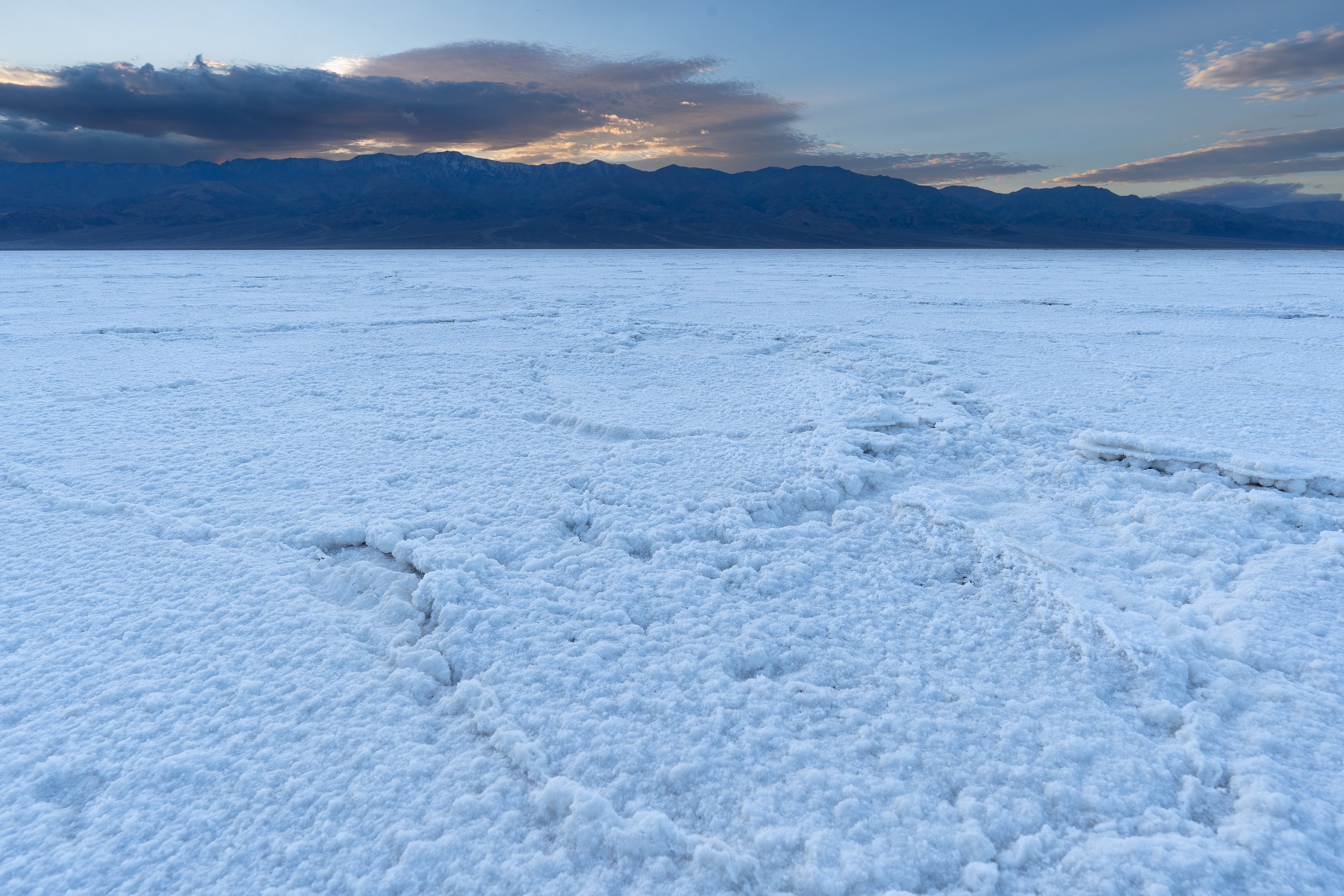
Salt flats at sunset, not quite the sunset we hoped for but still such an amazing place to explore. Sony A7III with 16-35 f/4 at 19mm, f/10, 1/20s, ISO 100
The next day was a different story. The wind picked up again and we could see storm clouds around us so we drove north again towards the sand dunes which looked promising. We managed to get out about a half mile into the dunes when the wind suddenly went crazy, blasting sand at us and then the sky opened up pelting us with rain that felt like pellets from an air gun. This didn’t stop us completely as we tried to get some video of the situation, mostly so that we could laugh at ourselves. We got back to the truck and the rain moved away after about 10 minutes. This was when the sky started to look wild. Dark clouds and rain in front of us with harsh sunlight on the dunes and the wind still throwing the sand around. I think I have at least 10 shots that I could print from the next hour out there…maybe more.
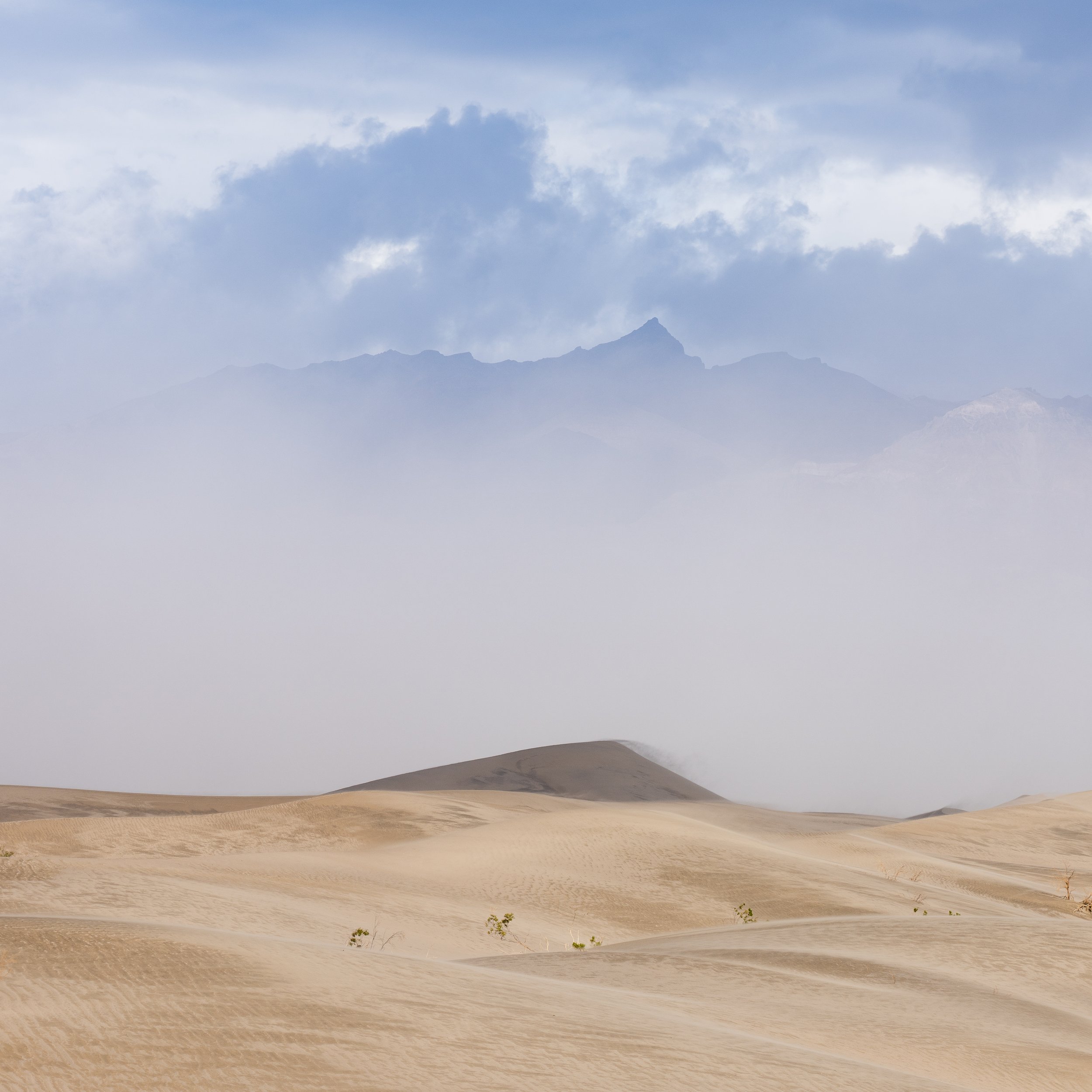
A rain storm making its way past us across the valley of Sand dunes. Sony A7RIV with 24-105 at 105mm, f/10, 1/250s, ISO 100

The sand was still blowing in the distance, but the light and shadows were amazing as the storm clouds moved on. Sony A7RIV with 24-105 at 43mm, f/9, 1/320s, ISO 100

Salwa on the top edge of one of the larger sand dunes. Sony A7III with 16-35 f/4 at 34mm, f/9, 1/320s, ISO 100
As per usual on this trip the weather was starting to turn again as we heard that snow was coming for the mountains on the way to Vegas. We decided to run for the hills, and got to the very top just in time for the snow. It was a slow and nervous trip down into Las Vegas that night but after a night at a KOA campground to get a shower, wash some clothes and get the batteries topped up we were headed to a park on the other side of Vegas called Valley of Fire.

Salwa near the beginning of wave of fire hike. Sony A7III with 70-200 f/4 at 70mm, f/4, 1/1000s, ISO 100
This turned out to be one of the best stops of the entire trip, and I had barely heard of the place before we went there. We camped at the Atlatl Rock campground in the park where we were surrounded by fantastic red rocks with desert bighorn sheep wandering through regularly. Just hiking through these rocks could take up your time for days.
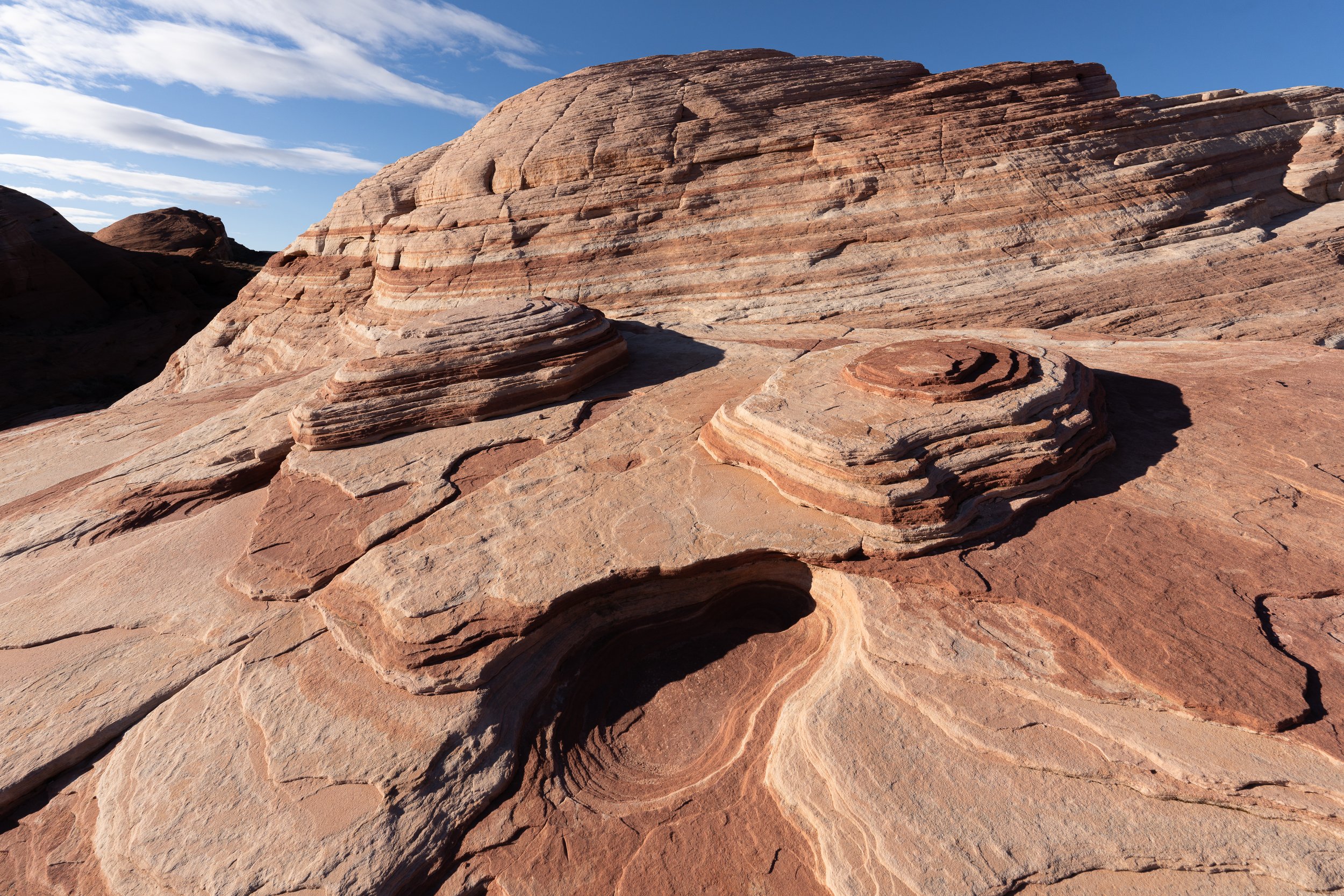
Waves of weathered rock. Sony A7RIV with 16-35 f/4 at 17mm, f/11, 1/200s, ISO 100
We spent most of our time hiking along White Domes road with beautiful slot canyons that we accessed from the end of the road.

Part of the Slot canyon near White Dome. Sony A7III with 16-35 f/4 at 16mm, f/10, 1/20s, ISO 100
From just after the sun came up we wandered all around Fire Wave trail. This area had some of the most spectator rock formations and wild colors. This is an area to check out with a quick hike and then come back again and again in different light. I think I would like to come back here and spend at least a week capturing dawn and sunset shots. If you are into astro or night sky photography you might find you will really never have time to sleep in this park.

So many textures and colours make the Wave of Fire hike a photographers dream. Sony A7RIV with 16-35 f/4 at 16mm, f/11, 1/125s, ISO 100

Pink, orange, red…pick your favourite colour. Sony A7III, 16-35 f/4 at 16mm, f/8, 1/100s, ISO 100
When we finally did leave Valley of Fire we were off to another very different desert landscape. This was an area we visited years ago in a 1976 VW Westfalia. Joshua tree may not have the same wild colors but the shapes of the boulders, and the Joshua trees themselves make for some wild landscapes.
If you can’t find camping in the park, there is an area at the south end of the park for BLM camping which will allow you to spend your days in the park without too much time on the road. On this trip we spent most of our time around Jumbo Rocks and Cottonwood.

A dead tree with some fantastic boulders in the background. Sony A7RIV with 24-105 f/4 at 34mm, f/8, 1/80s, ISO 100
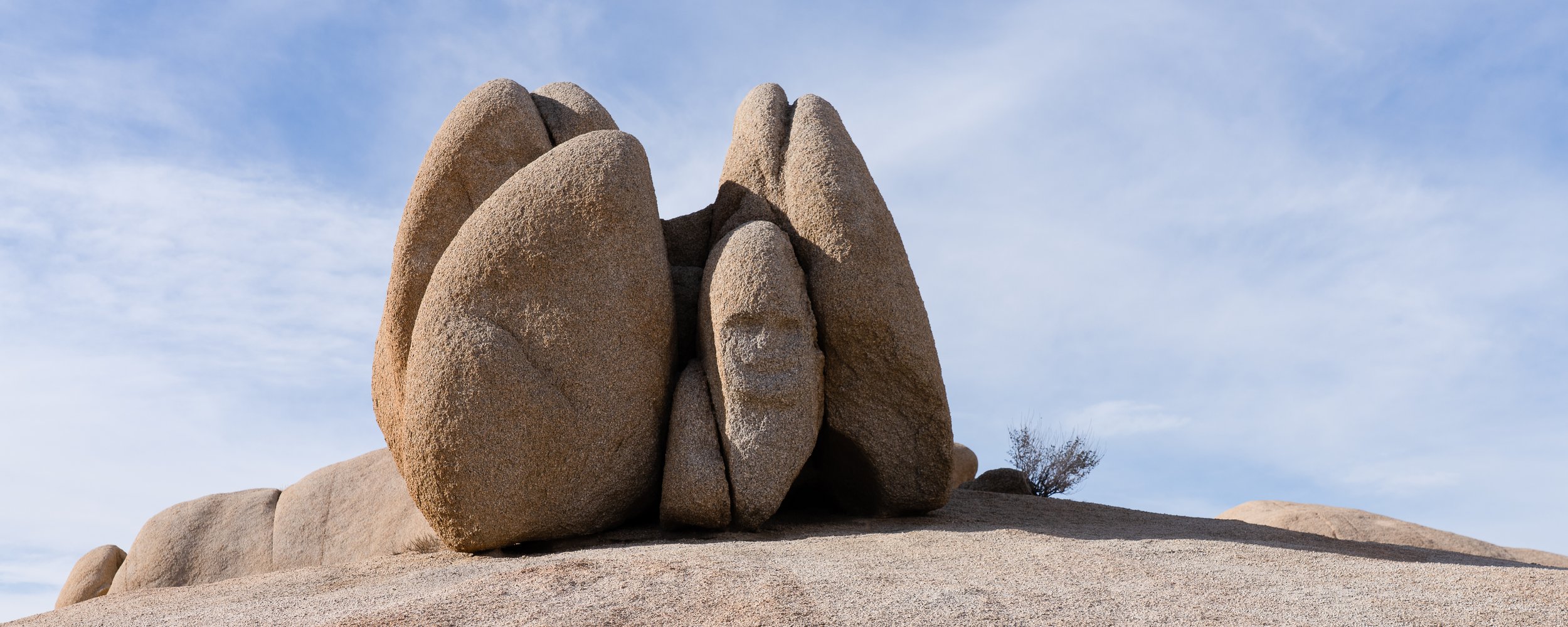
I see a face, do you? Sony A7RIV with 24-105 f/4 at 49mm, f/9, 1/320s, ISO 100
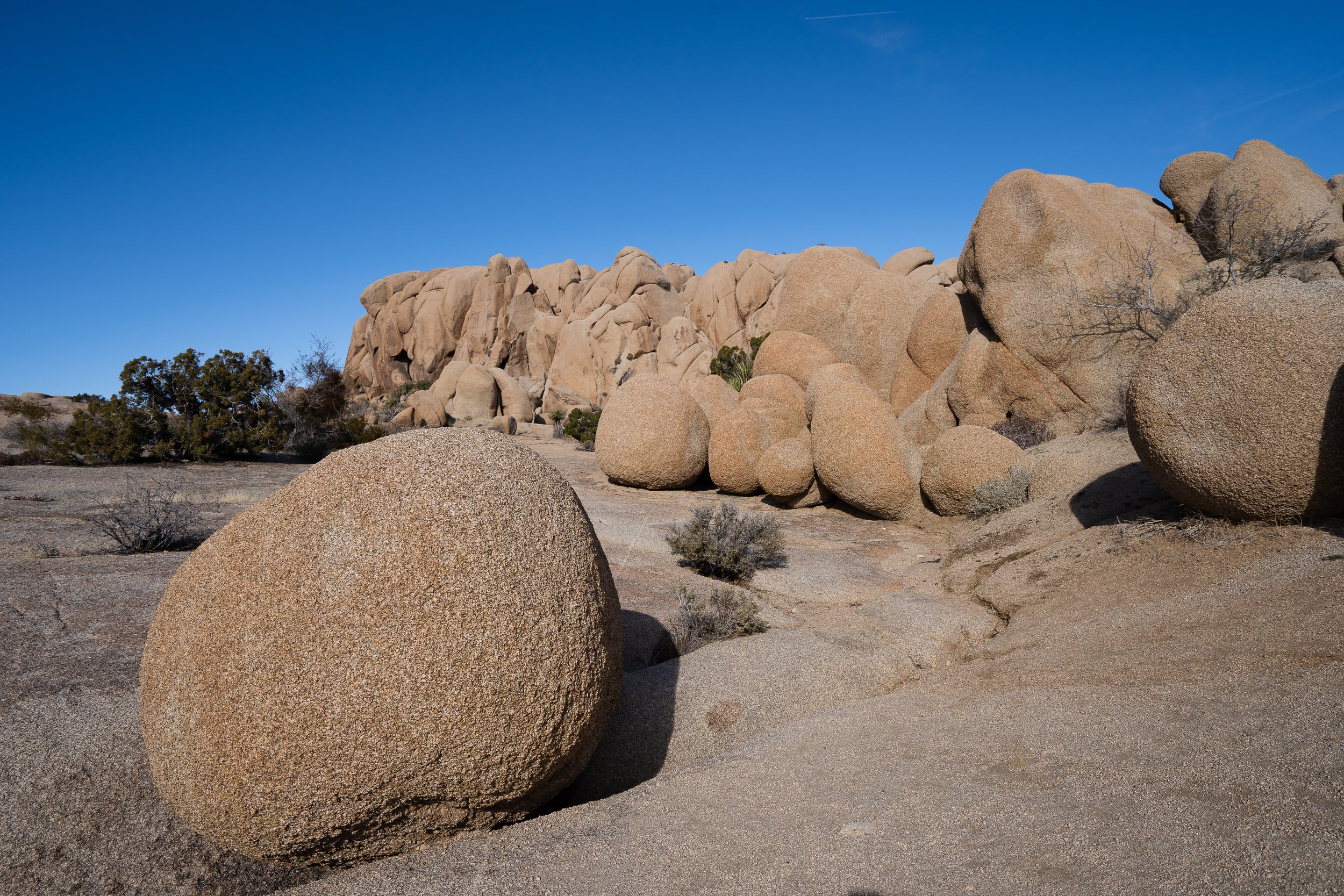
a boulder playground. Sony A7III with 16-35 f/4 at 22mm, f/7.1, 1/800s, ISO 100

Joshua tree hugging Salwa…always another tree to hug. Sony A7III with 16-35 f/4 at 26mm, f/9, 1/250s, ISO 100
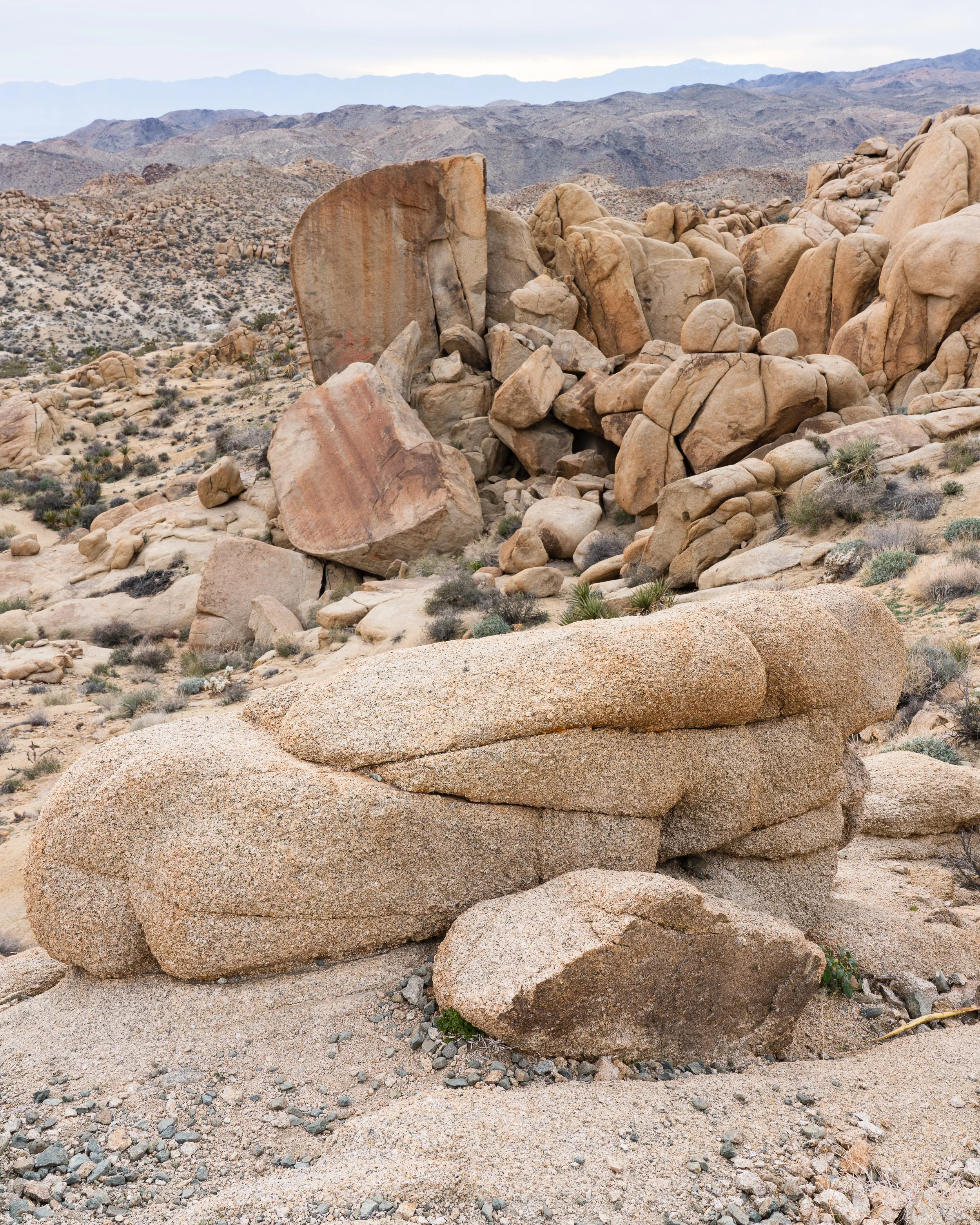
hiking near Cottonwood campground. Sony A7RIV with 24-105mm at 31mm, f/13, 1/25s, ISO 100
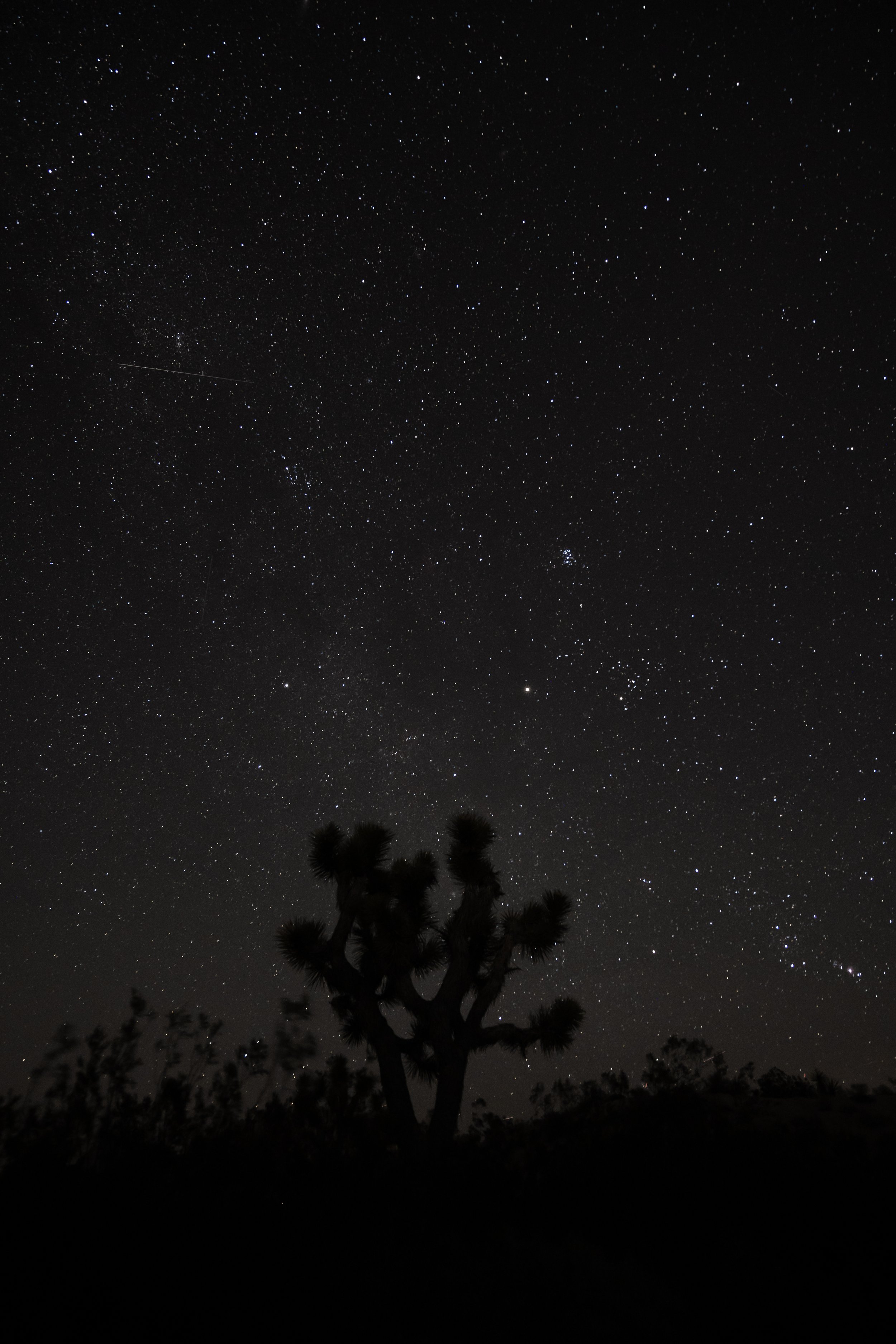
Night sky and a Joshua tree. Sony A7III with 16-35 f/4 at 16mm, f/4, 25s, ISO 1600
At this point we started to put California, and Nevada into our rear view mirror and headed to Arizona. Organ Pipe Cactus National monument was going to be our first stop and was one of the first times we actually had some warm weather (at least for a couple of days). This park is a little south west of Phoenix down on the Mexican border and it is easy to see what this park is named for.

Sunset in Organ Pipe Cactus National Monument. Sony A7III with 70-200 f/4 at 200mm, f/5.6, 1/1000s ISO 1600
This is also when we started seeing more birds and I was able to pull out the big lens.
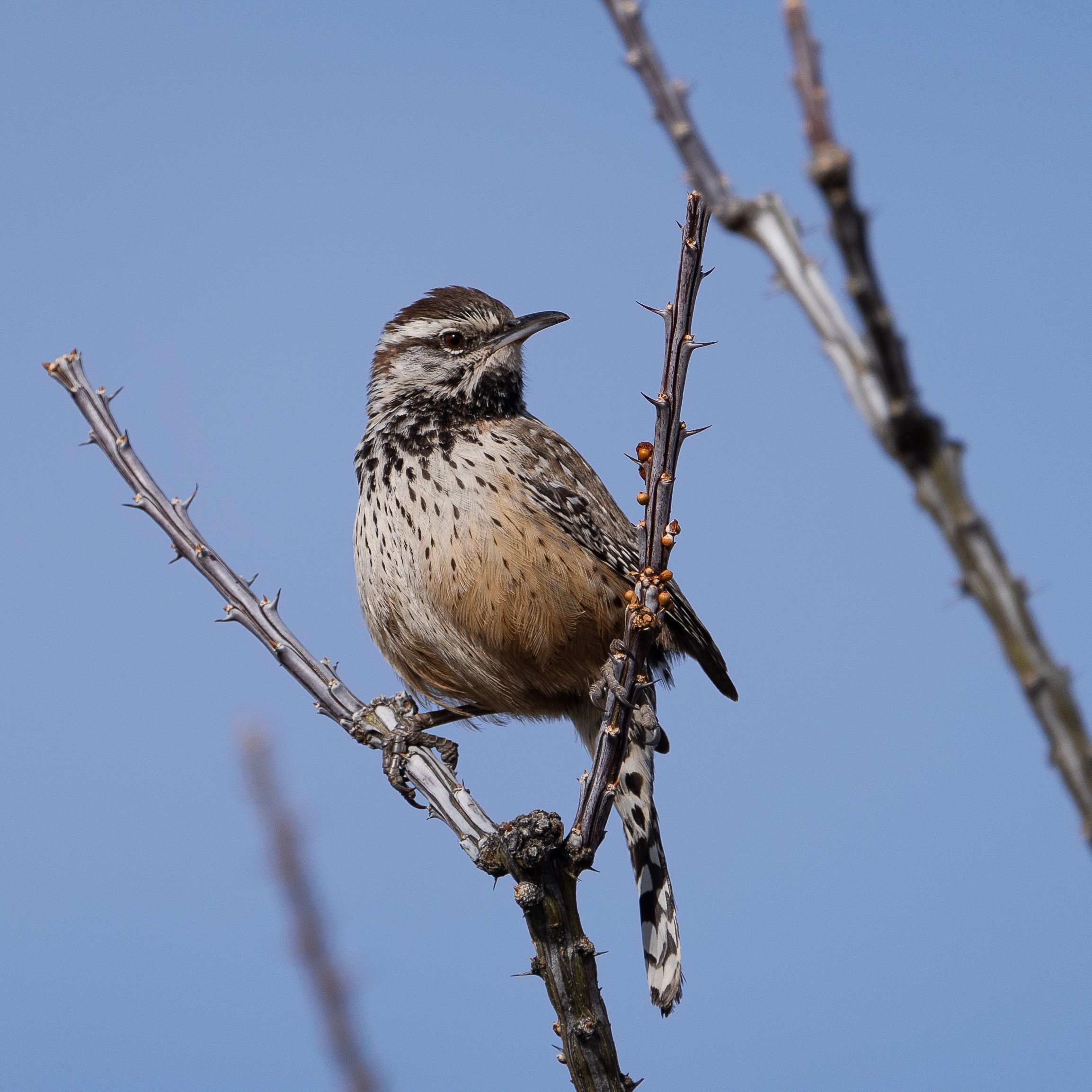
Cactus Wren. Sony A7III with 200-600 f/5.6-6.3 at 600mm, f/6.3, 1/1250s, ISO 250

Phainopepla. Sony A7RIV with 200-600 f/5.6-6.3 at 600mm, f/6.3, 1/2000s, ISO 250

Mexican Scrub Jay. Sony A7RIV with 200-600 f/5.6-6.3 at 600mm, f/6.3, 1/2000s, ISO 200
Again, just outside of this park is some BLM land for camping, we stayed in the park this time and learned quickly that there is an area that is generator free so that you don’t have to listen to loud engines instead of the nature in the park.
I have parents that were snowbirds for around 20 years and spent a good deal of their winters in Tucson so I have in the past been able to come down and spend time in that area. Tucson Mountain state park is a great area to get into some of the desert hiking and to wander amongst the Saguaro cactus that so much reminds me of Saturday mornings watching the bugs bunny/road runner hour.

Saguaro cactii and the view into Tucson Mountains state park. Sony A7III with 24-105 f/4 at 24mm, f/8, 1/320s, ISO 100
This time around we spent only a couple of nights in this area but also went up to Mount Lemmon to check out some wildly different terrain and to give us some time for some good food in Tucson itself.

multiple hoodoos to hike through and around. Sony A7III with 24-105 f/4 at 24mm, f/10, 1/160s, ISO 100, 6 shot panorama

More interesting rock formations along the road up Mt. Lemmon. Sony A7III with 24-105 f/4 at 34mm, f/10, 1/320s, ISO 100
On the next portion of the trip we went to a bunch of areas we found out about through other campers, as we headed east just before the New Mexico border there is a small town called Portal which is just that, a little portal into another amazing piece of landscape and also another little birders haven. The whole area from Madera Canyon to Patagonia Lake and across to Portal are great locations to find hummingbirds and many birds that are only found in Arizona and Mexico.

Anna’s hummingbird near Patagonia Lake, Arizona. Sony A7RIV with 200-600 f/5.6-6.3 at 600mm, f/6.3, 1/2000s, ISO 1000

Blue throated hummingbird. Sony A7RIV with 200-600 f/5.6-6.3 at 600mm, f/6.3, 1/800s, ISO 8000

broad billed hummingbird. Sony A7RIV with 200-600 f/5.6-6.3 at 600mm, f/6.3, 1/2000s, ISO 500
Since moving into Arizona we had been lucky enough to have much more sunny weather even if not nearly as warm as we would have liked. This continued as we worked our way into New Mexico and White Sands national park but our hopes to head into northern portions of New Mexico were not going to be on this trip as ice and snow were in the forecast for Albuquerque and Santa Fe.

The shadows bring out the textures in these nearly monochromatic images. Sony A7RIV with 24-105 f/4 at 24mm, f/11, 1/320s, ISO 100

The wind shapes the land. Sony A7RIV with 24-105 f/4 at 52mm, f/11, 1/250s, ISO 100

Black and white image of the rolling dunes. Sony A7RIV with 24-105 f/4 at 89mm, f/11, 1/400s, ISO 100
This meant a whole new plan was in order and now Texas looked to be one of the few areas that was going to be warm enough for us to camp. On the map was Big Bend Nation Park and as with anything in Texas it was a fairly long drive. Our first stop on this leg was Hueco Tanks, a park I had always wanted to visit when I was a younger and was fairly active in bouldering and climbing. This park is a haven for bouldering and we watched a few climbers attempting stuff I couldn’t think of now.
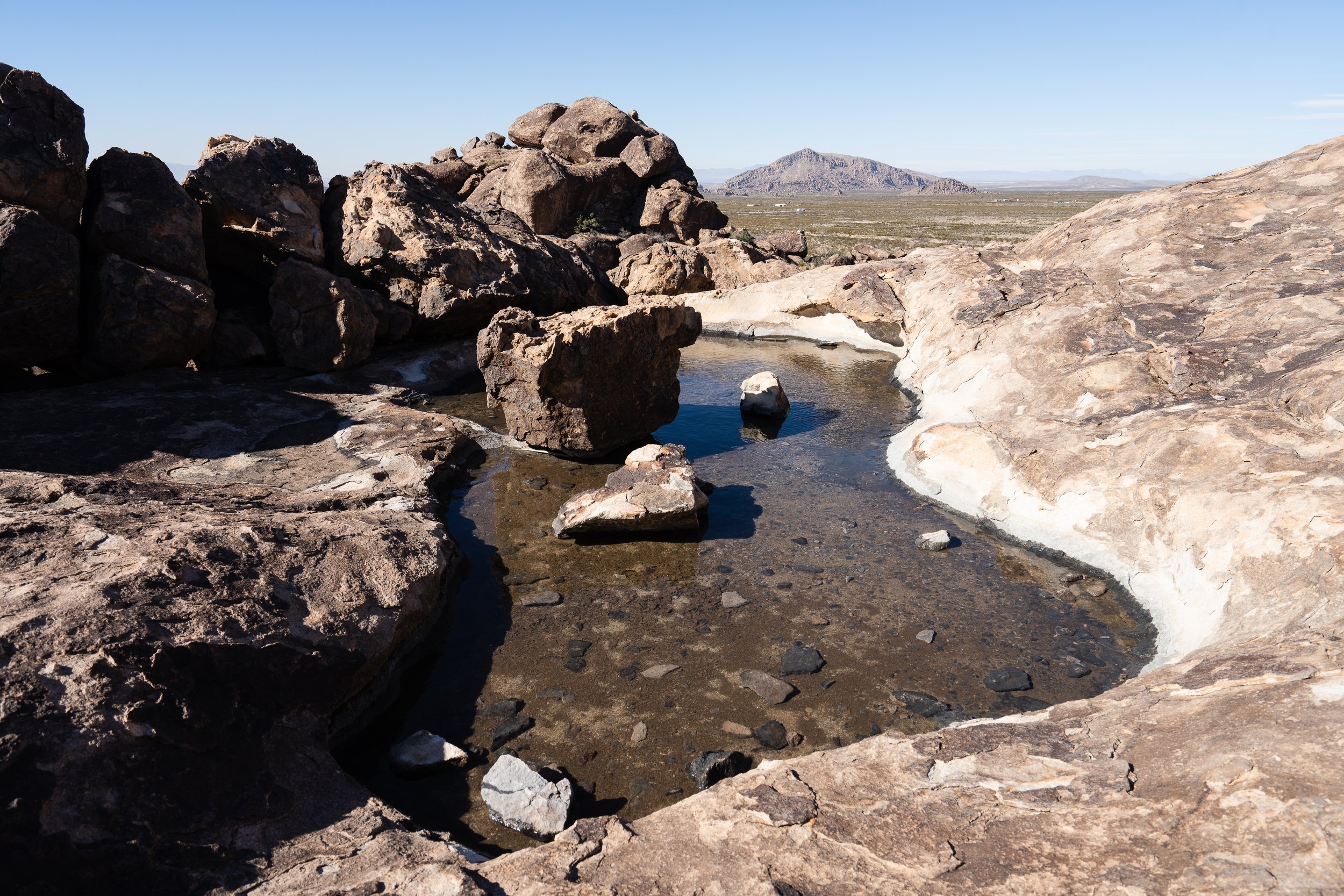
An example of the defining feature here in Hueco Tanks. Sony A7RIV with 16-35 f/4 at 22mm, f/14, 1/80s, ISO 100
Hueco tanks is a very protected area with some significant native historical landmarks and petroglyphs so treading carefully and only in the self-guided parts is important to ensure others will be able to enjoy this area for years to come.

Some fantastic petroglyphs in a cave. We had to be so careful not to touch the wall in this tight and slippery location. Sony A7RIV with 16-35 f/4 at 16mm, f/4, 1/8s, ISO 1600

Just the view from in the cave, but the light was so amazing this is one of my favourite shots from the trip. Sony A7RIV with 16-35 f/4 at 16mm, f/9, 4s, ISO 100
Getting a bit closer to Big Bend, we found a nice park to stay at in Fort Davis which has a big Observatory near by. Nice hiking, camping and dark skies along with some more desert bighorn sheep made for a good stopover before some outback camping on the north end of Big Bend. We didn’t get a chance to check out the observatory this time, but I definitely would like to come back just for that.

Sunset from the lookout at Davis Mountain. Sony A7III with 24-105 f/4 at 105mm, f/22, 1/15s, ISO 640
Our first night in Big Bend was at a spot called Nine Point Draw and we were out there completely on our own. This was so beautiful and quiet. We were able to really relax and just enjoy the scenery. I think we could have spent weeks in the National Park and the state park combined. We managed a number of interesting hikes, one called balancing rock (how many of those are there?) was very picturesque, the hike down to what was called the window to the world was busy but still worth it. Finally the view into Santa Elena Canyon was amazing.
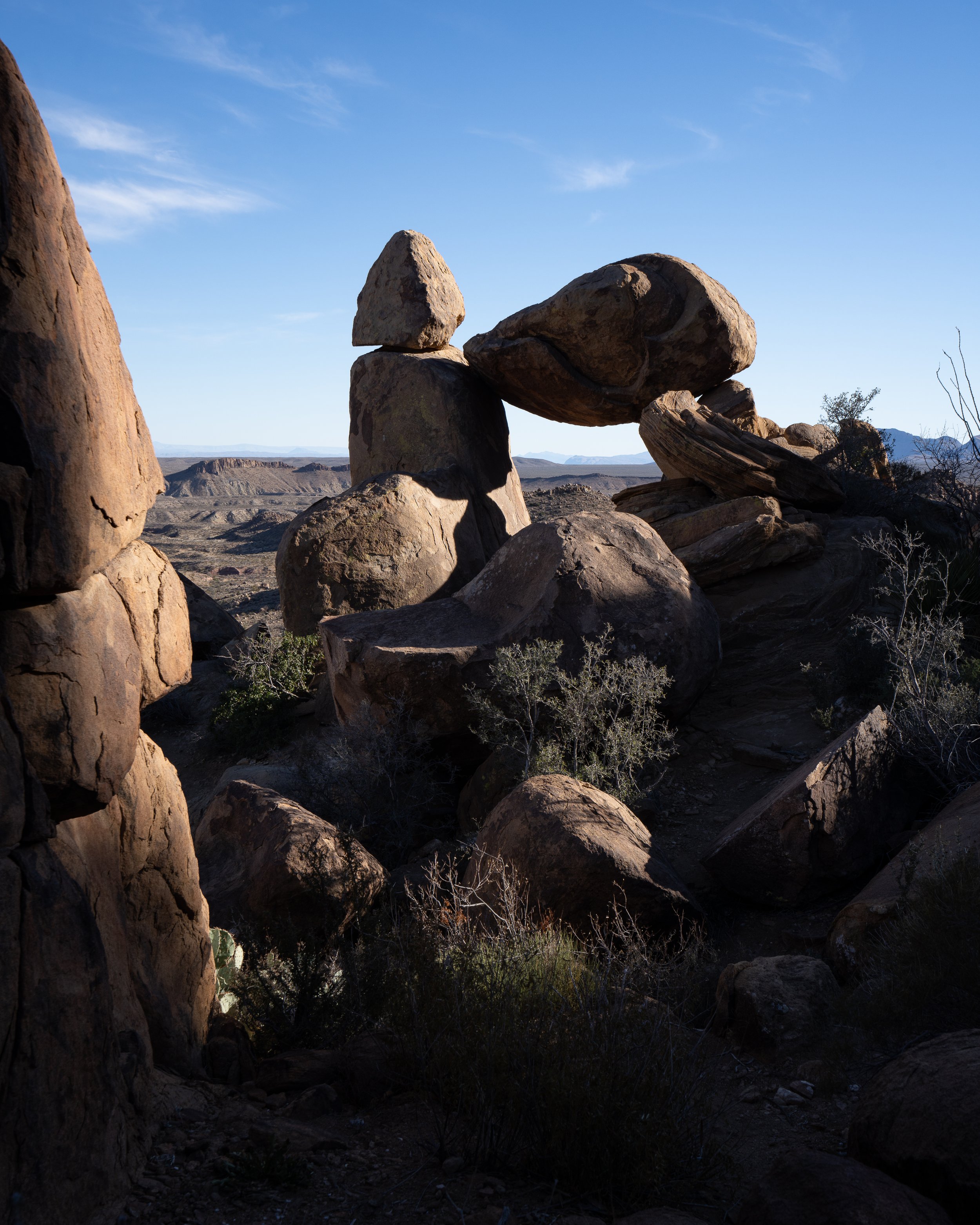
Balancing rock, Big Bend National Park. Sony A7RIV with 16-35 f/4 at 35mm, f/10, 1/125s, ISO 100

Window to the world. Sony A7RIV with 16-35 f/4 at 16mm, f/10, 1/40s, ISO 100
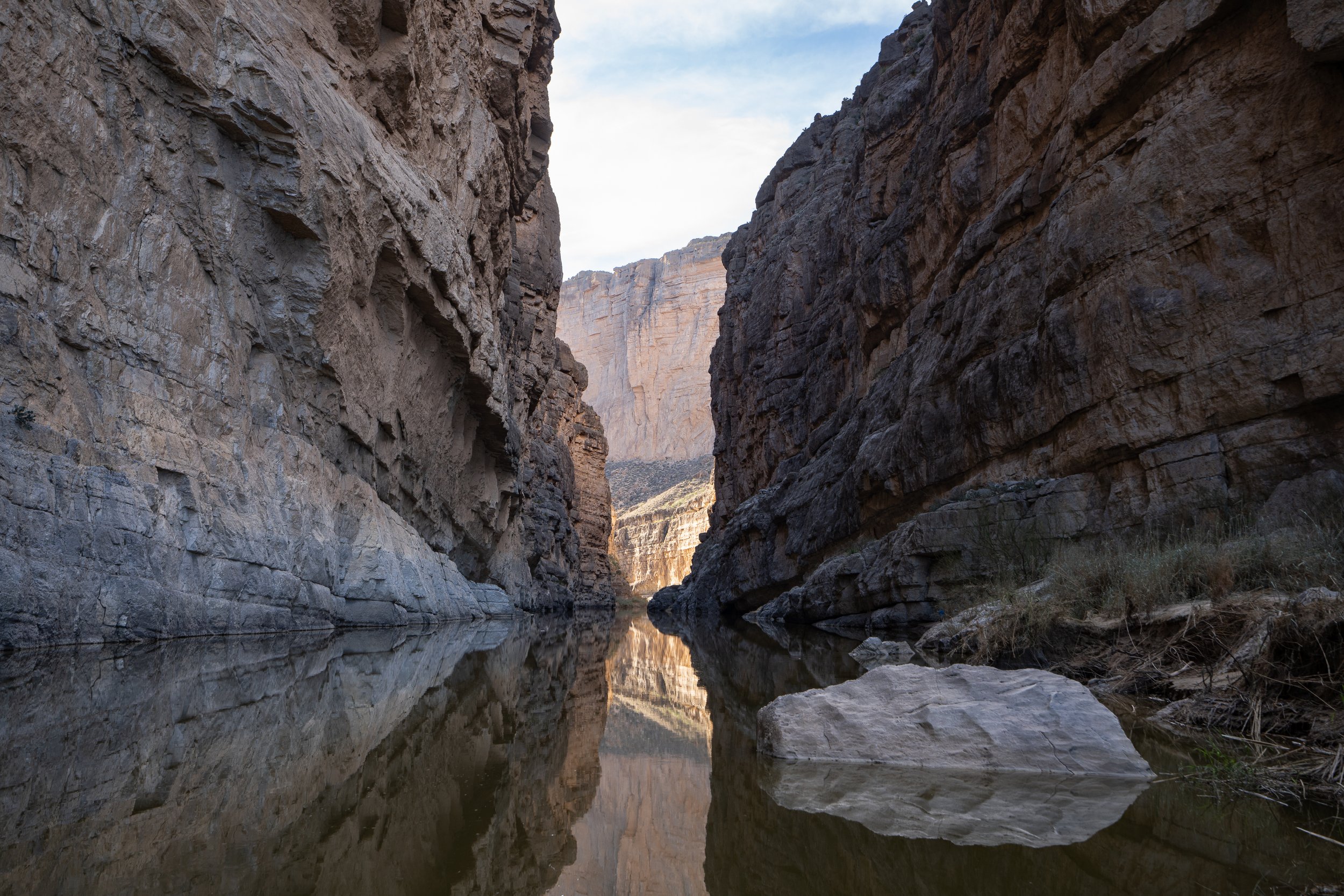
Santa Elena Canyon. Sony A7RIV with 16-35 f/4 at 35mm, f/8, 1/50s, ISO 100
At this point in out trip things took a turn…we didn’t know if we should head back west and try to find warm weather in southern Arizona and California or to continue east since we were interested in a boat show in Miami in a couple of weeks. Our indecision was also challenged as we found a problem with our trailer that caused us to spend a week in San Antonio to get fixed (thank you Arkto for dealing with this so well for us). Our decision was made for us as the weather became ice and snow all the way to San Antonio and we managed to miss the worst of it by heading straight towards Louisiana and onwards to the east coast, but that’s a story for the next posting.

This was a fun road through Big Bend State Park. Sony A7III with 200-600 f/5.6-6.3 at 200mm, f/7.1, 1/2000s, ISO 2000

Winter trip - Stage 2 - Quickly down the US west coast
Coastal photography, we have spent a great deal of time shooting on the east coast of the US when we lived in South Carolina. The west coast is a different beast altogether. Rocky coastlines, big waves crashing, fantastic tidal pools all make for very different shots and of course the fact that the sun goes down over the ocean instead of rising again makes shooting very different.
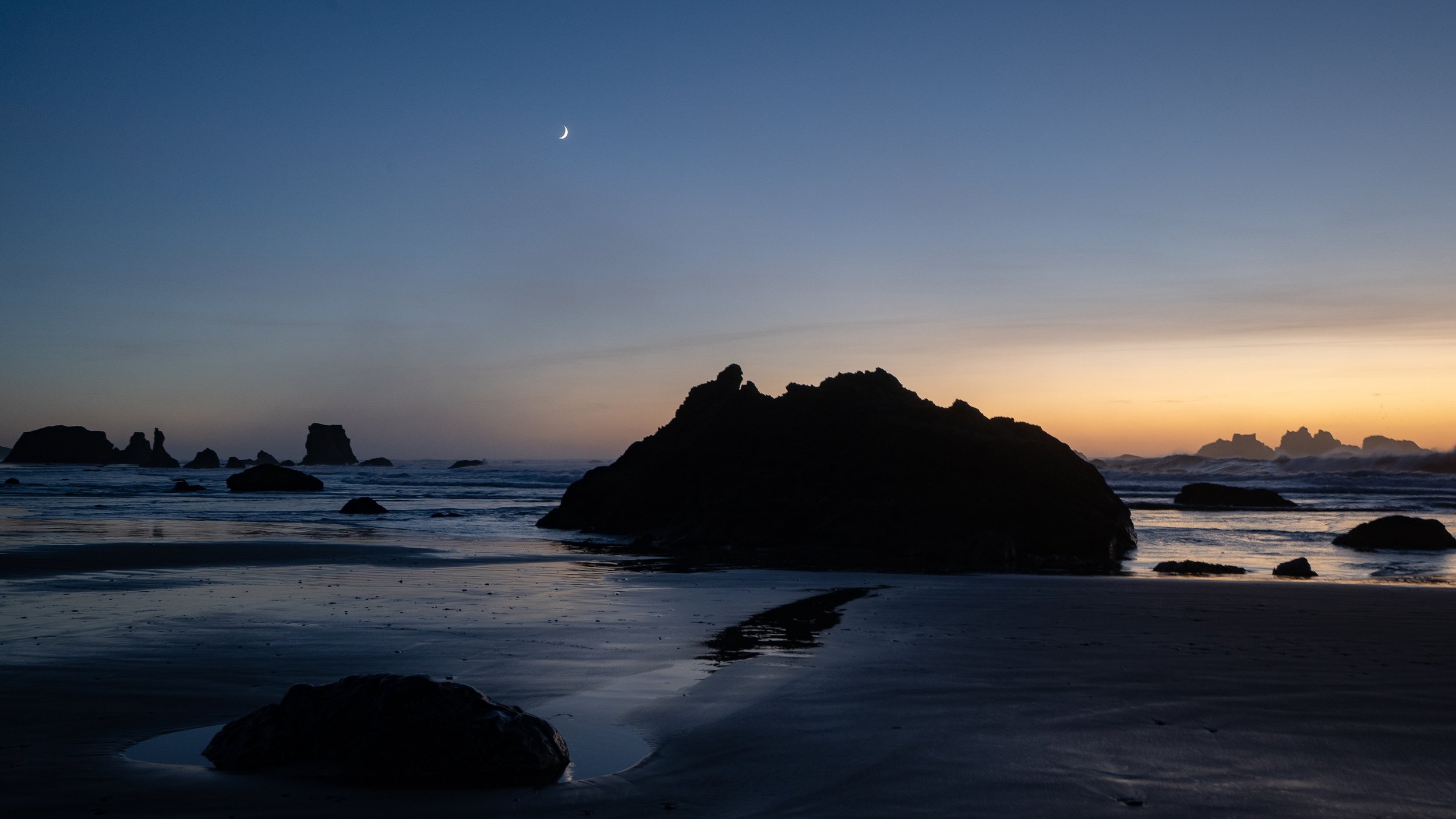
Coastal photography, we have spent a great deal of time shooting on the east coast of the US when we lived in South Carolina. The west coast is a different beast altogether. Rocky coastlines, big waves crashing, fantastic tidal pools all make for very different shots and of course the fact that the sun goes down over the ocean instead of rising again makes shooting very different.
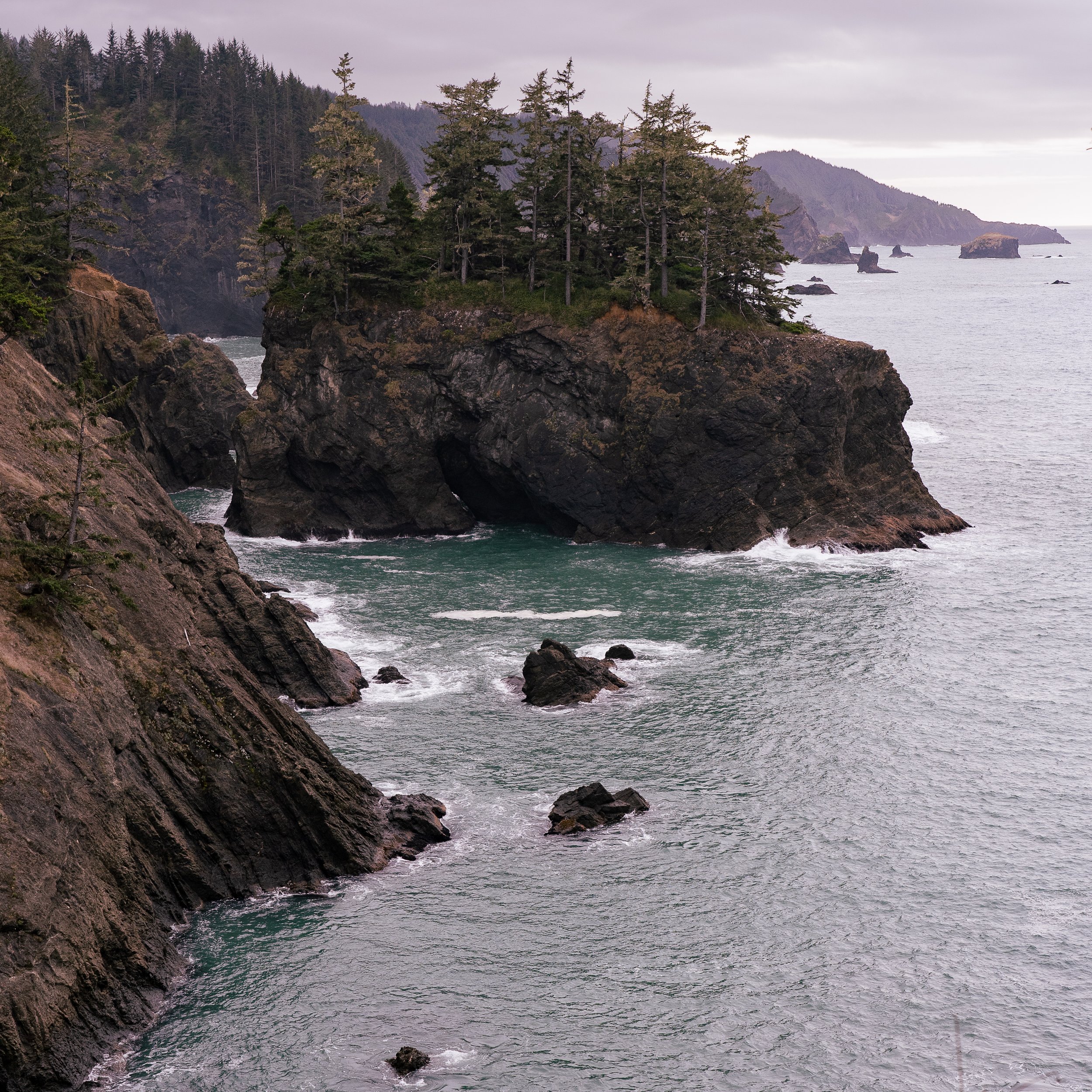
The view from “Secret Beach” one of many stops along the Samuel H. Boardman State Scenic Corridor.
Nature along this coast is also very different, we don’t see many different types of herons or egrets and gators are not something we need to worry about but we can look forward to sea lions, elephant seals and sea otters.
Since we are on the road continuously we are at the whim of the weather for the few days we were at each location. This means that whatever conditions we see that day is likely what we have to shoot. In that sense we often stopped at many locations during the day with the hope that one of those locations would be a good sunset shot…with the hope that conditions at sunset will be good or at least interesting enough. With storms and rainy weather following us down the coast it did make for some interesting seascapes and sunsets.

Photo taken with Sony A7RIV and 70-200 f/4 lens at 82mm, ISO 1000, f/4, 1/2000s. This was just a quick stop at a lookout along the highway where we saw waves crashing from a distance.
Writing these articles helps to ensure I look back at the photos I’ve taken. I usually pick what I think are the best photos from that day when I download them into Lightroom but what I have found is that if I go through them again a few weeks or even months later I find quite a few shots that I overlooked when I first downloaded them. I’m not sure what it is that changes how I look at them but I’m glad I do this once in a while.

I almost overlooked this shot on my first pass. After a couple of months I looked back through the library and this one stood out for some reason.
Our first real taste of the coast was at Cape Disappointment as the south end of Washington State. We basically didn’t get much of a chance to see anything else due to two full days of rain that kept us on the road from Port Angeles along hwy 101. I’m hoping that we will get a chance to revisit the Washington coastline but grey and rainy is not the best way to see any of that area.
Disappointment was definitely not disappointing. In fact as our first real taste of this rocky coastline it had a pretty big impact on us. One of the first sights was the Lighthouse and with the first bit of sunlight we had seen in many days it was the first time we wanted to get out with the cameras. One of the best small hikes we did was to head into Deadman’s Cove which turned out to have a cool island in the middle with a lone tree….an interesting subject to do a bit on long exposure photography and after the trip I still think it gave me one of my favourite shots of the trip.
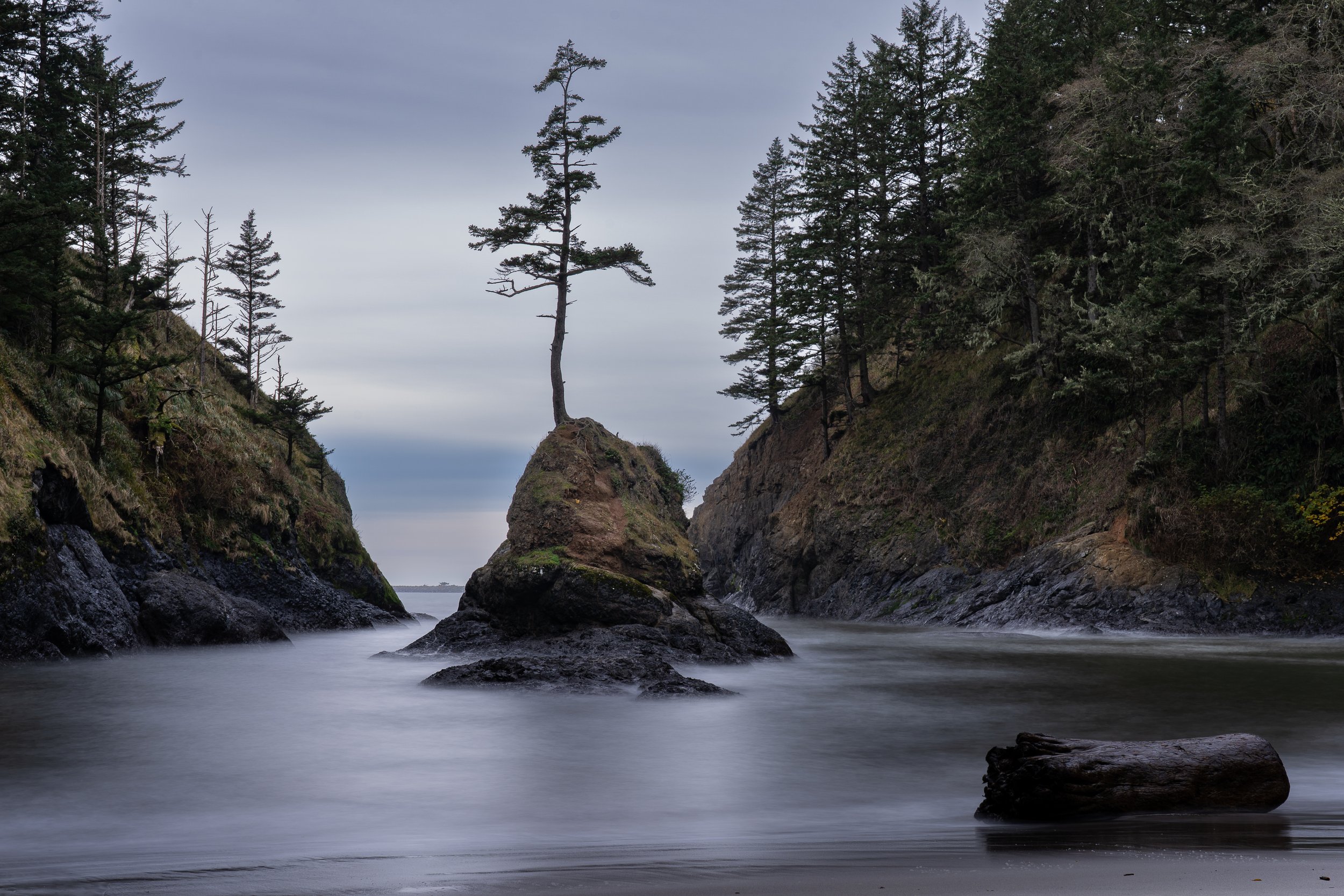
It took some time to get this shot just right. With a 6 stop filter we were trying for long enough exposer to smooth out the waves but that log to the right moved when the waves were too large. This was one of my favourite shot of the trip. Photo taken with Sony A7III with 24-105 lens at 50 mm, ISO 100, f/13, 30 seconds.
Oregon has been on my list of places to visit for a long time. I’ve been watching a landscape photographer on YouTube named Nick Page (https://www.youtube.com/@NickPage) so I had some ideas of what was possible, although I knew it was unlikely I would be lucky enough to get an opportunity to get shots that were as good as his when our window was usually one or possibly two days at any one area. I just hoped that we would get some weather windows at dawn and dusk with interesting weather…not pure grey skies and drizzling rain or pure blue skies. If you are looking on a map some of the spots we stopped at are Bandon Beach, Shore Acres State Park near Coos Bay, Cape Blanco, and Secret Beach near Brookings. This is just a few as we stopped many times along the highway all the way through Oregon.

Bandon Beach as the sun was getting low. Very little colour with the grey clouds and mist from the sea so I thought black and white would give a better feeling. Photo taken with Sony A7RIV and 70-200 f/4 at 100mm, ISO f/13, at 1/640s.
Turned out we did get some really windy days but we managed to miss a king tide with those winds by just a couple of days. That being said we did manage to get some nice shots around Bandon and scoped out a few areas around what is referred to as secret beach?? This is a place I would like to come back and spend some time near so that I could find a better spot to take shots from. The places I stood made me feel like I was just missing the shot.
We did manage to get very lucky on one of our coastal walks. By lucky I mean we ended up with a storm coming right over us as we wandered down the beach and got absolutely soaked but as this storm moved off we got one of the most amazing rainbows that I have seen with dark skies in the background and sunlight hitting the rocks. It was worth the painful rain/ice hitting us as we tried to get these shots.
A wet and cold walk on Lone Ranch Beach through a very windy storm was all worth it for these shots as the storm passed through. It was a fleeting moment but one I’m glad we caught. Photo taken with Sony A7RIV with 24-105 f/4 lens at 27 mm, ISO 160, f/11, 1/200s.
Before heading inland we took a little time along the California coast.
Along Highway 1 we continuously saw hawks hovering above the cliffs over the grassy hills hunting. At times they would go into another hawks territory and that would cause some interesting interactions. If we didn’t need to get to our campsite I could likely have stayed for hours waiting and watching those hawks.

A pair of Red-tailed hawks fighting above Highway 1 in Northern California. This was a quick stop on the side of the road as we saw numerous hawks hunting in the grass above the ocean. Photo taken with Sony A7RIV with the 200-600 lens and 1.4 teleconverter at 840mm, ISO 250, f/9, 1/1250s.
I am always eager to find some wildlife and we hit the jackpot with a sea otter that was getting ready to sleep, rolling in the kelp and fluffing up its fur for a good half hour only 20 feet from us on the beach. It finally settled in to sleep, seemingly without a worry in the world.
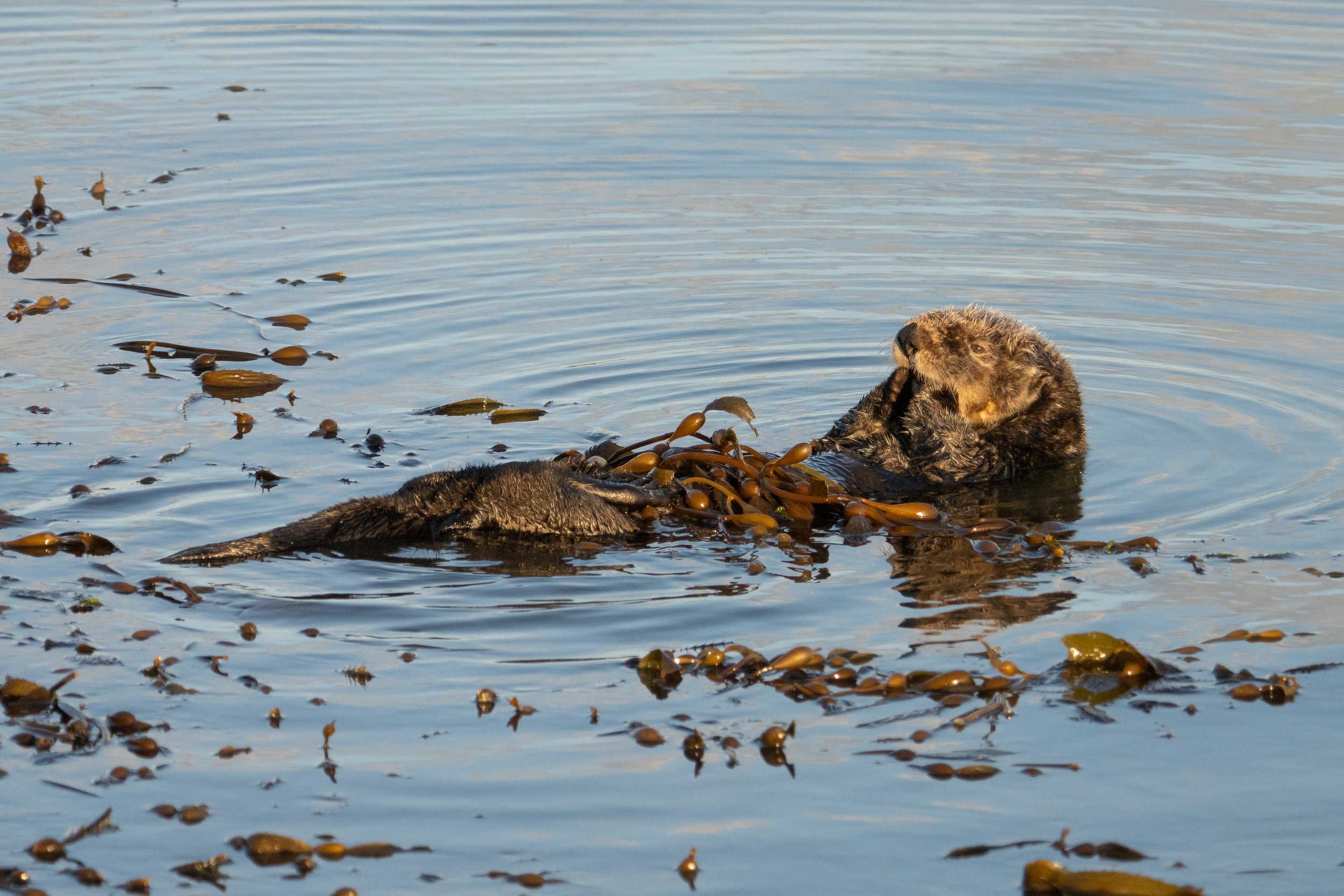
Sea Otter wrapping itself in the weeds and starting to puff up and clean before settling down for a nap. Photo taken with Sony A7RIV and 200-600 lens at 400mm, ISO 2000, f/9, 1/1250s to ensure I stopped the motion and was able to get the whole otter in focus.
You can see more of this cuteness in our vlog on no.fixed.plans on YouTube, you can also look directly at the West Coast Gallery for more pictures.
With horrible weather always just one step behind us, we really did not spend the amount of time we wanted to on this trip. It was a good sampler and now that we have some ideas I think that we can make some more trips down to the Oregon coast especially and hopefully get to spend more quality time behind the camera. With that cold and wet weather coming for us again our next step was to head inland towards Death Valley, but that will be in the next post.