
Photo locations, techniques and technology. Highlights of locations we frequent as well as features on how and why we shoot the way we do, including gear reviews specific to nature photographers.
Tanzania - Antelope
When you go on safari you mostly think about animals like the big 5, the exciting huge animals and the big cats. Maybe you think about apes and monkeys or all the birds but rarely do you hear about people going to Africa specifically to see the animals the are most often on all the other animals menus. These are some of the most numerous animals on the continent with amazing herds that migrate during each season but other than the wildebeest that are famous for trying to cross rivers full of crocs, we only think of the antelopes basically as food for the cats.
Wildebeest on the Serengeti
When you go on safari you mostly think about animals like the big 5, the exciting huge animals and the big cats. Maybe you think about apes and monkeys or all the birds but rarely do you hear about people going to Africa specifically to see the animals the are most often on all the other animals menus. These are some of the most numerous animals on the continent with amazing herds that migrate during each season but other than the wildebeest that are famous for trying to cross rivers full of crocs, we only think of the antelopes basically as food for the cats.
There are approximately 70 different species of antelope in Africa with around 20 species in the Serengeti totaling over 2 million migrating antelope. On our 2 week trip we managed to see 12 different species from our safari vehicles.
Gnu (Wildebeest)
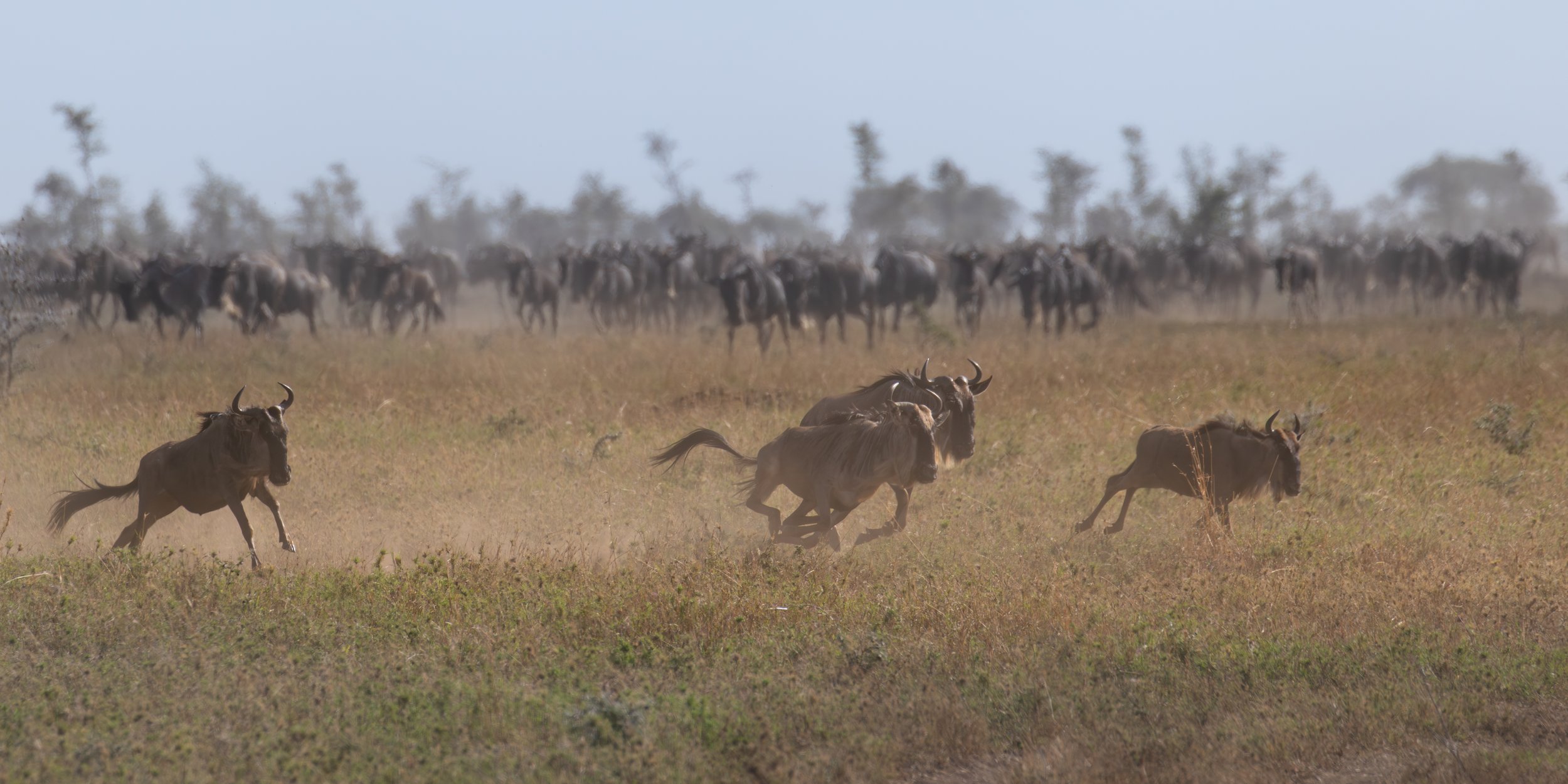
The dust rises as the wildebeest cross our path on the Serengeti
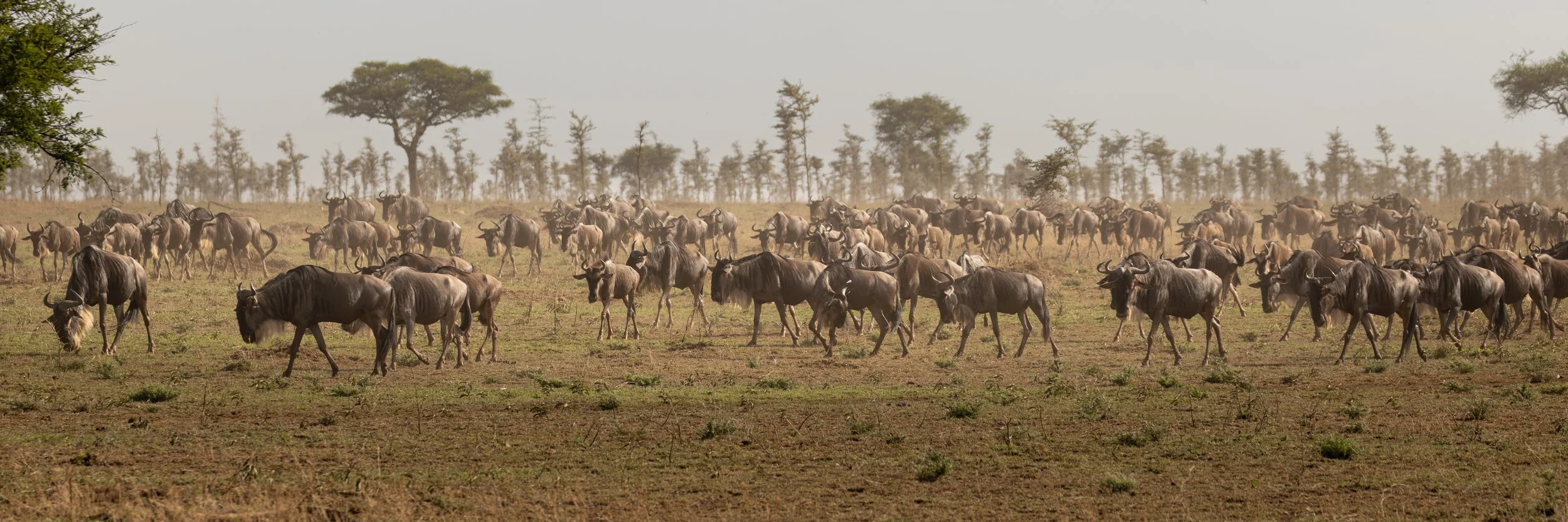
Approximately 1.6 million Wildebeest (gnu) and more than half a million gazelles are the largest numbers and we saw a good number each and every day that we were on safari.
We were very lucky to see the numbers of wildebeest we saw on this trip, according to our guide they were in much larger numbers than expected for the time of year. Often found with zebra, they were hard to miss as they were visible in a line as far as we could see with a constant dust cloud above the herds as a telltale of what is coming.
The main migration events that everyone comes to see are normally in January to March for the calving in the south and the Mara River crossing in July to October. We may not have seen them in the numbers of those times but it was still the largest gathering of animals I have ever seen so pretty spectacular.
Gazelles (Thompson's and Grant's)
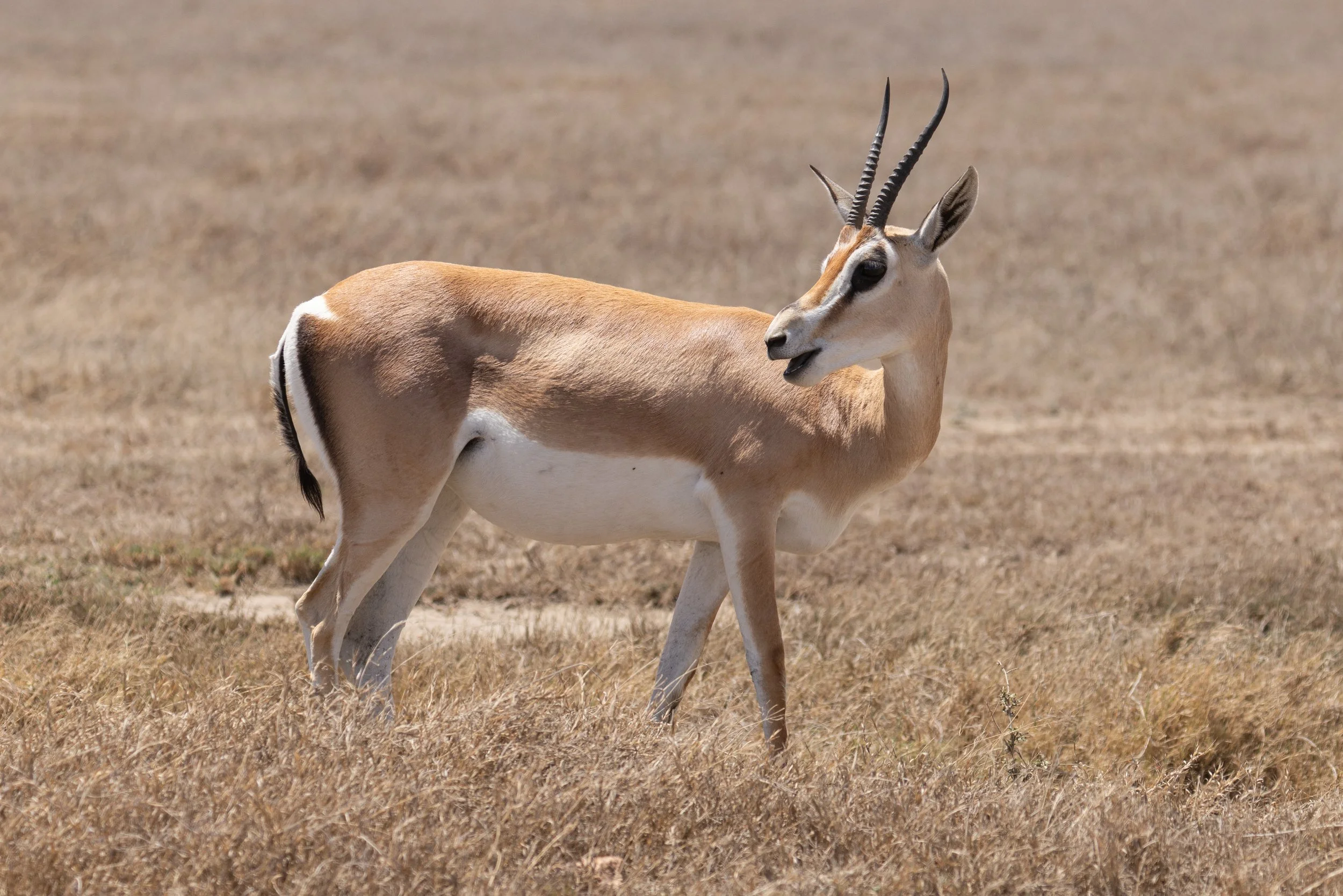
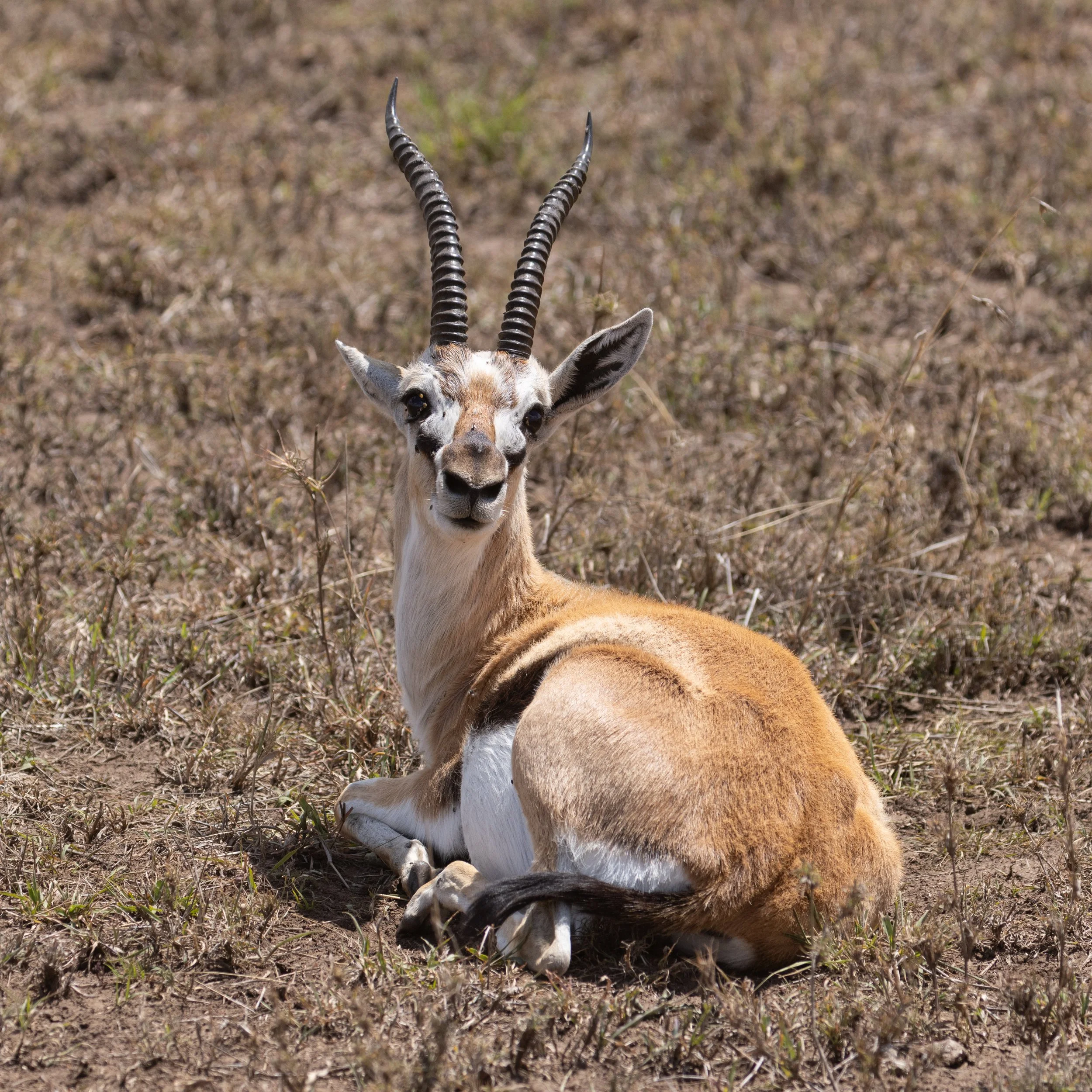
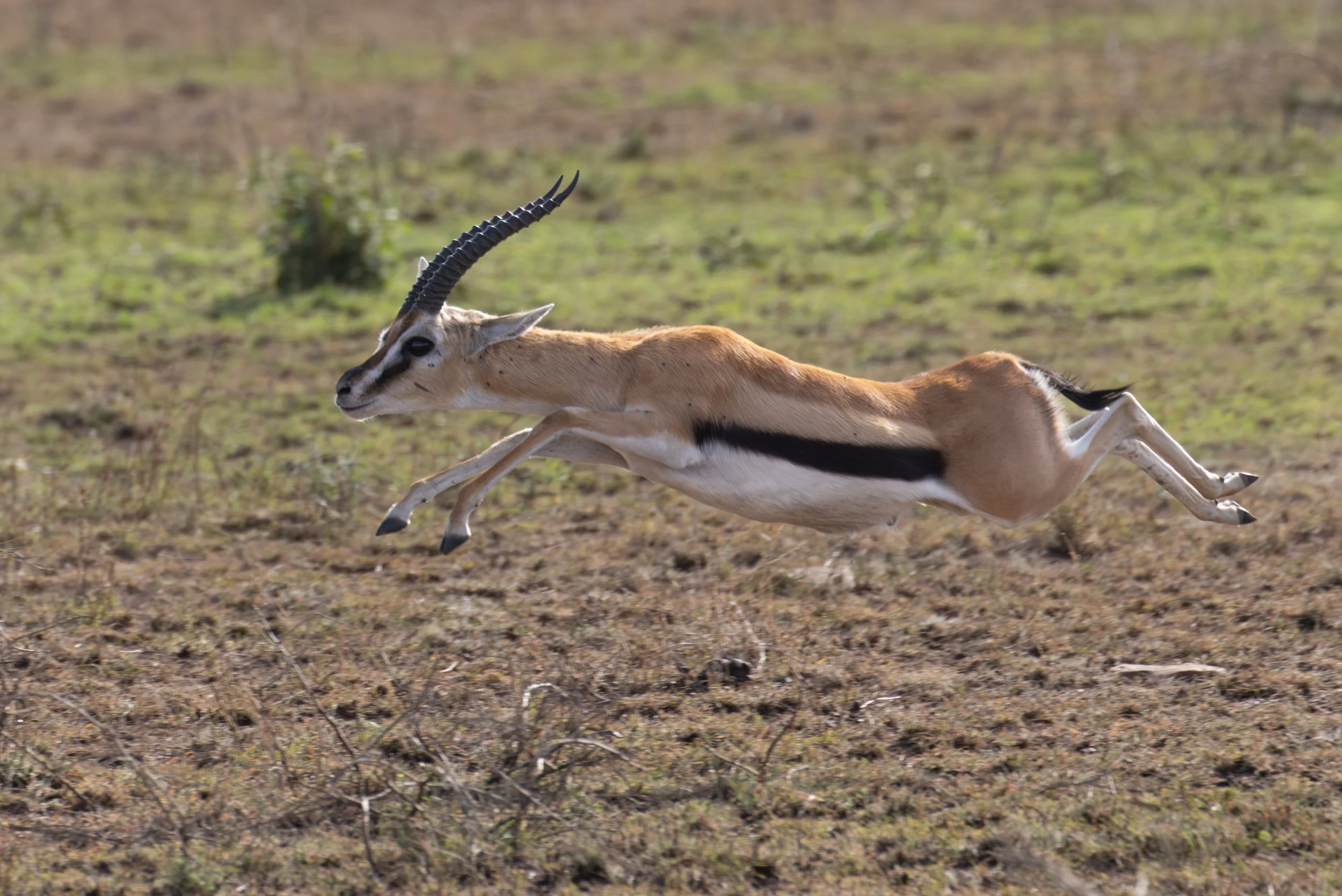
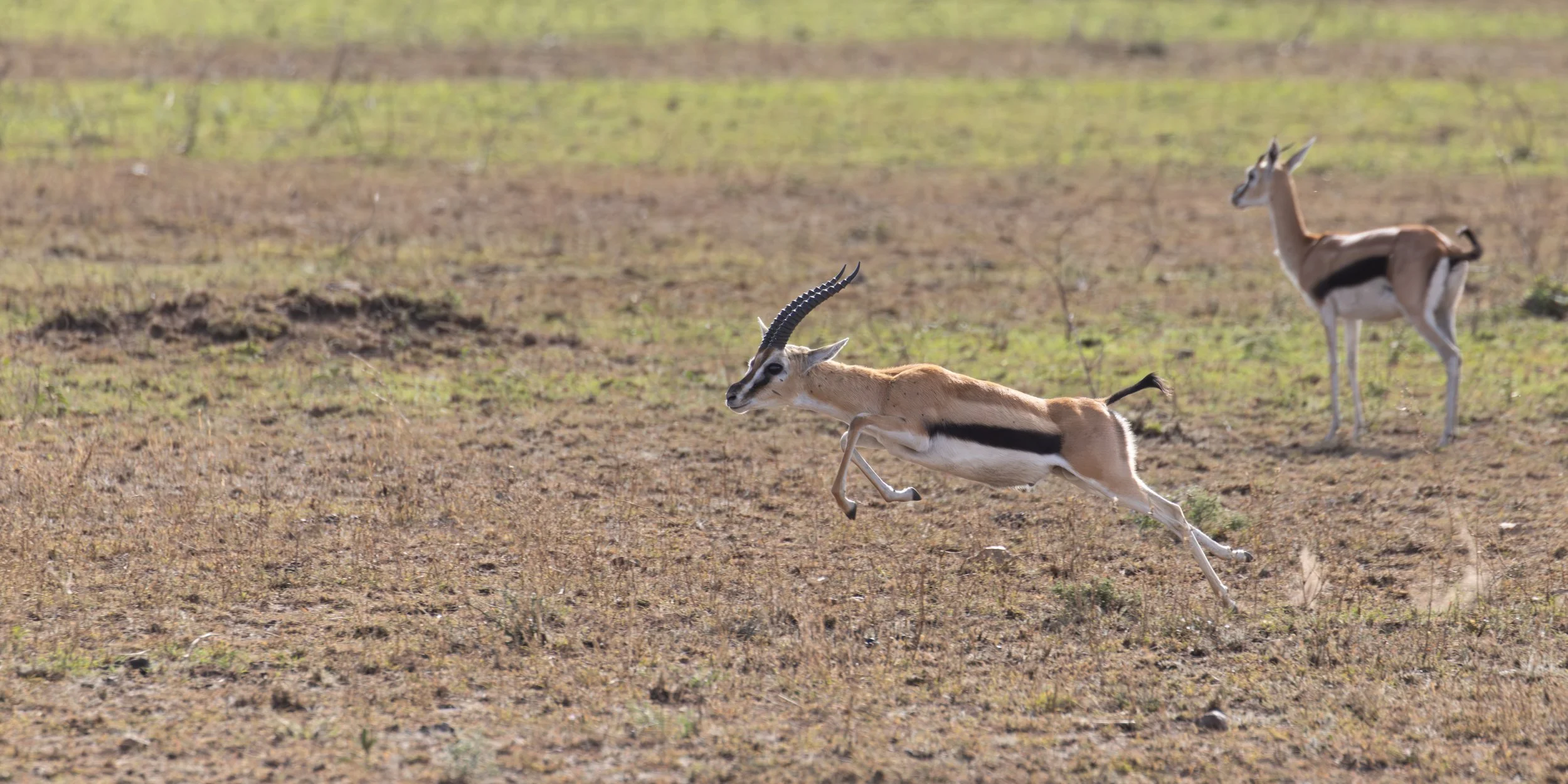
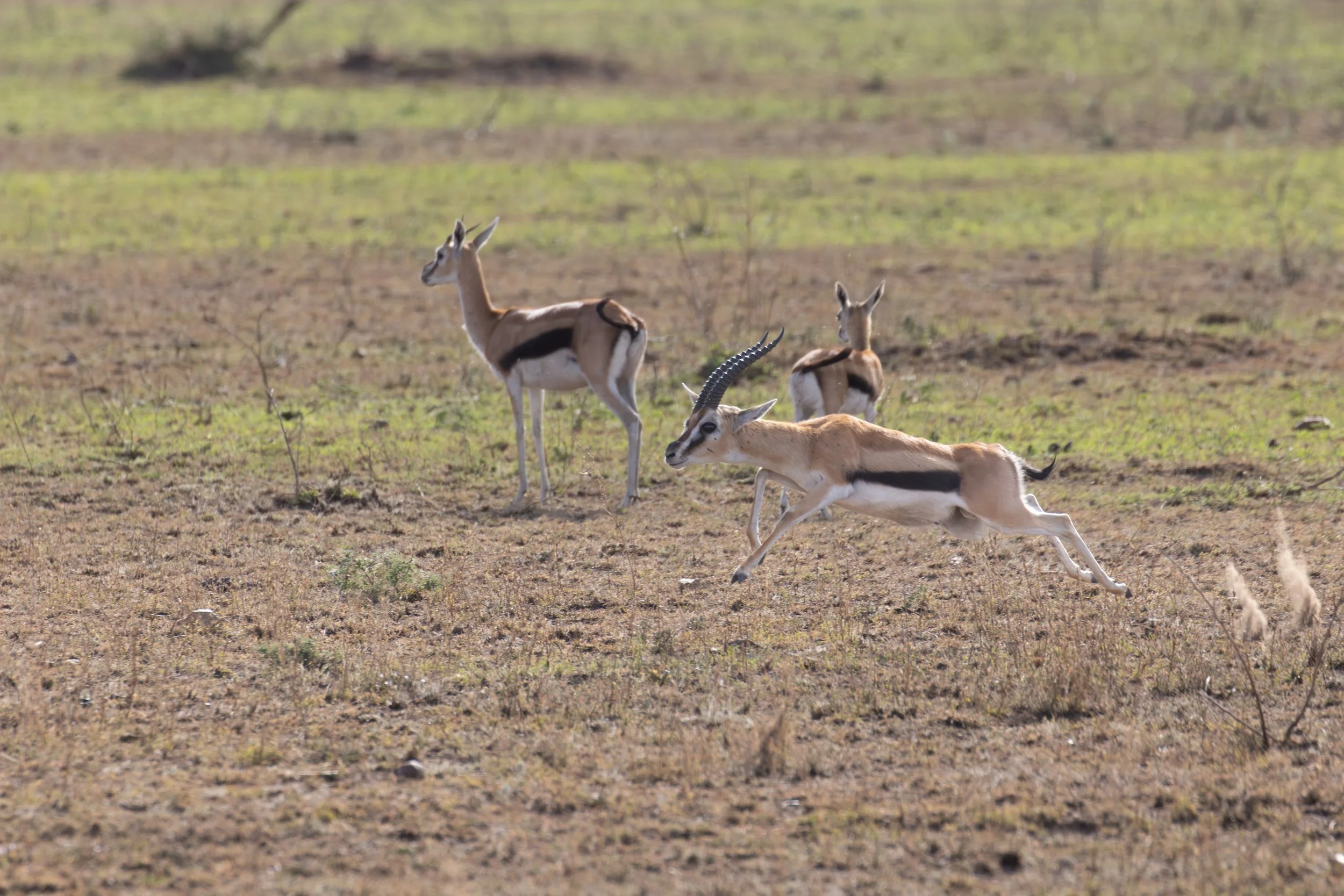
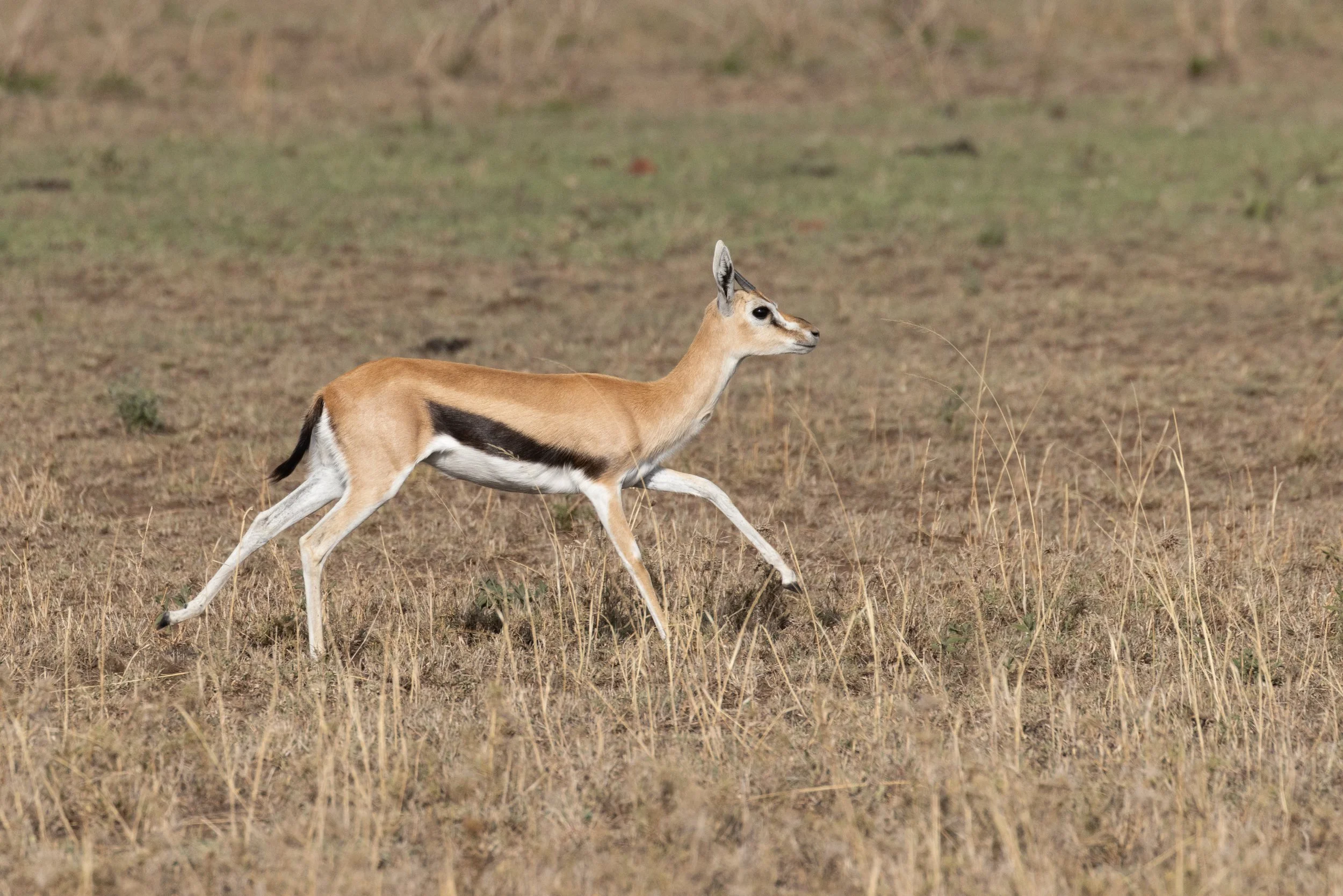
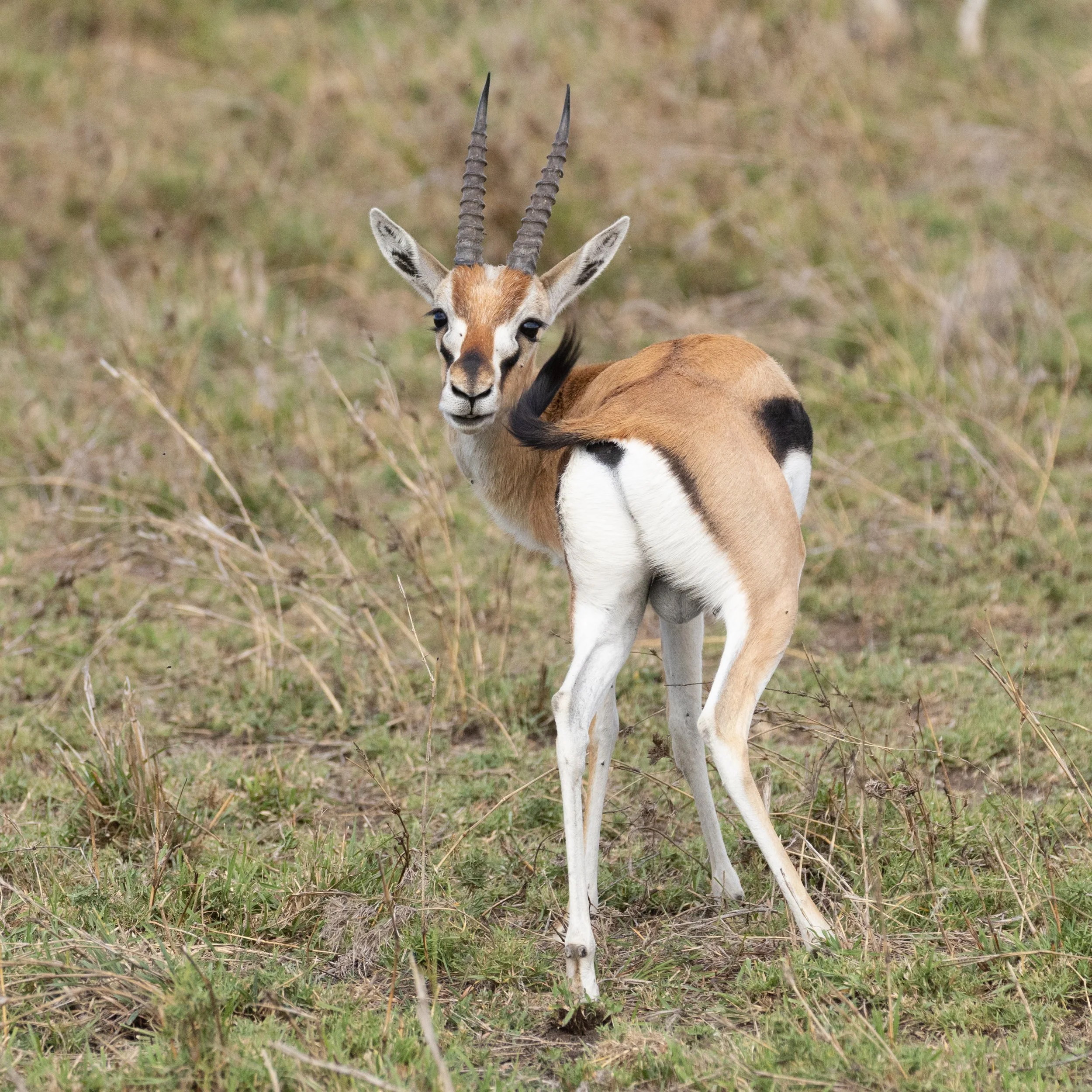
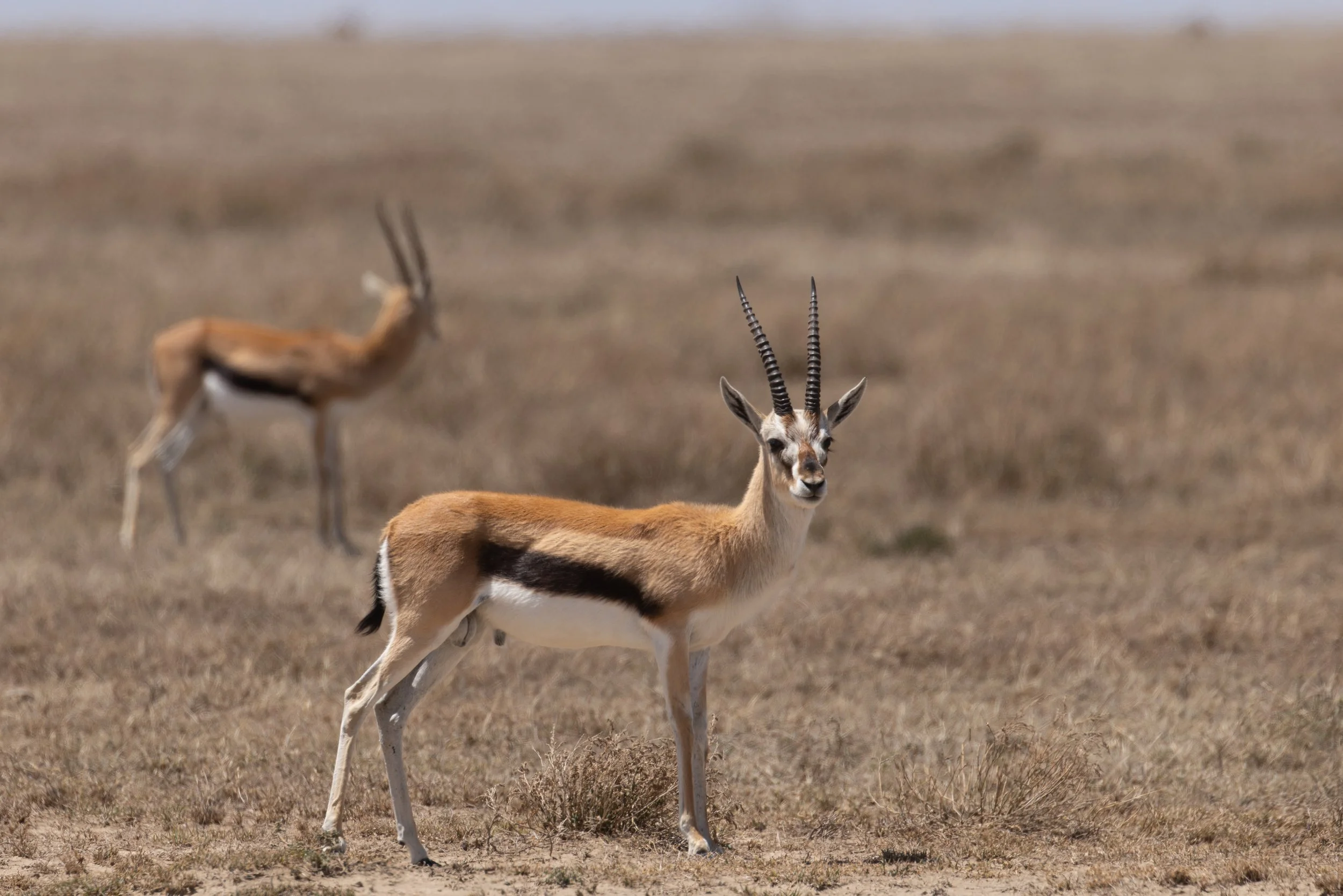
A constant sight in the Serengeti, most of the ones we saw were the Thompson's Gazelle but we did see some Grant's here and there. The Thompson's gazelle, which have a large black stripe on the sides, were often along the roads and were pretty active. Mostly grazing but they had plenty of time for play since there didn't seem to be a lot of danger in the areas we saw them at least not visible danger.
Impala
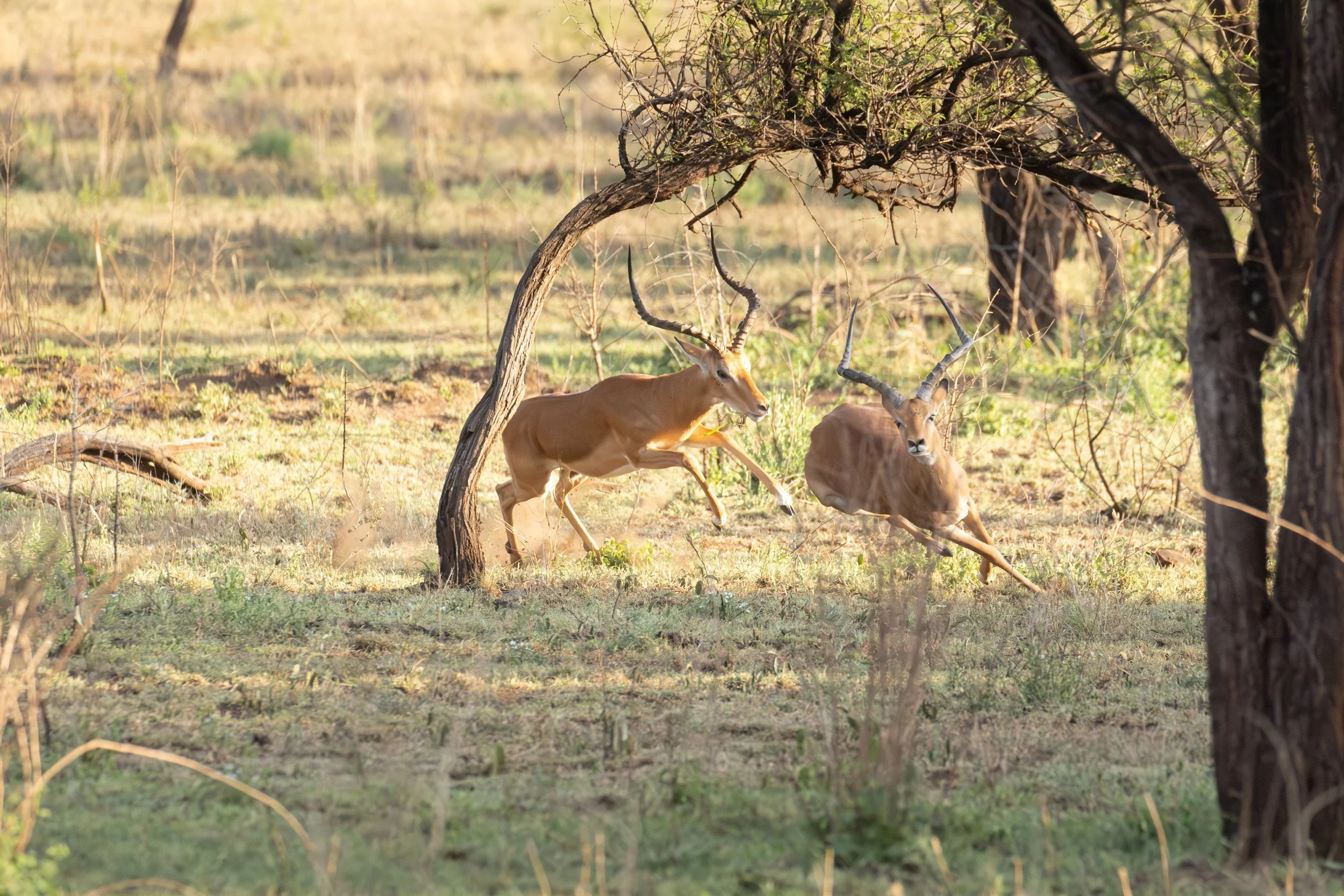
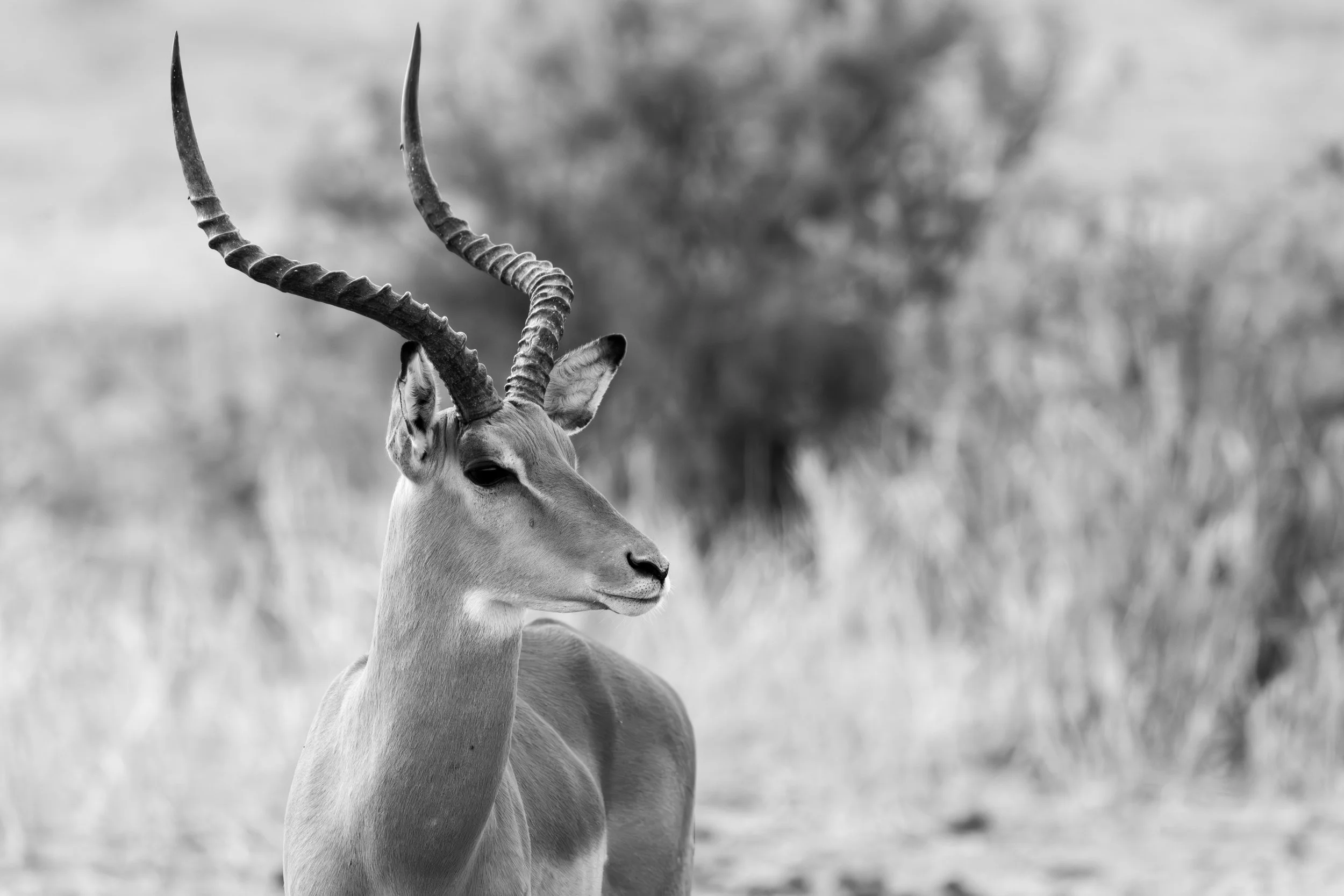
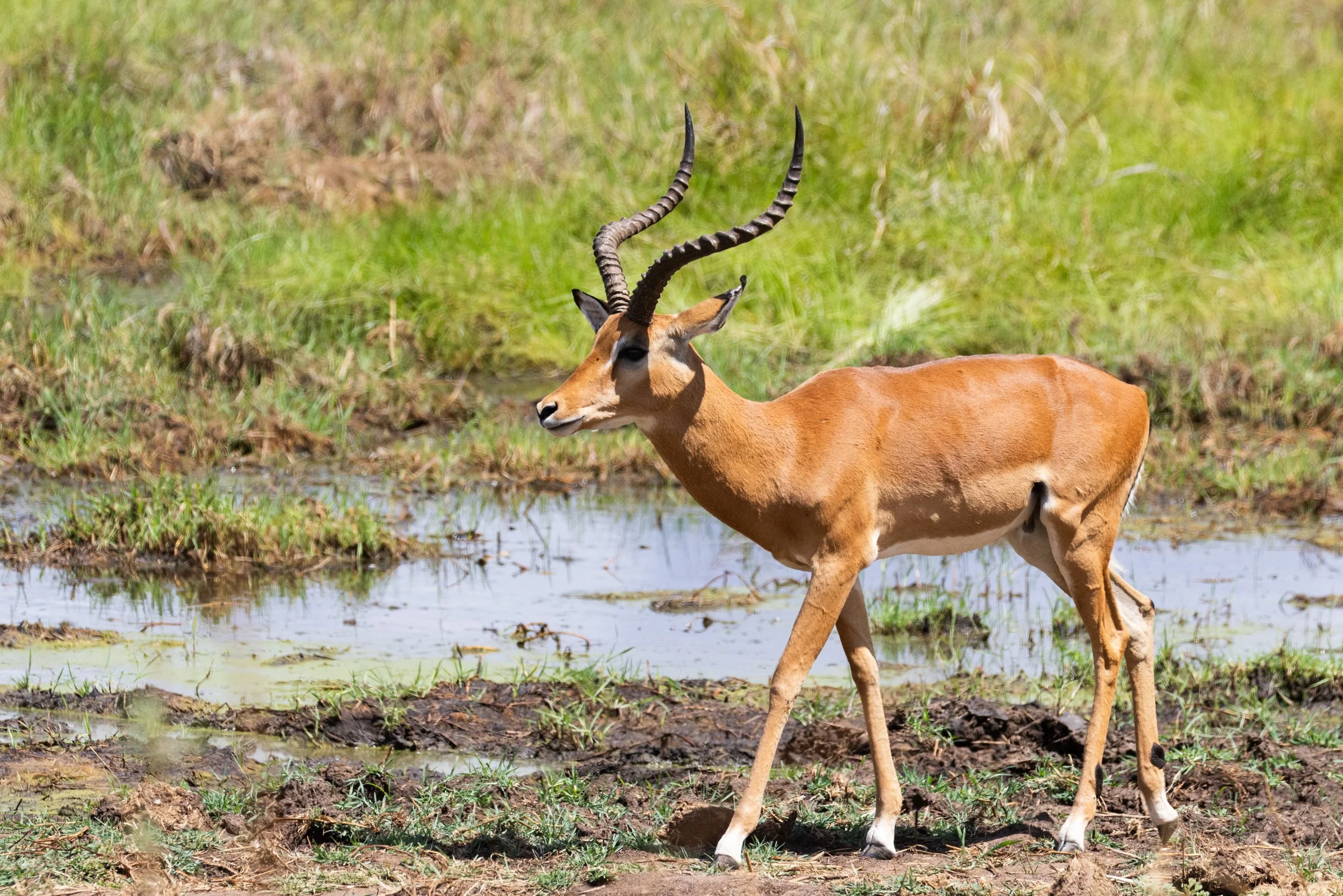
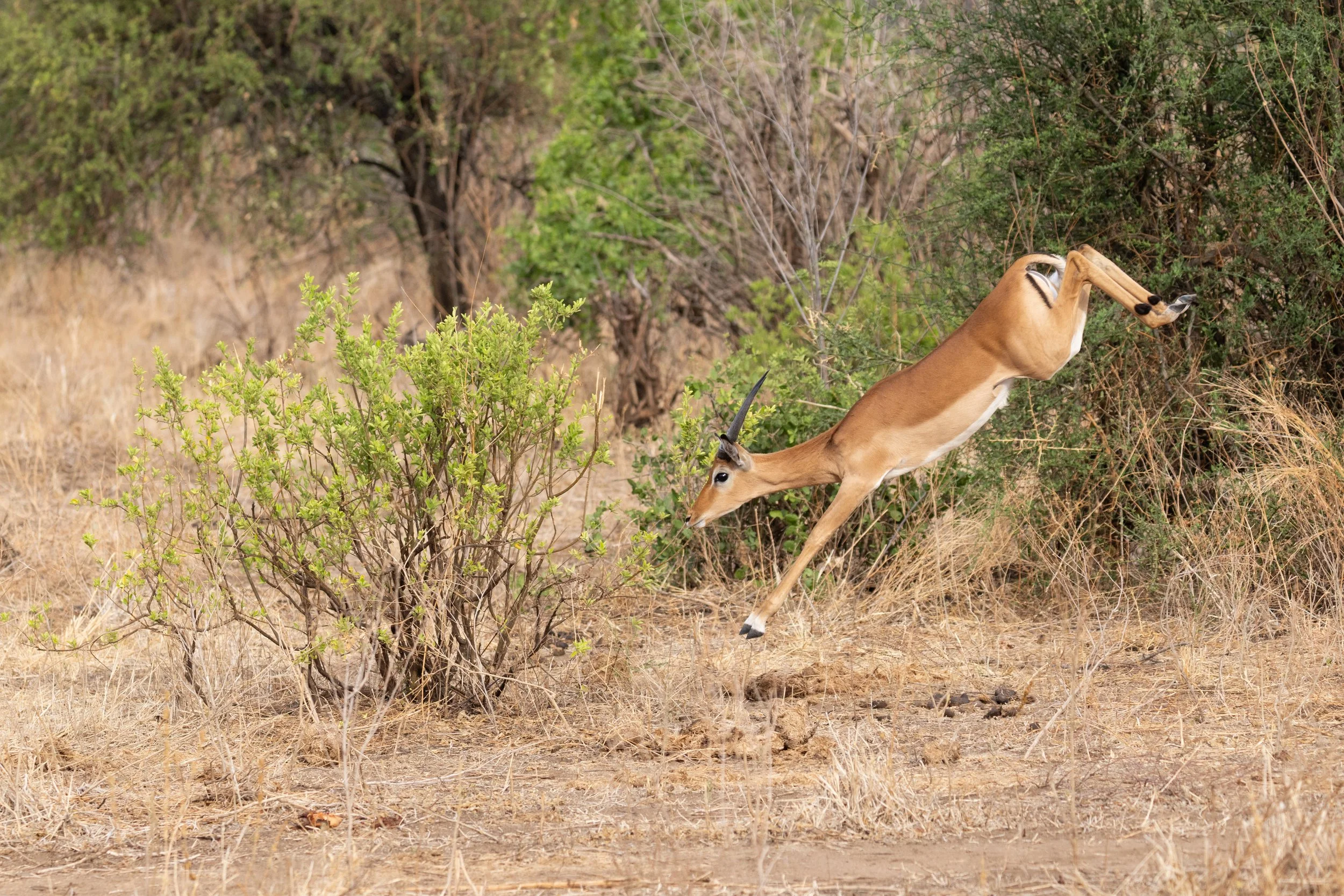
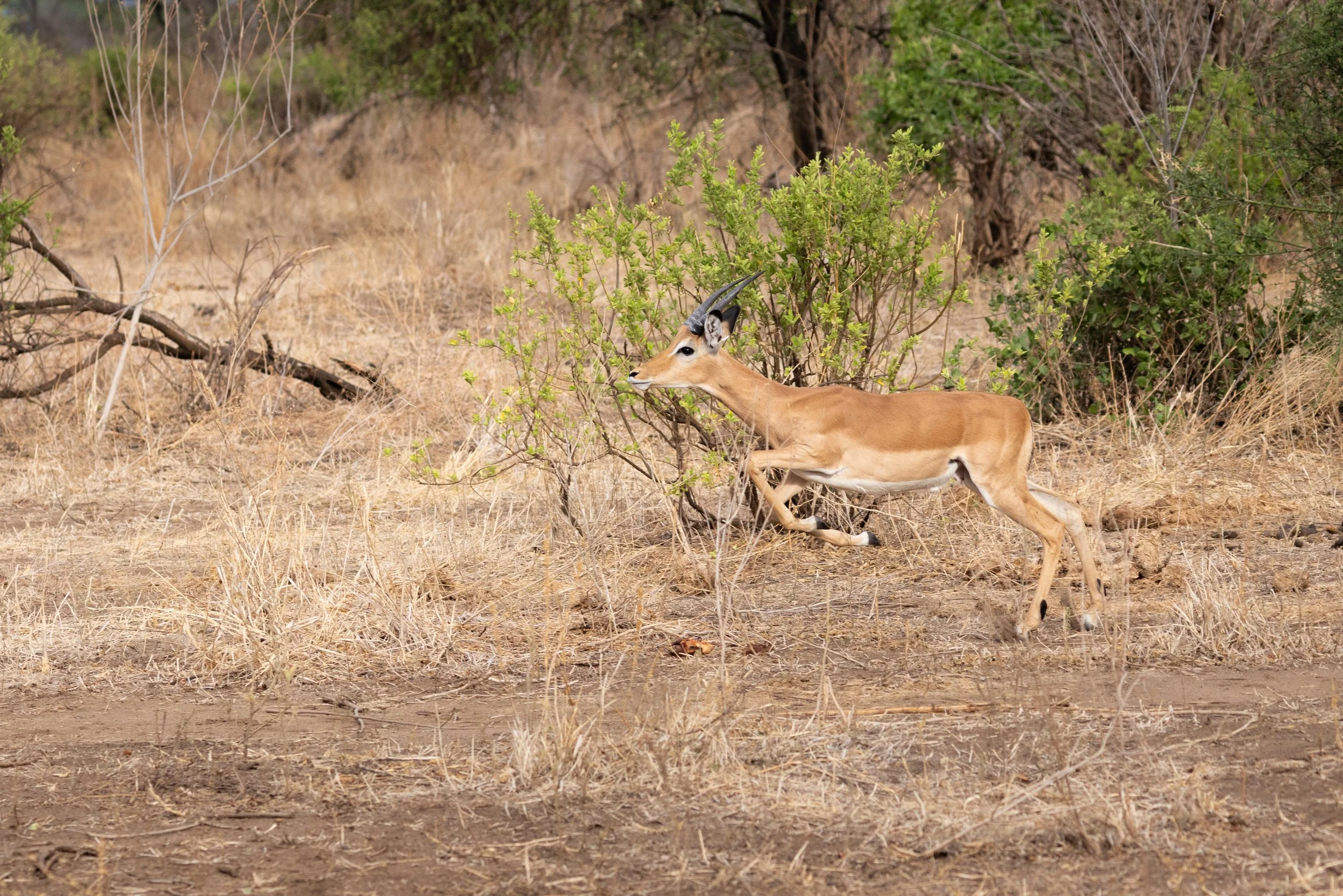
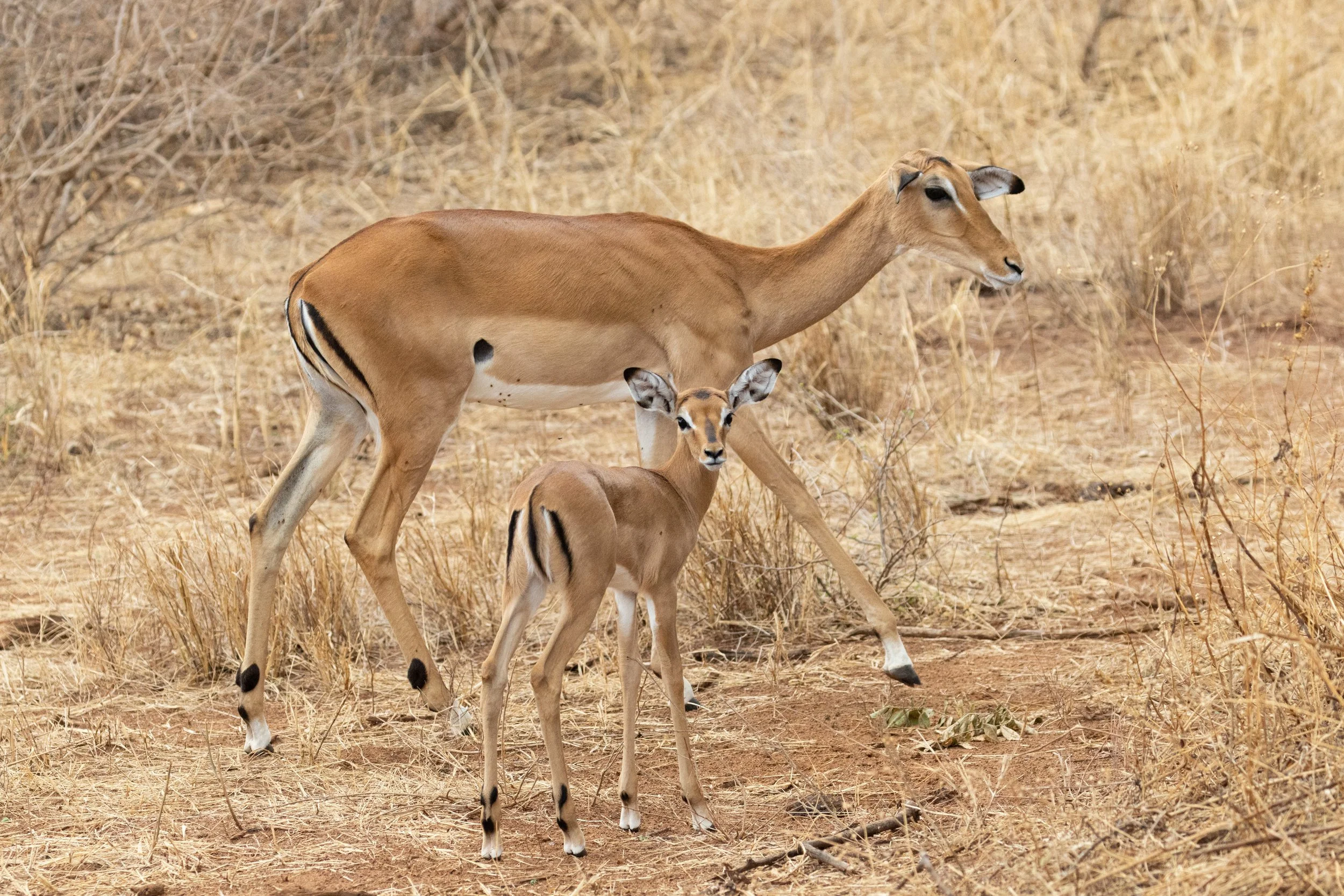
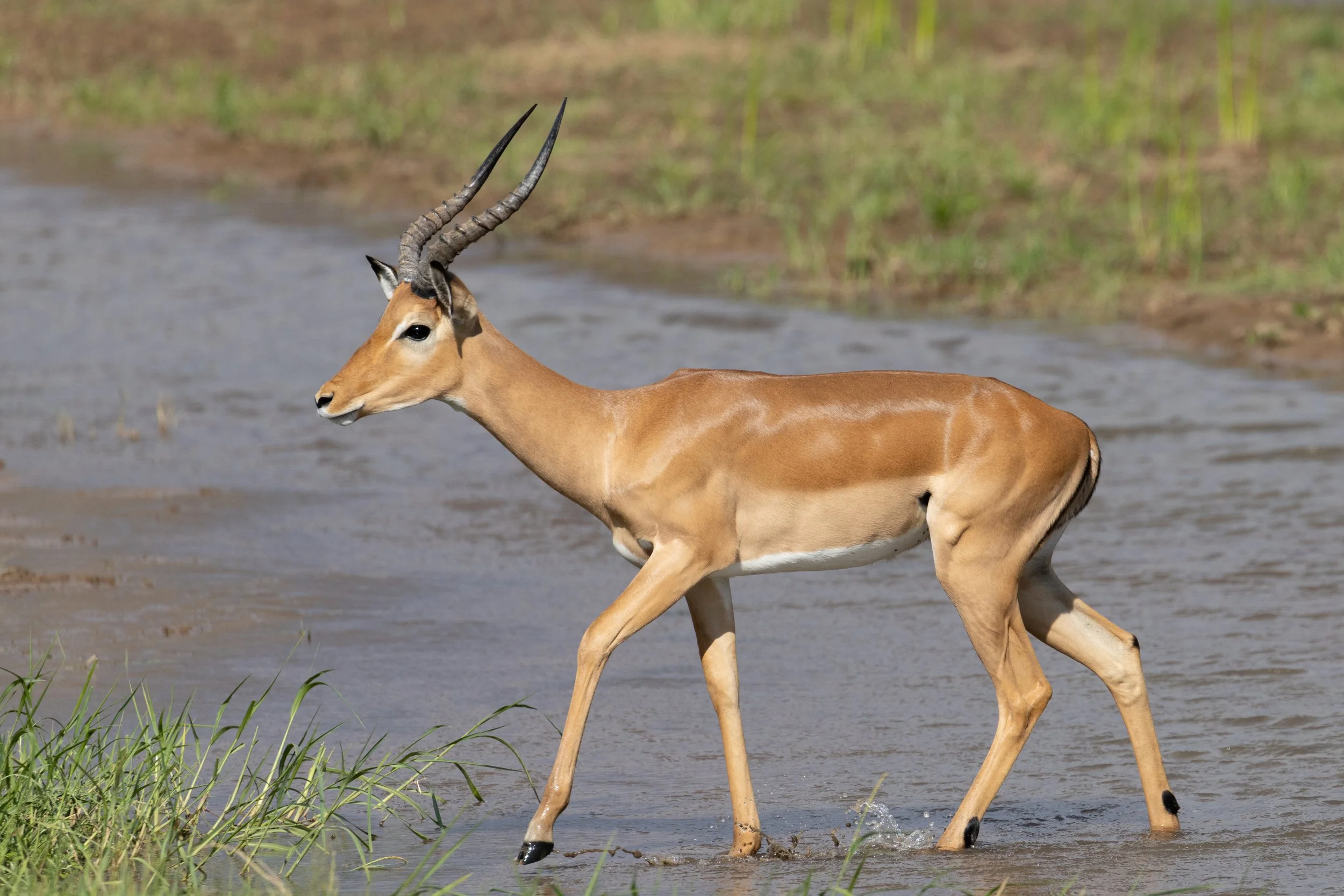
The next most common species we saw were the Impala with their amazing speed and huge jumps, the white patch over the eye and the black stripe on the tail make them fairly easy to discern from the Grant's gazelle.
Waterbuck
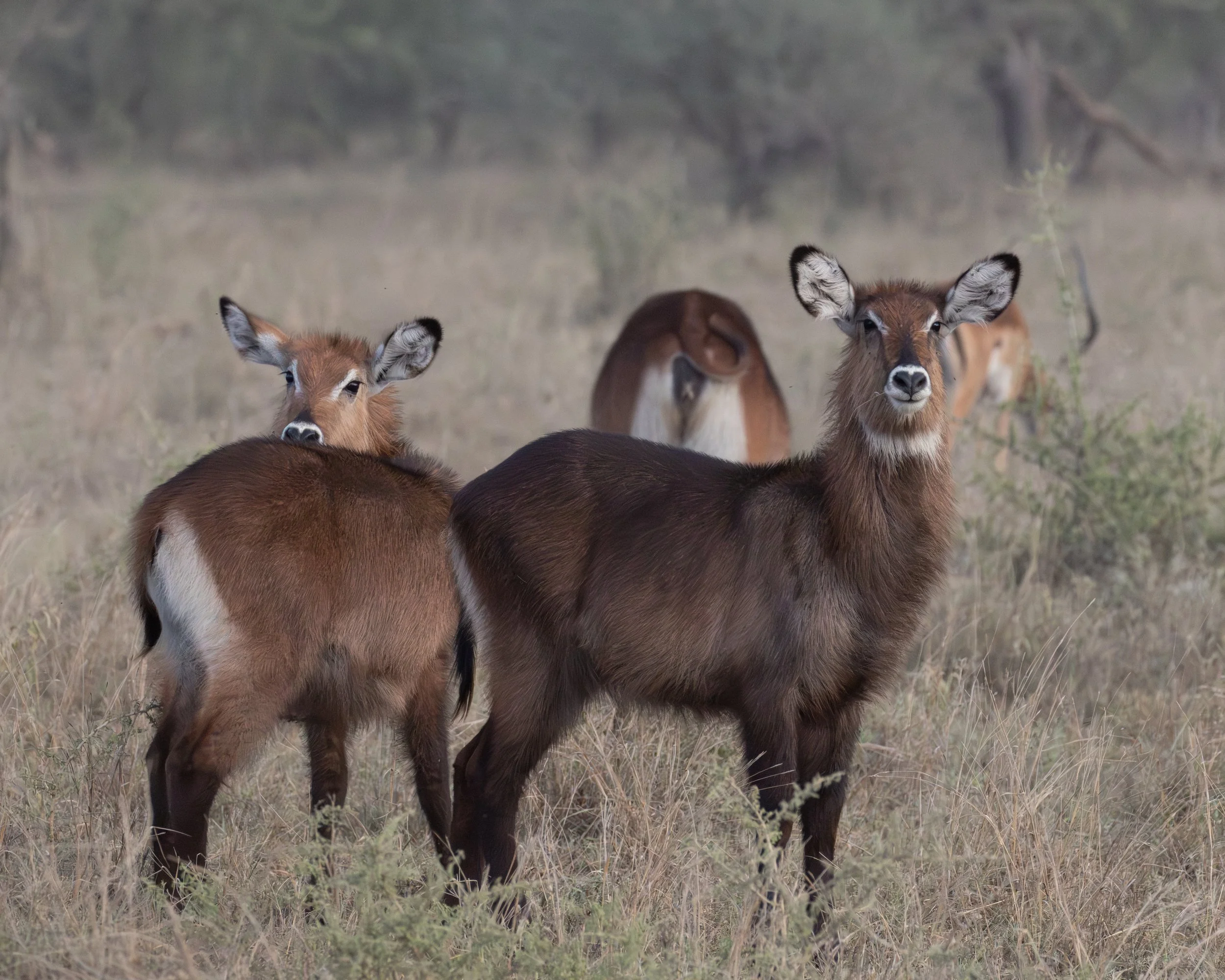
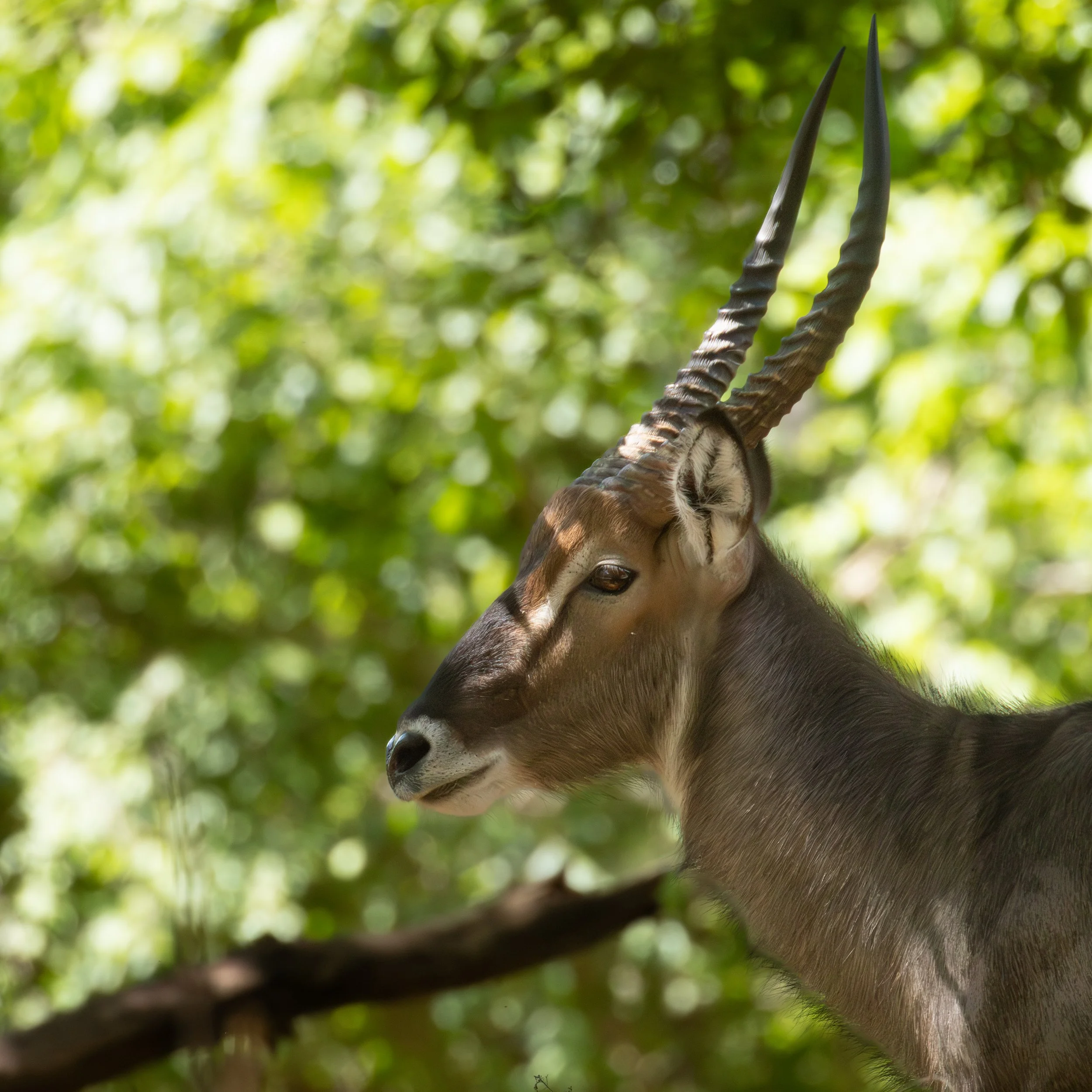
A relatively large antelope with large round ears and white patches above the eyes and a distinctive marking on the rump that our guides referred to as a toilet seat. Most often seen near water their coat has a water repellent oil layer to help protect it from moisture. The males have long ringed horns that can grow as long as a metre.
Bushbuck
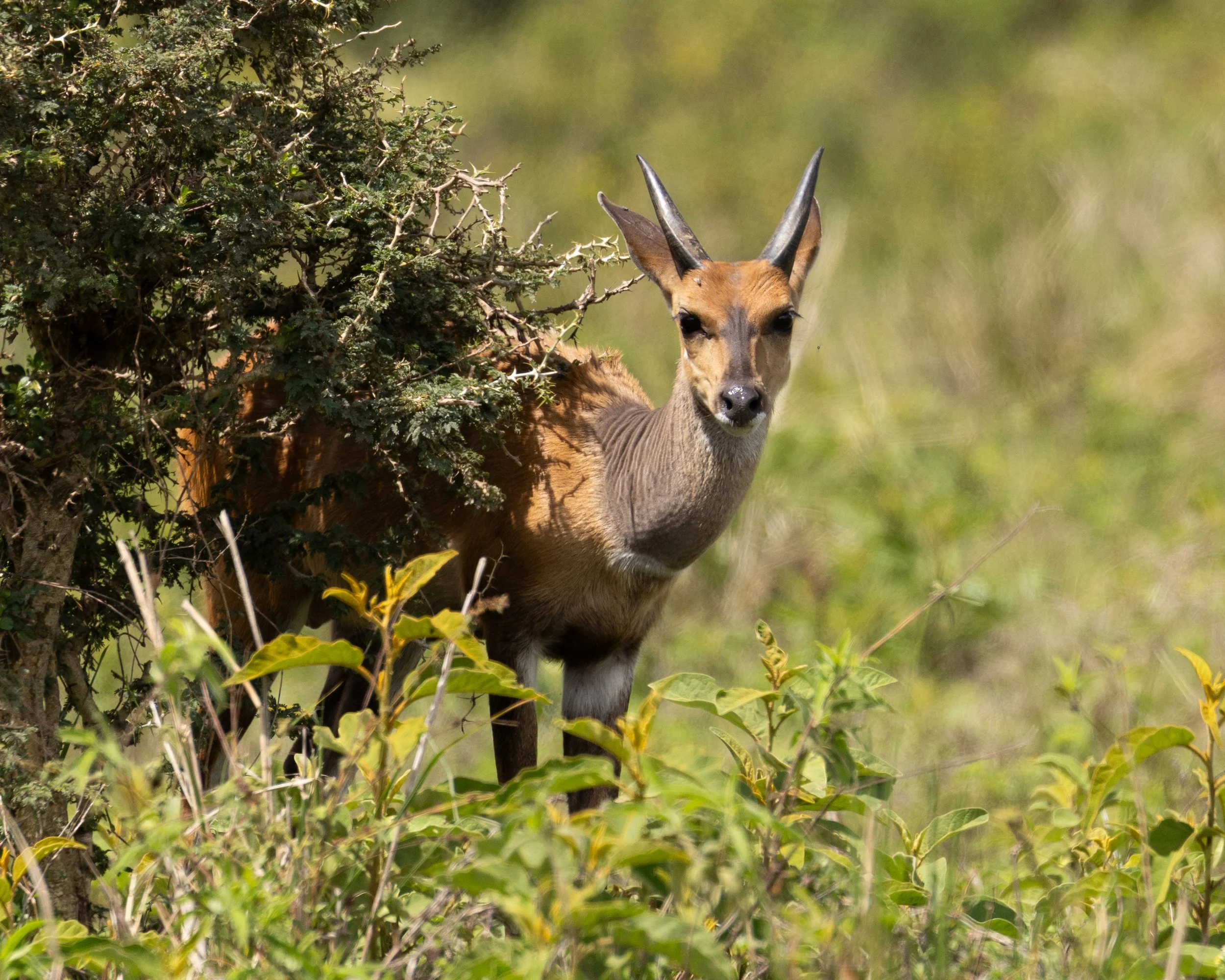
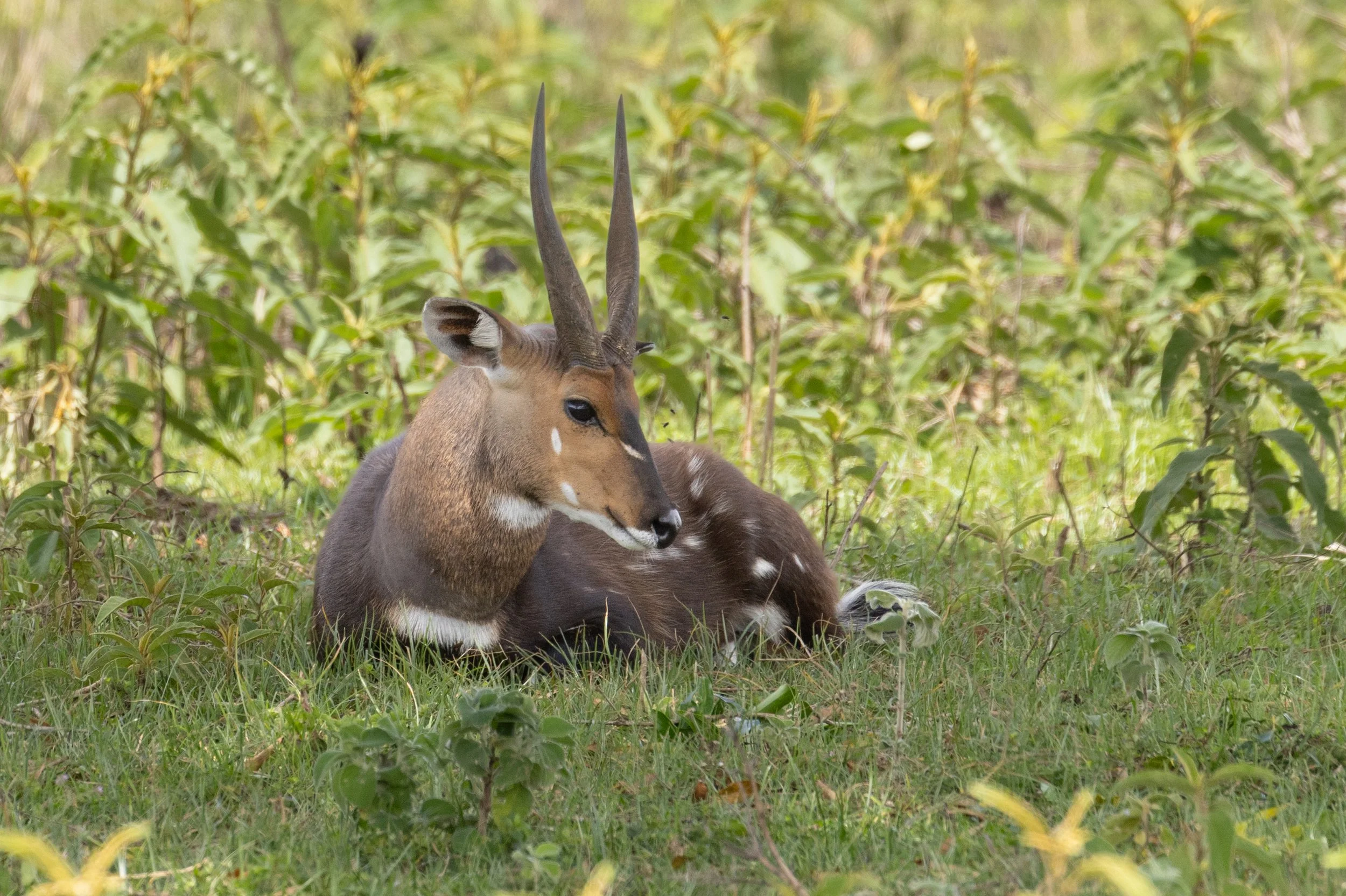
One of the more solitary antelopes, it spends much of its time as the name would suggest in the bush. Males have large spiral horns but the females of the species do not have horns. It has geometric white patches on its ears, chin, tail, legs and neck. Habitat loss is the biggest threat to the bushbuck as agriculture and settlements remove the vegetation they like to stay in.
Bohor reedbuck
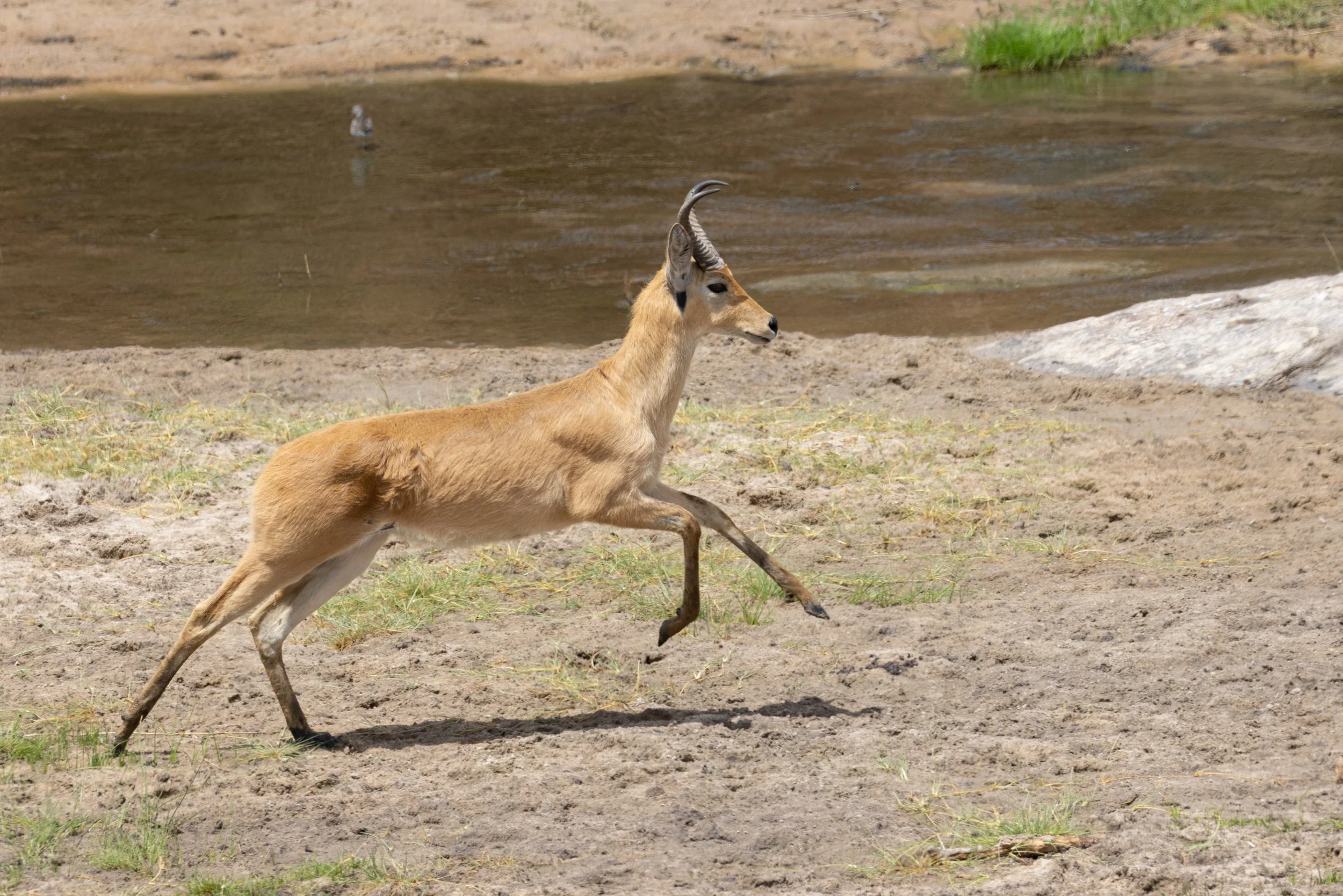
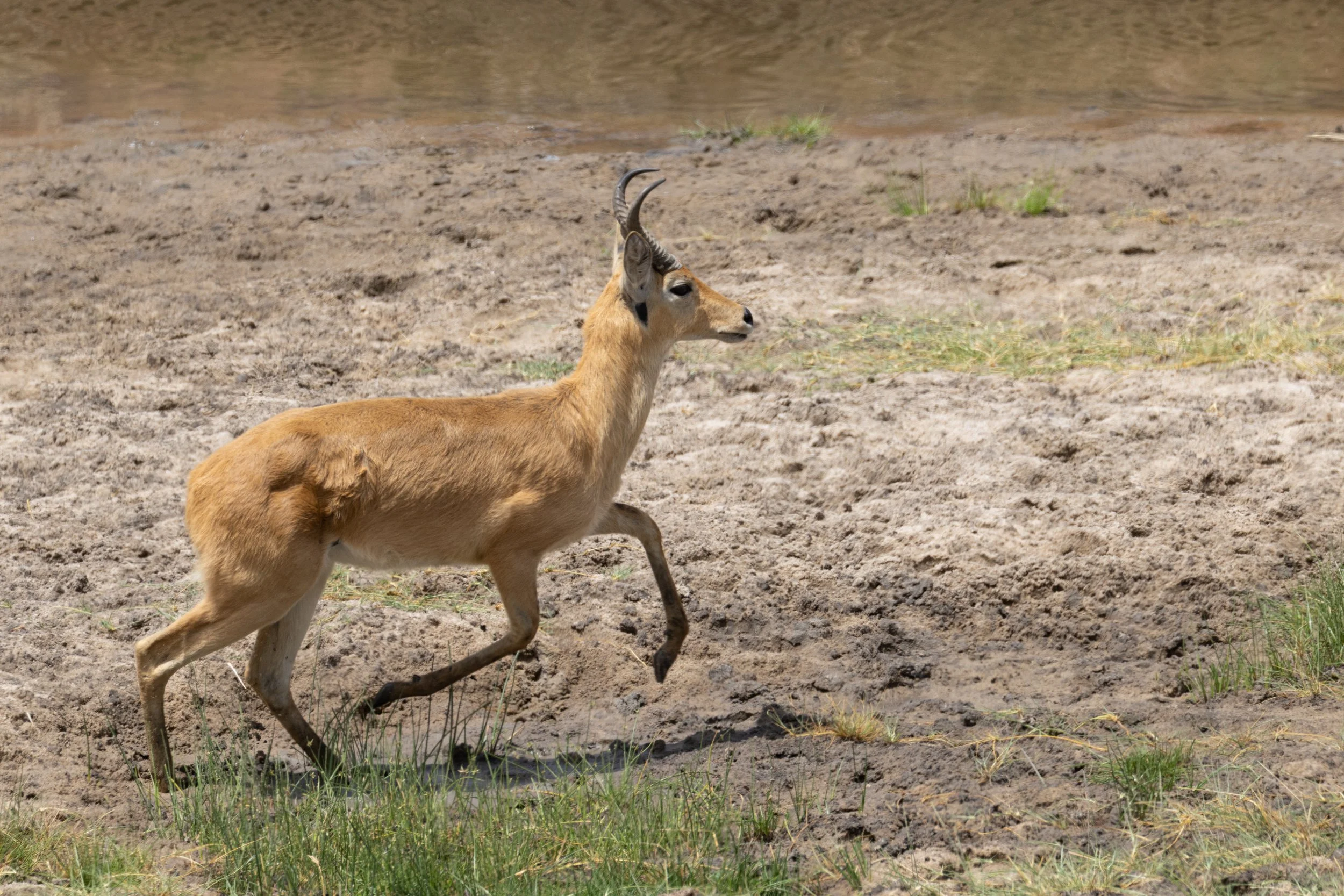
Another antelope most commonly spotted close to water sources in the Serengeti. They most often prefer to graze at night so we were pretty lucky to find some. The males have a distinctive horn that extend backward from the forehead and then hook slightly forward.
Klipspringer
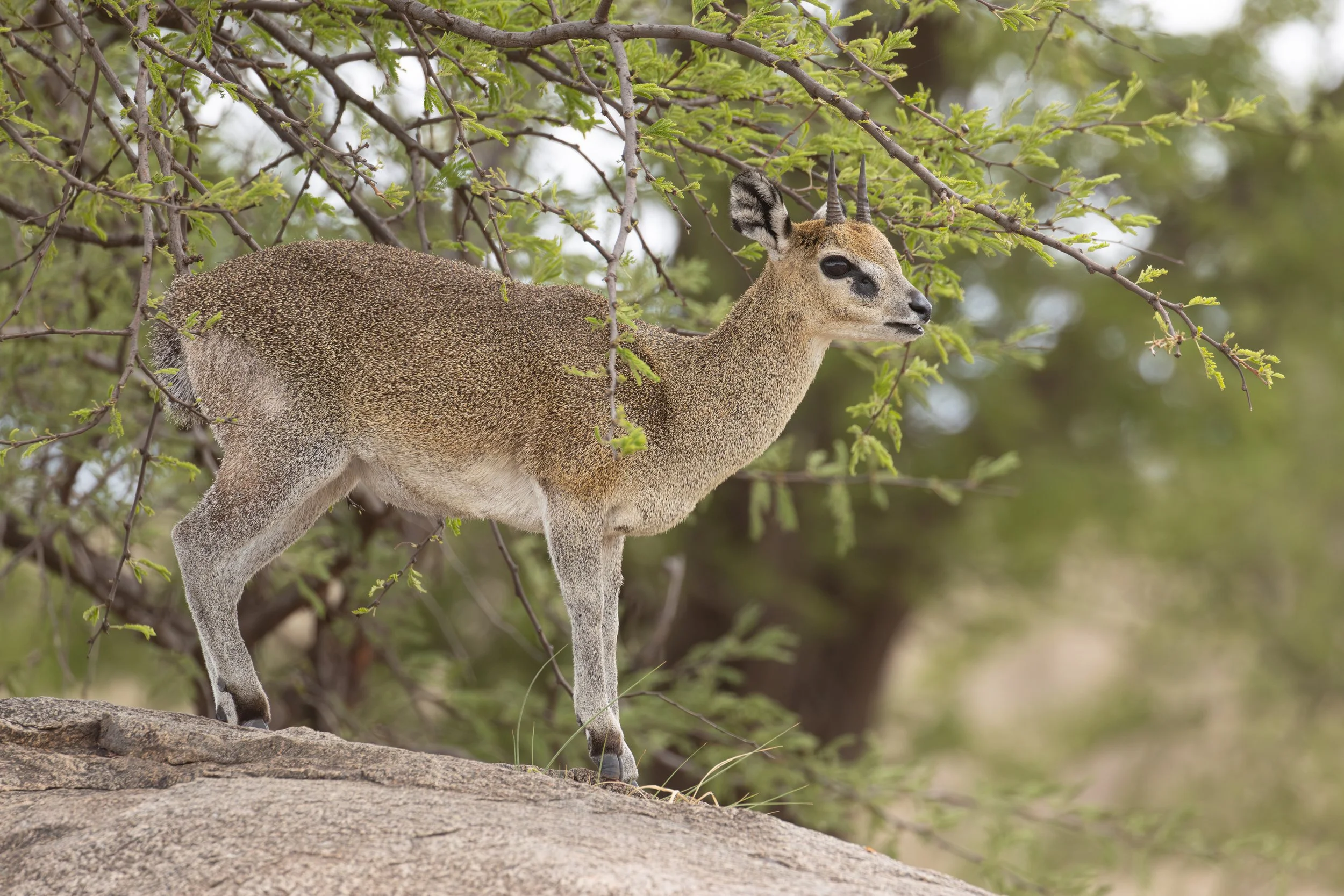
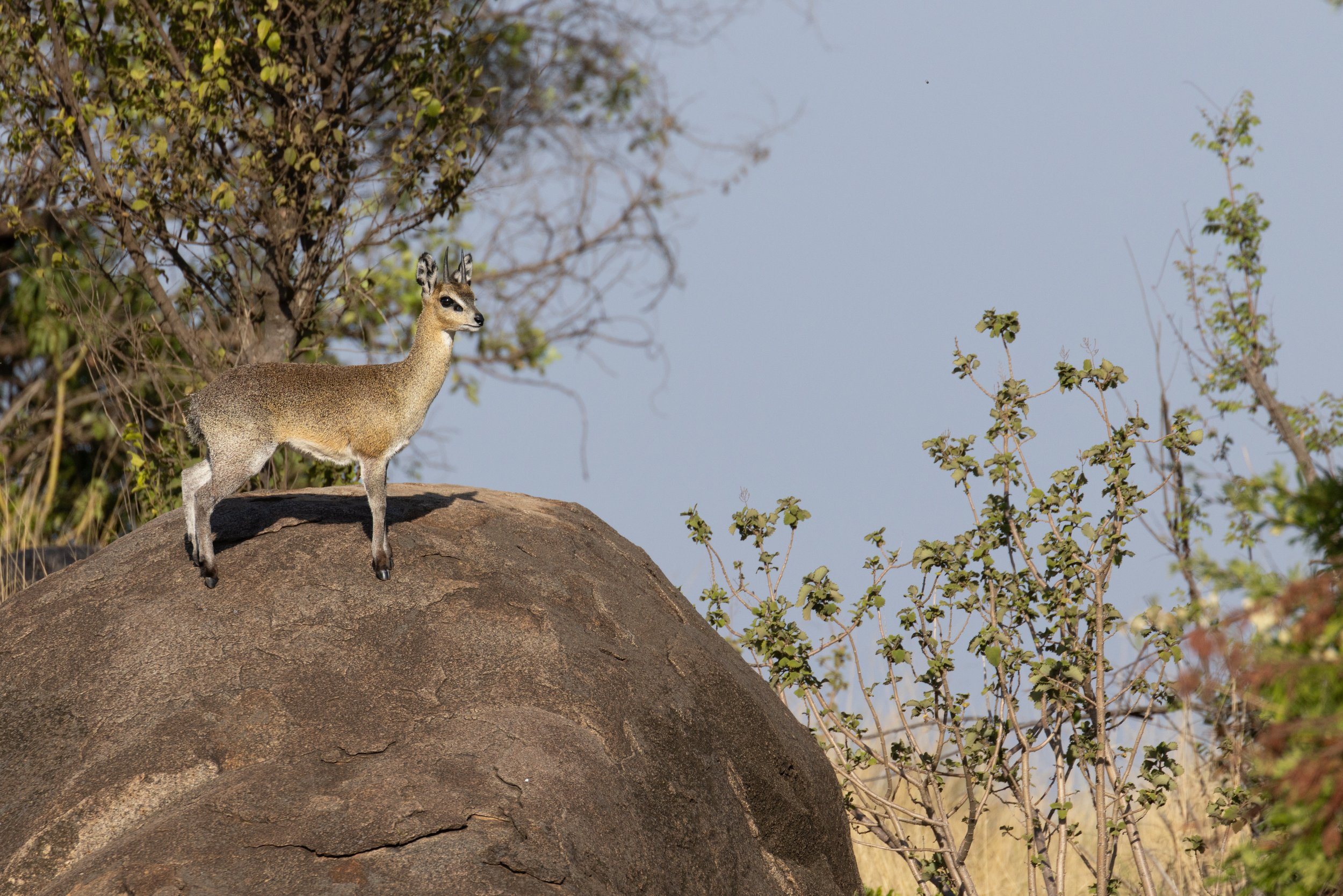
These tiny, sturdy antelope live in the more mountainous areas of the Serengeti, and seem at home on top of rocks. Males seem to like to stand guard watching for extended periods from high spots.
Dik-dik
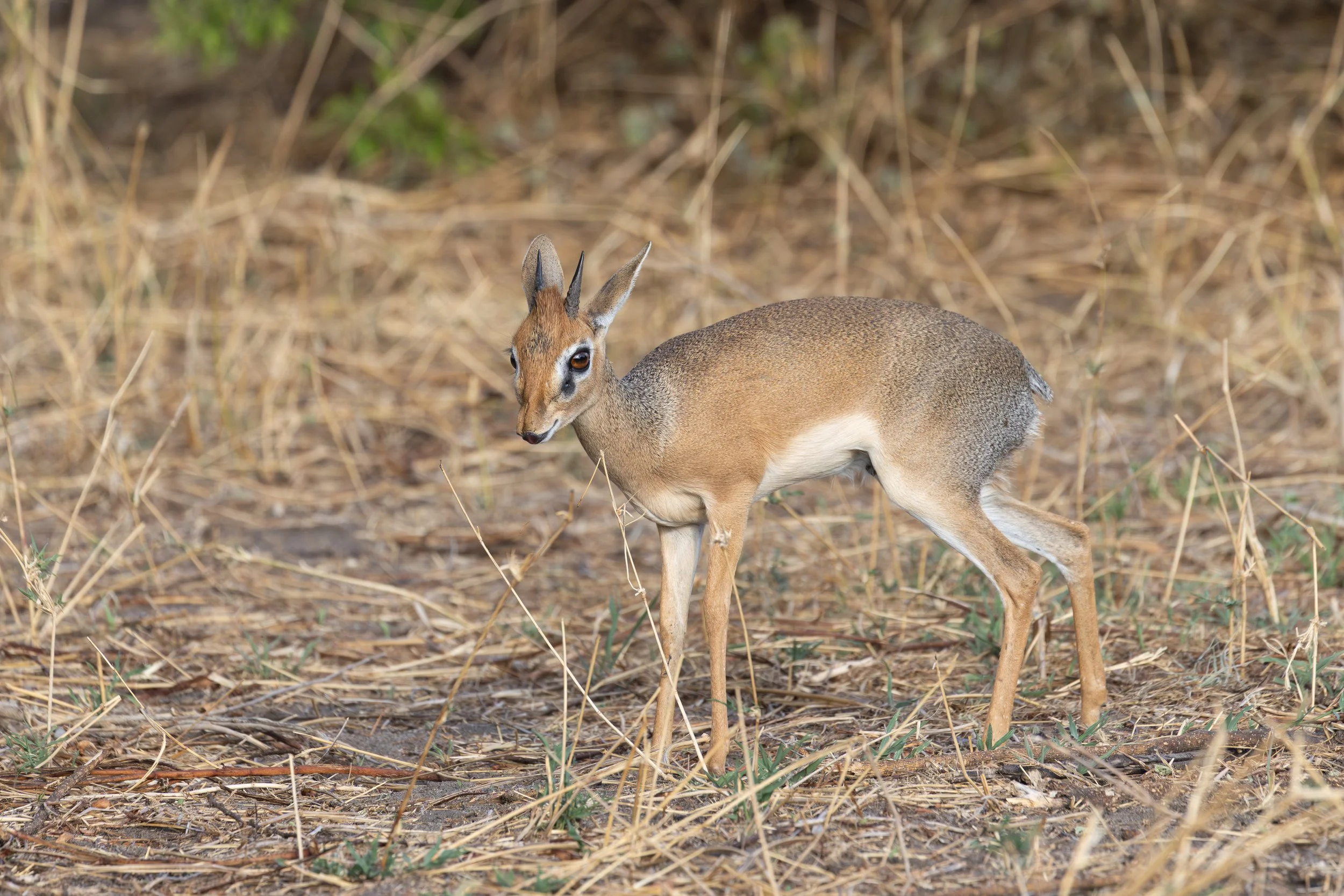
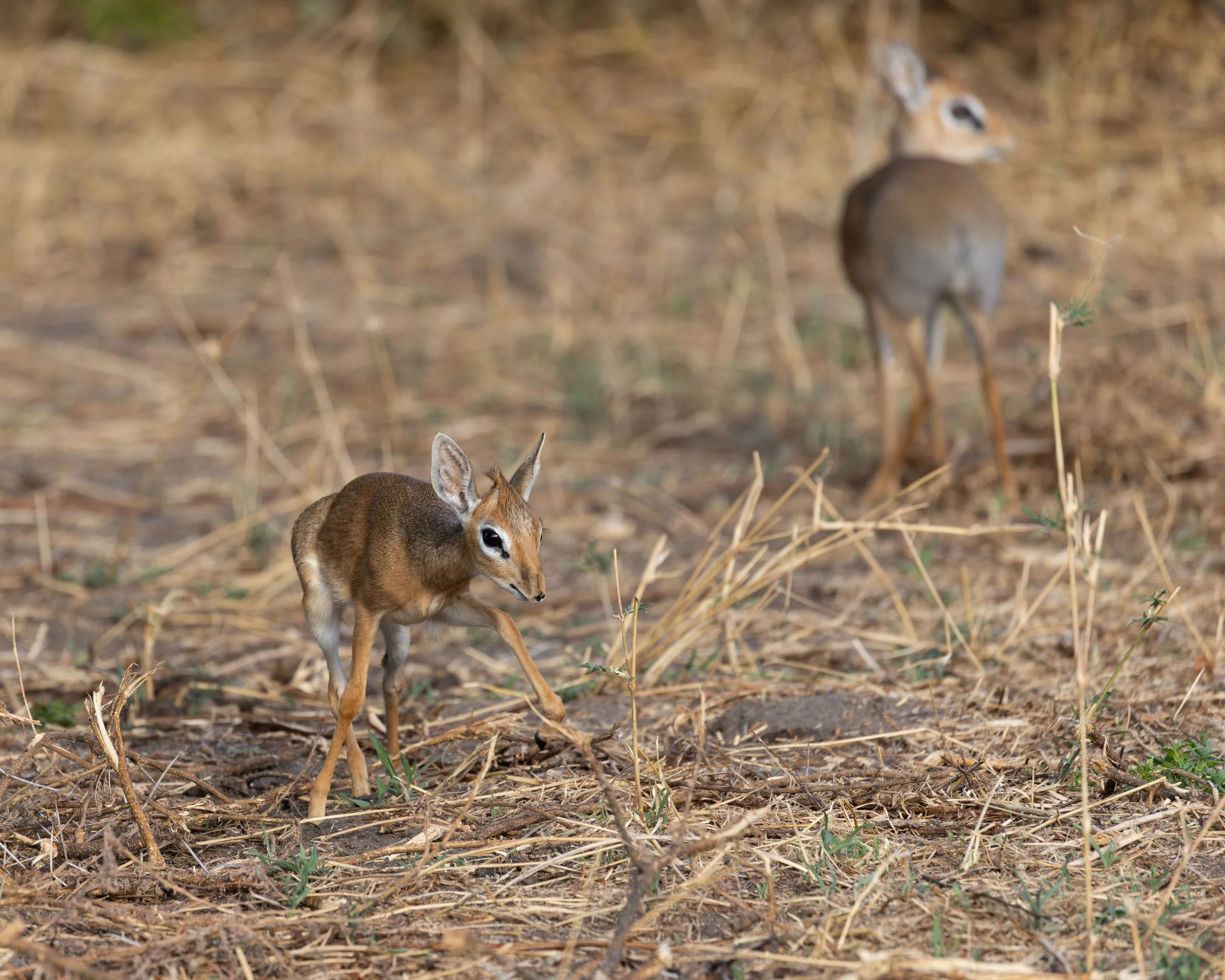
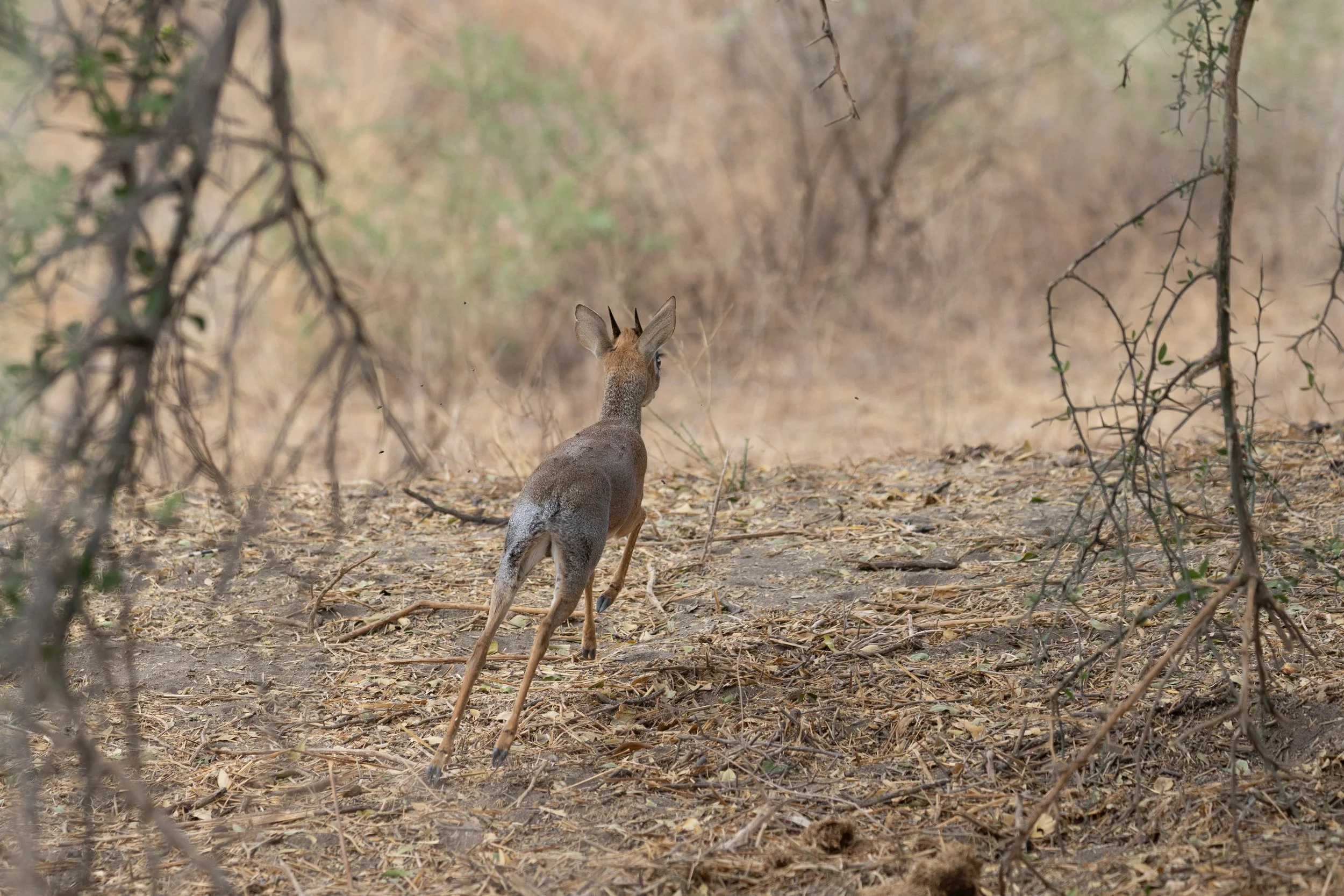
Similar in size to the Klipspringer but much more dainty looking the Dik-dik are often found in thick vegetation. These are the smallest antelope on the Serengeti, they have an alarm call that is the dik-dik sound which gives them their name. Distinguishing features are the elongated snout and dark spots at the corners of the eyes which are glands used for scent marking.
Topi
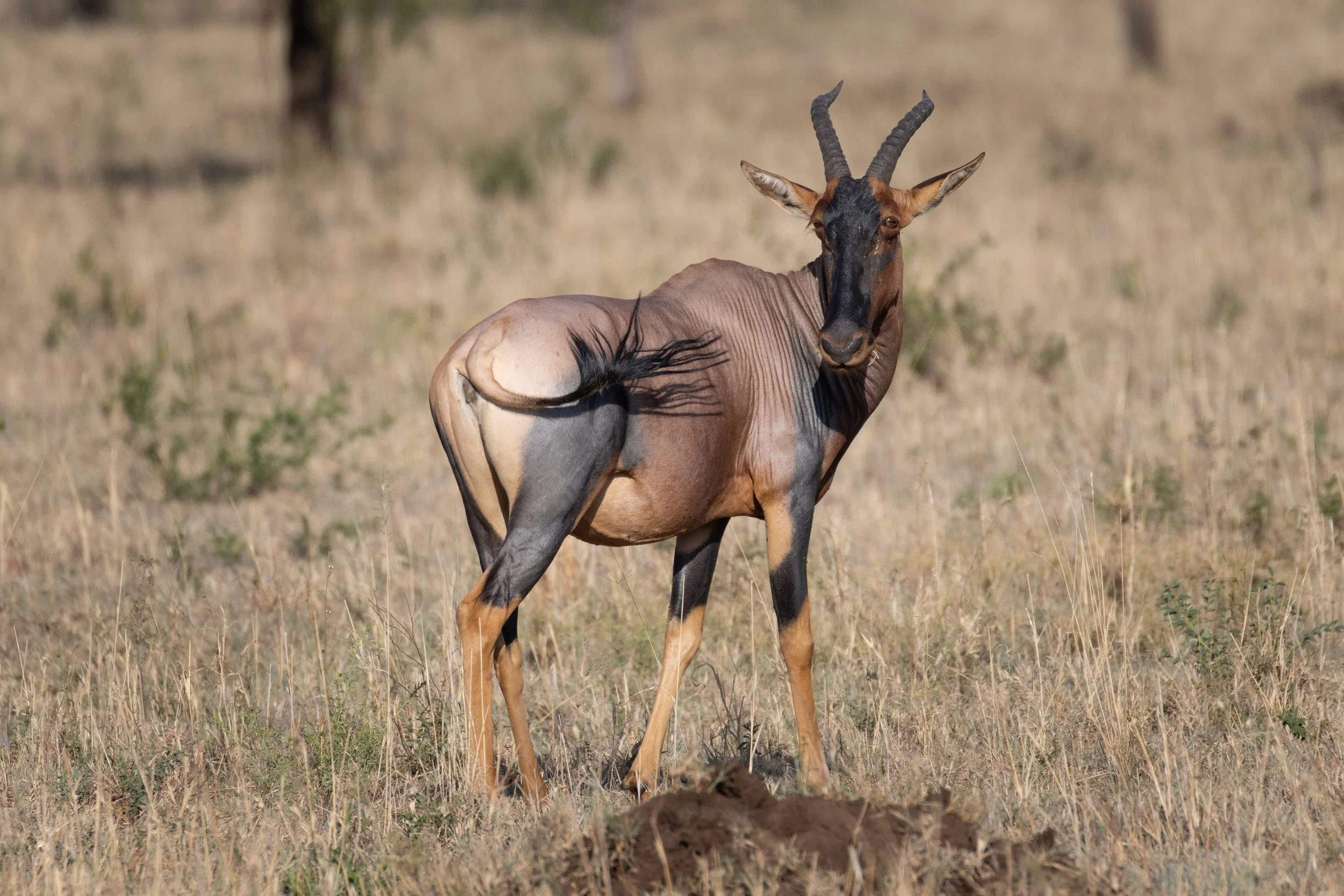
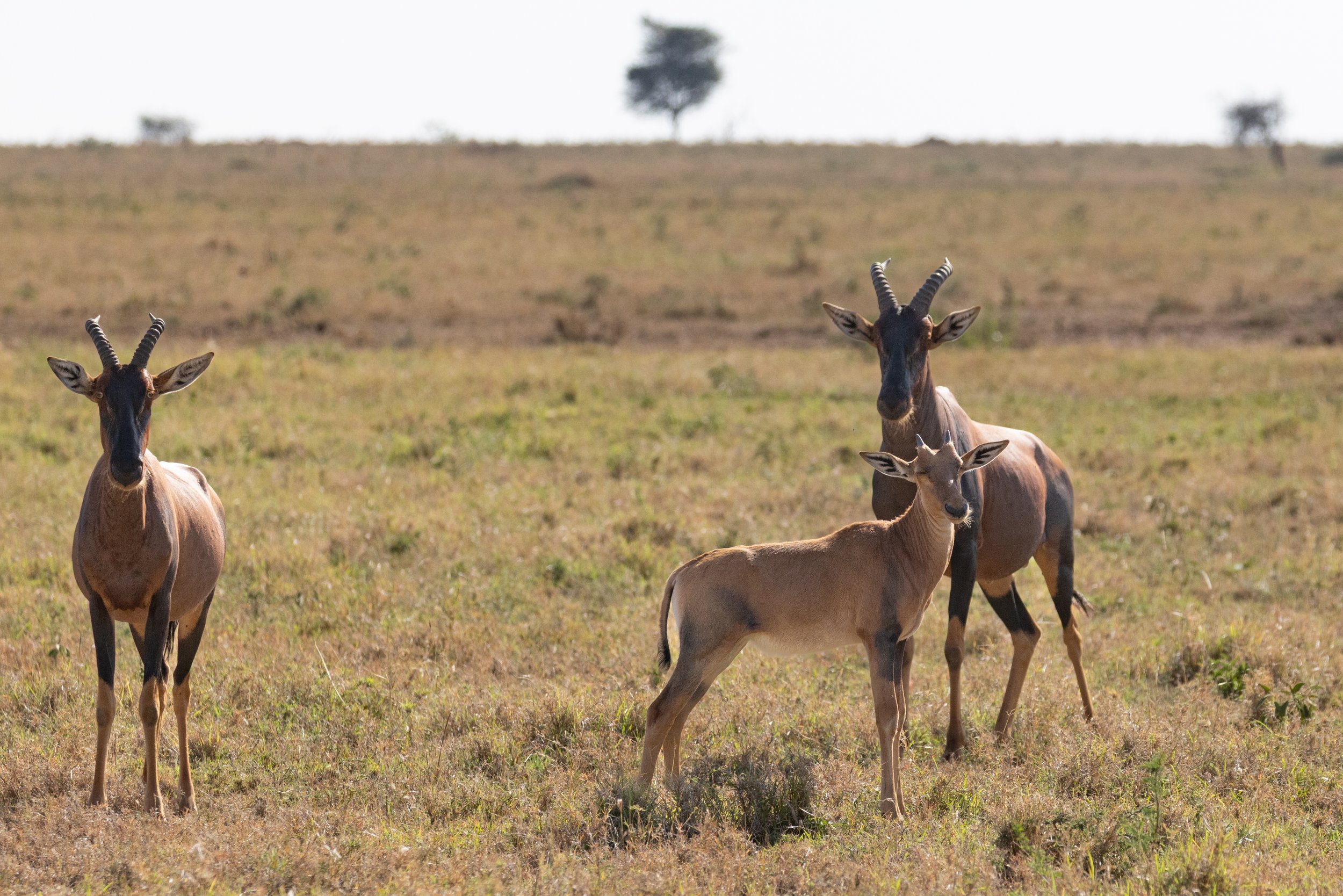
A medium antelope with a reddish-brown coat and black patches that appear on their faces, hips and legs. This is one of the more common antelopes estimates of around 300000 individuals. Similar to the Hartbeest but a bit smaller and doesn't have as long or narrow facial features.
Hartbeest

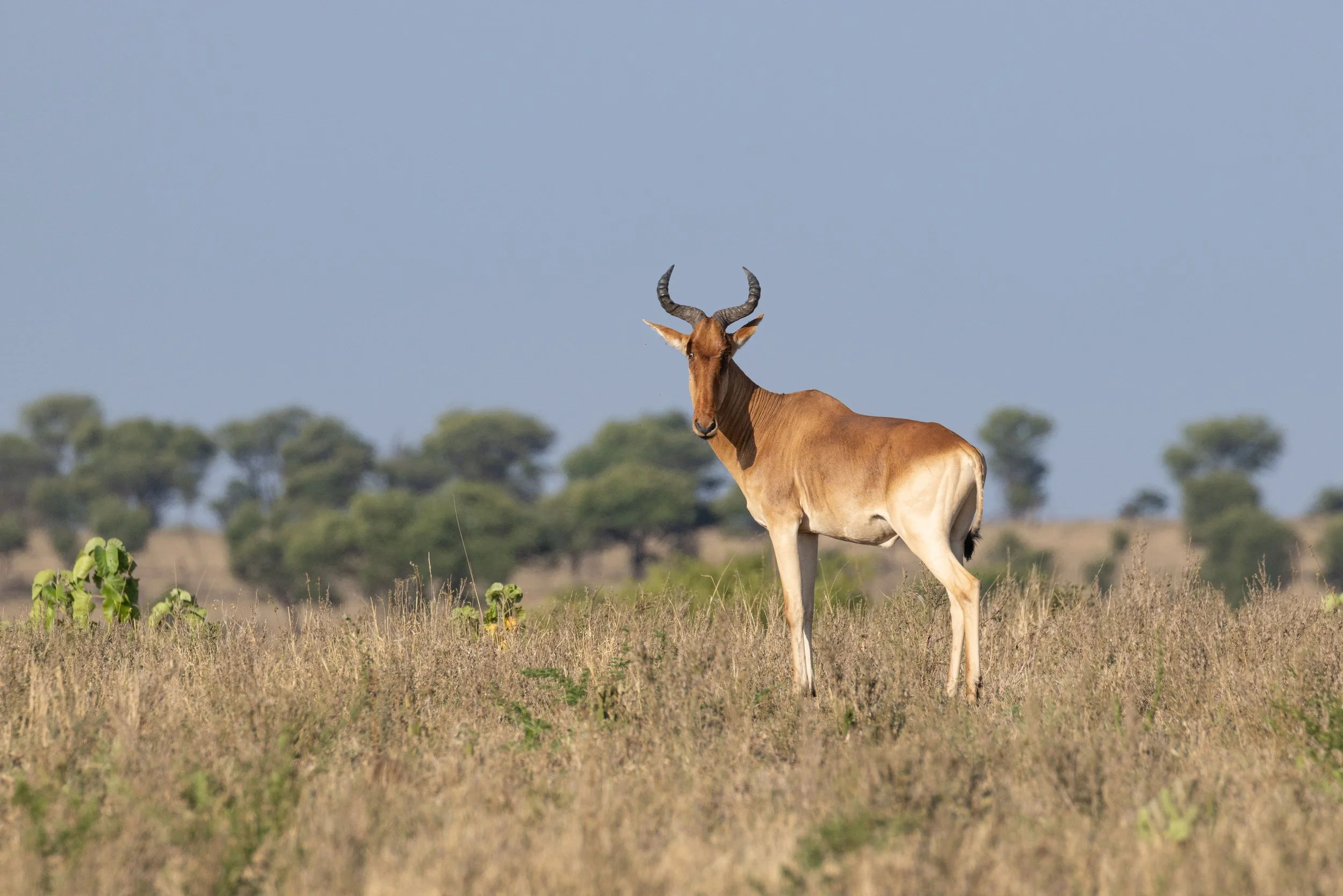
Another medium sized antelope with an elongated head, steeply sloping back, long legs and "bracket" shaped horns. Running at up to 70km/h it is one of the fastest antelopes even though they might at first look a bit clumsy.
Eland
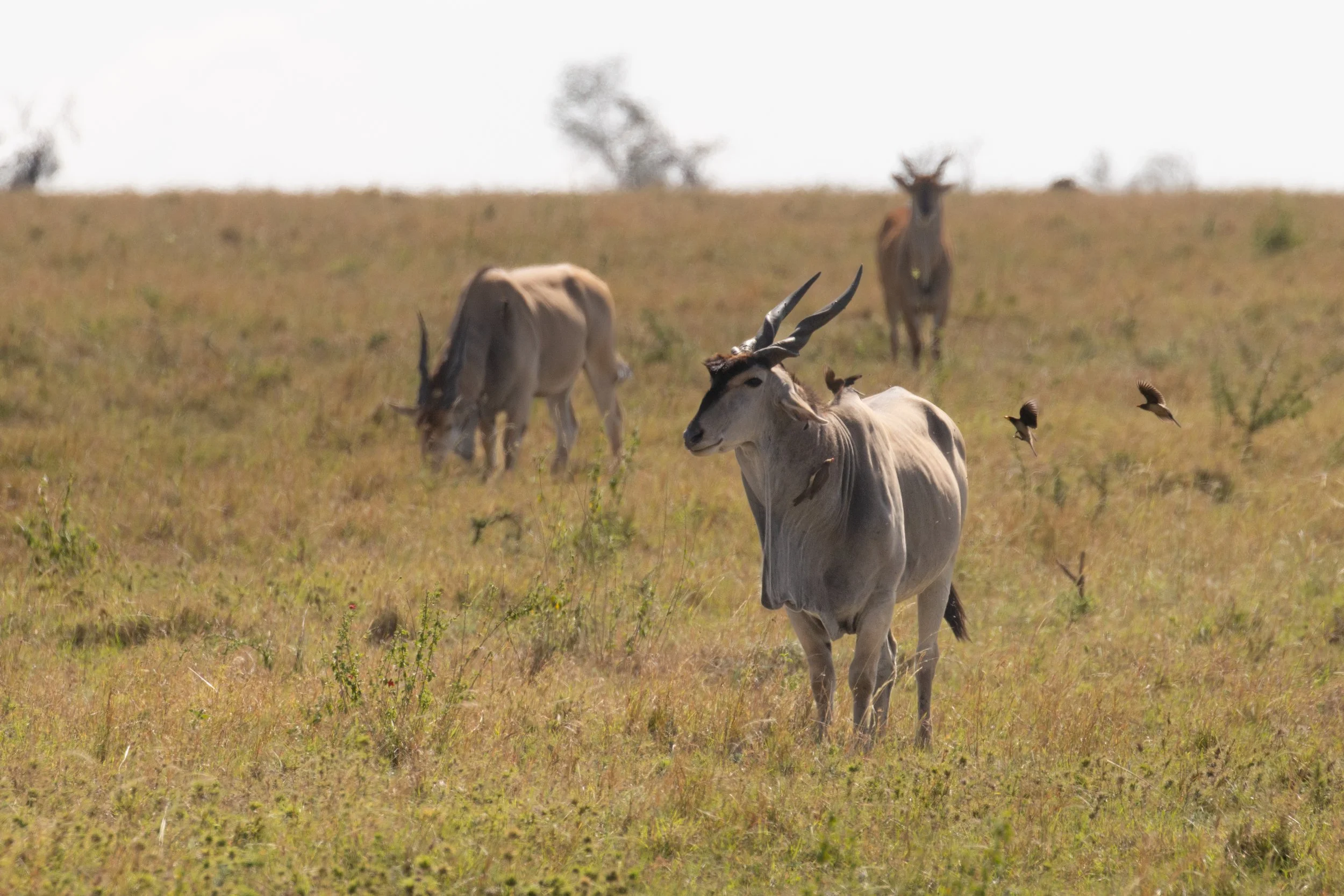
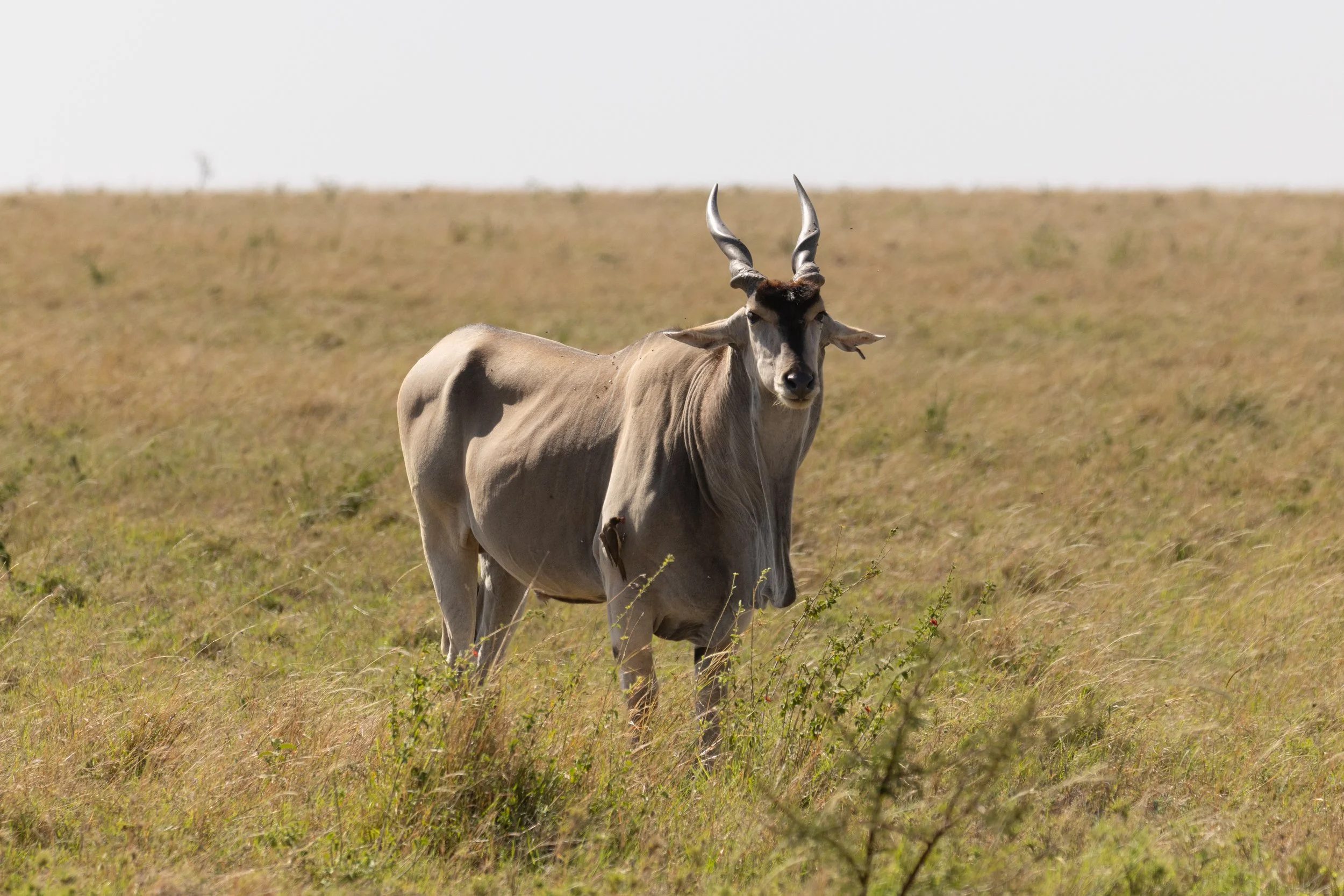
The largest of the antelopes at up to 1000kg, it could easily be mistaken at first sight for an ox or large cow until you see those horns. The elands has spiral shaped horns and prominent dewlaps under their neck.
Often just considered food for big cats, antelopes are so varied in Tanzania and especially in the Serengeti they were a constant draw for their activity and just shear numbers. Even though we were constantly hoping to see a big cat hunting one of these animals they were worth it on their own. I probably wouldn't do a safari just to see these animals alone but I was very happy to spend time just watching the antics of these creatures. If you do go on a safari don't forget to spend some time watching and photographing antelope, you might even get to watch as they run for their lives although I'm pretty sure they would rather just eat and play.